

Raise to Washtenaw County's economic development tax passes in 6-5 vote
An increase of 0.01 mill to the economic development tax levied in Washtenaw County received final approval Wednesday night in a close vote from the Board of Commissioners.
The commissioners debated the resolution before voting 6-5 to raise the tax rate from 0.05 mill to 0.06 mill. Commissioners Dan Smith, Rob Turner, Ronnie Peterson, Alicia Ping and Wesley Prater voted against the increase.
Once the motion passed to increase the tax rate, commissioners voted 8-3 to approve levying the tax itself. Commissioners Dan Smith, Peterson and Prater voting against the tax in its entirety.
The board was poised to pass a renewal of the economic development tax at its current rate of 0.05 mill - levied under Public Act 88 - at its meeting two weeks ago after holding a public hearing.
But Commissioner Conan Smith then proposed an amendment to raise the tax after the public hearing, and the board then voted to bring the issue before the public again Wednesday night for comment.
Three people voiced their opinions to the board Wednesday; one did not want a raise to the tax rate, and two were for it.
Under the new rate, the millage would raise $838,578 per year, and mean a payment of $6 per year for a homeowner with a house with a taxable value of $100,000.
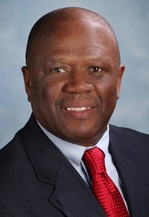
Commissioner Ronnie Peterson opposed the tax increase.
“It is a troubling economic time, but how do you build a strong economy? You build by investing in it,” said Commissioner Yousef Rabhi. “It’s hard to take a leadership position in times of economic stress and say, ‘We’re investing in our community.’”
The resolution included allocations for the money garnered under the millage. They include:
- $200,000 for Ann Arbor SPARK and $50,000 for its associated nonprofit SPARK East
- $100,000 for the Eastern Leaders Group
- $82,500 for the Michigan State University Extension 4-H Program
- $15,000 for the 4-H Youth Show
- $15,000 for the Food Systems Economic Partnership
- $15,000 to the MSU Extension for economic development in the local food system
The resolution for the 0.06 mill tax rate will raise $155,483 more per year than the 0.05 mill rate. The extra money will be used in part to pay out the county’s $50,000 annual dues for its participation in the Detroit Region Aerotropolis.
The remaining balance of $311,078 raised by the tax will be given to Public Act 88 efforts of the Office of Community and Economic Development, including heritage tourism, the Food Policy Council, Workforce Development Board and the Economic Development Corporation.
Commissioner Peterson voiced his strong opposition to the millage increase, as the Ypsilanti district he represents is currently facing economic struggles, and two broke school districts are on the verge of merging.
Specifically, Peterson objected to the intent of hiring staff with the millage money in the Office of Community and Economic Development with no clear plan before the board as to how many people would be hired and the pay rates of their employment.
“(Act 88) was meant for expansion of economic development, not hiring county employees at the administrative level,” Peterson said.
As many of the allocations in the resolution fund economic development efforts in the eastern half of Washtenaw County, Commissioner Ping raised concern that the district she represents in the western part of the county wasn’t receiving much benefit from the millage.
“Most of the western part of the county is on dial-up networks,” Ping said. “No business is going to put their business out there … I think I would actually be in favor of doing something that didn’t continuously fund the same organizations over and over.”
Commissioner Rabhi spoke in favor of the millage increase by reminding the board that the specific allocations of the money raised by the millage could be changed at any time.
“If you don’t like Ann Arbor SPARK, then go in later and amend the allocation list,” Rabhi said.
Commissioner Rolland Sizemore Jr. said he knew he would face some flak for supporting the millage, but said he sees economic development tax as important to the success of previous investments in communities in the eastern half of the county -- a statement seconded by Commissioner Leah Gunn.
Amy Biolchini covers Washtenaw County, health and environmental issues for AnnArbor.com. Reach her at (734) 623-2552, amybiolchini@annarbor.com or on Twitter.
Comments
snapshot
Fri, Oct 5, 2012 : 5:53 a.m.
Making a Mockery of Democracy. Yousef stands up for nurses bargaining rights and be so willing to circumvent my right to vote on new taxes? Public emplyees get raises, my taxes continue to increase to pay for those employees while the level of public service decreases, my income is decreased due to economic conditions caused by public employees and government regulators not doing their job. Board of commissioners solution? Raise taxes and hire additional employees? Change is needed.
Tom Whitaker
Fri, Oct 5, 2012 : 4:22 a.m.
Oh thank goodness! Now the commissioners can get back to counting kibbles at the Humane Society. Rabhi is a disappointment.
PineyWoodsGuy
Fri, Oct 5, 2012 : 3:50 a.m.
Ronnie! He da Man!
Rick Stevens
Thu, Oct 4, 2012 : 7:19 p.m.
SPARK gets another pass and continues to feed at the trough while telling the public they have no right to know if the money robbed from taxpayers does anything. Come SPARK -- if your results are so fantastic and worth our tax money you should be proud to show off your audits and audited job creation numbers. Right?
Martin Church
Thu, Oct 4, 2012 : 4:50 p.m.
it's time for these commissioners to be removed from office. The rest of us are struggling to survive and they are funding pet projects. They all need to be replaced. And NOW. you think these programs are good invest your own money. stop stealing from the homeowners in this county.
Jeffersonian Liberal
Thu, Oct 4, 2012 : 12:47 p.m.
I sure sleep better at night knowing that Mr. Rabhi is wisely investing the peoples money during these difficult economic times. God only knows that if it was left up to the free market some crony capitalist might lose their place at the public trough.
Alan Goldsmith
Thu, Oct 4, 2012 : 10:41 a.m.
"If you don't like Ann Arbor SPARK, then go in later and amend the allocation list," Rabhi said. So Mr. Rabhi--are you going to push for the elimination of the Ann Arbor SPARK funding without demanding to look at their financial records? OR are you going to hop on the Conan Smith bus and rubber stamp all of the giveaways for his political friends? This is a major issue, and while I have great respect for you support of the U of Michigan's Nurses during their negotiations (unlike Conan Smith) you need to look at this issue seriously and not just be another Conan/Ficano Democrat, more interested in their own careers than taxpayers.
A2comments
Thu, Oct 4, 2012 : 10:35 a.m.
Hopefully Conan Smith's constituents will remember him raising their taxes and vote him out when they have the chance.
DonBee
Thu, Oct 4, 2012 : 10:18 a.m.
These are economic development activities? $82,500 for the Michigan State University Extension 4-H Program $15,000 for the 4-H Youth Show $15,000 for the Food Systems Economic Partnership $15,000 to the MSU Extension for economic development in the local food system The remaining balance of $311,078 raised by the tax will be given to Public Act 88 efforts of the Office of Community and Economic Development, including heritage tourism, the Food Policy Council As usual Mr. Smith and his cronies are ripping off the public and telling them one thing, while doing another. But since they can raise this tax without a vote, they will. After all Mr. Smith has never met a dollar of Other People's Money that he did not want to take away and spend! Afterall government knows how to spend money much more wisely than you or I.
DonBee
Sun, Oct 7, 2012 : 4:57 p.m.
Oldtimer3 - Beneficial I will agree with, but not ECONOMIC DEVELOPMENT related, which is the specific use of this millage.
OLDTIMER3
Thu, Oct 4, 2012 : 11:31 a.m.
I thought as you did until I ckicked on the hyper links and investigated what each one was doing. Most of them are beneficial to the county.