

District reconsidering club fees after student says they're hurting participation
Saline administrators are reviewing a decision to charge high schoolers $40 to join a school club, after one student said membership is down in a group thats focus is to curb drug and alcohol use and other dangerous behaviors among teens.
Senior Julie Soissen approached the Saline Board of Education in April to ask that the club fee for members of Students Against Destructive Decisions be waived. She reported participation in the club has dropped from 120 students to 32 since the district implemented the fee.
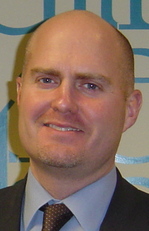
Scot Graden
The $40 is a one-time, annual fee that allows students to participate in an unlimited number of clubs. The fee for middle schoolers is $20. Athletes similarly pay one-time fees of $200 at the middle school and $250 at the high school to participate in sports.
Soissen said SADD provides more than 250 hours of volunteer service within the district, performing anti-bullying, harassment and peer resistance skits at the elementary schools; organizing the 24-hour relay; participating in the holiday parade; helping at the fire department’s open house; selling cider with the Lions Club and organizing a Nerf tag event with Harvest Elementary pupils, among other things.
Soissen said the entire district and community at large benefit from SADD’s outreach and efforts to prevent kids from making unhealthy, unsafe decisions, such as engaging in violence, committing suicide, participating in underage drinking or substance abuse and driving while impaired or in a risky manner.
SADD also is a self-sufficient club that supports itself via the fundraisers it conducts throughout the year, she said, adding other clubs such as the Special Olympics, FFA, Link Crew and DECA are exempt from the fees. SADD would like to be added to the list, she said.
Saline Superintendent Scot Graden said at Tuesday’s Board of Education meeting that these exempt organizations are considered “co-curricular” because often they supplement students’ education or students receive a grade or class credit for participating. Other groups similar to SADD, such as Student Council and National Honor Society, however, have the fee requirements and are deemed “extracurricular.”
So Graden said there are essentially four options: 1) do nothing; 2) grant SADD’s request for exemption; 3) look at creating a third category for service clubs and waiving any group that fits the label; or 4) remove the fee for all clubs.
Graden said part of the reason the fees were put into place was to help offset the costs of the faculty advisers for these groups.
“It makes good sense that the people consuming the resources help fund the resources,” said Board Trustee Todd Carter. “But if clubs are doing a benefit to the schools... maybe it should be made where they’re covered.”
In 2010-11, the club fees generated about $20,000 for the general fund. The projected revenue for 2011-12 is $22,000, Graden said.
Trustee David Zimmer, who served on an initial committee as a concerned citizen when the fees were being discussed, said part of the committee’s decision to support club fees was to “increase the level of fairness between sports and clubs.” He said the committee projected Saline would see about $50,000 in revenue. Since the actual numbers are less than half of the original estimate, he is concerned perhaps participation rates have decreased across the board.
Graden said overall participation has not declined in the past two years, but he will check back further for comparison.
Board President Lisa Slawson said a decision on administering the fees is really outside of the board’s purview as policy makers and should be the superintendent’s decision.
Graden said he is going to follow up with some more research and ultimately will bring his decision back to the board as part of the budget he recommends for 2012-13. The budget presentation is scheduled for June 12.
Only a handful of other districts in Washtenaw County, such as Manchester and Whitmore Lake, charge participation fees for after-school clubs and organizations. Manchester requires $15 per middle schooler, per year and $25 per high schooler, per year.
Staff reporter Danielle Arndt covers K-12 education for AnnArbor.com. Follow her on Twitter @DanielleArndt or email her at daniellearndt@annarbor.com.
Comments
Lac Court Orilles
Thu, May 24, 2012 : 11:58 p.m.
The teaching profession is the only one I know where a professional who works overtime makes much less than s/he does working regular time. Most people who work overtime get paid time and a half whereas a teacher who coaches or sponsors a club gets paid 25 cents an hour. Quit villifying teachers who work overtime.
sellers
Wed, May 23, 2012 : 1:40 p.m.
Getting into the waver business could get dramatic. The fee is $40 per academic year for all clubs. If you join one, you are eligible for them all. I think - being a parent - that some of the barrier is that the students need to coordinate with their parents to do the financial exchange. Parents are nickeled and dimed it seems for little things all throughout the year, and it may seem like a lot to many parents. To that point, $25 versus $40 is probably not the issue. One option could be if you are a student who has paid for the athletic activity fee, you are waved from the club fee. This would address the issue of, "students have to choose...".
Duc d'Escargot
Wed, May 23, 2012 : 12:53 p.m.
"...a group that's focus..."? What the heck kind of a possessive form is that? Just when you think the writing on annarbor.com couldn't get any worse. Ironically written by the "K-12 Education Reporter."
Danielle Arndt
Wed, May 23, 2012 : 3:20 p.m.
Thank you for pointing out the typo. It has been corrected.
Mike
Wed, May 23, 2012 : 12:14 p.m.
If the club costs the school district money it should be charged for.
AMOC
Wed, May 23, 2012 : 11:53 a.m.
I think the root of the problem is that in far too many districts, teachers are paid "overtime" rates to act as club advisors, band, orchestra and choir directors, theater directors, coaches and athletic trainers. These activities were once an expected part of doing the job of being a school teacher, and covered by the standard salary paid to instructional staff. Teachers in music, drama and gym face fewer demands on their time for creating and grading written assignments and more for overseeing practices, games and performances. They should not be collecting hundreds and thousands of extra dollars for their after school and evening work with students in these co-curricular activities. Nor should extra-curricular club advisors be paid by the school districts. Voluntary clubs in our schools should be all-volunteer efforts, and schools should re-open club sponsor / club advisor spots to (background-checked) parents and community volunteers rather than insisting that only teachers may perform this function and only teachers for whom there is a school district budget to pay the overtime pay they charge for "advising" clubs.
craigjjs
Wed, May 23, 2012 : 1:10 p.m.
Teachers collecting hundreds of thousands of extra dollars? In Saline?
Common Sense
Wed, May 23, 2012 : 11:12 a.m.
I think that all students should "pay" something for their participation in clubs and sports. However, I would suggest that the students be given an option to volunteer to help out at local human service programs at the rate of $8.00/hour. Saline Social Service, the Evangelical Home, Brecon Vilage, American Legion, Christmas in April, Fifth Corner, the churches that feed the homeless are just a few suggestions. I am sure there are many other good solutions too. This would allow them "to have some skin in the game" if they choose not to pay the fee.