

Sandi Smith defending 1st Ward seat on Ann Arbor City Council against Sumi Kailasapathy
Voters in Ann Arbor's 1st Ward will decide next Tuesday between two Ann Arbor City Council candidates with vastly different perspectives and priorities.
Sandi Smith, who was first elected two years ago, is seeking reelection. She's a University of Michigan graduate and local real estate professional with a long history of community service and a pro-growth outlook.
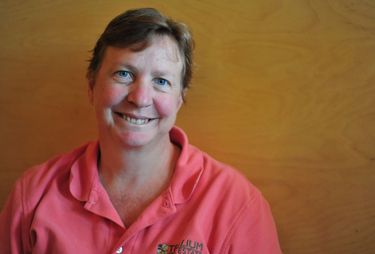
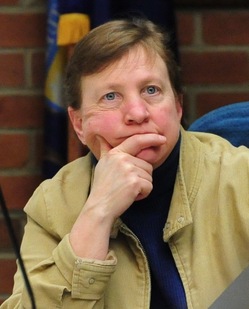
Sandi Smith, D-1st Ward, is seeking reelection to the Ann Arbor City Council next Tuesday.
Ryan J. Stanton | AnnArbor.com
"Unfortunately, I don't think we can cut our way to prosperity," Smith says. "We can trim, we can cut, but we still need to increase at the revenue side. We need to look at proactive ways to bring more businesses and increase our tax base."
Sumi Kailasapathy, a political newcomer with hesitations about new development, says Smith has been ineffective on council and has worked only to increase city spending and debt at the expense of basic services.
A native of Sri Lanka, Kailasapathy admittedly has little record of community involvement in her 13 years in Ann Arbor, but says she believes her skills as an accountant with a background in political science would be an asset. She vows to go over the city's budget with a fine-toothed comb and cut wasteful spending.
"Money is being mismanaged and, being a CPA, I think I can bring something to the budgeting and cost controls and things like that," she says. "That's my primary motivation to come in, because I think I can bring an accounting discipline."
Smith and Kailasapathy, both Democrats, will face off in next Tuesday's primary election. The winner advances unopposed to the November general election.
The 1st Ward matchup is one of four contested city races, including the mayoral bout between incumbent John Hieftje and challenger Patricia Lesko. Kailasapathy has aligned herself with a slate that includes Lesko, 4th Ward candidate Jack Eaton, and 5th Ward candidate Lou Glorie.
The four have jointly waged an aggressive campaign calling for the ouster of the current council majority. They condemn the council for making cuts to basic services and laying off firefighters, while spending millions on a new police-courts building and an underground parking garage.
"Our priority now should be funding the unfunded pension benefits, which is over $200 million," Kailasapathy says. "It's like you have all these credit card bills and you don't want to pay that, and then you are borrowing and going and building something silly, and that's how I see it. We have to get our priorities right."
Kailasapathy is half-correct about the city's unfunded pension liabilities. As of the city's last audit, the pension system was 93.6 percent funded, with an unfunded liability of $28.9 million. However, future retiree benefits are only 30.5 percent funded, with a $161 million hole to close — a challenge many cities across Michigan face.
Additionally, city records show the city's debt rose more than 25 percent between 2006 and 2009, going from $167.2 million to $209.9 million. Meanwhile, governmental activities spending increased from $96.9 million to $130.2 million.
Smith acknowledges city spending has gone up, but says it's mostly because of rising employee wages and benefits and needed capital investments. She says the city is negotiating with its labor unions to get employee costs under control.
"Everybody's costs are going up," she says. "We keep cutting, but the costs of having employees, providing health insurance and these benefits, are rising. There's no doubt."
Kailasapathy criticizes the city for adding to its debt by taking on projects like the police-courts building and the underground parking structure on Fifth Avenue.
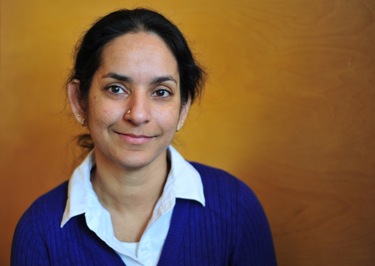
Sumi Kailasapathy, a certified public accountant and native of Sri Lanka, is challenging Smith for her seat.
Ryan J. Stanton | AnnArbor.com
"Debt means we also need to pay interest on those debts, so that's going to really put Ann Arbor city in a more disadvantaged position," she says. "So, take on less debt and also prioritize our expenses. Just focus on the core services like roads, bridges, police and fire, and put aside nonessential expenses."
Smith defends the police-courts building and underground parking structure, saying both projects were needed, and the city identified revenue streams to fund them with minimal impact on the budget. In the case of the parking structure, Smith says, the project will pay for itself with revenue from users of the parking system.
In the case of the police-courts building, city records show annual debt payments are set at $1.86 million for 30 years — about $735,496 of which is being covered by discontinued leases. The Downtown Development Authority agreed to take on $520,000 of the remaining cost, while $374,180 is coming from revenue from antennae sites and $225,000 from court tickets.
"There's a certain kind of debt that is a true, absolute liability on the city, and then there's a debt that's funded with revenue," Smith says.
Smith says it's important for Ann Arbor to continue investing in infrastructure. She says the police department badly needed a new headquarters, and she's proud the city found a way to make it happen in tandem with new space for the courts.
"We need to invest in the future. We need to invest in our infrastructure," Smith says. "We need to invest in things like single-stream recycling. We need to do these things. We need to invest in our sewer plant."
Developing differences
In addition to taking a more fiscally conservative approach to the city's budget, Kailasapathy also says she would be more hesitant about approving new developments in Ann Arbor.
Kailasapathy, who says she's "not really into pro-development within the city," believes there are too many vacant structures in Ann Arbor to justify adding new buildings to the mix right now.
Kailasapathy bluntly criticized the incumbent's performance in office at a debate earlier this month.
Ryan J. Stanton | AnnArbor.com
"I personally think I don't like ... putting new development in," she says. "I think with all these empty spaces and stuff, personally, we need to figure out how to use them, because you don't want closed down buildings and neglected buildings."
Smith says she's pro-growth and, with other sources of revenue drying up, reeling in new investment is the city's best chance for success without raising taxes.
"I've heard pretty loud and clear that nobody wants an income tax," Smith says. "But we have a need to have revenue. Forty percent of our land is off the tax rolls between the university and our vast park system. And we lost almost 5 percent of our tax base when Pfizer moved out, so we have a demand for high quality of life, we demand our services, but we don't want to pay a penny more. So the only way to do that is to expand your tax base. Development will do that."
Smith recently supported both the Moravian and Heritage Row, two apartment developments that proposed adding density in a near-downtown neighborhood made up of student rental properties and single-family homes. Both projects failed to get the eight votes needed for approval from council, which pleased Kailasapathy and neighbors who opposed them.
"I voted for the Moravian," Smith says. "I know that is very upsetting to some people, but while I was collecting signatures, I had probably a 2-to-1 kudos for voting for it. So people who are not adjacent to it really want more of that going on."
Kailasapathy notes both projects were Planned Unit Developments, which means the developers were asking for exceptions to the city's zoning rules. She says she has a particular dislike for that kind of development because it gives City Council members a chance to pick winners and losers.
Kailasapathy says she fears Ann Arbor is trying to become "the next Chicago," but actually might end up turning into "a knockoff of Southfield."
"That's not a vision for Ann Arbor for me, no offense to Southfield," she says. "I feel we can build on what our treasures are, like these small stores and small businesses. And even instead of a convention center or a big hotel, what I would really like is the Allen Creek Greenway belt coming here. I mean, people are not going to come here to look at an ugly building, but if we can really enhance our environmental aspects, then I think that will be the asset."
Smith also supports the Allen Creek Greenway, but her overall vision for Ann Arbor is much different than Kailasapathy's. After several years of working toward new downtown design guidelines and zoning changes, Smith says she's looking forward to watching the downtown fill in with new development in the coming years.
"With the design guidelines in place, some of the work we've done right now before there's a lot of new building will maintain that pedestrian scale and continue to make it interesting, more lively," she says. "When we get enough residents, then we start to get to the tipping point where we can start getting more groceries and services downtown that people expect to do by foot."
Smith says she wants to see more residents living downtown, and the streets filled with more of a mix of daytime and nighttime users. She says she doesn't think the city will change much outside of the downtown, but she sees opportunity for some infill development in near-downtown neighborhoods.
"I think that the energy that the university is putting into the tech spinoffs and the bio spinoffs is going to continue to create businesses that are here," Smith says. "Economic growth in the new economy is not by five hundreds or thousands. We're not likely to have a large plant or a Pfizer locate here. We'll have growth by ones and fives and tens and that's OK."
Smith's road to politics
Smith grew up in Bloomfield Township in a subdivision she describes as "classic sprawl." While in high school, she considered her options for college and toured several universities along the east coast before settling on U-M.
Smith is stressing her experience on council and record of serving in the community in this election.
Ryan J. Stanton | AnnArbor.com
"There was just something about Ann Arbor that had this allure," she says. "And after I did all that touring, I looked at my folks and I said, 'Take me over to Ann Arbor.' And as incredulous as they were, I came to the University of Michigan and played field hockey varsity first year, which was a big draw for me."
Smith arrived at U-M in 1981 and, like many Ann Arborites who found themselves transplanted here, fell in love with the city and never left.
She earned a bachelor's degree in psychology. But before graduating, she began a career in real estate that she continues today.
After working at a couple of real estate companies, Smith and her partner, Linda Lombardini, founded Trillium Real Estate in 2001.
"We had enough business on our own that we felt that would work, so we launched off kind of moments before 9/11, which was really kind of unfortunate," Smith says. "Business has been tumbling ever since, so it's been a hard road."
Smith and her partner have been together 15 years. They live and work in downtown Ann Arbor and talk proudly of their renovated office space.
"In late 2008, we bought our building in Braun Court and it was just a shell," Smith says. "We renovated it and we did a lot of the work ourselves. I did all of the design work and it's about as green of a building as you can get."
Smith, who handles mostly residential properties, says she also has been working in new construction with a green home builder called Living Space Builders.
Smith has served on a number of boards and committees for the city, including the Housing and Human Services Advisory Board, Council Rules Committee, Audit Committee and Community Events Fund Committee. She also has chaired the Housing Board of Appeals and served on the Downtown Development Authority for the last six years — predating her election to council.
"That was sort of my first appointment, and I really have enjoyed my volunteer work there," Smith says of her spot on the DDA. "It's a chance to make a difference in the city. You start seeing things you never realized before — all the pieces that make the city work."
Smith also has served on a number of task forces, including the Greenway Task Force and the Police Courts Building Design Committee. She lists several accomplishments in her first term on the City Council, including doubling the occupancy of the emergency shelter system last winter, supporting funding for foreclosure prevention and restoring funding for human services.
She also worked to stop the installation of parking meters in near-downtown neighborhoods, eliminated a controversial loading zone permit program for downtown, and supported expansion of the city's recycling program.
"I've sponsored a lot of legislation," Smith says. "If you go to Legistar, you can search by name and see how many different things I've done. And I've noticed that there are people who have been on council twice as long as I have who have less than I have. I'm active, I'm prepared when I go to the table, and I'm absolutely willing to raise the questions that sometimes people don't want me to ask."
From Sri Lanka to Ann Arbor
The story of how Kailasapathy, a political activist from Sri Lanka, came to live in Ann Arbor has all the makings of a drama fit for the silver screen. It involves a daring escape under the cover of night from her war-torn country at the age of 22, with nothing in hand but a passport and a change of clothes — so not to draw attention to her plans of fleeing.
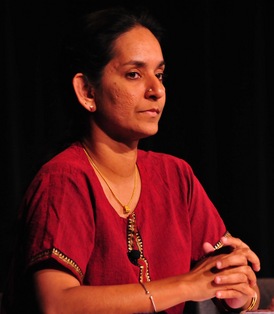
Kailasapathy escaped violence in Sri Lanka in the early 1990s and found refuge in the United States.
Ryan J. Stanton | AnnArbor.com
"I don't have any pictures of my dad, I don't have any mementos, any remembrance," she says. "My mom said 'just run' because they warned me that the next day they were going to come and sweep up all the activists, and they did, and they killed all of them."
Kailasapathy lived in Jaffna, Sri Lanka, during the 1980s while a violent civil war was raging. After finishing high school, she went to the University of Jaffna to study business and found herself heavily involved in student activism.
She co-founded the Poorani Women's Organization, served as treasurer of the University Students Union, and was an active leader defending civil and human rights. She says the Students Union played a courageous role in defending the civilian space from the guns of government forces and a rebel group known as the Tamil Tigers.
"Some of the members were assassinated," she says. "In the sense, we were caught between the military on the one hand and the Tigers on the other hand. They were coming to civilian areas, shooting at the military. The military would shoot us back. And again, many of the students were killed. And there came a point when many of the Tamil Tigers took over and some of us were lucky enough to flee but many of them died."
After fleeing to the United States in the early 1990s, Kailasapathy enrolled at Wellesley College in Massachusetts. She continued her activism there, working through Amnesty International for the release of her fellow students who were being held prisoner by the Tamil Tigers.
She earned a degree in economics and political science from Wellesley College and a master's degree in political science from the New School for Social Research in New York. She moved to Michigan in 1997 to be with her husband, Giri Jogaratnam, a professor at Eastern Michigan University. They have two sons who attend Ann Arbor Public Schools.
Kailasapathy taught courses in gender studies, international political economy and globalization at EMU from 1997 to 2007 before transitioning into a career as an accountant. After focusing on being a mother for the past 13 years, she says she's ready to be politically active again.
Kailasapathy says the fact that the Tamil Tigers finally were eliminated last May gave her reason to think. But she says going back to Sri Lanka is out of the question at this point in her life.
"I'm a U.S. citizen and my kids like it here and my husband is here and we are going to live here," she says. "Ann Arbor is my home. This is where I'm going to live, this is where I'm going to die, so I might as well make it the place I want to live in."
Placing priorities
Kailasapathy says she sees herself as the fresh "outsider" the City Council needs. But in these tough economic times, Smith is stressing that Ann Arbor needs the continuity that only the city's current leadership can provide.
Both candidates vow to work hard to represent the priorities of the Ann Arbor community, but Kailasapathy suggests Smith doesn't listen well to constituents.
Smith says the Stadium bridges will be replaced next spring with or without grant money.
Ryan J. Stanton | AnnArbor.com
"I feel that I will listen to them carefully and make my decisions based on what the residents need, not based on what a developer needs," she says.
Kailasapathy says she's against using tax dollars to fund business attraction efforts through Ann Arbor SPARK — efforts Smith supports. Kailasapathy says the city should first focus on maintaining its roads and bridges, as well as its parks.
Commenting on the city's failure to replace the Stadium bridges, Kailasapathy calls it just another example of the "misplaced priorities" she says plague city government.
"It's how we choose," she says. "I mean, limited resources are acknowledged. Yes, the tax income base is reducing. We have less revenue to spend. That's agreed. But then how we choose to spend is the whole problem."
Smith says the Stadium bridges will be replaced next spring. Instead of rushing to spend $23 million, she says, the city is being fiscally responsible and, after years of trying to reel in outside money, is applying one last time for state and federal grants.
Smith and Kailasapathy have differing views on the city's recent investment in single-stream recycling. Smith calls it a progressive move forward that will increase recycling while saving $650,000 a year. Kailasapathy questions the upfront costs and says she isn't convinced it's going to improve recycling in Ann Arbor.
Another difference between Smith and Kailasapathy is a willingness to consider a city income tax. Smith says she's willing to put it on the ballot for voters to decide, but Kailasapathy thinks wasteful spending must be eliminated before a new tax is considered — even if it would reduce property taxes and shift some of the city's tax burden onto commuters.
"Don't get me wrong, I'm not against taxes," Kailasapathy says. "Just because I'm a CPA, don't think I'm like 'cut, cut, cut.' No, we live in Ann Arbor because we love this. Yeah, taxes are high, but I think, 'Hey, it's well worth it.'"
Smith says she feels like she just arrived on council. While much of her first term was devoted to working on the city's budget, she thinks the budget is now stabilized, and she's looking forward to working on other initiatives if given a second term.
In Their Words
Here's what Smith and Kailasapathy had to say on other issues.
- Airport Runway Expansion
-
Smith: "I'm not in favor of the expansion. We are very fortunate to be near an international airport. We're 20 minutes away and we can fly nonstop to Tokyo, and we have the Willow Run Airport. There's no need for an expansion in order to create a more robust airport here."
Kailasapathy: "I am totally dead against it because some people showed me reports that I looked at. The expansion is primarily built on rich people flying. They need more space and more planes are coming in."
-
City Income Tax
Smith: "I personally am not completely in favor of that, but I am completely now in favor of allowing it to go on the ballot and let the community have a broad and robust dialogue about whether this is good for the community for the short-term or the long-term and how it affects each different segment of the population."
Kailasapathy: "Don't we have to first eliminate waste before we advocate putting new taxes in?"
-
Argo Dam
Smith: "I'm a dam-in person. I understand the health of the river. I also understand that there may be an opportunity to do a project that is kind of an integrated approach where we can make some fast water areas, we can restore some movement to the river, but yet maintain Argo. I'd like to see it there."
Kailasapathy: "I'm 100 percent for Argo Dam. I have looked at several reports, including many of the engineering project reports that have come out, and it becomes very clear that there's no kind of engineering reason for the dam to go."
-
Fuller Road Station
Smith: "Particularly if we can leverage federal, state and university dollars, I think it will be a huge economic boon for us. And it's green. How can you get more green than a mass transit station? And our investment so far has been very minimal."
Kailasapathy: "I basically think it's going to be a parking lot for the university, and I haven't been convinced that the train is coming. Even the whole idea that people are going to come from Jackson and here and there. I mean, Ann Arbor is a little town. Do we want all this traffic?"
"I'm interested in regionalization and having us look beyond political boundaries, reach across US-23 and shake hands with Ypsilanti," she says. "Let's look at transportation issues and see if there are better ways to get people back and forth to Ypsilanti. We're doing express buses to Canton and Chelsea. My God, why aren't we doing it to Ypsilanti?"
Kailasapathy says she would focus on cutting costs and seeking concessions from employees.
"We really need to negotiate with the city employees," she says. "I'm not against unions. I'm not against benefits, but they would have to share more of the cost. That's the only way we can make the gap shrink. Otherwise, there's no way. It's not sustainable."
Smith says she has a lot of experience in cutting costs, and not just with the city.
"I'm also a small business owner and I know firsthand what it's like to keep the doors open, to trim excess fat out of a budget, to make payroll, while costs are skyrocketing," she says. "My insurance premiums went up 39 percent this year, and we had to make adjustments."
Kailasapathy has been questioned for aligning herself with Lesko, who has been criticized for her combative style and inaccuracies in her campaign messages. Kailasapathy says she and the members of her slate, Lesko included, are sticking together.
"It's the four of us," she says. "The common platform we have is to ouster the council majority. We have our different styles, we have our own personalities, and not that we agree on everything. But there is something common that is to get the current majority out."
Smith says she doesn't care for negative campaigning, and that's mostly what she's seen from what she calls "the Lesko slate."
"Slinging mud is not a way that I would choose to campaign or live my life," she says. "In my ward, people have asked me these questions that are outrageous and there's only one possible source and it would be from the Lesko slate. So to have claims of impropriety and corruption and backroom dealing is, one, unsubstantiated and, two, rather insulting. I had somebody suggest I start running a campaign to counter it and I won't do it. I'm running on my merits."
With Ann Arbor notorious for having low turnout in primary elections (11 percent of registered voters cast ballots last August), it's likely that a relatively small number of residents will go to the polls next week to choose between Smith and Kailasapathy.
For Kailasapathy, the fact that most Ann Arbor residents will stay home is unfathomable. She recalls her first election in Sri Lanka after she turned 18. The Tamil Tigers set up road blocks, she says, and killed people who tried to vote.
"You know what my mom did? She made me wake up early in the morning and she said, 'Let's go really early when it's dark so they can't see,'" Kailasapathy says. "I was excited and I wanted to vote, so she took me and we both went to the voting booth and we voted. And when people tell me 'I don't want to go to vote,' I feel like 'do you know how we had to vote? We risked our lives.' I value it so much, and it's so precious for me."
Ryan J. Stanton covers government and politics for AnnArbor.com. Reach him at ryanstanton@annarbor.com or 734-623-2529.
Comments
Heather Wade
Tue, Aug 3, 2010 : 11:20 a.m.
I feel both proud & lucky to live in Ann Arbor. I support Sandi Smith for reelection to City Council. She has the experience, dedication, energy,and forward-thinking vision to keep moving Ann Arbor forward. I'm proud to be an Ann Arbor resident and hear about advances that Ann Arbor make which help to lead other cities to improve as well. Sandi has been involved in and has led many of these initiatives - such as the savings by switching Main Street lighting to LED (for which Ann Arbor has been nationally recognized). I'm very happy about the single-stream recycling because it means that many more items can be recycled now. Sandi serves the people. She listens to all sides, weighs the input, and acts for what is in the best interest of the city, even if she, herself, may disagree. She understands that she is here to represent her constituents and works tirelessly to serve them. Vote for Sandi Smith today! Heather Wade
A Pretty Ann Arbor
Sun, Aug 1, 2010 : 2:48 p.m.
@Linda Lombardini - you were listed as an admin of "Support the Moravian" Fanpage on Facebook - I wish I still had a copy of that page on the date I saw it. "Support the Moravian" was the sole support of the drinking party before the event at city hall. I see now that you are no longer an admin of the group. At least the week before the event at City Hall you were showing as a admin of the group. Many saw your name associated with the group and the party on Facebook. If you weren't there and didn't support it then your name was used erroneously - maybe that is why you are no longer showing as an admin for the group, but just a friend. Either way going into "the event" at city council your name was associated with the Moravian and the developers on Facebook.
Snarf Oscar Boondoggle
Thu, Jul 29, 2010 : 3:21 a.m.
although a reasonable comparative article, one core concept was omitted. smith's challenger thinks that diverting money collected for project A into dollars for project B is 'just fine'. that is hte federal trick, not to be mimicked locally.... Sandi Smith, "We have funds that we have dedicated for certain things, and we cannot take that money and use it [elsewhere]. @Xena -- Smith works tirelessly for this city and is honest. She does not tell people what they want to hear, just for the sake of expediency. [ed: OhMy! thee shame!] @a2gossip.com -- The minute Ms. Smith rolled her eyes she lost my vote. ummmm, perhaps you should have been listening to the unethical, amoral mis-use of public funds that smith;s challenger is touting... i'd roll my eyes too... but i'd still pay attention. taxpayer dollars collected for A to be diverted to B. and this challenger is... an accountant? that would be the hallmark of h&r dum-dum. @a2gossip.com --... and wouldn't let the mayor get away..... then she should replace lesko and run for mayor... firebrands unite! @A24eva -- In financial times we need financial minded people, not real-estate agents. Wasn't it the real estate market that precipitated the current financial mess to begin with? uhhhhhhhhhhhhhhhh, so trillium real estate was responsible for the community reinvestment act (and progeny) that dictated to lenders that they must _give_ money to ppl who, demonstrably, could not pay it back? are your thoughts dreams?... h u l l o.. A24eva! btw, any existing or pre-existing politician who promotes the mis-use of taxpayer dollars, as demonstrated by smith's challenger --- A money for B project --- is, and forever will be, 'dishonest'. and i cannot -stress- that dishonesty strongly enough. grrrrrrrrrrrrrrrrrrrrrrrrrrrrrrrrrrrrrrrrrrrrrrrrrrrrrr!
needed perspective
Wed, Jul 28, 2010 : 10:46 p.m.
so sorry...didn't read the 53 comments....but Smith is the most thoughtful and reflective person in politics that I know. She is direct and to the point, and represents the heart of Ann Arbor. Her agenda is "common sense"!
David Cahill
Wed, Jul 28, 2010 : 1 p.m.
I never pretended to be "average" - what a concept! 8-) And I do use my real name. "I am David Cahill, and I approve this message."
A. Green
Wed, Jul 28, 2010 : 12:08 p.m.
@ Alan Goldsmith A volunteer on a campaign who is supporting a specific candidate, who is also a member of the candidate's ward is well within their rights to write a comment. Phyllis wrote one out of 50 posted comments and she used her own name. Bill wrote two comments. That is in no way "piling" on the comments by any standard except maybe using the "Lesko slate" standard of exaggeration and lies. So what is Mr. Cahill's motivation if not to intimidate or discredit another commenter? Why is the comment regarding who someone is married to a matter of fact when Cahill does not seem to think the public needs to know that he is Sabra Briere's husband? It is hypocritical. Maybe he should practice what he preaches. I find it offensive for a person such as David Cahill who is all over these blogs on daily basis spouting off his personal opinion to think it is appropriate to try and label any other commenter's opinion as invalid because of his marital status. Using that Logic I guess Sabra agrees with everything David posts. Maybe David actually posts comments for Sabra? Isn't that what David is implying about Bill? It is the hypocrisy that bothers me about this.
A. Green
Wed, Jul 28, 2010 : 11:07 a.m.
@ David Cahill "And Bill Shea is too shy to mention that he is Phillis' husband." What does that have to do with anything? I don't see you labeling all your comments with "I am the husband of Sabra Briere" (who is actually a current councilmember for those of you who don't know). If you truly believed in transparency at all, you would post this disclaimer automatically, but you don't. You, someone who constantly posts on city issues disguised as the average person, has no business trying to intimidate the average city resident from posting.
Speechless
Wed, Jul 28, 2010 : 11:02 a.m.
From above: "... Are the[y] ready to ask for National Guard troops to guard the corner of 7th and Washington to shoot non-mind reading drivers?...." I will defer comment on that question to Linda Diane Feldt, who is a more knowledgeable local observer of that pedestrian crosswalk than I am: http://www.annarbor.com/news/ann-arbors-new-pedestrian-safety-ordinance-seeks-to-prevent-playing-frogger-to-cross-the-street/index.php#comment-121164
Speechless
Wed, Jul 28, 2010 : 9:18 a.m.
As for Dukes of Hazzard vs. The Council Party, you've helped make my case. Sorry to hear that increased pedestrian safety, local peace activism, as well as a timely rebuke to racist, Arizona-copycat legislation in Lansing, all hold precious little meaning to council majority opponents. And you demand that the city look into replacing RAA with a big waste management corporation? At least the criticisms of greenbelt program purchases are constructive. Does the rest of the opposition, as well as their slate, share these views?
gamebuster
Wed, Jul 28, 2010 : 1:18 a.m.
I feel very sad on seeing people attacking Sumi as she's been home to take care of her son. I've been very active these 2 years, just because facing a pressing/suffering issue seeing the homeless suffering out there. I've two sons, 12 & 9. I took good care of children the first 10 yrs. Honestly speaking, I'm blaming myself right now as I didn't take good care of my second child as I had done to my older child. It doesn't matter whether you vote for Sumi or not, It's wrong to attack her motherhood. All women must know that women need to love their children first, then feel the strong love urge to care others. I face mental patients, I feel the pain. So does Sumi, she promised me she'd work on it. For women with children of young age, if not for strong urge to care the community, we won't come out. We'd rather spend all our energy and love to kids. Finance & Accounting knowledge can safeguard our budget. Ann Arbor seems not so care about "Interest of conflicts". I've heard that more than one person in the current council involved with realtor or developer's business. City Council is mainly dealing with "building" & "Constructing" issue. I don't mean to suspect, but it's better for them to tell the public that when they make decisions at the Council, it's completely not based on their background.
ChuckL
Tue, Jul 27, 2010 : 11:29 p.m.
The article said, "In the case of the police-courts building, city records show annual debt payments are set at $1.86 million for 30 years about $735,496 of which is being covered by discontinued leases. The Downtown Development Authority agreed to take on $520,000 of the remaining cost, while $374,180 is coming from revenue from antennae sites and $225,000 from court tickets." These figures do not include the cost of court security that use to be provided by the county at no cost to the city (aside from the rent charges to the city.) The money from the DDA is not free money; this is money that cannot be spent elsewhere by the DDA. If the city dissolved the DDA, this cost would be a direct expense to the city. The $225 thousand is ominous; like ticket revenue grows on trees! The PD expansion does not pay for itself!
DLB78
Tue, Jul 27, 2010 : 8:42 p.m.
@aaparent: I don't disagree with your assessment of why Sumi posted the information, but what bothers me and what remains inconsistent is that what she posted was the same information that she precisely instructed the media NOT to print earlier because she felt it could be hurtful to her child. What is inappropriate is to tell others what they should not write but then go ahead and write the same thing yourself when it suits your needs. Would it not have been enough to say she was a fulltime parent for those years? As a parent yourself would you not applaud her for taking that time and stepping back from activism without having to know the special needs portion? By doing that she is the one who exposed her son to the "kids can be cruel" teasing that she said she was trying to avoid when she asked everyone else not to print it. To throw it out there now knowing it could hurt him suggests she's using it for something.
aaparent
Tue, Jul 27, 2010 : 7:47 p.m.
@DLB78 -- I thought Sumi posted to explain that the reason she has not done more community work is a result of extra responsibilities at home due to the special needs of a child. It is still consistent with wanting privacy regarding the nature of the problems. Any of us in a similar position with family members can understand the wish to share some information to avoid creating an inaccurate impression, while still protecting her child by not disclosing personal information not relevant to the council race. It is inappropriate to accuse her of seeking sympathy.
DLB78
Tue, Jul 27, 2010 : 7:13 p.m.
I can't imagine I'm the only person to see this inconsistency, or that I'm the only person who finds it troubling. In a candidate debate that I attended at the A2 Community Center a number of weeks ago, Sumi specifically and adamantly requested to the media staffers in attendance that they not publish the information that she has a special needs child. She explained that her child could read, after all, and that seeing that information in print could be hurtful to him. The best I can tell from the campaign coverage I have read since then, those reporters respected her wishes. It therefore surprised me that Sumi herself would publish this information today in her comment. What's the deal? Written words that could be potentially hurtful to your child are ok to publish as long as the hurtful information is aired by his own mother to support her political agenda? If you can't make up your mind whether private information about your own family is or is not suitable to publish, then how can you be trusted to be anything but wishy-washy when making decisions of lesser importance as a member of city council? Your statement could have simply indicated that you were not an activist for a number of years because your priorities were in raising your child(ren). That in and of itself is appropriate, commendable and sufficient. You didn't have to include the special needs explanation and risk hurting your own kid. That just wreaks of....well I don't know what it wreaks of exactly, maybe stumping for the sympathy vote? Not cool in a big way.
Speechless
Tue, Jul 27, 2010 : 5:35 p.m.
Some random commentary related to the First Ward race: • Recently, on this site and elsewhere, opponents of the mayor and city council have attacked a council vote that improves crosswalk safety; disparaged greenbelt purchases designed to slow down sprawl; regarded Recycle Ann Arbor as a vortex of eco-corruption; spoken against the council resolution opposing the racist new Arizona law; and today we're told that Peaceworks is "another special interest group without a clue." To all of that, what can I can say except... WTF? Is the vocal opposition really a secret front group for the Dukes of Hazzard? I'd like to see Sumi (especially) and Sandi speak out publicly on these issues to clarify where they personally stand. • The argument that Sumi needs to serve on city committees before she can serve on city council presents a disingenuous Catch-22. Unless you politically support the council and mayor, you stand little chance of getting appointed to anything. Turning weak logic on its head, should we automatically disqualify Sandi for not risking her life as a Sri Lankan activist? • Supporting controlled growth and increased workforce housing doesn't mean, therefore, that one must also support destructive, idiotic development proposals like Heritage Row and City Place, or an oversized Moravian hulk that should have been a smaller, by-right project. • Supporting neighborhood integrity and history does not mean one must badmouth new rental units and commit knee-jerk attacks on useful workforce projects like Near North (in place of negotiation), nor does it require the formation of convenient political alliances with area slumlords. • If Sumi wishes to gain full credibility on financial issues, it's quite essential that she openly reject the full Allen Creek Greenway project, an enormous development scheme pushed by many of her backers. During a time when human service funding falls under heavy siege, the provincial narcissism and irresponsibility behind the full greenway proposal is at least equal to that which drives the new city hall and the library lot construction. Instead, tighten flood zone restrictions and let them do their thing over time.
NorthsideZak
Tue, Jul 27, 2010 : 5:32 p.m.
@billshea, are you kidding me? Do you pay any attention to local politics? Smith and the mayor are good friends. He needed another yes sir and he got her.
David Cahill
Tue, Jul 27, 2010 : 5:19 p.m.
And Bill Shea is too shy to mention that he is Phillis' husband.
Shar Bear
Tue, Jul 27, 2010 : 1:15 p.m.
Let's hope the city can have projects that increase tax base. The beauty of Ann Arbor is the great downtown, diversity, great place to work, play and study. Ann Arbor is in great shape and will continue its traditions. Vote Smith!
Linda Lombardini
Tue, Jul 27, 2010 : 12:47 p.m.
@KLK "Ms. Smith's partner is involved with the developers and that is a conflict of interest in my opinion. She hosted the "drink it up party" with the Moravian Developers - Ms. Smith should have excused her voting on this issue." Hmmm. Didn't host it. Didn't pay for it. Didn't happen.
SonnyDog09
Tue, Jul 27, 2010 : 12:33 p.m.
First of all, this was a well researched, written and informative piece. Second, I cannot believe that these are the candidates that the ruling party has inflicted on us. It's not much of a choice, is it? If you are happy getting to choose between candidates as lacking in substance as this, then by all means, keep Ann Arbor a single party, worker's paradise.
Listen
Tue, Jul 27, 2010 : 12:17 p.m.
@Robert M: I don't see that any of the Sandi supporters have even remotely suggested that staying home to raise kids is a bad thing or is anti-public service. People are just pointing out what Sumi herself has said, that for the 13 years she has lived in Ann Arbor she has not participated in any community or civic organizations of any kind. By comparison (and this article is all about comparison of candidates, after all), Sandi has been extremely active in city and civic organizations for many years and has a solid understanding of the process of city governance. If you owned a business and were hiring a new employee would you hire the one who says "I am a nice person and I am really interested in this position but I have absolutely no relevant experience" or would you hire the person who has an extensive resume of qualifications and related experience? If you don't want to vote for Sandi then don't, but be careful what you wish for because when it comes to qualifications the alternative is like asking the kindergartner to drive the school bus.
billshea
Tue, Jul 27, 2010 : 12:16 p.m.
Sandi Smith was handpicked by the mayor and crew two years ago to run against Ron Suarez who they felt was giving them too many problems pushing their agenda through. I wish this fellow would give us one iota of evidence to support this claim. Like Sumi/Lesko many rants, he cant. she (Sumi) is her own person I wish Sumi would prove this assertion by calling off her attack dogs. To support such distasteful negativism definitely shows a flaw in one's character.
Tim Colenback
Tue, Jul 27, 2010 : 11:48 a.m.
When it was disclosed that council had engaged in e-mailing during sessions to avoid public disclosure, Sandi Smith had an opportunity to show leadership and call for the pro-active release of these e-mails. Instead she provided cover for worst of the perpetrators and opposed releasing the e-mails at city expense. The citizens of Ann Arbor pay for the time of councilmembers during these meetings as well as their laptops. This e-mailing and the refusal to release it at city expense at a minimum was a gross violation of the spirit if not the letter of the Freedom of Information Act and Michigan "sunshine laws." We need council representatives that will do the public business of council in the public and support enthusiastically the sharing of information with the citizens of the community. Sumi has a commitment to openness in government and that is why I support her.
HaeJee
Tue, Jul 27, 2010 : 11:48 a.m.
I am not hearing Sumi provide an argument with substance. Seriously. criticizing someone who has held the seat for 2 years!? I kind of find that humorous. It takes much longer before we can see or feel the positive or negative outcome. I also dont think having academic learning in political science is a strong ground to justify as experience. I credit anyone willing to run for office, but it is very important on the approach you take. Running with Lesko only makes me concerned that you did not do your research or you support her questionable character. Similar to my opinion when McCain announced that Palin was running with him. I thought he lost his mind or sold out. I am not convinced that these new people have a realistic view on the issues in Ann Arbor. They do not support additional parking downtown because there is a decline in Ann Arbor population? We need additional parking for people that are spending money downtown that live outside the city limits. This is where you can get additional revenue.
Sumangala Kailasapathy
Tue, Jul 27, 2010 : 10:51 a.m.
I have a special needs child and took time off from serious activism for a while. I have no regrets regarding this decision and I hope everyone understands my situation and respects my privacy on this issue. Sumangala "Sumi" Kailasapathy
xmo
Tue, Jul 27, 2010 : 10:44 a.m.
Why are both DEMOCRAT candidates stance on taxes the same: "Don't get me wrong, I'm not against taxes," Kailasapathy says Smith says. "We can trim, we can cut, but we still need to increase at the revenue side. I never met a DEMOCRAT who wanted didn't want to raise taxes!
David Cahill
Tue, Jul 27, 2010 : 10:36 a.m.
Sandi Smith has a consistent idea about development and taxes. She favors such damaging projects as the Moravian and Heritage Row in order to increase the money the city gets in taxes. She is willing to destroy the city in order to save it.
NorthsideZak
Tue, Jul 27, 2010 : 9:35 a.m.
A reminder of how Smith got to council: Sandi Smith was handpicked by the mayor and crew two years ago to run against Ron Suarez who they felt was giving them too many problems pushing their agenda through. When Ron decided to not seek another term for personal reasons, Smith was handed her first term unopposed. The first ward deserves this opportunity to decide who we want to represent us in council. We do not need the mayor to do it for us. I vote Sumi.
BHarding
Tue, Jul 27, 2010 : 9:14 a.m.
My vote for Sumi is based on several things: she is her own person, regardless of what others perceive, and wants financial health for the city. Ann Arbor doesn't have a 6 billion dollar endowment to play with, and we need to be fiscally conservative with the taxpayer's money, not gambling on future growth. The State of Michigan is in terrible shape, and it will take time to emerge in good health, we have to act accordingly. No, we are not a small town, and we do have room to grow and still maintain the qualities and character we enjoy. But, in this economic climate, the Conference Center is not a wise investment. Maintaining and preserving the things we already have should keep us busy right now.
Ted Annis
Tue, Jul 27, 2010 : 9:13 a.m.
This Sandi Smith has got to be removed. Her own statements indicate that she is a lightweight who does not know what she is doing. Further, she has ducked the important issues (bridge, unfunded pension liability for existing employees, sewer infrastructure). Fortunately, we have an able replacement in the person of Sumi Kailasapathy.
Ted Annis
Tue, Jul 27, 2010 : 9:12 a.m.
This Sandi Smith has got to be removed. Her own statements indicate that she is a lightweight who does not know what she is doing. Further, she has ducked the important issues (bridge, unfunded pension liability for existing employees, sewer infrastructure). Fortunately, we have an able replacement in the person of Sumi Kailasapathy.
Barb
Tue, Jul 27, 2010 : 9:09 a.m.
Lesko is not going to win. There's just no way. But the other council contenders (Glorie, Eaton, Sumi) are all head and shoulders above their incumbent counterparts. Dismissing them based only on their desire for a change in mayor is irresponsible. There are many more issues at play here. Look at the whole candidate instead of picking and choosing.
dane
Tue, Jul 27, 2010 : 9:01 a.m.
I have been a Ann Arbor resident for over 25 years. I chose to settle here for the beauty, liberal atmosphere and progressive politics. By using the term "progressive", I do not mean change without careful thought, research and consideration which is what Sandi Smith brought to the table of our city council 2 years ago.Sandi has proven herself time and again and stands for what is best for our city and its residents. I beleive in the democratic process and while I feel it would be a GROSS injustice to our city and its population to even consider Pat Lesko and Sumi, who both are only running to promote their personal adgendas,I do support their right to run.With that being said I know the residents of Ann Arbor are more intelligent than to support candidates that have been proven to be dishonest and self-serving and very negative in their campaigning. Sandi Smith has none of those traits, she is up front,honest and committed to the residents of Ann Arbor. I strongly urge the voting population of this city first of all to get out and vote and also to support Sandi Smith whos track record has shown her to be a positive and effective member of our community and our city council.
bruceae
Tue, Jul 27, 2010 : 8:57 a.m.
Sorry, Sandi. 2 years on the concil and the best you can say is that costs are going up and we are negotiating with the labor unions? They have been stalling for years and you and he rest of the council have done nothing to reduce costs. Get it done by next Tuesday or count my vote for change.
KeepingItReal
Tue, Jul 27, 2010 : 8:36 a.m.
I was all in for Sumi until it was announced that she is part of the Lesko Slate. There need to be some changes on council but I don't think it should come at he expense of constant turmoil with a Lesko slate.
billshea
Tue, Jul 27, 2010 : 8:20 a.m.
After watching three debates and reading all I can about these candidates all I hear from Sumi are unsubstantiated accusations and suspect/inaccurate statistics. I've yet to reach the point where I can trust her. And that is the issue--trust--just exactly what are these backroom dealings that Sumi claims Sandi has been involved in? She never reveals them. Where is the corruption in colleagues discussing the finer mechanisms of governance to each other? The red herring of "transparency" Sumi bats around ala Lesko seems more like someone crying foul simply because they lack the skills to work effectively with their peers rather than obscuring information that is clearly in the public domain. I wonder if Sumi's negative rhetoric would change if she were in a different ward against a different opponent? I doubt it. And that is it: if we stripped Sumi's negative rhetoric away she really has nothing of substance to say against Sandi. Thank goodness we don't have to wade through rhetorical negativism in Sandi's campaign. Her record, unlike Sumi's, is strong and clear and needed in Ann Arbor.
A. Green
Tue, Jul 27, 2010 : 8:18 a.m.
Sumi doesnt understand how naive she is actually is. By staying loyal to Lesko and her slate she is just showing the voters how she would defend a bad decision that she might make as a councilmember. There is no getting around that. That is not loyalty. That shows how her own special interest trumps what is good for the city. Her first decision while running for council blows up in her face and she still sticks to it with no apologies and defends it to the end. Because of this I could never trust Sumis judgment on doing what is right for the city. Her relationship with her friends and allies mean more to her than doing a competent job. Not the type of councilwoman I want on council. True leaders sometimes make tough decisions that upset some voters; they do it because they know it is their responsibility to do what is right even if it may be unpopular with the vocal minority. Sandi is the type of leader. Sandi is the only reasonable choice in first ward.
A Pretty Ann Arbor
Tue, Jul 27, 2010 : 8:13 a.m.
@Listen - there is a lot of development in the right areas of town - where they make sense. There is a huge overage of student housing in town now - knocking down neighborhoods to build more is NUTS! Development for the sake of development is crazy. Ms. Smith's partner is involved with the developers and that is a conflict of interest in my opinion. She hosted the "drink it up party" with the Moravian Developers - Ms. Smith should have excused her voting on this issue.
PhillisE
Tue, Jul 27, 2010 : 8:09 a.m.
I strongly believe that Sandi is the best choice for the First Ward. I first met Sandi during my Michigan Peaceworks days. Sandi and her partner Linda Lombardini, co-owners of Trillium Real Estate, were stalwart supporters. They attended Peaceworks events, volunteered, donated generously, and even wrote little notes of encouragement. When Sandi told me two years ago she was considering a run for City Council, I met with her and was very impressed by her ideas and energy. I joined her campaign and helped her win a first term on Council. Two years later, I am even more impressed. As long-term watchers of City Council will attest, Sandi is a very hard-working and effective councilmember. In just one term on Council she has spearheaded an impressive array of initiatives. I like the way Sandi considers all sides of every issue, studies the points carefully, and comes to principled decisions. She is a consensus-builder and has made significant advances in the areas of shelter and low-income housing, home foreclosure prevention, and green energy solutions. She is also a proponent of thoughtful growth and development, with particular attention to increasing the stock of affordable housing downtown and preventing housing sprawl into the surrounding farmlands and natural areas. And Sandi spent many late nights poring over the city budget with a fine-tooth comb, looking for places to save money while preserving important city services. There is no question in my mind that Sandi is the far superior candidate. Her opponent, Sumi, is part of the Pat Lesko slate and has not been involved in a single community group or city task force during her 12 years of residency in Ann Arbor. In my opinion, you have to show commitment to our community before you deserve the chance to represent it on Council. Primary elections typically have small turnouts. They sometimes get decided by just a handful of votes. Thats why its important to get to the polls. If you live in the First Ward, please vote for Sandi. Phillis Engelbert
A Pretty Ann Arbor
Tue, Jul 27, 2010 : 8:05 a.m.
@winston smith - aligning doesn't always mean that they rubber stamp each other. Trust me Sumi and Patricia are both individually minded and won't always agree with each other if elected. Sumi is more than capable and has a passion to change the existing ways things are done - if you want another 2 years of the same old thing then by all means - vote for Sandi - but if you are tired, like most of us, of the same old stuff coming from city hall then Sumi is one piece of the puzzle for change. If we continue down the same path, doing the same things over and over - we will lose what is wonderful and unique about Ann Arbor. Doing the same thing over and over without change - but hoping for change is defined as insanity.
Listen
Tue, Jul 27, 2010 : 8:02 a.m.
It's nice to finally see someone explain how the police-courts building will be funded, and that the funding plan includes real revenue sources so that the cost of the building doesn't increase the financial burden to the city. On the surface it may seem like a really bad plan to be building a new police-courts facility during a significant economic downturn, but when the figures show that it's being paid for with current lease money as well as new revenue then that's reasonable. The challenger slate makes it sound like the money for the P-C building and the new parking structure are coming directly out of the pockets of the police and firefighters, and based on the reported revenue streams we can see that's just not the case. Facts and figures should carry more weight than rhetoric. And to be anti-development like Sumi just seems silly. Contrary to her quote, Ann Arbor is not just "a little town". Ann Arbor is a vibrant city with a huge university and a progressive, well-educated populace. Sumi says "do we want all this traffic?". By all means, yes!! The traffic means people have a reason and/or desire to work in Ann Arbor, to spend money in Ann Arbor, to live in Ann Arbor. Why would you not want that?? If you shut the doors to the traffic and new development then you risk the possibility that the vibrant city really will become just "a little town". That's not progress, that's stagnation, and that's not a good vision for Ann Arbor's future. It's better to welcome growth and development and make plans on how to do it wisely, and those are the kind of efforts that you can see in Sandi's experience with the DDA and city council. I'm not seeing any vision or concrete ideas from Sumi, I'm only seeing rhetoric and criticism. I think I'll stick with the candidate who has real ideas, real facts and has a long history of making real efforts to keep the city going in the direction that's good for the future. Good luck Ms. Smith....if wisdom prevails then so too will you on August 3.
gamebuster
Tue, Jul 27, 2010 : 7:35 a.m.
Being an active volunteer, I have in contact with many people from all walks of life. I sincerely hope that people can give the new leadership a vote. For the past ten years, how the basic services of this city has been achieved, we can all see that. Millions of dollars used in advance by credit, but not to benefit those really in need but to build gorgeous structures and technologically advanced stuff, or install foreign public arts, that's not right for the whole community. In California, the government has a roughly percentage of general building to that of public housing. To include, not only balancing our budget, but also balancing our needs as a city is a must. I'm standing in the front seeing people suffer. I boldly recommend you Patricia Lesko, Sumi, Lou Golrie, Eaton, Jeff Irwin. Why? I'm NOT affiliated with any political parties. But, I've been involved advocating and volunteering services, and have the interaction of many people in the offices, I deeply know what out city needs, and what type of people have their priority, their hearts on the city, on the people.
a2grateful
Tue, Jul 27, 2010 : 7:32 a.m.
"Experienced" politicians are exactly the ones that placed us in this jackpot... Care to recall the architect of our early retirement program? None other than former city administrator N. Berlin... He strolled out of Ann Arbor with a sweet retirement package that he engineered, and still enjoys, today... In this instance, some may perceive there to be no difference between "experience" and self-served interest... Berlin's program continues today... How's that experience working out for us?
winston smith
Tue, Jul 27, 2010 : 7:29 a.m.
I'd vote for Ms. Kailasapathy in a minute if only she hadn't aligned herself with Pat Lesko. Bad move on her part IMO.
YpsiLivin
Tue, Jul 27, 2010 : 7:26 a.m.
As of the city's last audit, the pension system was 93.6 percent funded, with an unfunded liability of $28.9 million. However, future retiree benefits are only 30.5 percent funded, with a $161 million hole to close... This is what happens when voters consistently choose to elect people who tell them what they want to hear, rather than those who are prepared to deal with the tough realities of a situation. Good luck to Ms.Kailasapathy; she's running in a city where the Council thinks its toughest problems are single-stream recycling, feral cats and immigration in Arizona.
My2bits
Tue, Jul 27, 2010 : 7:15 a.m.
It is a lot easier to say we need changes than to figure out how to work out complex issues. Sumi needs to put some time in on some other boards/commissions to gain some experience on how to effectively accomplish her goals. Our national/state/local governments have to work through issues within a complex and far-from-perfect political process. I don't want a slate of inexperienced (or problematic in Pat Lesko's case) candidates wading in over their heads and having an ineffective council for the next two years. I do not agree with Sandi's views on all issues, and do agree with some of Sumi's positions. Maybe Sumi will have my vote in some future year. I encourage her to find other ways to contribute to our community in the meantime. I will be voting for Sandi this year.
a2grateful
Tue, Jul 27, 2010 : 5:57 a.m.
Unfunded pension benefits (over $200 million) are the elephant in the closet... The City has paid for EARLY retirements for well over a decade, citing wisdom in keeping our workforce "trim." This started at a time when our investment income covered a much greater portion of pension benefits. Now, we have many fewer workers at city hall... many workers we do have are temps or contractors... and the human resource cost is through the roof... when you consider all the people we pay that no longer work... and all the expertise and work capacity that we have lost... Cutbacks in city service? The service providers retired early... We no longer have the ability to pay those that perform the work... we now pay them not to work... so we will no longer offer services... That is definitely a "budget bucket (or silo)" issue of our current leadership... This is definitely the type of issue that mayor and council should have been working on... retirement policy, retirement funding, retirement reform with other cities and the state... Instead, we have folly fountains, folly trolleys, folly signs in the day of GPS, folly garages, folly conference centers, folly retired rich artist enclaves... Choosing not to work on true issues is arrogant... inability to identify true issues is incompetence... hiding true issues from voters with hidden agenda is fraud... For these reasons few city government incumbents have my vote this primary...