

Senate hopefuls Pam Byrnes, Rebekah Warren differ on plan that asks teachers to dig more into pockets
The Michigan Legislature's vote on Friday to revamp the teacher retirement system is starting to draw distinctions between state Rep. Pam Byrnes and Rep. Rebekah Warren.
Byrnes, D-Lyndon Township, voted for the reform. Warren, D-Ann Arbor, voted against it. The two will face off in the Aug. 3 primary for the 18th District state Senate seat.
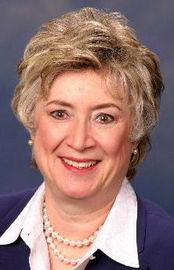
Pam Byrnes
Analysts say the reform could save Michigan taxpayers more than $3 billion over the next decade, but on the losing end of the deal are teachers who will pay more into pension funds.
That leaves some wondering whether Warren's vote of opposition will translate into campaign support from the Michigan Education Association heading into August, or whether Byrnes will earn the favor of voters for backing spending reform.
Byrnes was one of 14 Democrats who joined the House Republicans in Friday's vote to pass the legislation, which increases teacher retirement premiums and removes any guarantee of retirement health benefits. The bill was opposed by the MEA, Michigan Association of School Boards, the Michigan Association of School Administrators and other labor unions.
Byrnes said her decision to support the plan wasn't an easy one, but will save taxpayers hundreds of millions of dollars while helping to curb teacher layoffs and keep class sizes down. She also said it opens up jobs for new teachers who otherwise might leave Michigan.
The plan makes more teachers eligible for retirement by allowing employees whose age and years of service total 80 to retire early. It sets up a new trust designated for retiree health care and requires teachers to contribute 3 percent of their salary toward it starting July 1.
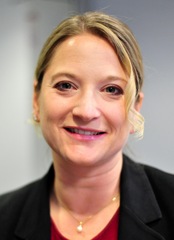
Rebekah Warren
Warren said the reform pushes out experienced teachers while taxing new teachers to pay for it. And on average, new teachers in Michigan make $16.80 an hour.
"I firmly believe that public education is the key to Michigan’s long-term prosperity, and continually attacking the very people we trust to educate and care for our children in order to balance the budget is not only unconscionable, it undermines a sensible strategy for our recovery," Warren said.
“What we have done is left our already struggling school districts with fewer veteran educators to guide our children and mentor new instructors, and diminished Michigan’s ability to attract and retain quality teachers."
As the state's fiscal crisis continues to linger, Byrnes said Michigan must look for more ways to reform government and modernize its tax structure to properly fund schools.
"It's unfortunate that so many lawmakers treat 'revenue' and 'reforms' as toxic words because they are more worried about their own political career than Michigan's future," Byrnes said. "We need to have a very frank discussion on funding schools in Michigan, instead of passing the buck from year to year. We have to take ownership of our school funding crisis and do what's right for our kids — no matter the political fallout."
Warren said the reform doesn't solve the retirement funding dilemma, nor does it help local school districts balance their budgets.
She said educators in several Washtenaw County school districts already have made concessions over the last few years to help balance district budgets. The reform legislation takes an additional 3 percent of their pay, and Warren claims it doesn't offer any savings to the local school districts. Rather, it puts added pressure on local negotiations, which now must take into account the additional cut to teacher compensation.
“The simple question is whether we truly believe that public education is fundamental to Michigan’s future,” Warren said. “If so, then we cannot rely on piecemeal plans and short-term savings. Instead, we must work together to implement a fair and progressive tax structure that recognizes the shift in our economy and ensures that Michigan’s working families do not unfairly bear the tax burden.”
Byrnes said the state can't keep laying off teachers while class sizes balloon.
"The solution lies in creating the reforms and finding revenues to give our schools the resources they need so our children receive the top-notch education to succeed at work and, more importantly, in life," she said.
"We all lose when schools don't have the resources they need," she added. "Our children lose out on the high-quality education they need to compete for good-paying jobs. Communities lose out on jobs because businesses will not locate to places without a highly educated workforce. Education is one of the major building blocks of the Michigan of tomorrow — we can't expect our students to excel unless we invest in education."
Warren argues alternatives could help the state and local districts save money without compromising the quality of teaching. Probably the biggest systemic impact, she said, comes from enhancing early childhood education. For every dollar invested in those programs, she said, seven are saved through decreased costs in corrections and human services.
Warren also said simple policy changes like requiring the Legislature to finalize the School Aid Fund budget by June 1 can help stabilize the school finance system. She argues a reduction in fiscal volatility during the school year will result in fewer over-expenditures, reducing pressure on the state.
"We fund schools with our least predictable revenue sources — the sales tax and the lottery — and we don’t tell them how much money they will have until well into the school year, making effective budgeting nearly impossible," she said.
“These solutions are out there, but it takes time, innovation and a commitment to investing in the people of this state. Policies like the one we passed Friday morning let everyone down — our children, our teachers and the residents of Michigan who are yearning for the visionary leadership that will guide us through this time of crisis.”
Washtenaw County Commissioner Jeff Irwin, a Democrat who is seeking Warren's seat when she leaves the House this year, also came out in opposition to the measures taken by the Legislature on Friday. He said the bill is yet another example of Lansing’s poorly-targeted budget reduction measures.
"Attracting jobs and lowering unemployment are key goals for Michigan, but our legislators are focusing cuts on the most important element of economic success: education," Irwin said.
Citing recent studies that examine the effectiveness of Michigan's tax incentives directed toward corporations, Irwin said education and quality of life factors far outweigh taxes as reasons that businesses choose to locate or expand in Michigan.
"Instead of cutting tax loopholes and corporate welfare programs that have been shown to be ineffective, the Legislature is once again targeting teachers," he said. "I can't understand protecting ineffective programs while cutting the most proven method of job attraction."
Ned Staebler, vice president of capital access and business acceleration for the Michigan Economic Development Corp., also took a stance on the issue. Staebler faces Irwin in the Aug. 3 Democratic primary.
"It is clear that right now priority No. 1 in Michigan should be creating jobs by diversifying and growing our economy," he said. "This bill is an example of the short-sighted policies that have caused this mess in the first place. In the name of 'reform,' we're overcrowding our classrooms and leaving our children unprepared to lead in the 21st century. Worst of all, this bill will likely not save local school districts money."
Staebler recently picked up endorsements for his campaign from two teachers union groups. Ann Arbor Education Association President Brit Satchwell announced that after a rigorous screening and review process, the AAEA and MEA recommended that their members support Staebler in the 53rd District state representative race.
The MEA is a self-governing education association representing more than 157,000 teachers, faculty and education support staff throughout the state. Ryan J. Stanton covers government for AnnArbor.com. Reach him at ryanstanton@annarbor.com or 734-623-2529.
Comments
ypsineighbor
Wed, May 19, 2010 : 3:29 p.m.
"Warren claims it doesn't offer any savings to the local school districts" I don't understand this comment. New teachers make much less than teachers of retirement age, but new teachers are the first to go when layoffs are announced. Therefore, this measure should reduce the payrolls of school Districts almost immediately. In addition, since new school employees would be placed in a hybrid retirement system that includes a defined contribution plan, it would seem this legislation would save Districts money over the long-run (I hear District pension contributions are expected to go from 16% to 20% of salary this year). Understood that teachers have given up a lot lately. No question there. But looking strictly at the numbers involved, I don't see the logic of Ms. Warren's statement.
Thinkin' it Over
Tue, May 18, 2010 : 4:41 p.m.
Before unions, teachers worked independently and belonged to "clubs." School districts provided separate and unequal pay scales for male and female teachers in identical teaching assignments. I keep wondering what kind of organization would union bashers suggest for teachers? Should teachers not collaborate and work together for equal rights and responsibilities? Should teachers be free agents without any sort of professional organization?
Ryan J. Stanton
Tue, May 18, 2010 : 4:35 p.m.
Sorry I was unable to jump back into this discussion yesterday. Things got pretty busy with the city budget coming down. Looks like some productive discussion took place and questions were answered anyway. Thanks to all. Note that the end of the story was updated to include 53rd District state House candidate Ned Staebler's stance on the issue as well.
Speechless
Tue, May 18, 2010 : 3:08 p.m.
Quoted from further above: "Un-Funded Union Liabilities are crippling this state and others." No, it's primarily Michigan's corporate welfare policies & programs which accomplish that trick. The interests of unionized teachers have come under attack because it represents a specific labor battlefield that the state's business interests have selected in their endless quest to roll back wages, salaries and worker rights throughout Michigan. Bagging the MEA constitutes a prized and sought-after hunting trophy in the corporate world. Meanwhile, as millionaire business leaders and their acolytes wail on about 'overpaid' school teachers, they demand we overlook their special perks & privileges in the state's tax laws. It should be hugely embarrassing to Democrats and to people of conscience that Granholm and Byrnes have chosen to play along with this nasty game. Additionally, under Michigan's fixed income tax rate, corporate execs pay the same 4.35% as rest of us. This represents an enormous, unfair personal subsidy provided directly to the wealthy and one which annually impoverishes our state government. In contrast, about 34 other U.S. states have more fairly chosen to use variations of the graduated income tax, which raises more funds and reduces the incentive to bash teachers' unions.
Me Next
Tue, May 18, 2010 : 12:12 p.m.
"Good paying jobs" in the private sector is what is missing. $1 invested saves $7 is hard to swallow as real evidence doesn't make it believable. Instead of funding "programs", cost/child assessment for State's Basic Ed Responsibility to make available should be the focus. Teachers should receive a salary & all perks - they can buy in the Free Market themselves like private sector workers. High degrees does not guarantee "high quality ed." We don't elect leaders, we elect servants to represent us. Perks at State & National levels need to end as well; excluding the real security servants. As for Corporate Welfare, Gross Gain from private sector jobs provided should determine. In the end both Corporate & Public have to make a profit.
DonBee
Tue, May 18, 2010 : 12:12 p.m.
@Lisa Starfield - http://teacherportal.com/teacher-salaries-by-state Shows Michigan is #4 based on total compensation (salary+benefits) and cost of living. Oh by the way - Teacher portal is "owned by the American Federation of Teachers. The other big teacher's union.
Lisa Starrfield
Tue, May 18, 2010 : 10:38 a.m.
Michigan does NOT rank #4 in teacher salaries in this nation. The average U.S. teacher earns $55,350 and the average MI teacher earns $57,958. There are 13 states where the average teacher salary is greater than ours. (source: http://www.nea.org/edstats/ see 2009 data)
Janelle Baranowski
Tue, May 18, 2010 : 10:23 a.m.
This reform is a start, although it leaves much to be desired. I would encourage readers to check out a breakdown of Saline teachers' contract, done by the Mackinac Center for Public Policy. Each district is different, but it gives you an idea of what these contracts really look like. http://www.mackinac.org/12600
Do not taunt Happy Fun Ball
Tue, May 18, 2010 : 6:13 a.m.
Un-Funded Union Liabilities are crippling this state and others. Michigan teachers have the 4th highest salary in the country. Teachers work about 1300 hours per year. Teachers pay $0.00/yr for their family healthcare. There are so many restrictions on how and when they 'work' as to be laughable. The MEA has strong-armed the Union filled school boards long enough. Everyone else in Michigan has taken a 20-30% paycut, lost half their benefits, or been laid-off. If the MEA would allow for competitive teacher salaries - Classroom sizes would not 'balloon' because we would have more teachers (See any private school for comparisons.) These two candidates are 1970's re-treads whose policies and votes got Michigan to where it is today - 17% unemployment and the Country's worst climate for job investment. Vote for Michigan's future, not some politicians future.
Stephen Lange Ranzini
Mon, May 17, 2010 : 11:52 p.m.
This plan was proposed by Gov. Granholm in March as a means to close the states structural budget deficit, but it only closes the deficit with smoke and mirrors using money from the state pension fund to make the huge payouts required and burying the future liability being created by the plan in the liabilities of the state pension fund. As we in Ann Arbor know, these buyout schemes bury huge future losses with the hope that the stock market rises to rescue you from your generous buyout of retirees. Any student of pension fund accounting knows that these buyouts crystallize potential liabilities as actual liabilities and the incentives to retire actually add large amounts of liabilities to the plan, with the result that the pension fund becomes under funded. Accounting trickery reduces your stated annual expenses until the tab comes due in future years and while this short term phantom boost to income appears to, it doesn't actually balance a budget and when the dust settles youve retired your most experienced workers and kicked the can down the road to the next governor (or city council) and made the ultimate deficit a lot bigger. Yikes! As always, Gov. Granholm didn't want to get to the root of the problem and do the right thing, so she came up with a temporary patch! Oh, I should also mention that the City of Ann Arbors pension fund and retirement fund combined deficit as of June 2009 had increased to $190 million? Our early retiree buyouts didn't cost us a thing??? See http://www.a2gov.org/government/financeadminservices/accounting/Documents/CAFR%20Main%20FY2009.pdf - see pages 85 & 87 of the pdf and note the sum of the UAAL in notes 12 and 13. I wonder what the states retirement fund deficit will be after the bill for *this* buyout comes due? Ouch.
Speechless
Mon, May 17, 2010 : 9:15 p.m.
Quoted from further above: "My compensation has dropped by 3% so that I can support my retired colleagues in need of health care. I am happy to do that." If teachers want to do that to help former teachers, that's great but it should be strictly voluntary, not mandated by the state government. Once again, Commissioner Jeff Irwin indicates that this same goal for teachers can be achieved by fixing tax loopholes and ending those corporate welfare schemes which have failed to produce economic results for Michigan. Let those who are better off pay for it, not people who need to work for a living. In the upcoming August primary, Rebekah Warren's campaign will no doubt receive additional support from the MEA and other unions. Meanwhile, I'll bet that this recent vote in Lansing provides a respectable boost to Pam Byrnes' corporate campaign donations, including some from sources traditionally very loyal to Republicans and to narrow business interests. A quote from the previous comment: I don't get why some people want to continually target corporations for tax hikes when corporations provide jobs that are paid for through THEIR money (or at least the money of their stockholders)...." A progressive, graduated income tax targets individual income, not corporate income. In addition, it's expected that eventual implementation of a graduated tax will lead to reduction in the small business tax.
Hornet
Mon, May 17, 2010 : 8:15 p.m.
@Bonovox - kudos to you for being rational, I know many teachers think like you do and it is refreshing to hear your voice instead of the union brainwashed types like @Lisa Starrfield. I have not been a fan of Pam's voting record, but in this case she did the best thing given the options. Are there many other areas for the legislators to target besides teachers? Yes, how about all the other special interests who work for our government? I don't get why some people want to continually target corporations for tax hikes when corporations provide jobs that are paid for through THEIR money (or at least the money of their stockholders) while government provides jobs paid for through OUR money.
rcastentman
Mon, May 17, 2010 : 8:14 p.m.
With the MEA still resisting much needed reforms, especially in the areas of teacher contributions to their health care and retirement packages, I'm not sure an endorsement from the MEA is going to have a positive impact for Ms. Warren. Some would call it a curse, so good luck with that! On the other hand, over the past several years Pam has been a staunch supporter of public education. While the retirement incentive turned out to be less than anyone really wanted - at least it's something...and it's something in an election year. Thanks Pam for doing your best and I'm looking forward to supporting you this fall.
Diagenes
Mon, May 17, 2010 : 8:14 p.m.
BonoVox, thank you for the insight. I am happy there are teachers like you out there.
BonoVox
Mon, May 17, 2010 : 7:58 p.m.
Quoting from above Excuse me, but Michigan just did raise taxes.... on our teachers! As a public school teacher I am compensated with a combination of salary and benefits. My salary is not welfare, my raises are not tax refunds and a change to my benefit contribution is not a tax. My compensation has dropped by 3% so that I can support my retired colleagues in need of health care. I am happy to do that. In fact, as a whole the bill we are actually discussing will allow more teachers to volunteer to retire with more money in retirement (which they will probably spend in Michigan), shore up retiree health care funding (which will most likely increase with more retirements), and allow younger teachers with families to not be forced to look for work out of state (thus helping to keep property values up and brighten our state's future). This is an example of what sensible, bi-partisanship looks like (a proposal from a Democratic governor, introduced into legislation by leading Republicans and carried through by a pragmatic Democratic leader). Way to go Pam Byrnes.
Speechless
Mon, May 17, 2010 : 7:21 p.m.
Quoted from comment above: "Given the current (and apparently near future) economic situation in Michigan, raising taxes for anything is probably out of the question." Excuse me, but Michigan just did raise taxes.... on our teachers! Meanwhile, the country club millionaires living in our state read about this vote in Lansing and then laugh all the way to the bank! Michigan's fixed-rate income tax needs to end, and that's hardly an unrealistic prospect. Most U.S. states have used a graduated state income tax for years and years. In these states, the wealthy pay more, the working people pay less, and it works out much better for their states' annual budgets. Also, take note that County Commissioner Jeff Irwin's ideas for the immediate future do not involve raising new taxes. He states in the article that Michigan should close tax loopholes, as well as end those forms of corporate welfare which put money in the pockets of the comfortably well-off but do nothing to improve the state's economy. Morally and economically, that would be a much better approach to resolving the current budget crisis than going after Michigan's teachers who in sharp contrast do significant work for a living.
BonoVox
Mon, May 17, 2010 : 5:05 p.m.
Regarding the defined benefit plan, teachers hired after 1990 contribute between 4%-6% of salary. The formula is available at Michigan.gov/ office of retirement services. Congratulation to Pam Byrnes for showing some political courage and supporting an innovative idea. Given the current (and apparently near future) economic situation in Michigan, raising taxes for anything is probably out of the question. The MEA needs to get out of this paradigm. As a public school teacher, I fully support Representative Byrnes and her vote, as do many of my co-workers. We need responsible, thoughtful, and courageous leadership in these difficult times. I am a Democrat and I will be backing Byrnes in the coming election, specifically because of this stance.
aa3lw
Mon, May 17, 2010 : 4:49 p.m.
Finally, a legislator who pushes for reform! It's about time someone puts aside the political bull and does something that will actually help Michigan.
DonBee
Mon, May 17, 2010 : 4:32 p.m.
Mick52 - The system in question is a defined benefit plan with full dental and medical support. The school districts were taxed to fund it, but not the teachers directly. This year (2010) the tax was 20 percent of the teacher payroll. This fall teachers will have to pay 3 percent of their salary into the program in addition to the tax on the school districts.
Speechless
Mon, May 17, 2010 : 4:31 p.m.
The very last paragraph in the article above, quoting County Commissioner Jeff Irwin, finally cuts to the chase: "Instead of cutting tax loopholes and corporate welfare programs that have been shown to be ineffective, the Legislature is once again targeting teachers," he said. "I can't understand protecting ineffective programs while cutting the most proven method of job attraction." Again one must ask, why do the teacher bashers usually remain so quiet when legislated corporate pork draws many millions away from the state budget? And, for that matter, when corporate bailouts skim billions from the federal budget? Must the MEA haters behave as if they serve corporate masters? Why stay so silent when country club millionaires draw public welfare, only to so energetically smear school teachers as greedy and lazy? Pam Byrnes' actions are cowardly, not worthy of our respect. Furthermore, Michigan's state budget problems can be fixed by way of a state constitutional amendment that will allow a graduated income tax in Michigan. State Senator Alma Wheeler Smith and others know this and have begun developing plans for tax reform. Under a graduated tax, most working people would actually pay less they do currently, while others (including unionized teachers at the higher end of the pay scale) will pay somewhat more. This is a much more fair arrangement that would also relieve the state's chronic, annual fiscal crises. Otherwise without such tax reform these budget battles promise to keep getting worse every year, guaranteeing us a front row seat in Michigan's continuing race to the bottom.
samshoe
Mon, May 17, 2010 : 2:53 p.m.
If Pam Byrnes continues with this approach to solving Michigan's numerous budget problems she will have my vote come August!
Lisa Starrfield
Mon, May 17, 2010 : 2:43 p.m.
Rep Byrnes, you control the purse. We could raise taxes and fund our schools properly. Instead, you want to fund schools on the backs of teachers alone. Many of the teachers who retire will not be replaced. Class sizes won't stay down because of this either.
xmo
Mon, May 17, 2010 : 2:18 p.m.
Finally Pam Byrnes votes the way to save the state! Its hard to keep voting for things that cost the state so much money in our time of fiscal crisis. Retiring older expensive employees and hiring newer cheaper employees is what every company is doing. Are teachers so special that they shouldn't be treated like everyone else?
Mick52
Mon, May 17, 2010 : 2:15 p.m.
Ryan I like your articles, I think the are the best on aa.com. This is a good article, its the kind that tells us who to vote for. In this story, I would like to know how much teachers were contributing into their pension funds before this legislation. "...removes any guarantee of retirement health benefits." No guarantee, but a possibility? This is a tough pill to swallow. If you offer early retirement to people less than Medicare age, why will they take it with no HC assistance? This is troubling. Knowing how the system is set up would help us balance our opinion on the law. For example, if teachers pay nothing and have a defined benefit pension plan this should have happened long ago. If they have a defined contribution plan however, this could be troublesome for teachers. This bill does not force retirements, it makes it easier for those who choose to. What's the big deal with that? It increases retirement contributions. From what to what? If its to what most of us are paying, its appropriate. Based on the information here, Ms. Byrnes is the candidate of choice while Ms Warren should not hold any office. Three positive points noted by Ms. Byrnes: "will save taxpayers hundreds of millions of dollars while helping to curb teacher layoffs and keep class sizes down." While Ms Warren says: "the reform pushes out experienced teachers while taxing new teachers to pay for it." Duh. Social Security, all kinds of insurance are funded this way. When you pay your SS tax and premiums, it goes to pay for everybody. This appears to be no different. Later on, someone will be paying the costs for the new teachers. Then this: "Byrnes said Michigan must look for more ways to reform government and modernize its tax structure to properly fund schools." Yeah, sure. Give us some examples when you say this. I would say Michigan has looked, and acted, on a way to "reform" government and modernize its tax structure by passing this law. I am beginning to hate the word "reform." Used too much. Then this lulu: "and continually attacking the very people we trust to educate and care for our children in order to balance the budget." Attacking teachers? Continually? This is not an attack, its a change in benefit funding. The attacks we should reserve for the teachers who pass kids who cannot read, write and add. Many of whom we are hoping will retire to be replace by new younger teachers. Pension and health benefit plans are wrecking severe damage on budgets nationwide. This is going to have to happen. Ms Warren is hoping for MEA support, thus it appears her position is for her benefit rather than the constituents.
baitm
Mon, May 17, 2010 : 2:01 p.m.
pam byrnes will get what she deserves. people looking for real solutions are needed, not self-serving traitors! did she vote to cut her own lifetime healthcare benefits? maybe she won't need it in her next job.
Top Cat
Mon, May 17, 2010 : 12:48 p.m.
Considering the party she belongs too, this was a courageous stand for Pam Byrnes and congratulations to her for it. Warren seems to think that if you educate them the employers will come. They don't.