

'Gateway to Ypsilanti': Settlement reached to renovate Parkview Apartments

Amanda Wallace's granddaughter, Leiasha Wallace, is pictured on the family's front porch in the Parkview Apartment complex.
Tom Perkins | For AnnArbor.com
Amanda Wallace lives in one of the roughly 30 remaining occupied apartments in the 144-unit Parkview Apartments on the south side of Ypsilanti.
The housing project is often referred to as the “Gateway to Ypsilanti” because of its proximity to the city's border and location off I-94 at Hamilton Street. But Wallace has a different nickname.
“This is the ‘Gateway to Hell,’ that’s what this is,” she said.
Those who have stayed - living in an otherwise boarded up and abandoned complex - are the last holdouts since conditions began seriously deteriorating in the early 2000s under the management of the Parkview Non-Profit Association. Residents past and present have similar complaints - sewage back-ups, plumbing problems, mice, animals in the ceilings, holes in the walls and ceilings, flooding and mold.
But Parkview's days as a rundown housing complex are likely nearing an end. U.S. District Judge Victoria Roberts approved a settlement this month between the Parkview Tenant’s Association and the U.S. Department of Housing and Urban Development, allowing an ambitious renovation plan to move forward.
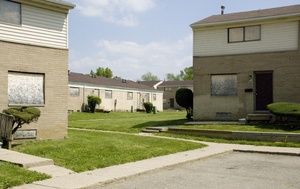
The Parkview apartment complex has seen occupancy drop over the years.
Tom Perkins | For AnnArbor.com
HUD will transfer ownership of the property to the Ypsilanti Housing Commission under the agreement, which brings to a close six years of litigation over the complex’s fate. Baltimore-based Chesapeake Community Advisors Inc. will invest an estimated $12 million to renovate the complex into a mixed low- and middle-income community.
Chesapeake will receive $2.7 million - approximately $40,000 per unit - in immediate HUD grant money and a matching Federal Housing Authority loan to renovate half of the 144 units. The company is seeking federal low income housing tax credits and private investments to help renovate the second half.
HUD agreed to pay $700,000 in back taxes, and the city housing commission will pay the taxes from 2005. In addition, HUD agreed to pay all outstanding utility bills and other costs associated with the property.
The City Council must now vote to approve the housing commission's acquisition of the property.
“We have a real need for affordable housing, to fix up blighted properties and to improve our image, and renovating Parkview will do all three,” Ypsilanti Mayor Paul Schreiber said. “And anytime we get $6 (million) to $12 million invested in Ypsilanti, I’m all for it.”
Residents will be relocated beginning this summer, and Chesapeake hopes to begin renovations sometime this fall. The first 68 units are expected to be ready for occupancy by fall 2011.
HUD will provide the housing commission with 144 Section 8 housing vouchers to assist current or future Parkview residents, or to place those in its voucher inventory. Residents who have lived in Parkview on or after July 30, 2007, will receive the first housing vouchers and relocation assistance and will have the option to move back into the complex following renovation.
The current management company, which is sub-contracted by HUD, will no longer run Parkview. Instead, the city housing commission will form a new non-profit to oversee the complex, and officials have said there will be a tighter screening process to curb crime issues that have been prevalent in the community.
A long litigation history
The origins of the deterioration and litigation process lie in the Parkview Non-Profit Association's failure to meet a number of HUD requirements and codes leading up to 2004, officials say. That year, the Ypsilanti Community Utilities Authority threatened to shut off water for non-payment.
HUD paid enough of the bill to keep the water on and began the foreclosure process on Parkview Apartments. HUD began soliciting offers through a program in which low-income properties are offered to local entities at a reduced rate.
The Ypsilanti Housing Commission and Ypsilanti City Council both submitted plans for the property. Bob Gillett, director of Legal Services of South Central Michigan, the legal team representing the Parkview Tenant’s Association, said the housing commission's proposal went further to provide assurances it would accommodate low-income residents.
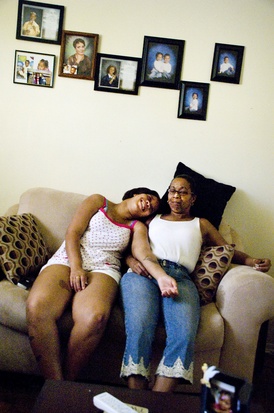
Amanda Wallace is shown with her daughter, Jazmin, in their Parkview home.
Tom Perkins | For AnnArbor.com
The commission proposed using The Chesapeake Community Advisors.
“From the beginning, our legal team was impressed with the quality of development plan they proposed and the quality of dialogue they had with the commission and tenants,” Gillett said.
Schreiber, then chairman of the housing commission, said the commission attempted to acquire the apartments because the Parkview Non-Profit Association was doing a poor job of managing the property.
“We could see it was not being run well,” he said. “It was a blight on the community, there were crime problems and there were image problems for the city.”
But the association sued to stop the foreclosure. The association denied any wrongdoing in its suit and placed the blame on HUD. A judge dismissed the case in February 2005.
HUD then began the process of transferring the property to the city housing commission, but several disputes arose between that board and the City Council. The commission’s board is appointed by the mayor and is approved by the City Council.
Schreiber said the City Council proposed building condominiums as it pushed for greater homeownership in the city and filed a formal objection to HUD choosing the city housing commission's plan.
HUD reconsidered and again chose the commission, but the city - which must approve any Ypsilanti Housing Commission land acquisition - delayed action past a HUD-imposed deadline. Schreiber said the disputes prompted HUD to give up selling locally.
The 'Daredevil Landlord'
Nervous over the City Council and housing commission’s inability to cooperate, HUD opted to sell the property at a public auction to the highest bidder, Gillett said.
That bidder turned to be New York City-based developer Emmanuel Ku, a self-described “daredevil landlord.”
Gillett said the tenant’s association sued to block the sale after researching Ku and discovering a lengthy history of code violations and tenant issues, and reports alleged he had 1,400 outstanding code violations from his New York City properties alone. The suit, filed in fall 2005, stayed in the legal system until March 2006 when HUD offered to cancel the sale if the tenants canceled the suit.
Concurrently, the Parkview Non-Profit Association, which still owned the property, filed for bankruptcy.
Once the bankruptcy proceedings came to a close, HUD became the mortgagee in possession.
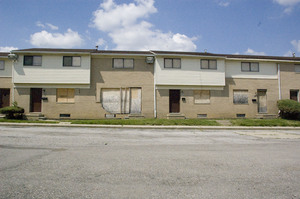
Parkview Apartments will soon receive substantial renovations.
Tom Perkins | For AnnArbor.com
HUD began preparing to publicly auction the property instead of selling it to the housing commission. The agency contended it was unable to transfer the property to the commission because the Deficit Reduction Act of 2005 prevented it from transferring the property for below market value.
The tenant's association sued to block the auction, taking the position that the Parkview case began in 2004 and could be grandfathered. That set up the case that would ultimately lead to this month's settlement.
“There was suddenly a ‘get as much money as possible out of the sale,’ approach and HUD said they no longer had authority to make the sale,” Gillett said. “Then things just kind of laid there for a while.”
By early 2007, Rep. John Dingell’s office got involved, contacting HUD nearly weekly in an effort to have the property transferred to the Ypsilanti Housing Commission.
Dingell said he intervened because the project is one of the few sources of low-income housing in Ypsilanti.
“Now, more than ever, the residents of southeast Michigan need an affordable housing resource,” Dingell said. “People have left Parkview because HUD, up until now, did little or nothing to keep it in habitable condition. I believe that once the complex is refurbished, which will require a bit of work, it will attract new residents.”
The 2008 Foreclosure Protection Act included language freeing HUD from having to seek market value in the Parkview Apartments case.
Gillett said the legislation was “tremendously important” - but still didn’t bring the swift resolution that local officials hoped for in the case.
During the six years of litigation, occupancy fell from roughly 125 to under 30. Tenants also started receiving multiple notices that they must move and could lose their Section 8 assistance if they didn't.
The tenant’s association filed a motion last September asking HUD to fill the apartments that could still be occupied. Roberts ordered HUD to do that and to meet with the tenants to negotiate.
‘Light at the end of the tunnel’
On May 20, a more promising chapter in Parkview’s story began when Roberts signed the approval of a settlement.
“Obviously this is not your average landlord-tenant suit,” Gillett said. “I think overall we’re sorry that this took six years, but in terms of benefits of this settlement to the tenants and city, it’s great and is everything that we hoped for.”
Tenants say it's been a frustrating situation - but they're hopeful things will soon change.
Wallace, who has lupus, said the constant stress only worsens her health.
“I am so tired of the constant harassment from the management and not knowing if I’m going to be evicted,” she said. “I’m at the end of my rope. We’ve suffered long enough over here.”
Last Thursday, a copy of the settlement agreement arrived in resident Denzil Morris’s mailbox. Morris said she's frustrated after constantly hearing new stories over the last six years, but is becoming more confident she'll receive her Section 8 voucher this time.
Morris said a pipe inside her apartment burst over the winter and flooded her basement. She now owes more than $1,000 for the repair bill.
“I can see the light at the end of the tunnel, and it’s a big, old bright number eight,” she said.
Tom Perkins is a freelance writer for AnnArbor.com. Reach the news desk at news@annarbor.com or 734-623-2530.
Comments
Nina
Mon, Jun 7, 2010 : 12:12 p.m.
Actually, you do have a voice in this. You can attend the City Council meetings and speak your concerns. And, if crime is a big concern in Ypsilanti, perhaps residents should consider actually voting YES on police millages... It's really disheartening to read comments such as "send them to Detroit," and implying it would "handle the problem." With the state of DPS, it would be a terrible crime to send Ypsilanti children to that district. Additionally, arguing for the removal of low-income housing in Ypsilanti is just plain evil. I think the conjunction of low and mid-income townhomes will be a success in the gateway. Pessimistic comments about its inherent failure creates a huge disparity between those of us who are trying to help embrace and resurrect a community in Ypsilanti and those who'd rather stagnantly b&m about its problems.
Monica
Fri, Jun 4, 2010 : 11:45 p.m.
My Uncle has lived in this community for over 30 years. Half of the commenters have NO IDEA what the heck they are talking about. First, this complex was originally a co-op, where the original residents back in the 1970's co-owned the townhomes with the Management Authority. Also the original agreement is if they moved out, residents would receive a portion of the money they paid for rent, to invest in a home. My late Grandfather and Grandmother paid hand over fist for their townhome and then some, until the day each of them passed. My Uncle took care of each of them, until they passed. As a kid, I pretty much lived part-time at their home in the 1970's. I know first hand that Parkview was clean, nice and enjoyable to live within. Management changed hands in the early 1990's and things began to go downhill. It was all about getting folks with the section 8 voucher and not Section 236 that required the resident to work or be retired, with a set portion of their income going to rent. By 2000's the complex had turned into a drug heaven. At that point, I had to move my Grandma to senior health care housing BUT my Uncle, who took care of both my Grandpa and Grandma...continued paid the rent and kept the townhouse. It has taken, it seems. like 20 years for the remaining residents to get what THEY are due. Most of the remaining residents are like my Uncle (now in his late 60's), of the original co-op that DESERVED to get something out of what the mismanagement of the complex, did to them. The latest management company tried to do everything possible to screw the remaining residents out of what they PAID years for. In my opinion, after 30+ years of payments on a supposed co-op...he deserves a home but, at least he will be able to get a subsidy to maintain in affordable housing. This is a blessing and I am sure that Grandpa and Grandma are smiling from heaven. Thank you Mayor Schreiber and Congressman Dingell for finally resolving this situation for the remaining residents, including my Uncle.
Monica
Fri, Jun 4, 2010 : 11:42 p.m.
My Uncle has lived in this community for over 30 years. Half of the commenters have NO IDEA what the heck they are talking about. First, this complex was originally a co-op, where the original residents back in the 1970's co-owned the townhomes with the Management Authority. Also the original agreement is if they moved out, residents would receive a portion of the money they paid for rent, to invest in a home. My late Grandfather and Grandmother paid hand over fist for their townhome and then some, until the day each of them passed. My Uncle took care of each of them, until they passed. As a kid, I pretty much lived part-time at their home in the 1970's. I know first hand that Parkview was clean, nice and enjoyable to live within. Management changed hands in the early 1990's and things began to go downhill. It was all about getting folks with the section 8 voucher and not Section 236 that required the resident to work or be retired, with a set portion of their income going to rent. By 2000's the complex had turned into a drug heaven. At that point, I had to move my Grandma to senior health care housing BUT my Uncle, who took care of both my Grandpa and Grandma...continued paid the rent and kept the townhouse. It has taken, it seems. like 20 years for the remaining residents to get what THEY are due. Most of the remaining residents are like my Uncle (now in his late 60's), of the original co-op that DESERVED to get something out of what the mismanagement of the complex, did to them. The latest management company tried to do everything possible to screw the remaining residents out of what they PAID years for. In my opinion, after 30+ years of payments on a supposed co-op...he deserves a home but, at least he will be able to get a subsidy to maintain in affordable housing. This is a blessing and I am sure that Grandpa and Grandma are smiling from heaven. Thank you Mayor Schreiber and Congressman Dingell for finally resolving this situation for the remaining residents, including my Uncle.
Ronn
Fri, Jun 4, 2010 : 1:32 p.m.
No one likes the boards on the building in parkview but people need somebody to blame. Let's start with the politicians that are selling these people false hopes and dreams. If politics could be taken out of this housing situation then maybe progress can be made and seen. Residents dont deserve to be a pawn in this shuffle board game or the three card moty thats being played. Parkview residents are a part of this community and as a community we have to stand behind them until something is done. You dont have to live in parkview to stand behind the residents because the surrounding area and homes feel the same pain and see the same eye sore coming and going as they do. We have to remove are petty difference's and stand strong behind these people that are fighting for a descent place to live. One way that it should always be done is by voting for people that will stand up and fight the good fight for the people that vote them in. Someone will come save us all from the polictial stuff thats keeping people from living in places simple TLC can bring back to life. We all live together here on the southside and I would stand up for parkviews reidents against the polictical hoopla. We dont ever have to like one another but that shouldnt stop people from standing together for a common cause. Librity Sqaure are having housing issues and as a community we all should stand behind them and ask the people that we voted in to work hard at helping us help to improve and maintain affordable, safe, housing. Parkview and Librty Sqaure are needed for residents that need low income housing so write your community leaders and demand help. FAST! I wish the residents of parkview the very best in housing issue. Amamnda and Denzell and other residents have been trying to do the right thing but politics is crushing any hope in the future with nothing being done to help them when time of need has come. As a community, we have to stand by their side and not toe to toe but back to back and be heard that as a community we are not happy and May God bless us all and pray that the courts do the right thing by the people for the people. Parkview, Librty Sqaure keep fighting the good fight, and your community are behind Ya'll 110%..
ronn oneal
Fri, Jun 4, 2010 : noon
The only holes Amanda Wallace HAD in her wall's are the ones put in there during domestics with her Boy friend and Son fighting and punched a hole in the wall's. Denzel's unit had the pipes burst because she didnt pay D.T.E. and they froze and burst because of no heat. The Pipes where repaired by outside contractor and after the units heat was turn on the same day, they wait until the wall's was dry enough to repair damaged dry wall and paint. The reporter that wrote this was on the property and could have easily went into her unit and seen that everything was repaired and painted. Also. if he would have investigated the story that was told to him he would have found out that a large percentage of what said to him was the 100% truthful. What do you expect coming from convicted felons and people that have more 911 calls to thier house than they have applications filled out for employment.`
angela
Fri, Jun 4, 2010 : 11:38 a.m.
As i posted on the article about liberty square Allow the voters in Ypsilant even Washtenaw County to have a say as what to do with places like these. Ypsilanti has such a bad image because of these places.
angela
Fri, Jun 4, 2010 : 11:32 a.m.
its not the low income houses that are causing the crime and the problems, as I said the neighborhoods dont have to be like this just because the people living there are poor. So something should be done with the people who are causing these problems over and over again. Its not fair that the people who do want progress have to deal with problems such as this. The other responses are correct if something isnt done with the ones causing the problem then no matter how spiffy you make the complex it will again become a dump. Eventually other peoples money will run out and there will be nothing left to once again rebuild this complex.
Woman in Ypsilanti
Thu, Jun 3, 2010 : 11:28 p.m.
@angela Not at all. They will be renovated and, from what I understand, will have both low and middle income housing. Poor people have to live somewhere, it benefits the community to provide decent low income housing. We do not have to accept crime and blight.
angela
Thu, Jun 3, 2010 : 6:52 p.m.
woman in ypsilanti said she loves the diversity, good for you your better than the rest of us. Most of us would say "lets get rid of crime and blight, lets clean up our community and make this a better place for us all to live". Just because someone is poor doesnt mean the neighberhoods have to be that way. Are you suggesting we accept these crime infested drug infested bug infested dumps just because of the wonderfully socio-economic diversity.
Jamie
Thu, Jun 3, 2010 : 3:08 p.m.
I think these should also be condemned like the other ones off of Rawsonville. I used to deliver pizza, and refused to deliver to this one or the one on Rawsonville due to what I felt as danger. @dading, I agree they should just bulldoze them both.
jondhall
Thu, Jun 3, 2010 : 2:16 p.m.
I must say I agree with almost all of the comments, I like the bulldozer idea best! All for the bulldozer say aye! Private enterprise works best every time, give these tenants vouchers and let them move on!
pseudo
Thu, Jun 3, 2010 : 11:31 a.m.
I was there for the presentation at the City Council meeting. I think this is a fabulous opportunity. @it is not Liberty Square by any standard. The people there will be relocated, their units will be rehabilitated and they will have to complete some training to return. The remaining units are to be mixed income and will have more conventional financing and if that financing doesn't happen, then they will be torn down as suggested in other comments. Gateway is probably a faulty headline - I agree but the plans for the property are a huge win for everyone. HUD violated the rights of the residents there and, frankly, got slammed in court because of it. Bring! Way to go Bob and Krista!!
jjc155
Thu, Jun 3, 2010 : 11:14 a.m.
"Gateway" eh? Nice I just spit coffee on my computer screen, LOL I understand that they are some back taxes being paid, which is great in this cash strapped city, but doesnt moving the complex from private ownership to the housing authority then take it off of the city tax roll? Just look at the "successes" of the Ypsilanti Housing Commisson to judge the future of this complex. I'm calling it, with in 5 years of completion it will be right back to where it is now. Atleast now it is not a drain on the PD/FD having to run calls there all the time, but it will be soon, LOL
Woman in Ypsilanti
Thu, Jun 3, 2010 : 11:11 a.m.
One of the reasons I love living in Ypsilanti is that it actually is a community with a diverse population. Part of that diversity is socio-economic. I am very supportive of having low-income housing options and am very pleased to hear that this development is going to be renovated.
Rasputin
Thu, Jun 3, 2010 : 9:55 a.m.
Consolidate the remaining inhabitants and renovate the occupied buildings, Bulldoze the rest and build a park. I have to agree with other comments, this is hardly a gateway. I only see these units as i LEAVE Ypsilanti via I-94. The water tower is the gateway to Ypsilanti.
Hoser
Thu, Jun 3, 2010 : 9:38 a.m.
I relocated from Livonia because of a job transfer and was very impressed how Ypsilanti and its township was changing for the better. It seemed like those lovely eyesore ghetto shacks were finally going to get closed down. It only brought the crime element into the city and property values down. Why is there even a need to keep building these ghetto's up and in a few years start all over again. Why not try to upgrade the city and bring in people who want to improve themselves and their communities. I think with all the empty homes in Ypsilanti and suburbs there is enough homes for those who want to stay and become residents. Since all the major cuts in city budgets how will the police departments handle the increased crime this will again bring into the neighborhoods? This is a bad move. I guess if they lock the fence around it at night, perhaps they can keep the crime element contained? Time to change the City leadership.
gramaz
Thu, Jun 3, 2010 : 9:27 a.m.
I wish I was a multimilliomaire; I would have bought the complex to turn it into a snow boarding hill & greenery park. The children at Perry School could have a lovely veiw too Detroit leveled their huge ghetto on Joy rd. it's now a park.
angela
Thu, Jun 3, 2010 : 9:10 a.m.
At what point do we realize its not the low income housing that tears itself apart, its the people in the low income housing that tear it apart. When people dont earn what they have they treat what they have like junk. I live in Ypsi and just like Liberty Square this place is a dump and should be torn down. Blocks and blocks of unoccupied houses in detroit, why cant we move people who need low income housing there and try to rebuild ypsi back to what it once was instead of rebuilding areas that we all know within a few years will look just like it does now. Maybe we should try to handle the problem instead of putting a silk hat on a pig.
Davidian
Thu, Jun 3, 2010 : 8:53 a.m.
This isn't low income housing! Every time I drove by, the lot was full of Lincolns, Cadillacs, Jaguars, and Hummers. I make 80k a year and I can't afford cars like that.
krc
Thu, Jun 3, 2010 : 8:38 a.m.
I heard a rumor about this place. It was supposedly owned by a church, who decided not to renovate but to wait until the remaining residents to move out and just lock the gates because it was a violent and drug-infested place and this was their way of helping to clean up Ypsi. The fence sure is attractive.
glimmertwin
Thu, Jun 3, 2010 : 8:13 a.m.
In a few years we will be reading this same article again, but regarding the renovated buildings. Government subsidized anything rarely work.
lumberg48108
Thu, Jun 3, 2010 : 8:13 a.m.
Does it matter what is done? In a few years it will fall apart and we will be right back to where we are now! Subsidized housing (in Ypsi) does not work well folks! And those visiting Ypsi or leaving Ypsi via I-94 all get to see that before they enter the free way!
drew_blows
Thu, Jun 3, 2010 : 8:05 a.m.
No more low income housing in Ypsilanti/Ypsilanti Township. Low income housing brings down the quality of life.
RuralMom
Thu, Jun 3, 2010 : 7:19 a.m.
Have to say when they renovated it years ago and named it Gateway, my husband and I said to one another "Gateway to what, Gateway to Hell?". Not sure if this change will help bring it up to par or finally put it to rest. Way too many issues at that complex.
Soothslayer
Thu, Jun 3, 2010 : 7:10 a.m.
this is the best possible outcome for this property, remaining residents and future applicants. perhaps with renovation will come an improved outlook on life as well.
dading dont delete me bro
Thu, Jun 3, 2010 : 5:25 a.m.
...and "gateway to ypsilanti"? what a wonderful eyesore. it's on the way OUT of ypsilanti. isn't a gateway usually a way IN?
dading dont delete me bro
Thu, Jun 3, 2010 : 5:23 a.m.
is this the city's liberty square? bulldozer here too.