

Two sides seek to educate voters on Ypsilanti tax proposals as election nears
Two organized campaigns supporting and opposing the City of Ypsilanti’s proposed income tax and Water Street debt retirement millage proposals have emerged and are actively campaigning in the city.
They say educating the average voter -- who may not know a lot about either proposal -- is the key to passing or stopping the measures. The campaigns have until a May 8 vote to convince voters that the taxes will help or harm the city.
“I’m finding people don’t know too much about the proposals,” said Beth Bashert, chair of the Save Ypsi Yes campaign that supports the taxes. “People close to city politics knew this was coming for a while, but the general voter may not know about it at all.
“It is a massive educational effort.”
Conversely, Peter Fletcher, spokesman for the Stop City Income Tax Campaign (SCIT) group also underscored that there is a lack of understanding about the proposals but said it is because a lack of information from the city. He said that is leading people to oppose the measures.
“Usually the voters on the fence are the ones who don’t understand the proposals,” he said. “It’s human nature: If you don’t understand something, then you say, ‘No.’ That’s why the proposals need to be more carefully reviewed and analyzed. They aren’t a 'bad idea,' they’re mysterious ideas, and the mystery does not justify an affirmative vote.”

Beth Bashert
Tom Perkins | For AnnArbor.com
With several of their own organizational meetings complete, the campaigns are turning their attention to four city-sponsored informational presentations being held in March and early April.
Ypsilanti voters are being asked to approve a 1 percent income tax that would also tax non-residents working in the city .5 percent. Also on the ballot is a Water Street debt retirement millage. The ballot language is for 4.7085 mills, but the city says it likely lower that millage to 2.3543 mills. A resident with a home with a market value of $100,000 would then pay $127 in taxes instead of $235 in 2013. By 2017, that millage would grow to 3.5 mills, or $178 annually for the same home.
Without approval of both measures, city leaders say they will be forced to make drastic cuts and the city will be left in financial ruin.
Bashert contended that a five-year financial plan City Council designed to address the situation uses conservative numbers and will have the city out of its financial crisis in 2017.
The income tax will bring in revenue from 6,000 employees at Eastern Michigan University who aren’t currently on the tax rolls, Bashert said, and the average person on a fixed income would be exempt.
Bashert said she understands the challenge in getting this type of information out to the average voter and fully convincing them that the taxes will save Ypsilanti from insolvency.
“We’re in an anti-tax culture and everybody is strapped. I understand that, and nobody wants to pay more anything,” she said. “The challenge is explaining a complex issue in very simple terms about why approving the proposals is important even though we may not want to.”
But Fletcher hit on the SCIT group’s main talking points.
“We just don’t believe there has been any sufficient justification to increase taxes,” he said, adding that there is always room for more cuts in government. ‘If you impose a tax that’s not imposed in Ypsilanti Township or in the surrounding municipalities, then how do we get businesses to come here when they can go across the street and they won’t pay high taxes?”
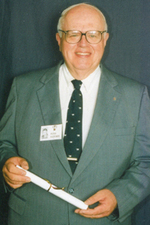
Peter Fletcher
The election season has also seen some old names in Ypsilanti politics re-emerge.
As the Save Ypsi campaign was gearing up, its leaders were telling residents they would soon put up a website at SaveYpsi.com. But local businessman Steve Pierce, who made a mayoral bid against Mayor Paul Schreiber in 2006, acquired the domain name before the organized millage effort formed. He used the site to put up an anti-tax memo signed by “Gen. Demetrius Ypsilanti.”
“You can save Ypsilanti from this new City Income Tax plus the massive new Water Street Bailout Millage,” the memo reads in large print. “This new tax scheme is the most devastating plan for Ypsilanti since the ill-fated Water Street Project.”
Bashert had no comment on the website.
The 2012 income tax campaign has also seen several council members and some residents who previously opposed an income tax proposal in 2007 support the new tax.
Schreiber said he has been out knocking on doors and campaigning, and residents seem to understand the city’s situation more than when he last campaigned for an income tax in 2007.
“The big difference between now and four years ago is people understand that cities are being squeezed, finances are tight and there’s no relief coming soon. That understanding wasn’t there 4 years ago,” he said.
Both groups have also undertaken fundraising efforts. The SCIT group circulated a letter asking a targeted group of residents for donations - suggesting $500, but accepting any amount - to help their cause. That drew criticism from some of the proposals’ supporters who questioned how an anti-new-tax group could ask for that level of funding.
“Money is the oxygen of politics, and the media is not cheap,” Fletcher responded. “AnnArbor.com doesn’t donate ad space - we have to buy it.”
So far City Council members have been mostly united in their efforts to explain the issues and urge voters to approve the measures.
Schreiber also said the biggest challenge facing the campaign is educating voters on the issues. He said he understands people not wanting to pay higher taxes, but added that there’s no alternative he can see.
“I think paying more is going to be a negative, but the bigger negative is losing support staff, police and fire staff, and not being able to provide the basic services people expect from the city,” Schreiber said.
Council member Brian Robb has been the only council member not to come out fully in support of the measures.
“Picking between astronomical taxes or big cuts in service is a no-win proposition,” he said. “I’m reluctant to tell people they don’t pay enough in taxes, but I’m also reluctant to tell people they need a smaller public safety department. When people ask me questions I give them answers.
"Just like the last election, this election will divide the town and pit neighbor against neighbor and I’m not interested in being a part of that.”
Comments
WaterTower
Tue, Mar 27, 2012 : 10:11 a.m.
Donald Wilson wrote that he supported the City Income Tax because he won't have to pay because he gets to deduct it from his state taxes. This is not true. Effective January 1, 2012, P.A. 38 eliminates all of the following credits: * City Income Tax Return - a non-refundable credit used to offset city income tax liability levied by Michigan cities.
YpsiVeteran
Wed, Mar 28, 2012 : 1:23 a.m.
Your property won't be worth the gas in your mower if a bankruptcy judge gets involved. That's the bottom line. If you tie the hands at the reins, you can't blame them when the horse runs off a cliff. The people responsible for Water Street were incompetent. They were voted into office. New people are in office now, and they're trying to solve this problem. Without these measures, what is your solution? Keep in mind pensions would not be a problem if it weren't for the specter of Water Street.
Val
Tue, Mar 27, 2012 : 2:45 a.m.
I don't live in Ypsilanti but if I did I would vote for the income tax but vote on the property tax. It is time that the people share in the obligation of paying for the city services that everyone uses, not just the property owners. It is the first small step in getting rid of the property tax by voting no on the millage and yes on the income tax.
WaterTower
Tue, Mar 27, 2012 : 2:34 a.m.
City Confidential is always pointing out communities like Grand Rapids and Lapeer are successful with a City Income Tax. CC fails to tell the reader those same communities all have incredibly low property tax rates. All of them are 40 to 50% lower than Ypsilanti. The Cities that all have really high property taxes AND a City income Tax, they are all failing. The top 5 include Detroit, Flint, Hamtramck, Muskegon Heights and Highland Park. Three of those top 5 have already had an EFM, one will have an EM in a week, and the fifth will have a consent agreement within a month. If you rank Ypsi in with the the top 5 cities with high Property Taxes and a City Income Tax, today Ypsilanti would be ranked number two only behind Detroit. That is BEFORE an election that will increase property taxes and add a City Income Tax. If these tax increases pass, Ypsi will be Number One as the most heavily taxed city in the entire state. Currently, Ypsi's property tax rate is 62 mills and by 2017 City Council is projecting a homestead residential property tax rate of 78 mills and over 96 mills non-homestead. These numbers are from the 5-year projection released by the City. I think many would vote for a City Income Tax if Ypsi had the same property tax rate as Grand Rapids of 34 mills or Lapeer which is 27 mills. You can't hold out Grand Rapids as a model for Ypsilanti and simply ignore the fact Grand Rapids property tax rate is nearly half that of Ypsilanti.
YpsiVeteran
Wed, Mar 28, 2012 : 1:19 a.m.
Grand Rapids is 45 square miles; Ypsilanti is 4 square miles. Grand Rapids can afford a lower property tax rate because it has more than 10 times the property to tax. Huge portions of Ypsi (EMU) are completely tax exempt. These are the facts. In spite of Ypsi's property tax rate, the amounts collected have declined steadily, meaning that property owners are paying less for services that cost the city more. The cities you list that have EMs all have something in common that Ypsi does not share. They all stuck their heads in the sand and ignored their financial imbalances. They all continued to spend wildly until they ran up multi-million dollar deficits, and then they spent some more. They all refused to face their situations until they were forced to. Ypsi has not done that, and in fact has one of the lowest per capita spending rates in the state, as has been pointed out by other posters.
Mike
Tue, Mar 27, 2012 : 1:32 a.m.
I always love how government entities "sell" tax increases. A small tax increase here and a small inrease there, followed by a fee on this and a fee on that, and a permit for this and a permit for that, and a regulation for this and a regulation for that, and an increase in fines for this and an increase for that. Pretty soon they're picking our pcket from so many directions the average joe has no idea how much he's paying in taxes; we feel t and we intuitively know we don't want any more of it...............
Jay Thomas
Tue, Mar 27, 2012 : 1:25 a.m.
So basically they want EMU employees to cough up some more bread. Just aren't many employers in Ypsi...
Ben Petiprin
Tue, Mar 27, 2012 : 12:18 a.m.
The only thing that could heal the city in a long-term sense would be getting worth-while jobs back here. That does not include a waitstaff job or part-time employment at a fast-food place. Admittedly, I don't understand how these things work, but we need to get the factories going full-force again. Make anything. Solar panels, hybrid cars, stuffed animals, marital aids whatever. Enrich the people and they'll enrich the government, the other way never seems to work.
margo
Sat, Mar 31, 2012 : 7:46 p.m.
Yeah SOLAR panel time to put solarpanel all over the waterstreet Park and make money sell it back to DTE .cityhall has solarpanel make solarpanel pay for waterstreet etc etc..
Mark Hergott
Mon, Mar 26, 2012 : 10:19 p.m.
The simple answer is that neither higher taxes or smaller public safety departments are in the public interest. We need to tear down these imaginary boundaries between Superior Charter Township, Ypsilanti, and Ypsilanti Charter Township. A unified tax base and a public safety authority with political input from the three communities will be the ultimate solution. Well, the optimal solution. Chances are Ypsilanti city will drown in debt, and the townships will refuse to help out of a combination of stinginess and spite. After that has done a terrible toll to the three communities, something resembling sanity will rise from the ashes. And that's sad.
joe golder
Mon, Mar 26, 2012 : 11:29 p.m.
In the end it will still be politicians, personal agendas, and egos standing in the way!
Donald Wilson
Mon, Mar 26, 2012 : 9:58 p.m.
I HOPE this passes and I WANT to work in the city now! that .5% income tax will go to the city I enjoy and do business in (My house is just outside the city limits) and that money will come OFF my State taxes. This is GREAT!
margo
Sat, Mar 31, 2012 : 7:44 p.m.
We donot need to vote on this ,just donate your money NOW, sva eus taxpayer the paper work!
WaterTower
Tue, Mar 27, 2012 : 9:59 a.m.
Not true, the state eliminated the deduction of a City Income Tax from your State taxes in 2012.
R V
Mon, Mar 26, 2012 : 7:51 p.m.
Frankly, the only city on the list of "great" Michigan cities that have an income tax that even slightly qualifies is Grand Rapids. I agree that there is a huge potential for businesses and homeowners to gradually relocate and also for demand for homes to go down, further sinking the property values that are the core of this problem... The city's projections for property tax income seem arbitrary (-7, -3, -3, -3, -3%), and without justification it seems difficult to approve an income tax. This must be the priority; it is really sloppy that every other analysis has been done but the crux of the matter is property taxes and property values, and this has no analysis, just an assurance that these are "conservative numbers." I don't know if I believe values will keep sinking for five years, unless perhaps if this is passed... I'd like to keep an open mind but we really need to justify this if the city wants my vote.
Glen S.
Mon, Mar 26, 2012 : 6:47 p.m.
Read between the lines folks -- So far, the "No" campaign has offered not a single alternative plan or idea -- just more of of the same: Looking backward rather than forward, blaming others, and pretending the problem will just "go away" if we continue to ignore it. Nobody (including me) is thrilled by the idea of paying more in taxes, but until somebody comes up with a realistic, viable alternative that will help Ypsilanti maintain critical public safety services (such as police and fire) at levels that will keep our community safe -- I intend to vote 'YES' on both of these propsoals on May 8.
ypsilanti
Mon, Mar 26, 2012 : 6:41 p.m.
Bilbo: Such a non-argument. The anti-taxers haven't yet heard what the pro-taxers are going to do to patch the giant hole that will result when businesses flee to right across the border in the township.
City Confidential
Mon, Mar 26, 2012 : 9:34 p.m.
Tax flight is a myth. Where are those businesses going to go? If the businesses are only concerned about taxes, then why didn't they leave a long time ago? The businesses that are in the city are here because they have a reason to be here - proximity to downtown, to campus, to their customers. You don't think businesses will leave when they don't have basic city services like public safety? You obviously don't understand what is at stake here.
Bilbo
Mon, Mar 26, 2012 : 6:07 p.m.
I still haven't heard what the people voting no plan to do with that big hole in the city budget. Saying no isn't a plan. What are we gonna do when we don't have money? Mistakes were made in the past, but are we gonna let that destroy our city? I know I'm not. I'm voting yes cause I want to keep living here.
City Confidential
Tue, Mar 27, 2012 : 2:42 a.m.
I just looked over the info again and realized that my comment was incorrect. The income tax will replace the lost property tax revenue, but it will not pay toward the Water Street debt. The debt will be offset with fund balance and reserves through 2017, making the rate half of the total millage.
City Confidential
Mon, Mar 26, 2012 : 9:31 p.m.
The plan is to use a millage to pay off the Water Street debt, and to use the income tax to also pay off the Water Street debt (cutting the millage in half) and to replace the funds that have been lost with the 30-35% reduction in property tax revenues. What don't you understand here?
Depot Town
Mon, Mar 26, 2012 : 6:10 p.m.
That's a straw man argument. The pro-tax side has no plan. This is a vote about having an income tax and another millage. This doesn't say how we're going to spend the money. Council is supposed to be telling us what the plan is. I haven't heard a peep from any of them on a so-called plan.
City Confidential
Mon, Mar 26, 2012 : 5:22 p.m.
This article does a great job of bring up a critical point: the voters do not seem to understand the issues. Several of the comments here prove this. 1) this was never being hidden - the City has done everything it can do to promote it. It is being put forth in May so that we can start planning next years' budget, which begins July 1. Someone didn't understand that and commented anyway. 2) The city has not been mismanaged and there is nothing left to cut. Our city manager was taken by the State to help save other cities in distress because he had been so successful at keeping our city afloat through tough choices. Our services are down to absolutely minimal levels and we spend less per capita than almost any city in the state. Someone didn't understand that, but commented anyway. 3) These taxes are what it is going to take to fill the hole that was created when our property taxes went down by 30% or so in the city. This is the only way to save badly needed services that will not be paid for otherwise. Several people don't understand that, but commented anyway. 4) There are 22 cities in the state that have an income tax - Lapeer, Ionia, Hudson, Grayling, Grand Rapids, Big Rapids, etc. These are not failing cities. Regardless of what cities have or don't have an income tax, we need one in order to pay for needed city services. People don't seem to understand that, but comment anyway. 5) The party of no is using manipulative lies or partial truths to sway people who don't understand the issues, and obviously there are people commenting here who don't understand that but think they should vote no anyway. It's not condescending to recognize that some people just don't want to put in the time to understand what is at stake and that there are no other solutions that make any sense. It's so much easier to just lie and stir up anti-tax anger than to face reality and try to understand the issues.
margo
Sat, Mar 31, 2012 : 7:41 p.m.
The city manager Taken by the STATE?HMMMh so Why did they new citymanager quit after 3 weeks on the job? How much money does the city get from the college/state ?
Midtowner
Mon, Mar 26, 2012 : 5:28 p.m.
Talk about your manipulative lies and partial truths ... Grand Rapids has a millage rate of 31. Ypsilanti has a millage rate of 62. Is the city's proposal to cut my property taxes in half?
Martin Church
Mon, Mar 26, 2012 : 5:08 p.m.
it's not astronomical if you make a lot of money with a lot of disposalable income. However for a lot of our residences, this is astronomical. I am voting NO for both. if you want to bill someone bill Former Mayor Farmer and those who voted to destroy the water street community for a pipe dream. You were told there would be problems when this began and now that it has become a reality you offer nothing. but more dreams. The city claims it won't use the whole millage to pay off the water street debt. I doubt the truthfulness of this statement. And I dont see a sunset clause in the document when will this debt retire, in thirty years. I am paying 60% in state federal and local taxes now. I don't think I can afford more.
joe golder
Tue, Mar 27, 2012 : 5:58 p.m.
Are you kidding Lorie! Water street community? It was a huge stretch then and even a bigger one now! I'm so glad we got rid of the drug dealers when that tax bearing part of Ypsi was leveled. Has there ever been a project in Ypsi that has gobbled up more money or human resources than this cataclysmic goof! I don't think so! Hearing people defend the people responsible or continue to trust their leadership is almost cult worshiping!
pseudo
Mon, Mar 26, 2012 : 6:20 p.m.
Water street community? are you kidding, the drug dealers? or the squatters in the abandoned buildings? That area was a resource hog and abandoned building complex. wasteland. btw...60% in taxes? you need better tax advice. pretty simple but true?
jondhall
Mon, Mar 26, 2012 : 4:59 p.m.
City of Ypsilanti has one of the Highest Mileage rates in the state of Michigan, this can only be due to mismanagement. They have no brush pick up and one must pay for trash removal. What City services do they have? They overpaid all the business owners that they ran out of town for the "water Street project"! They have underfunded their pension obligations and paid above prevailing wages, now the tax payers is being asked to bail them out? I say NO to this proposal.
MorningGirl
Tue, Mar 27, 2012 : 12:39 p.m.
We do not pay for trash removal.
Bilbo
Mon, Mar 26, 2012 : 6:09 p.m.
So what's your plan? This is a whole new group of people on council - people who voted against an income tax in the past. Now they ALL agree that this is our only chance.
Stephen
Mon, Mar 26, 2012 : 5:07 p.m.
Are you thinking of the township? The city does have brush and trash pick up. Whether or not you agree with how WS has been handled it is still a debt that needs to be paid. We can either pay it now or wait for an EM to come in and force an even higher millage through later.
ypsilanti
Mon, Mar 26, 2012 : 4:53 p.m.
Forgot to mention that the "education" campaign last time was: "The sky will fall if you don't approve an income tax!" The campaign this time: [Spoken very slowly] "The sky will fall if you don't approve an income tax, really!"
LC
Mon, Mar 26, 2012 : 4:50 p.m.
Why doesn't this article mention the pension millage? I was told it will go up to 15 mills. Won't we be voting on that too?
Markus
Tue, Mar 27, 2012 : 2 a.m.
The amount paid to Fire & Police pension and retiree health costs will go up by about 90% by 2017, based on the city's projections. At that point, payments for people not currently providing any service to the city will consume about 30% of the projected revenue. This is on top of any income tax or debt-retirement millage, and you cannot vote on the matter. That is because the City can already automatically raise millages to meet whatever the pension/health obligation is for that year. Based on the projected increases, your 15-mill number is about right.
pseudo
Mon, Mar 26, 2012 : 6:24 p.m.
Are you talking about the shift in state taxes from Business to Pensions? I think you are. That is the STATE (Gov. Snyder) who shifted taxes from businesses to Pensions and other individuals. that was in an income tax format. You can't have a 'millage' on a penison. So I can't tell what you are asking. City Council cannot raise taxes without a vote of the people. Fees? yes. Taxes? no, that needs a vote.
LC
Mon, Mar 26, 2012 : 5:01 p.m.
So city council is just going to raise my taxes another 15 mills without my approval? What is that going to do to my tax rate? It's going to higher than Detroit.
akronymn
Mon, Mar 26, 2012 : 4:59 p.m.
The only two measures on the May 8 ballot are the income tax and the Water Street debt retirement millage.
ypsilanti
Mon, Mar 26, 2012 : 4:49 p.m.
The city wants you to throw good money after bad. The city should be ashamed of itself for spending taxpayers' money to hold this election asking voter to approve what voters overwhelmingly disapproved of just a few short years ago.
pseudo
Mon, Mar 26, 2012 : 6:25 p.m.
except the very people who ran SCIT last time have changed their tune now that they are on city council...Even Pete Murdock is for this one.
Bilbo
Mon, Mar 26, 2012 : 6:11 p.m.
Times have changed. All of the people on council who voted against this in the past are for it now. Why is that? Because the world changed in 2008.
Ben Petiprin
Mon, Mar 26, 2012 : 4:46 p.m.
I found the tone of Bashert's campaign somewhat condescending. She kept talking about how she needs to explain this in the "simplest terms" as if only stupid people vote against taxes. Perhaps people don't want to give any additional money to a city government that's just going to mismanage it anyway. Any extra money given to city council will likely be used to continue tearing down affordable housing to help Ypsi achieve the new image it's looking for, all the while destroying its real character. I wonder if the projections for the income tax revenue account for the people who are likely to leave. This is not an automatic cure all. You know what other cities in Michigan have an income tax? Detroit, Grand Rapids, Highland Park, Saginaw. How are they doing again?
pseudo
Mon, Mar 26, 2012 : 6:08 p.m.
take it as you may, its better than adolescent antics and baloney being spewed by Pierce and crew.
akronymn
Mon, Mar 26, 2012 : 4:33 p.m.
Lorie hit the nail on the head in her comments. These aren't astronomical proposals. They are very reasonable numbers on par with many other cities around the state of Michigan who have used local income taxes to weather serious loss of revenue. Ypsilanti is in the ten lowest spending cities per capita in Michigan. The city does a great job of working with the very limited resources available but the fact of the matter is revenue has fallen to the point where public safety, sanitation, and other core services can not be maintained. Without replacing at least some of the missing revenue Ypsilanti won't be able to maintain itself as a safe, clean city. Voting YES on both proposals on the May 8 ballot is incredibly important. There's lots of good information and resources at http://www.saveypsiyes.com/
joe golder
Mon, Mar 26, 2012 : 10:50 p.m.
I'm so glad they have 9 mil stashed to cover the water st. bond payments coming due in the next several years!! We all know this doesn't have a chance to pass.
Deendeens
Mon, Mar 26, 2012 : 4:30 p.m.
If you look back on the last 3-4 pages of Ypsilanti news here on annarbor.com, you will see the police effectively dealing with local crimes. The last thing I want to do as a resident is short the police and fire, or lose more care of our parks, or lose the great momentum our community has been gaining. I will be voting yes -- not eagerly. But I understand that Ypsi is worth fighting for and I know that the state won't be coming to our rescue. Ypsi has to do it for herself.
margo
Sat, Mar 31, 2012 : 7:27 p.m.
THE POLICE DEPARTMENT can apply for grants , like they did in warren and other cities!
Stephen
Mon, Mar 26, 2012 : 4:35 p.m.
You make a good point. This isn't something I'm doing because I'm excited to spend my money. This is something that I am willing to do because Ypsilanti is a great city and we all need to work together to take care of our home.
pseudo
Mon, Mar 26, 2012 : 3:49 p.m.
This Steve Pierce? http://www.annarbor.com/news/literature-distorting-record-of-ypsilanti-mayor-paul-schreiber-circulated-to-residents/ Has he started spending time here again? I thought he was headed back New Mexico or some such.
margo
Sat, Mar 31, 2012 : 7:26 p.m.
FREE INTERNET WIRLESS YPSI and where is it?
Stephen
Mon, Mar 26, 2012 : 4:16 p.m.
Yes that's the one. He can't seem to keep his nose out of the dirt.
pseudo
Mon, Mar 26, 2012 : 3:48 p.m.
There isn't anything astronomical about these tax proposals. The income tax is a fair tax that will begingto right an unbalanced situation where people come here to work for employers that don't pay taxes and thus don't contibute to city services. So everybody who depends on city services will be chipping in to help pay for them. This is a good thing. The millage, there are lots of reasons why Waterstreet hasn't been sold or developed. Good bad or ugly - it has to get paid off. 1 mil is like $40 - $50/yr. The taxes have gone down by way more than that in the past 5 years or so we're still paying way less.
shutthefrtdoor
Mon, Mar 26, 2012 : 3:37 p.m.
I'm just glad this is out there now and not being hidden from the voters on the May ballot.
shutthefrtdoor
Tue, Mar 27, 2012 : 7:40 p.m.
Thanks WaterTower! Have you heard from the other poster?
WaterTower
Tue, Mar 27, 2012 : 2:45 a.m.
Here is a bit.ly link to the Echo story http://bit.ly/HdOCWb "Council Member Peter Murdoch argued for the earlier date, expressing the opinion that the case could be made by then, and a desire "not to give the opposition even more time to organize." He also said that in a November election "people who don't really live here" would vote and might be harder to persuade."
shutthefrtdoor
Mon, Mar 26, 2012 : 6:30 p.m.
index.php/article/2012/01/ypsi_city_council_discusses_recreation_financial_plan -------------------------------------------------------------------------------- Here ya go...
shutthefrtdoor
Mon, Mar 26, 2012 : 6:29 p.m.
Stephen...try "Ypsi City Council discusses recreation, financial plan".
Stephen
Mon, Mar 26, 2012 : 5:46 p.m.
This is on the ballot in May so that the revenue from these measures can be used during FY 2013. If the measures went on the ballot in November then they couldn't go into effect until 2014. You'll need to provide a link to your sources. There are no articles on that date that quote Pete Murdock (or Murdoch). The last time he was quoted in the Eastern Echo was in March of 2011.
shutthefrtdoor
Mon, Mar 26, 2012 : 5:29 p.m.
Stephen, I've been posting about this since February after I was made aware from the Council meeting. I even posted it to AA.com Community Wall. Just recently it has grown legs and is being reported on. The reason I say "hidden" is because Mr. Murdoch agrued for the earlier date so that "not to give the opposition even more time to organize". IMO "hidden" was their intent. Less people vote in May compared to November. You can verify this quote by checking The Eastern Echo 1-11-12
Stephen
Mon, Mar 26, 2012 : 4:20 p.m.
How was this being hidden before? There have been a couple articles on this site, both sides have active campaigns to bring this to voters' attention, and the city is holding public information sessions.