

University of Michigan spending $440 million to upgrade residence halls

More Galleries
 The Lunch Room does vegan food in a way that even non-vegans can enjoy
 Images from Dawn Farm's 40th Anniversary Jamboree
 See photos from Kerrytown BookFest
 Images from Michigan's 41-30 win over Notre Dame under the lights
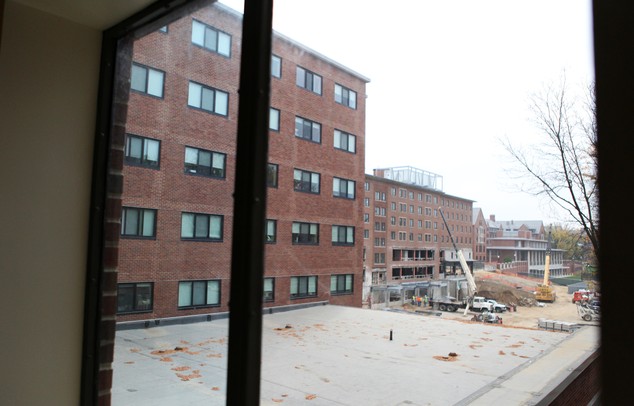
Couzens Hall is shown along with another dorm being worked on at the University of Michigan. Couzens Hall was built in 1925 and reopened in fall of 2011 after extensive renovations and major upgrades to the infrastructure and interior. The University of Michigan is pushing to renovate dorms and create a more desirable living situation. Thursday October, 13, 2011. Jeff Sainlar I AnnArbor.com
-
 Couzens Hall is shown along with another dorm being worked on at the University of Michigan. Couzens Hall was built in 1925 and reopened in fall of 2011 after extensive renovations and major upgrades to the infrastructure and interior. The University of Michigan is pushing to renovate dorms and create a more desirable living situation. Thursday October, 13, 2011. Jeff Sainlar I AnnArbor.com
/calendar/photologue/photos/resized/cache/101311_EDU_COUZENS_HALL_JNS_01___fullsize.JPG
Couzens Hall is shown along with another dorm being worked on at the University of Michigan. Couzens Hall was built in 1925 and reopened in fall of 2011 after extensive renovations and major upgrades to the infrastructure and interior. The University of Michigan is pushing to renovate dorms and create a more desirable living situation. Thursday October, 13, 2011. Jeff Sainlar I AnnArbor.com
/calendar/photologue/photos/resized/cache/101311_EDU_COUZENS_HALL_JNS_01___fullsize.JPG
-
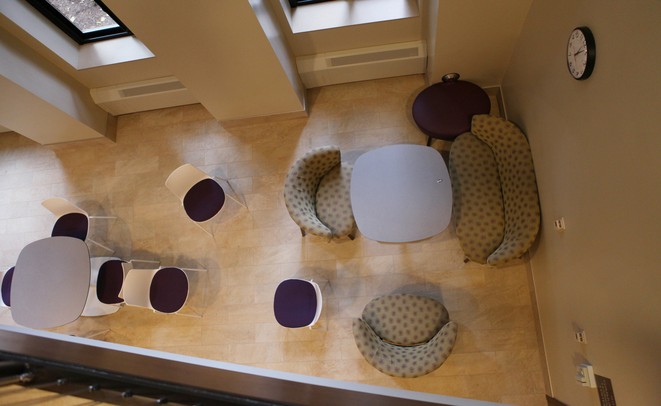
 Couzens Hall was built in 1925 and reopened in fall of 2011 after extensive renovations and major upgrades to the infrastructure and interior. The University of Michigan is pushing to renovate dorms and create a more desirable living situation. Thursday October, 13, 2011. Jeff Sainlar I AnnArbor.com
/calendar/photologue/photos/resized/cache/101311_EDU_COUZENS_HALL_JNS_02_fullsize.JPG
Couzens Hall was built in 1925 and reopened in fall of 2011 after extensive renovations and major upgrades to the infrastructure and interior. The University of Michigan is pushing to renovate dorms and create a more desirable living situation. Thursday October, 13, 2011. Jeff Sainlar I AnnArbor.com
/calendar/photologue/photos/resized/cache/101311_EDU_COUZENS_HALL_JNS_02_fullsize.JPG
-
 Couzens Hall was built in 1925 and reopened in fall of 2011 after extensive renovations and major upgrades to the infrastructure and interior. The University of Michigan is pushing to renovate dorms and create a more desirable living situation. Thursday October, 13, 2011. Jeff Sainlar I AnnArbor.com
/calendar/photologue/photos/resized/cache/101311_EDU_COUZENS_HALL_JNS_11_fullsize.JPG
Couzens Hall was built in 1925 and reopened in fall of 2011 after extensive renovations and major upgrades to the infrastructure and interior. The University of Michigan is pushing to renovate dorms and create a more desirable living situation. Thursday October, 13, 2011. Jeff Sainlar I AnnArbor.com
/calendar/photologue/photos/resized/cache/101311_EDU_COUZENS_HALL_JNS_11_fullsize.JPG
-
 Couzens Hall was built in 1925 and reopened in fall of 2011 after extensive renovations and major upgrades to the infrastructure and interior. The University of Michigan is pushing to renovate dorms and create a more desirable living situation. Thursday October, 13, 2011. Jeff Sainlar I AnnArbor.com
/calendar/photologue/photos/resized/cache/101311_EDU_COUZENS_HALL_JNS_04_fullsize.JPG
Couzens Hall was built in 1925 and reopened in fall of 2011 after extensive renovations and major upgrades to the infrastructure and interior. The University of Michigan is pushing to renovate dorms and create a more desirable living situation. Thursday October, 13, 2011. Jeff Sainlar I AnnArbor.com
/calendar/photologue/photos/resized/cache/101311_EDU_COUZENS_HALL_JNS_04_fullsize.JPG
-
 A University of Michigan resident studies in one of the designated study halls at Couzens Hall. Couzens Hall was built in 1925 and reopened in fall of 2011 after extensive renovations and major upgrades to the infrastructure and interior. The University of Michigan is pushing to renovate dorms and create a more desirable living situation. Thursday October, 13, 2011. Jeff Sainlar I AnnArbor.com
/calendar/photologue/photos/resized/cache/101311_EDU_COUZENS_HALL_JNS_06_fullsize.JPG
A University of Michigan resident studies in one of the designated study halls at Couzens Hall. Couzens Hall was built in 1925 and reopened in fall of 2011 after extensive renovations and major upgrades to the infrastructure and interior. The University of Michigan is pushing to renovate dorms and create a more desirable living situation. Thursday October, 13, 2011. Jeff Sainlar I AnnArbor.com
/calendar/photologue/photos/resized/cache/101311_EDU_COUZENS_HALL_JNS_06_fullsize.JPG
-
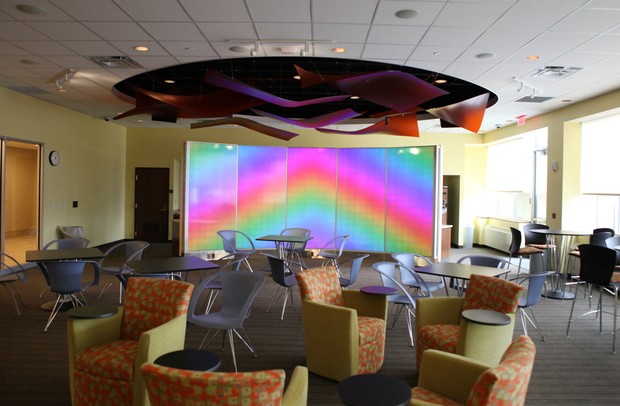
 An all-pourpose room at Couzens Hall is displayed. Couzens Hall was built in 1925 and reopened in fall of 2011 after extensive renovations and major upgrades to the infrastructure and interior. The University of Michigan is pushing to renovate dorms and create a more desirable living situation. Thursday October, 13, 2011. Jeff Sainlar I AnnArbor.com
/calendar/photologue/photos/resized/cache/101311_EDU_COUZENS_HALL_JNS_10_fullsize.JPG
An all-pourpose room at Couzens Hall is displayed. Couzens Hall was built in 1925 and reopened in fall of 2011 after extensive renovations and major upgrades to the infrastructure and interior. The University of Michigan is pushing to renovate dorms and create a more desirable living situation. Thursday October, 13, 2011. Jeff Sainlar I AnnArbor.com
/calendar/photologue/photos/resized/cache/101311_EDU_COUZENS_HALL_JNS_10_fullsize.JPG
-
 University of Michigan residents study in one of the designated study halls at Couzens Hall. Couzens Hall was built in 1925 and reopened in fall of 2011 after extensive renovations and major upgrades to the infrastructure and interior. The University of Michigan is pushing to renovate dorms and create a more desirable living situation. Thursday October, 13, 2011. Jeff Sainlar I AnnArbor.com
/calendar/photologue/photos/resized/cache/101311_EDU_COUZENS_HALL_JNS_07_fullsize.JPG
University of Michigan residents study in one of the designated study halls at Couzens Hall. Couzens Hall was built in 1925 and reopened in fall of 2011 after extensive renovations and major upgrades to the infrastructure and interior. The University of Michigan is pushing to renovate dorms and create a more desirable living situation. Thursday October, 13, 2011. Jeff Sainlar I AnnArbor.com
/calendar/photologue/photos/resized/cache/101311_EDU_COUZENS_HALL_JNS_07_fullsize.JPG
-
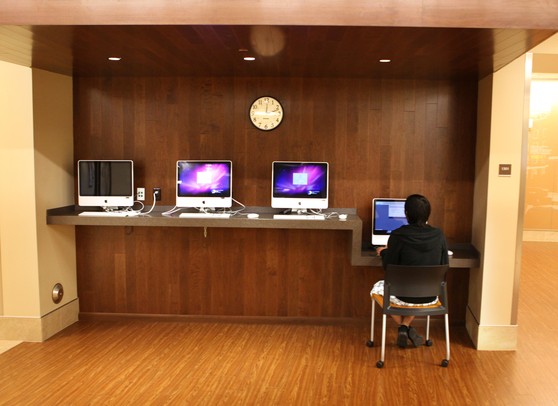
 A University of Michigan resident uses one of the many Macintosh computers located througout Couzens Hall. Couzens Hall was built in 1925 and reopened in fall of 2011 after extensive renovations and major upgrades to the infrastructure and interior. The University of Michigan is pushing to renovate dorms and create a more desirable living situation. Thursday October, 13, 2011. Jeff Sainlar I AnnArbor.com
/calendar/photologue/photos/resized/cache/101311_EDU_COUZENS_HALL_JNS_05_fullsize.JPG
A University of Michigan resident uses one of the many Macintosh computers located througout Couzens Hall. Couzens Hall was built in 1925 and reopened in fall of 2011 after extensive renovations and major upgrades to the infrastructure and interior. The University of Michigan is pushing to renovate dorms and create a more desirable living situation. Thursday October, 13, 2011. Jeff Sainlar I AnnArbor.com
/calendar/photologue/photos/resized/cache/101311_EDU_COUZENS_HALL_JNS_05_fullsize.JPG
-
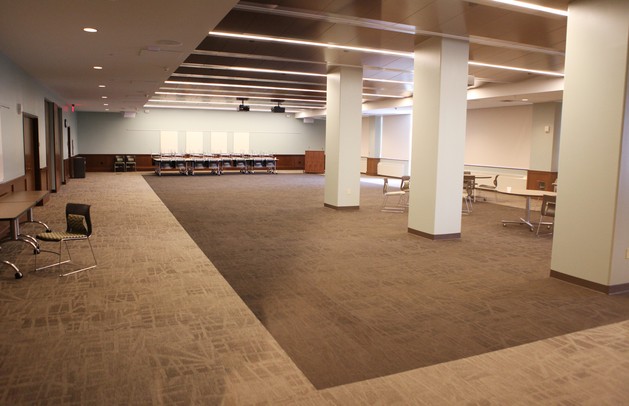
 Couzens Hall was built in 1925 and reopened in fall of 2011 after extensive renovations and major upgrades to the infrastructure and interior. The University of Michigan is pushing to renovate dorms and create a more desirable living situation. Thursday October, 13, 2011. Jeff Sainlar I AnnArbor.com
/calendar/photologue/photos/resized/cache/101311_EDU_COUZENS_HALL_JNS_08_fullsize.JPG
Couzens Hall was built in 1925 and reopened in fall of 2011 after extensive renovations and major upgrades to the infrastructure and interior. The University of Michigan is pushing to renovate dorms and create a more desirable living situation. Thursday October, 13, 2011. Jeff Sainlar I AnnArbor.com
/calendar/photologue/photos/resized/cache/101311_EDU_COUZENS_HALL_JNS_08_fullsize.JPG
-
 University of Michigan residents study in one of the designated work areas at Couzens Hall.Couzens Hall was built in 1925 and reopened in fall of 2011 after extensive renovations and major upgrades to the infrastructure and interior. The University of Michigan is pushing to renovate dorms and create a more desirable living situation. Thursday October, 13, 2011. Jeff Sainlar I AnnArbor.com
/calendar/photologue/photos/resized/cache/101311_EDU_COUZENS_HALL_JNS_09_fullsize.JPG
University of Michigan residents study in one of the designated work areas at Couzens Hall.Couzens Hall was built in 1925 and reopened in fall of 2011 after extensive renovations and major upgrades to the infrastructure and interior. The University of Michigan is pushing to renovate dorms and create a more desirable living situation. Thursday October, 13, 2011. Jeff Sainlar I AnnArbor.com
/calendar/photologue/photos/resized/cache/101311_EDU_COUZENS_HALL_JNS_09_fullsize.JPG
-
 Couzens Hall was built in 1925 and reopened in fall of 2011 after extensive renovations and major upgrades to the infrastructure and interior. The University of Michigan is pushing to renovate dorms and create a more desirable living situation. Thursday October, 13, 2011. Jeff Sainlar I AnnArbor.com
/calendar/photologue/photos/resized/cache/101311_EDU_COUZENS_HALL_JNS_03_fullsize.JPG
Couzens Hall was built in 1925 and reopened in fall of 2011 after extensive renovations and major upgrades to the infrastructure and interior. The University of Michigan is pushing to renovate dorms and create a more desirable living situation. Thursday October, 13, 2011. Jeff Sainlar I AnnArbor.com
/calendar/photologue/photos/resized/cache/101311_EDU_COUZENS_HALL_JNS_03_fullsize.JPG





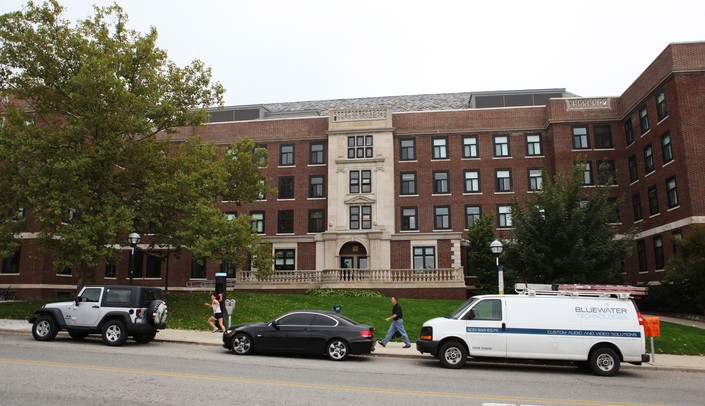
By the end of 2013, the University of Michigan will have spent $440 million updating residence halls since 2006.
Starting five years ago, the Ann Arbor university began its residence life initiative— a sweeping effort to update its dormitories and improve the residence life experience at U-M.
Prior to Mary Sue Coleman becoming U-M president in 2002, the school had not built or seriously renovated a residence hall in 32 years. Now, U-M is building or renovating a hall once every year.
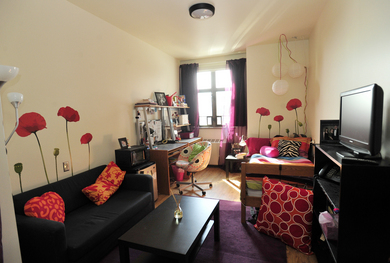
A single dorm room in North Quad includes a bed and a desk and a shared bathroom with one other unit.
Melanie Maxwell I AnnArbor.com
“Our halls were far from state of the art,” Coleman said in an interview. “We went too long in between (updates), and that’s when you get behind.”
The result of the five-year effort is striking. Everything in the updated dorms —from the light fixtures to bathroom backsplashes to lounge furniture to the new iMac models in study areas— is set to impress.
“We’re not doing this necessarily to compete with other schools; we're doing this to provide a good residential experience that students today and in the next several years will expect,” said Peter Logan, University Housing communications director. “It does play into our ability to attract good students.”
Linda Newman, director of University Housing, said that residence halls could be the factor that pushes students toward U-M.
“There are many factors that go into a student making a choice, and if all things are equal between the two schools and the residence halls are more comfortable —have more space, more bathrooms— I think we would find students gravitating toward the more comfortable living space,” Newman said. “It is a serious contender for the overall quality of a student’s experience.”
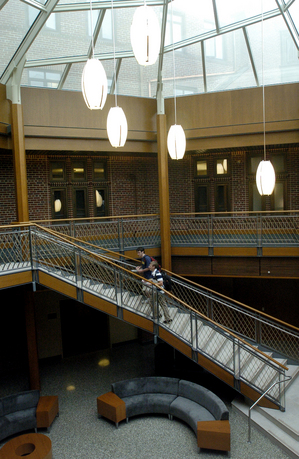
Students walk up a staircase leading from the rotunda to the the main lobby in the newly renovated Stockwell Hall on campus at the University of Michigan.
Melanie Maxwell | AnnArbor.com
Logan and Newman said the mega-million price tag is par for the course.
“It’s like a small city that we’re managing here,” Logan said. “It is a lot of money and it doesn’t fully address the infrastructure needs that are out there.”
The following residence halls have undergone or are about to undergo renovations. North Quad is the only wholly new structure on the list.
- East Quadrangle Renovation: Currently in the planning stages with a budget of $119 million.
- Lawyers Club: Currently in the planning stages with a budget of $39 million.
- Alice C. Lloyd Hall: Currently under construction with a budget of $56 million.
- Couzens Hall: Reopened in 2011 after $49 million renovation.
- North Quad: Opened in 2010 after $75 million construction project.
- Stockwell Hall: Reopened in 2009 after a 39.6 million renovation.
- Hill Dining Center: Reopened in 2008 after 21 million renovation.
- Mosher Jordan Hall: Reopened in 2008 after 44.1 million renovation.
Aside from the Lawyer’s Club renovation, which is being paid for in part by a large donation and in part by the law school, the majority of residence hall renovations are funded by University Housing, which derives its funding from student room and board fees.
Since the residence life initiative started, University Housing has set aside 2 percent of student room and board fees for the renovations.
“We don’t have $40 million that we're handing over every year; the 2 percent that we assign to the residence life initiative projects is paying for the financing for these projects,” Logan said.
In the past two years, student dorm fees have increased by 3 percent each year. This year's increase marks a $276 increase in the rate for a student in a standard double room. A double room is now $9,468 per year. A single room is $11,300.
Of the renovation costs, Logan says 85 to 90 percent is to improve the infrastructure of the updated residence halls. The remaining 10 to 15 percent goes toward finishings and furniture.
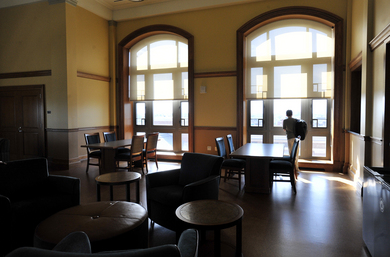
The North Quad Tower Room offers students a large community gathering space with a kitchen, lots of seating and a drop down projection screen.
Melanie Maxwell I AnnArbor.com
At Couzens Hall, a $49 million renovation project, $1.5 million was spent on furniture. Of that $1.5 million, about $750,000 was spend on dormitory room desks, beds and dressers. The remaining $750,000 was spent on common area furniture.
“The aesthetics is very important,” said Coleman of the new dorms. “It’s crucial…. The aesthetics of a place really adds to the whole experience.”
Aside from the dorm renovations, Logan said it is normal for University Housing to spend about $8.5 million in large-scale maintenance projects per year.
Kellie Woodhouse covers higher education for AnnArbor.com. Reach her at kelliewoodhouse@annarbor.com or 734-623-4602 and follow her on twitter.
Comments
Sparty
Tue, Oct 18, 2011 : 4:37 a.m.
Room and Board, that is housing in a dorm, is not required. So, if a student and their family is not happy with 80 year old buildings getting their infrastructure upgraded and the furnishings remodeled while they are at it, they can live in a shack or car elsewhere. Thus, many of these posts are meaningless, although I know how this community loves to complain.
Angi Olson
Mon, Oct 17, 2011 : 7:16 p.m.
I would gladly take a shoe-box with a mattress if tuition were more affordable. When so many people are struggling in this economy, aestheitcs should not be a priority.
Edward R Murrow's Ghost
Mon, Oct 17, 2011 : 5:02 p.m.
Love all of the carping about the money being spent. Of course, in a state that is ground zero for the economic downturn, that $400 million has put to work construction workers who would not otherwise be employed. It has kept afloat construction companies and suppliers who otherwise likely would be struggling. And all of that spending has filtered down to the community in terms of money spent at local businesses, homes bought or (more likely) not going into foreclosure, etc..... hut hut's comment above is dead on: Contrary to teapartyist nonsense, this is a perfect example of how the the government creates jobs. As for the comments about the homeless shelter being short money: Sorry--that's not the U's problem. It is clear to me that the U does not pay its fair share to the city for the services it uses, but that is a different issue. Good Night and Good Luck
Steve
Mon, Oct 17, 2011 : 4:31 p.m.
In general renovating is going to be more expensive than building new. That would be especially true of buildings as old and out of date as many of these buildings are. The point is, comparing cost of a new build to cost of a rennovation is essentially comparing apples to oranges. @AAgradstudent Couldn't let this one go. You are not impressed with the quality of your education, yet you have managed to put in 7 years worth of time at the U. If it's so substandard why are you still there? Surely there are other graduate schools in the country.
Suzi
Mon, Oct 17, 2011 : 4:14 p.m.
Who knew taking away lunch trays would be this beneficial..
Plubius
Mon, Oct 17, 2011 : 1:51 p.m.
Did anyone stop and read the actual dollar amounts spent? These numbers are staggering. UM has spent half a BILLION dollars on, not building but simply, renovating dorms. Has anyone asked, for example, how this level of spending compares to the Varsity high rise which will be able to house more than 400 people?
A2comments
Mon, Oct 17, 2011 : 12:40 p.m.
After visiting many schools in 2004 with our son, it was very clear that U of M's student housing was vastly inferior to most other schools. Our son lived for two years in Markley, and our younger son lived for one year in Markley, and now resides in Couzens. The renovated Couzens is markedly better than Markley was. If nothing else, brand new clean mattresses that are plastic wrapped for cleanliness (and with one side marked firm and the other less firm). Central heating and cooling instead of radiators belching heat most of the year. Clean carpets, renovated bathrooms, all very nice. Elevator lights of course didn't work on move-in. Also, the new Hill dining facility "Marketplace" is much nicer than what existed prior, although it wasn't designed to go trayless which seems a big miss as the U goes trayless and finds itself having to modify facilities including Marketplace. These improvements are long, long overdue. I cannot comment on whether the projects are done in an economical way, or who gets awarded the work, but the outcome is good, the timing is done well (they close after school ends in April and open a year later before school starts).
cinnabar7071
Mon, Oct 17, 2011 : 12:16 p.m.
The masses get to pay for the U, while only the weathy get an education from the U. We need to defund the U until the average Joe tax payer can afford an education there.
Stuart Brown
Mon, Oct 17, 2011 : 6:29 a.m.
This spending is grotesque! How many palms are being greased with these contracts? How much of this money will end up in overseas accounts? Somebody is raiding the cookie jar right under the public's noses and nobody is saying no. The Regents are asleep at the switch or worse, in on the con. The grifters running UofM must be in hog heaven. Compare the cost of UofM's rehabs with the current cost of the private luxury housing currently being built around the UofM campus; UofM spends way more to rehab than what the private developers are spending to build new per bed. When UofM built North Quad, the cost of the building was $485/sq-ft; private developers are spending around $200/sq-ft to build luxury dorms in Ann Arbor. The annual cost of undergraduate housing at UofM has well exceeded inflation in the last 29 years. Compare the cost of a dorm room in 1982 with the cost of ICC co-op housing then and now. The dorm's inflation rate runs at well above the CPI inflation rate while the ICC's cost increases are in line with CPI inflation; why? This money is public money which is being squandered. UofM penny pinches its nurses, its instructors and its students then turns around and blows huge sums of money on construction projects that have to be making the contractors insanely wealthy.
Sparty
Tue, Oct 18, 2011 : 4:29 a.m.
How much extra did it cost due to the requirement to incorporate the "historical components" of the Frieze Building into North Quad???
Sparty
Mon, Oct 17, 2011 : 4:02 a.m.
Smart strategy to invest with a plan over time, and even escalate it during poor economic times to help the local economy by driving job growth, construction and retail, etc., at prices that are probably more cost effective due to the ability to leverage negotiating power with the construction firms seeking work. The dorms are 75-85 years old in some case, people, surely they need infrastructure and remodeling periodically? Why not make them as comfortable as possible while doing so or should they make them of cement blocks with asbestos tile flooring?
Mr. Ed
Mon, Oct 17, 2011 : 3:52 a.m.
One thing I've learned is Couzens Hall was built in 1925.
grye
Mon, Oct 17, 2011 : 3:30 a.m.
There are economic issues in Ann Arbor? Not at the U.
grimmk
Mon, Oct 17, 2011 : 3:05 a.m.
Wow, at my old college they had so many people accept that they had to convert lounges into rooms. We have a thin plywood wall that wasn't attached to the ceiling. It moved a good few inches. There was no sound proofing. We heard everything in that hallway and vice vera. It SUCKED! Our closets were quickly put together boxes with a metal rod at the top to hand stuff on. We once got woken up by some washing dishes in the sink across the hall from us. Yeah. At 4am.
treetowncartel
Mon, Oct 17, 2011 : 2:18 a.m.
This article right now is sitting on one that says there isn't enough funding for the homeless to sleep. Maybe the University could make do with 439 million and help out the population it claims to want to help.
Sparty
Tue, Oct 18, 2011 : 4:26 a.m.
The dorm infrastructure program is paid for by residents living in university housing. The situations hardly compare. Do apartment complexes not get updated? Do new condos developments not get built?
7718
Mon, Oct 17, 2011 : 1:17 a.m.
I'm so glad the U has so much money to spruce up the dorms! When is Coleman going lanSing again to ask for even more money? I hear the administrator's restrooms need a makeover.
Sparty
Tue, Oct 18, 2011 : 4:23 a.m.
Didn't you read the article? The dorm infrastructure program is funded by a 2% housing fee and is not state funded.
LSA 2009
Mon, Oct 17, 2011 : 12:56 a.m.
UM professors are the greatest in the world. The on-campus dorms, on the other hand: Not so much. This is absolutely a much-needed move for the university.
AAgradstudent
Sun, Oct 16, 2011 : 11:55 p.m.
As a student who has been going to the University of Michigan for 7 years, I can tell you I am not impressed by the university of Michigan's quality of teaching at all. The school needs to focus more on getting quality teachers and reducing tuition. Attract some people who really want to teach by giving them this money! These dorms are too nice and get trashed anyway. Just another way for Mary Sue Coleman and the administration to look good to the outside world without working on the inside problems.
Edward R Murrow's Ghost
Mon, Oct 17, 2011 : 4:55 p.m.
Amen, Dan. Beyond explanation how someone would pay the money they are paying for what they claim is a poor education. If the education is so poor, time to transfer to another school. And, for what it is worth, I have two advanced degrees from the "U" and, in that capacity, served as a GSI/TA in numerous undergrad classes. In that capacity I certainly encountered some faculty (professors and GSIs/TAs) who were less than dedicated and/or who were poor teachers, but they were few and far between. My experience is that anyone who has not received the education they expected at the "U' has only themselves to blame. GN&GL
Dan
Mon, Oct 17, 2011 : 2:48 p.m.
As someone who is a grad student now but went elsewhere for undergrad, I just want to tell you that you have no idea how spoiled you are. And this is my 4th year here, so the initial crush has worn off and this place is still miles ahead of other universities.
ChrisW
Mon, Oct 17, 2011 : 3:51 a.m.
The quality of teaching sucked 25 years ago too, at least in the engineering school. There were a few great teachers, some decent teachers, and a large number of professors and TAs that couldn't teach at all. The most important lesson I learned from the university was how to traverse a huge mindless bureaucracy. That comes in handier in the real world than Laplacian Transforms ever did. And I learned how to study and learn on my own.
LSA 2009
Mon, Oct 17, 2011 : 1:15 a.m.
So you've been here for 7 years? Or is it 8 years? You can't seem to keep it straight! Sorry, but if you have been here for 7-8 years and are still bitter at the university, then it's probably your own fault. Nobody's stopping you from transferring somewhere else, you know?
AAgradstudent
Mon, Oct 17, 2011 : 12:58 a.m.
Sadly, it is not a joke. Grad school (4 years) + Undergrad (4 years) = 8 years. I am in my seventh year. You may ask, "If you didn't like it why come here for grad school?" This is my own fault. Somehow I thought it might be better with smaller class size...this is not the case.
Edward R Murrow's Ghost
Mon, Oct 17, 2011 : 12:44 a.m.
"As a student who has been going to the University of Michigan for 7 years, I can tell you I am not impressed by the university of Michigan's quality of teaching at all." This is a joke, right? I am reminded of a line from "Animal House": Bluto: "Seven years of college down the drain. Might as well join the [bleeping] Peace Corps" Good Night and Good Luck
hut hut
Sun, Oct 16, 2011 : 11:28 p.m.
Who says government doesn't create jobs?
ChunkyPastaSauce
Sun, Oct 16, 2011 : 10:47 p.m.
A representation of current dorms at umich from their website: <a href="http://www.housing.umich.edu/reshalls/gallery/singles" rel='nofollow'>http://www.housing.umich.edu/reshalls/gallery/singles</a> <a href="http://www.housing.umich.edu/reshalls/gallery/doubles" rel='nofollow'>http://www.housing.umich.edu/reshalls/gallery/doubles</a> <a href="http://www.housing.umich.edu/reshalls/gallery/triples" rel='nofollow'>http://www.housing.umich.edu/reshalls/gallery/triples</a> <a href="http://www.housing.umich.edu/reshalls/gallery/quads" rel='nofollow'>http://www.housing.umich.edu/reshalls/gallery/quads</a> Looks not so great.
A2comments
Mon, Oct 17, 2011 : 10:50 a.m.
Vast improvement over what was there prior. Stained mattresses, curtains,...
81wolverine
Sun, Oct 16, 2011 : 10:34 p.m.
I think this is a good investment by U-M. It's another way Michigan can stand out as a quality school. I've been at other schools where the dorms are really basic and having a nice living environment definitely improves the college experience. I know staying at Mosher-Jordan in the late 1970's was good, but the steam radiators were just one problem that made living there uncomfortable at times. I visited M-J a few years ago now that our daughter goes to U-M, and it was much nicer. I'm wondering when they are going to renovate Markley and Bursley.
Sparty
Tue, Oct 18, 2011 : 4:20 a.m.
Who says they are not paying for their education and their experience? Seems some are making alot of judgments about the students. Regardless of whether they are paying or their family is paying, it's none of our business if they choose to have nicer living arrangements. Seems like some are just jealous.
aamom
Mon, Oct 17, 2011 : 11:23 p.m.
You can't avoid having an "experience" cinnabar, whether it's good or bad. It's called being human. My time in a UM dorm was okay, but certainly things were starting to be in disrepair. If they haven't touched it since I was there 20 years ago then I think they are overdue on the maintenance.
cinnabar7071
Mon, Oct 17, 2011 : 12:19 p.m.
"nice living environment definitely improves the college experience." I would argue you are there for a education and not an experience. You want a experience get a job and pay for it yourself.
Pete Larson
Sun, Oct 16, 2011 : 10:31 p.m.
If the University wants to attract good students, it should look to reducing tuition. From this, we would conclude that what the University really wants is wealthy students, or perhaps the University has confused wealth with capability. $440 million could have paid the entire tuition bill of every University of Michigan undergraduate.
Macabre Sunset
Sun, Oct 16, 2011 : 10:08 p.m.
In my day, they were adventing the "converted triple," which was a two-person room with a bunk-bed, a cot, and three desks crammed so close you could barely breathe. Bathrooms were filthy and served at least 25 people. You really had no choice but to go to off-campus housing after freshman year. Of course, landlords knew that, so the off-campus houses were falling apart. It was still well worth it. Good to know that today's students might actually have reason to live on-campus.
Smart Logic
Sun, Oct 16, 2011 : 9:53 p.m.
I'm trying hard not to choke at the picture of the professionally decorated dorm room. Come on already. Where are the wooden lofts with Premium 2x4 Stud stamped on the lumber from Fingerle, mountains of beer cans, and textbooks strewn all over?
Smart Logic
Mon, Oct 17, 2011 : 10:55 a.m.
Older and wise enough to know not to buy Ikea.
B2Pilot
Mon, Oct 17, 2011 : 1:57 a.m.
You must be old! - Wood Lofts are not allowed anymore, and many of dorm rooms DO look like this since Ikea showed up. The new furniture makes these places look like hotels not like the old institutional dorms of your day pops!