

University of Michigan professor discusses climate change conference in Copenhagen
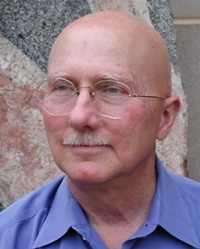
Henry Pollack is traveling with the University of Michigan delegation to the UN Climate Change Conference in Copenhagen.
The global climate change conference in Copenhagen just began heating up last week, and a delegation from the University of Michigan hopes to witness it all.
That group, which is being led by Richard Rood, a U-M professor of atmospheric, oceanic and space sciences; Paul Edwards from the School of Information; and Henry Pollack, a U-M geophysicist, includes several students.
The United Nations Climate Change Conference started in Copenhagen, Denmark, a week ago. Events are planned through Dec. 18. Group members wlll be blogging about their experiences while they are there.
Before leaving for Denmark, Pollack recently answered some questions about his expectations for the trip. Pollack served on the Intergovernmental Panel on Climate Change which received the Nobel Peace Prize, along with former Vice President Al Gore in 2007. Gore wrote the forward in Pollack's recently published book on climate change: “A World without Ice.”
Q: Can you explain a bit about what is going on in Copenhagen this month?
A: The broad agenda in Copenhagen is to draft a mitigation treaty, or a treaty to reduce greenhouse gas emissions. Two big topics are how more developed nations are going to help and what kind of monitoring and enforcement aspects will be part of the treaty … The main thing is putting a treaty in place.
Q. What sort of access will you have at this conference?
A. My role will be an observer. I’m part of the official University of Michigan observation committee which will give us access to many of the official activities (at the conference). One day I’m going to go out of Copenhagen to Aarhus, and I’m going to get a tour of the Vestas (Wind Systems A/S) research facility because I have a special interest in wind energy.
Q: What sort of agreement would you like to see come out of this conference?
A. I’m interested to see them put as much meat on this framework as possible because a treaty with no meat on it is just conceptual. Since China, India and the USA have already, more or less, made statements about agreements, I think there will be meat on it.
Q: Can you offer some context on how big of a deal it would be for the U.S. to make any climate change agreements as a result of this conference?
A. Number one: The U.S. has never signed onto an international climate change agreement of this scope before. There is the Kyoto (Protocol), which the U.S. helped draft, but the senate never approved. It is a big deal … It will be a big statement even though we over here have carbon-based fuel, we are trying to move away from that.
Q: As a researcher traveling from Michigan, what would you want to see at this conference?
A. I’m keen to see how the policies are shaping up. The science, despite all the leaked emails, is well accepted … It will be interesting to see the urgency expressed by the different nations. It will be a learning experience for me.
Tina Reed covers health and the environment for AnnArbor.com. You can reach her at tinareed@annarbor.com, call her at 734-623-2535 or find her on Twitter @TreedinAA.
Comments
billy
Sun, Dec 20, 2009 : 2:21 a.m.
I didn't equate global warming with socialism. The proponents of global warming did. I've read the Communist manifesto and I see how they are trying to take over, indoctrinating the youth and controlling the media.
Crescent Varrone
Fri, Dec 18, 2009 : 7:14 p.m.
while all public debate should be taken with a grain of salt, the discussion of Global Warming here seems overly skeptical. 1. we are burning a million years' worth of fossil fuel every year - is it really so illogical that this would have significant effects? 2. human effects on the ozone layer (or the fish in Lake Erie or acid rain) are well-documented - and have been reversed by the same people who brought you the problem. so it's not like humans haven't wrecked (and fixed) the environment before. Indeed, there is evidence we've been doing this since ancient times (extinctions, environmental degradation from 2000 to 10000 years ago). 3. the recommendations of the "climate nuts" are wise even if AGW were false - a) if the sun is causing the warming but greenhouse effect is real, then lowering GHG emissions will help push things the right way; b) we are running out of fossil fuels anyway, and unfriendly, unstable countries hold most of the reserves; c) existing power plants (coal) are terrible for the environment anyway - mercury contamination, mountaintop removal - so for goodness' sake let's not build any more; better to switch to cleaner energy sources; d) electric cars are cool - I want a Tesla! 4) can everyone please stop equating clean energy with Socialism - which has more MW of wind power, (Republican) Texas or (Social-democratic) Denmark? Answer: Texas. Reason: because this is the future of energy. Better get on the train, 'cause it's leaving the station...
billy
Thu, Dec 17, 2009 : 11:09 p.m.
This is a good link to who supports the Copenhagen summit http://www.youtube.com/watch?v=HNQqUACJ_Kw&feature=player_embedded
larry
Thu, Dec 17, 2009 : 9:50 p.m.
So now they've resorted to "bribing" China to the tune of $100 Billion... http://news.bbc.co.uk/2/hi/science/nature/8419578.stm Climate deal looks close, but may not halt warming By Richard Black Environment correspondent, BBC News website, Copenhagen He Yafei says China is willing to "engage" on emissions monitoring A deal at the UN climate summit looks more likely following a frantic day of behind the scenes diplomacy. China signalled concessions on monitoring of emission curbs, and the US said it would commit money for developing countries. Leaders are likely to have big choices to make when they meet on Friday. However, a leaked document from the UN climate convention indicates the best deal likely here will not keep the temperature rise below 2C (3.6F). Even if countries implement their biggest pledges, a rise of 3C (5.4F) is indicated, it concluded. Money matters Despite many expressions of concern about projections of climate change, finance has emerged as an issue more likely to make or break a deal than emission pledges. COPENHAGEN CLIMATE SUMMIT Delegates from 193 nations are in Copenhagen to negotiate an agreement on curbing greenhouse gas emissions, in order to prevent dangerous climate change Developing nations want rich nations to cut emissions by at least 25% by 2020 - rich nations are reluctant to go so far and want developing countries to curb emissions too The US will not accept legally binding emissions cuts unless China does the same. China has been vague on allowing international scrutiny of its emission cuts Ongoing disagreement on how funds to mitigate and adapt to climate change will be provided. Poor nations want direct aid, while the West favours schemes like carbon trading US Secretary of State Hillary Clinton said her administration was prepared to help establish funding of $100bn a year for developing countries if a deal emerges here that meets US requirements. "In the context of a strong accord in which all major economies pledge meaningful mitigation actions and provide full transparency as to those actions, the US is prepared to work with other countries towards a goal of mobilising $100bn a year to address the needs of developing countries." And they still claim they can predict global temperature rise? Amazing, when they have not gotten global temperature predictions right over the past 10-12 years with their models. And of course we would pledge another $100 Billion of money we don't have.
larry
Tue, Dec 15, 2009 : 5:23 p.m.
packman, thanka. Please spread the word and help stop this madness...
packman
Tue, Dec 15, 2009 : 3:53 p.m.
Thank you Larry for the post which adds to Algore's incredibility and incoherent rantings. Is it any wonder that many (most) people are skeptical over this issue?
larry
Tue, Dec 15, 2009 : 7:04 a.m.
Is this Al Gore (AGO2) smoking CO2, or what..? http://www.foxnews.com/scitech/2009/12/15/inconvenient-truth-gore-claims-dont-add/ Inconvenient Truth for Gore as Arctic Ice Claims Don't Add Up London Times The former vice president said new research showed that the Arctic could be completely ice-free in five years, but the scientist his estimate was based on denies the timeline. PRINTEMAILSHARE RECOMMEND (3) Dec. 14: Former Vice President Al Gore speaks at the U.N. Climate summit in Copenhagen. (AP) There are many kinds of truth. Al Gore was hit by an inconvenient one yesterday. The former vice president, who became an unlikely figurehead for the green movement after narrating the Oscar-winning documentary "An Inconvenient Truth," became entangled in a new climate change row. Gore, speaking at the Copenhagen climate change summit, stated the latest research showed that the Arctic could be completely ice-free in five years. In his speech, Gore told the conference: "These figures are fresh. Some of the models suggest to Dr. [Wieslav] Maslowski that there is a 75 percent chance that the entire north polar ice cap, during the summer months, could be completely ice-free within five to seven years." However, the climatologist whose work Gore was relying upon dropped the former vice president in the water with an icy blast. "It's unclear to me how this figure was arrived at," Dr. Maslowski said. "I would never try to estimate likelihood at anything as exact as this." Gore's office later admitted that the 75 percent figure was one used by Dr. Maslowski as a "ballpark figure" several years ago in a conversation with Gore. The embarrassing error cast another shadow over the conference after the controversy over the hacked e-mails from the University of East Anglia's Climate Research Unit, which appeared to suggest that scientists had manipulated data to strengthen their argument that human activities were causing global warming. Continue reading at The Times of London
FreedomLover
Tue, Dec 15, 2009 : 12:56 a.m.
I'll have to check out Mlive. Sounds like my kind of people!
jcj
Mon, Dec 14, 2009 : 10:04 p.m.
Kate your argument is as convincing (not) as any I've heard from the global warming alarmist. My point is you mad no case whatsoever just that we are suppose to follow like sheep. No body is raking in more money on this subject than your messiah Al Gore!
larry
Mon, Dec 14, 2009 : 6:45 p.m.
Carbon dioxide (CO2) is considered a "trace" gas in the Earth's atmosphere. The concentration of CO2 is 0.038% or 380 parts per MILLION. To put this in perspective, if $1000.00 represented the atmosphere, CO2 would be $0.38, and the rest of the atmosphere would be $999.62. CO2 is toxic at concentrations over 1% - i.e., when its concentration reaches $10.00 from $0.38. To think that changes in a gas at such low concentrations can have a dominant influence on the Earth's climate borders on the ludicrous.
larry
Mon, Dec 14, 2009 : 6:02 p.m.
GoBlu -- Could not agree with you more (and the others) more! Here is an interesting video by Lord Monckton on the Global Warming BS: http://www.youtube.com/watch?v=4zOXmJ4jd-8&feature=player_embedded# And this from, of all the lib places, the BBC: http://news.bbc.co.uk/2/hi/8299079.stm Page last updated at 15:22 GMT, Friday, 9 October 2009 16:22 UK E-mail this to a friend Printable version What happened to global warming? By Paul Hudson Climate correspondent, BBC News Average temperatures have not increased for over a decade This headline may come as a bit of a surprise, so too might that fact that the warmest year recorded globally was not in 2008 or 2007, but in 1998. But it is true. For the last 11 years we have not observed any increase in global temperatures. And our climate models did not forecast it, even though man-made carbon dioxide, the gas thought to be responsible for warming our planet, has continued to rise. So what on Earth is going on? Climate change sceptics, who passionately and consistently argue that man's influence on our climate is overstated, say they saw it coming. This anthropogenic global warming is an INCREDIBLE scam. It is almost like covert Marxism. These guys in the government want to essentially control everything -- health care, the auto companies, the financial system, and now this global warming BS. Al Gore flies around in his private jet (he has gotten very rich promoting this global warming BS) with no regard to all the CO2 he is emitting. He has degrees in Religion and Law, and is now a politician turned scientist. I guess you must hand it to him for making money out of hot air (as well as inventing the Internet). This stuff just boggles the mind. Amazing, legalized robbery..?
Macabre Sunset
Mon, Dec 14, 2009 : 5:08 p.m.
In other words, "my religion, despite all the leaked emails, still has fervent followers." Get ready for Pollack and other minions of Pope Gore to hijack our economy and crash it into the proverbial twin towers of climate-induced hysteria. Whee!
braggslaw
Mon, Dec 14, 2009 : 12:43 p.m.
The Cooling World: Newsweek warning us that we were entering a new ice age. There are ominous signs that the Earths weather patterns have begun to change dramatically and that these changes may portend a drastic decline in food production with serious political implications for just about every nation on Earth. The drop in food output could begin quite soon, perhaps only 10 years from now. The regions destined to feel its impact are the great wheat-producing lands of Canada and the U.S.S.R. in the North, along with a number of marginally self-sufficient tropical areas parts of India, Pakistan, Bangladesh, Indochina and Indonesia where the growing season is dependent upon the rains brought by the monsoon. The evidence in support of these predictions has now begun to accumulate so massively that meteorologists are hard-pressed to keep up with it. In England, farmers have seen their growing season decline by about two weeks since 1950, with a resultant overall loss in grain production estimated at up to 100,000 tons annually. During the same time, the average temperature around the equator has risen by a fraction of a degree a fraction that in some areas can mean drought and desolation. Last April, in the most devastating outbreak of tornadoes ever recorded, 148 twisters killed more than 300 people and caused half a billion dollars worth of damage in 13 U.S. states. To scientists, these seemingly disparate incidents represent the advance signs of fundamental changes in the worlds weather. The central fact is that after three quarters of a century of extraordinarily mild conditions, the earths climate seems to be cooling down. Meteorologists disagree about the cause and extent of the cooling trend, as well as over its specific impact on local weather conditions. But they are almost unanimous in the view that the trend will reduce agricultural productivity for the rest of the century. If the climatic change is as profound as some of the pessimists fear, the resulting famines could be catastrophic. A major climatic change would force economic and social adjustments on a worldwide scale, warns a recent report by the National Academy of Sciences, because the global patterns of food production and population that have evolved are implicitly dependent on the climate of the present century. A survey completed last year by Dr. Murray Mitchell of the National Oceanic and Atmospheric Administration reveals a drop of half a degree in average ground temperatures in the Northern Hemisphere between 1945 and 1968. According to George Kukla of Columbia University, satellite photos indicated a sudden, large increase in Northern Hemisphere snow cover in the winter of 1971-72. And a study released last month by two NOAA scientists notes that the amount of sunshine reaching the ground in the continental U.S. diminished by 1.3% between 1964 and 1972. To the layman, the relatively small changes in temperature and sunshine can be highly misleading. Reid Bryson of the University of Wisconsin points out that the Earths average temperature during the great Ice Ages was only about seven degrees lower than during its warmest eras and that the present decline has taken the planet about a sixth of the way toward the Ice Age average. Others regard the cooling as a reversion to the little ice age conditions that brought bitter winters to much of Europe and northern America between 1600 and 1900 years when the Thames used to freeze so solidly that Londoners roasted oxen on the ice and when iceboats sailed the Hudson River almost as far south as New York City. Just what causes the onset of major and minor ice ages remains a mystery. Our knowledge of the mechanisms of climatic change is at least as fragmentary as our data, concedes the National Academy of Sciences report. Not only are the basic scientific questions largely unanswered, but in many cases we do not yet know enough to pose the key questions. Meteorologists think that they can forecast the short-term results of the return to the norm of the last century. They begin by noting the slight drop in overall temperature that produces large numbers of pressure centers in the upper atmosphere. These break up the smooth flow of westerly winds over temperate areas. The stagnant air produced in this way causes an increase in extremes of local weather such as droughts, floods, extended dry spells, long freezes, delayed monsoons and even local temperature increases all of which have a direct impact on food supplies. The worlds food-producing system, warns Dr. James D. McQuigg of NOAAs Center for Climatic and Environmental Assessment, is much more sensitive to the weather variable than it was even five years ago. Furthermore, the growth of world population and creation of new national boundaries make it impossible for starving peoples to migrate from their devastated fields, as they did during past famines. Climatologists are pessimistic that political leaders will take any positive action to compensate for the climatic change, or even to allay its effects. They concede that some of the more spectacular solutions proposed, such as melting the Arctic ice cap by covering it with black soot or diverting arctic rivers, might create problems far greater than those they solve. But the scientists see few signs that government leaders anywhere are even prepared to take the simple measures of stockpiling food or of introducing the variables of climatic uncertainty into economic projections of future food supplies. The longer the planners delay, the more difficult will they find it to cope with climatic change once the results become grim reality.
tdw
Mon, Dec 14, 2009 : 11:15 a.m.
Hey I was just thinking does anyone remember about 20-25 yrs ago when the scientists were telling everyone that we were about to enter a new ice age?what ever happened to that?
djm12652
Mon, Dec 14, 2009 : 10:54 a.m.
Wow...I've never seen such a psuedo-intellectual thread of such vast degrees of difference. It comes down to this...Democrats are all smart and energy conserving good people, Republicans are are stupid people driving SUV's and are basically evil...right? Suns spots have had nothing to do with our climate ever...and cow's farts [nasty little gassy buggers] cause more damage that humans...
braggslaw
Mon, Dec 14, 2009 : 10:22 a.m.
Science is never settled. For people to argue unequivocally that global warming exists and people are causing does not fall under the scientific method. Cooling and warming periods have happened numerous times in the last million years, some scientists have postulated that a "bobble" in the earth's orbit is causing this cyclical cooling and warming. I do not want to forge national policy based upon fabricated data and emotional liberal arts majors who wouldn't know an ionic bond from a covalent bond.
David Briegel
Mon, Dec 14, 2009 : 10:05 a.m.
I heard an interview of Lord Monckton and he came off as a Royal snob. He stated that everyone who believed in Global Warming was evasive and didn't answer his questions while everyone in opposition was helpful and explained everything. End of credibility right there! To cast that wide a net on both sides as good vs evil is absurd!
bruceae
Mon, Dec 14, 2009 : 10:02 a.m.
Wow, a whole delegation of U of M professors and students on vacation over there observing. Who is paying for this vacation? And just last week we had Mary Sue on here talking about needing more funding. This would have been a good place to save money.
Thick Candy Shell
Mon, Dec 14, 2009 : 9:37 a.m.
@Kate Boyde, Who cares if they were "leaked" or "hacked". I doesn't change the fact of what they say. The computer code they use to "model the climate" shows the bias. The code was designed to CHANGE THE DATA. How can you trust anything they say. Oh, and they do not deny anything in the hacked info.
A2K
Mon, Dec 14, 2009 : 9:29 a.m.
Global Warming is a FACT...those so-called "emails" were "leaked" by Russian Oil/Gas "scientists" who were interested in keeping the status-quo and destroying the planet for their own selfish interests. Go ahead and deny all you want, doesn't change the fact that the Earth and all the wonderful living things and systems on it are in serious trouble. Amazing how the Trolls are bleeding onto A2.com from Mlive and elsewhere (why I avoid that site like the plague...too many militia/religious nutcases ranting and raving 24/7)
packman
Mon, Dec 14, 2009 : 9:24 a.m.
(Replying to Dave M's comments) "There is no longer argument about climate change - that's an established fact. It is also clearly understood that global warming is largely due to human induced factors." Dave - How can you be so sure? Argument and reasoned discourse is known as science. Disguising data is not...inhibiting publication of opposing views is not..."fudging" data in Al Gore's foolish movie is not...climate change took place long before humans had the means to "induce" such change. The scientific jury is still out and will no doubt end up "hung." When there is a perceived "crisis" politicians will not "waste it" to paraphrase our current Chief of Staff of the Obama White House. P.S. Scientists have biases too...
xmo
Mon, Dec 14, 2009 : 9:01 a.m.
"Big Tobacco" got into trouble when it lied about test results. Now that "Big Climate Change" has lied about Man Made Global warming will the same thing happen? How much money does U of M get to promote "Big Climate Change"? That would be an interesting article to read.
Conservative
Mon, Dec 14, 2009 : 8:49 a.m.
I'm not a fan of the cold. I say we all run our clothes dryers and gas grills 24/7 and warm up the atmosphere. Lets do it!
Ed Kimball
Mon, Dec 14, 2009 : 8:35 a.m.
@jcj: Do you have homeowners (or renters) insurance? The odds that something will actually happen to your home are small. You buy insurance because the possible outcome could be catastrophic. Even if global climate change is unlikely (and most scientists and others think it is quite likely), the results have the potential to be so serious that we should be spending some of our money on insuring it doesn't happen. Besides, making our economy more energy efficient will improve business profits and reduce our spending on foreign oil. How is that a bad thing (unless you're making a lot of money on foreign oil? BTW, I agree with braggslaw that a carbon tax would be a much more efficient and effective way to reduce (not "stop") carbon emissions.
Anonymous Commentor
Mon, Dec 14, 2009 : 8:25 a.m.
There is no longer argument about climate change - that's an established fact. It is also clearly understood that global warming is largely due to human induced factors. The debate now is about how best to address the crisis (mitigation, adaptation, or non-action), and this is where things become heavily politicized. Those who continue to debate the fundamental elements of climate change either do not understand or are suspicious of science, or have economic or other motives.
jcj
Mon, Dec 14, 2009 : 7:46 a.m.
Those that are pushing the climate change hoax either 1) Have there hand in our pockets ready for their big payoff or 2) are like sheep following there masters where ever they go with this. If climate change zar Al Gore is so concerned why does he charge thousands to preach his rubbish? During an appearance on NBC's Tonight show Nov. 12, former Vice President Al Gore told host Conan O'Brien geothermal energy is a promising alternative to fossil fuels because "the interior of the earth is extremely hot, several million degrees, and the crust of the earth is hot." The temperature at the earth's core has been estimated at between 4,000 and 6,000 degrees Celsius. As John Derbyshire of National Review noted, "if the temperature anywhere inside the earth were several million degrees,' we'd be a star." Who stands to gain from this propaganda? Counties around the world that expect a big windfall from more handouts, traveling salespersons like Al Gore and professors that will get grants to "study" the affects. You cannot call yourself a scientist ( it doesn't matter which side of the argument you are on)if you are going to distort the FACTS. And not look at all arguments. Let the propaganda begin sheep!
braggslaw
Mon, Dec 14, 2009 : 7:45 a.m.
China and India will burn all the fossil fuel in the world. Short of war there is nothing the US can do to stop human caused global warming (if in fact it exists). Cap and trade is a scheme to hide the costs of controlling carbon. If people want to stop carbon emissions, tax carbon directly so that the costs are transparent. As an American I do not want ill advised environmental nuts destroying the prosperity of the United States. I do not want America to martyr itself when China and India will ignore (or pretend to comply) with any emission controls.