

Washtenaw County Democrats say changes to emergency manager rules would harm cities, schools
State Rep. David Rutledge, D-Superior Township, expressed dismay today at the state House's passage of legislation he says promises to hurt local governments and school districts.
The Michigan House on Wednesday approved a package of bills that would grant broad powers to emergency financial managers appointed by the state to run struggling cities and schools.
Opponents say it's a power grab by the state. Supporters argue the legislation would lead to earlier intervention by the state in financially troubled communities and schools, and would help local schools and governments avoid bankruptcy.
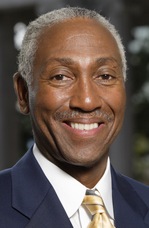
David Rutledge
The main bill in the package passed 62-47, with the vote falling mainly along party lines in the Republican-led House. The legislation now goes on to the Senate.
Rutledge, who represents the cash-strapped city of Ypsilanti and other parts of eastern Washtenaw County, said he intends to fight the legislation. He argues it would give emergency managers "unchecked control" over Michigan communities in financial disaster status.
The bills would give emergency managers the ability to sell a local government’s assets, terminate or renegotiate labor contracts, remove pension board trustees, set minimum staffing levels and enter into consolidation of service agreements. The legislation also allows private companies to serve as a local government's emergency manager.
Rutledge argues the manager would only be accountable to the state treasurer and would not be required to collaborate with local officials, labor unions or community members.
“I am deeply concerned about the potential long-term damage this legislation could have on our local communities,” Rutledge said in a statement today. “Local governments in financial stress should have access to resources and support from the state so that solutions can be found collaboratively before communities are forced into emergency status. Instead of offering support, this legislation would give emergency managers unlimited power.”
The legislation passed through the House Committee on Local, Intergovernmental and Regional Affairs, which is chaired by state Rep. Mark Ouimet, R-Scio Township.
Rutledge voted against the legislation in committee and again on Wednesday on the House floor. State Rep. Jeff Irwin, D-Ann Arbor, also voted against it.
"One troubling aspect is that these changes to the EMF act were rushed through at top speed," Irwin said. "I don't think it's appropriate to fast track a bill related to the state taking over local governments. When we're taking about usurping local elected officials and the will of the voters, that bill should enjoy thorough debate and consideration."
Many communities throughout Michigan are facing significant financial issues through no fault of their own, Rutledge said
“Unstable state funding to local governments and an unpredictable economy should not mean voters lose their right to make decisions about their own community," he said.
State Rep. Al Pscholka, primary sponsor of the bill package, argues his legislation "brings common sense and fiscal responsibility" to the resolution of local financial emergencies.
"This bill outlines a series of triggers that allows the Michigan Department of Treasury to reach agreements with local schools and governments to eliminate deficits and put their fiscal houses in order," Pscholka, R-Stevensville, said in a statement. "The bill also proposes some tough love for local leaders who won't make the necessary changes to bring the books into balance and protect the interest of taxpayers."
Republican Gov. Rick Snyder and his administration repeatedly have said there needs to be better clarity over the powers of emergency financial managers in both municipalities and schools, as well as allowance of earlier intervention by the state.
Ryan J. Stanton covers government and politics for AnnArbor.com. Reach him at ryanstanton@annarbor.com or 734-623-2529.
Comments
snapshot
Tue, Mar 1, 2011 : 3:17 a.m.
What is it that these legislatures don't get about an "emergency". So they want to take their time, discuss it, "Rangle" over the "problem" and discuss satisfactory solutions for all involved? Are they crazy? The folks they want to involve in the "solution" process, caused the "problem". It's BS that it is "through no fault of their own". The fault lay sqarely on a dysfunctional and corrupt system that provides immunity for incompetance. I agree wholeheartedly with Snyder's proposal for emergency managers. They need the power to circumvent the bickering local power brokers.
Tom
Sat, Feb 26, 2011 : 5:49 p.m.
Whatever the outcome, it's got to work better then the status quo. Each year the Ypsilanti school district is further in debt and the test scores go down.
Ryan J. Stanton
Sat, Feb 26, 2011 : 4:41 p.m.
A reader e-mailed this comment because they had trouble posting it: "Rutledge and Irwin did not indicate whether they had actually 'read' house bill 4214. I believe they are in err, because I actually read parts of the bill. It's called the 'local government and school district accountability act.' The act empowers the State government to intervene with the consent of the local authority if the local authority is unable to pay it's bills — this includes payments to union pensions. The bill includes a provision for the local authority to appeal decisions to the judiciary. Therefore, Rutledge is wrong, and the so-called 'control' is checked. It's checked by 'consent' of the local authority and it's checked by the 'right to appeal.' What this means is that the Republican legislature is preparing for a legitimate consensual intervention when local governments begin to welch on obligations to LABOR and contractors, and others. And that is only a matter of time. Rutledge is also wrong because the bill provides local authorities with resources and support especially in the form of expert financial analysis and emergency powers. "Irwin is wrong in his characterization of the bill. The bill provides for 'consent' of the local authority — not a take over Furthermore, Irwin is deceptive in that the bill provides emergency powers when the local authority cannot manage it's own jurisdiction. Finally, the bill clearly states that it is enacted by 'THE PEOPLE OF THE STATE OF MICHIGAN.' The first sentence states: 'A bill to safeguard the continued financial viability of unit of local government...' "The bill does NOT provide for union-busting, and the unions are not the ONLY entity with an interest in local government. The PEOPLE and the TAX PAYERS are also involved. So, if the local government or school district is financially stable, then the bill is not applicable. The bill becomes active, when the local government is failing."
Edward R Murrow's Ghost
Sat, Feb 26, 2011 : 5:25 p.m.
@Ryan--this person posted this message above--joe baublis And he is completely incorrect. The legislation has 20 trigger points that allows the appointment of an EFM (and the destruction of the locally elected government). The 20th trigger--the "just because" clause--reads "The existence of other facts or circumstances indicative of financial stress, as determined by the state treasurer (for a municipal government) or by the state school superintendent (for a school district)." The key phrase here is "circumstances indicative of financial stress." There is no guidance for what this means--it is completely subjective--"just because". And the bill absolutely provides for the destruction of unions. From the HFA analysis: The EFM would have the authority to: "Reject, modify, or terminate one or more terms and conditions of an existing collective bargaining agreement." In this case, "one or more terms" equals the entire contract. But, as I wrote above, the truly disturbing aspect of this legislation is that it allows the DESTRUCTION of a democratically elected government and its replacement by a business. A teapartyist dream. A nightmare for anyone who values democracy. Good Night and Good Luck
Heardoc
Sat, Feb 26, 2011 : 5:06 a.m.
Ryan J. Stanton wrote this at 5:25 PM on February 24, 2011-- he is a writer for the AA.com and wrote: A reader just shared the following thoughts with me via e-mail: "Though the legislation is purportedly intended to help 'struggling' school districts and municipalities, if you read the bill itself or the House Fiscal Agency's analysis, you can see it can be applied to virtually ANY local government or school board. I plead with you to read the analysis, in particular the intro and the EIGHTEEN triggering events (pg 4-6). Don't you love the last one? 'Facts indicative of financial stress'? If collective bargaining & contracts could be abrogated every time a government or company could be found with one sign of "financial stress," unions would not exist anywhere. "So there is no reason to believe that this legislation has anything to do with 'struggling' governments. This is a naked move at union-busting." Silly -- Public unions are bad -- Teddy Roosevelt and, amazingly, the first head of the AFL_CIO stated the same thing -- please distinguish public (government) employee unions from the private sector unions --All public unions like AFSCME should be made illegal.
Edward R Murrow's Ghost
Sat, Feb 26, 2011 : 2:45 a.m.
If you read your entire article and then paired it with mine, this is what you would have found: 1) PA 72 allows cities to declare bankruptcy only after 6 months under a EFM and then only if the EFM agrees. 2) Hamtramk wanted to avoid the step of an EFM and asked the governor to issue an executive order allowing it to declare bankruptcy. And somehow this means PA 72 is broken? Or that a city cannot declare bankruptcy? Yes, I forgot the first rule of debating with most conservatives: Facts and logic don't matter. They are a "dodge". And when conservatives can't counter facts and logic, they come off with something cool and snappy. Good Night and Good Luck
braggslaw
Sat, Feb 26, 2011 : 2:30 a.m.
wow... you really tried to dodge that. the financial manager is the tool of the governor. Hamtramck pleaded with the governor, so apparently they believed they needed the governor's permission. Unless of course Hamtramck is wrong and you are right... Nope you were wrong... Don't bring a knife to a gun-fight. Good night.
Edward R Murrow's Ghost
Sat, Feb 26, 2011 : 2:01 a.m.
Michigan municipalities may declare bankruptcy: "Unlike California and other states, struggling Michigan municipalities do not simply enter receivership and declare bankruptcy. Instead, if a local unit continues to falter, it eventually comes under PA 72, under which the governor declares a financial emergency. An emergency financial manager may be appointed who has broad authority, including the right to renegotiate contracts. 'Several municipalities in Michigan have emerged from PA 72 and moved forward, including Flint and Hamtramck,' said Washington. The Village of Three Oaks will soon join them. A local unit financial emergency can only proceed to Chapter 9, municipal bankruptcy, after a financial plan has been in place for at least 180 days, and the emergency financial manager has determined that there is no way to remedy the emergency in a timely manner. In addition, the emergency financial manager must petition the Emergency Financial Assistance Loan Board who must not disapprove the request. To date, Michigan municipalities have always avoided Chapter 9." See: <a href="http://www.muninetguide.com/articles/michigans-financial-crisis-creates-financial-woe-344.php" rel='nofollow'>http://www.muninetguide.com/articles/michigans-financial-crisis-creates-financial-woe-344.php</a> So, it is different from personal bankruptcy, but there is a process (PA 72 is the current law regulating EFMs). And under bankruptcy those municipalities can do anything that the proposed law permits. So why the necessity to ditch PA 72 and give PRIVATE COMPANIES the ability to run municipalities? But that's the answer to the question, isn't it? That, and creating the "just because" trigger that permits state takeover for just about any reason it desires. And only in a bizzaro universe is it bad news that a Michigan city never declared bankruptcy. In a rational universe, it means that PA 72 is working. Good Night and Good Luck
braggslaw
Sat, Feb 26, 2011 : 1:40 a.m.
Talk about ignorant and disingenuous. The democratic governor would not allow Hamtramck to declare bankruptcy. The state has a say. <a href="http://westlawnews.thomson.com/Bankruptcy/News/2010/12_-_December/Hamtramck,_Mich__eyes_state_loan,_seeks_bankruptcy/" rel='nofollow'>http://westlawnews.thomson.com/Bankruptcy/News/2010/12_-_December/Hamtramck,_Mich__eyes_state_loan,_seeks_bankruptcy/</a> <a href="http://www.nytimes.com/2010/12/28/us/28city.html" rel='nofollow'>http://www.nytimes.com/2010/12/28/us/28city.html</a> "Besides, states have a say in whether a municipality may pursue bankruptcy at all, and they have every reason to avoid such an outcome, not least of all for fear of a creating a ripple effect that could cripple the municipal bond market and drive up the cost of borrowing. " The financial manager is a tool of the governor Wrong again.. I repeat a city in Michigan has not declared bankruptcy.
John Q
Sat, Feb 26, 2011 : 1:23 a.m.
Why is anyone surprised by this? Republicans loooove their little dictators. The idea of a bunch of junior Chris Christies and Scott Walkers running around smashing union contracts and usurping the role elected officials gives a big thrill to a wide swath of conservatives.
Edward R Murrow's Ghost
Sat, Feb 26, 2011 : 12:49 a.m.
BL: Speaking of being disingenuous, you stopped the quote at precisely the point in the article that proves my point. The article continues: "Instead of bankruptcy, Governor Granholm's administration is pressuring Hamtramck to consider various loan proposals. However the Hamtramck city manager has said bankruptcy is a way to void the labor contracts and pension responsibilities that will continue to add to the city's debt." Note the word "pressuring". Pressures!! Not "requiring." The state has no standing whatsoever to prevent a municipality from declaring bankruptcy. That no city has ever declared bankruptcy would seem to be proof that such an outrageous EFM bill is not necessary. But in the bizzarro universe, lack of bankruptcy is proof that an extreme EFM bill is necessary. For those of you who might like to see the entire article in order to judge for yourself who is being disingenuous, it is at: <a href="http://peoplesworld.org/michigan-city-on-verge-of-bankruptcy/" rel='nofollow'>http://peoplesworld.org/michigan-city-on-verge-of-bankruptcy/</a> Good Night and Good Luck
braggslaw
Sat, Feb 26, 2011 : 12:43 a.m.
Most municipalities would love to declare bankruptcy.... Something the previous governor would not allow. It would allow the city to void all of its union contracts . In my mind the correct result. Interesting link <a href="http://www.opposingviews.com/i/feds-should-not-bail-out-cities-and-states" rel='nofollow'>http://www.opposingviews.com/i/feds-should-not-bail-out-cities-and-states</a>
braggslaw
Sat, Feb 26, 2011 : 12:38 a.m.
EMG you are being disingeuous. No Michigan municpality has ever declared bankruptcy. Hamtramck attempted but Granholm would not let them. "HAMTRAMCK Mich. - In a preview of what may happen to many cities and towns in this state, the city of Hamtramck is $3 million in debt and will run out of money by the end of January. It has sought permission from the State of Michigan to file for bankruptcy, a move never before taken by a Michigan municipality."
joe baublis
Fri, Feb 25, 2011 : 11:59 p.m.
Rutledge and Irwin may not have actually "read" house bill 4214. I believe they are in err, because I did read parts. It's called the "local government and school district accountability act". The act empowers the State government to intervene with the consent of the local authority if the local authority is unable to pay it's bills - this includes payments to union pensions. The bill includes a provision for the local authority to appeal decisions to the judiciary. Therefore, Rutledge is wrong, and the so-called "control" is checked. It's checked by "consent" of the local authority and it's checked by the "right to appeal". What this means is that the Republican legislature is preparing for a legitimate consensual intervention when local governments begin to welch on obligations to LABOR and contractors, and others. And that is only a matter of time. Rutledge is also wrong because the bill provides local authorities with resources and support especially in the form of expert financial analysis and emergency powers. Irwin is wrong in his characterization of the bill. The bill provides for "consent" of the local authority - not a take over. Furthermore, Irwin is deceptive in that the bill provides emergency powers when the local authority cannot manage it's own jurisidiction. Finally, the bill clearly states that it is enacted by "THE PEOPLE OF THE STATE OF MICHIGAN". The first sentance states: " A bill to safeguard the continued financial viability of unit of local government..." The bill does NOT provide for union-busting, and the unions are not the ONLY entity with an interest in local government. The PEOPLE and the TAX PAYERS are also involved. So, if the local government or school district is financially stable, then the bill is not applicable. The bill becomes active, when the local government is failing.
Rick Olson
Fri, Feb 25, 2011 : 10:39 p.m.
I also voted for this Emergency Financial Manager bill. The "preventive" provisions are intended to lessen the number of municipalities that go into financial emergency, but if they do, then the EFM has the powers he/she needs to deal with it, in contrast to Robert Bobb who has had his hands tied in dealing with Detroit Public Schools. A more detailed explanation if available at <a href="http://repolson.blogspot.com/2011/02/emergency-financial-managers-powers-to.html" rel='nofollow'>http://repolson.blogspot.com/2011/02/emergency-financial-managers-powers-to.html</a> Rick Olson, State Representative, 55th District
Do not taunt Happy Fun Ball
Sat, Feb 26, 2011 : 12:11 a.m.
Finally - a plan! Rick, I am glad you voted to take action toward fixing these financial problems. Someone is showing they have some spine to _not_ push this problem down the road! . Once Michigan is repaired fiscally - perhaps more businesses will be able to hire here. That in itself will mean fewer emergencies as the tax base will actually be able to pay taxes without taking out a loan. Maybe home values will rise (love those $1 homes in Detroit) and again tax revenue will increase for services.
Edward R Murrow's Ghost
Fri, Feb 25, 2011 : 10:58 p.m.
. . . while the vaguely worded triggers, especially the 20th "just because" trigger, are meant to insure more municipalities and school districts come under EFMs. When you came to my door this fall you presented yourself as a moderate. Now we know better. Enjoy your single term. Good Night and Good Luck
Edward R Murrow's Ghost
Fri, Feb 25, 2011 : 9:30 p.m.
"Ultimately the state is on the hook for the municipal liabilities. . . . The municipalities have been spending like children... giving money to their friends (unions)..etc., knowing that there were no consequences under a Democratic governor." Wrong. Indeed, amazingly ignorant. Municipalities can declare bankruptcy. School districts cannot but the only reason most will be facing problems next year is that the governor is creating an artificial crisis by not disbursing the school aid fund. The state has no obligation whatsoever in either case. But when municipalities AND school districts became dependent on state funding under Prop A, the state assumed a moral if not legal obligation to fund them AS PROMISED when it took away their ability to manage the revenue half of their budgets. But, then, maybe Prop A was the first step in the game that has taken 20 years to play out--prevent local governments from being able to manage the revenue half of their budgets, then create a fiscal crisis that will give a Republican governor and a Republican legislature an excuse to remove locally elected governments and to put their business buddies in charge. Naaahhhh. That would never happen. I mean, that would be like the Koch brothers buying themselves the governor of Wisconsin so that they could take over key state assets. Oh, that's what happened? Never mind. Good Night and Good Luck
zip the cat
Fri, Feb 25, 2011 : 8:33 p.m.
Ya'all voted this guy and his party into office and ya'all new he was going to make drastic changes. Now that he's here and doing what he said he was going to do and Ya'all new it when Ya'all voted them in,so whats the problem
Edward R Murrow's Ghost
Fri, Feb 25, 2011 : 9:31 p.m.
"We all" didn't vote for him and, like the guy in Wisconsin, there was nothing in his campaign that suggested any of this. Good Night and Good Luck
braggslaw
Fri, Feb 25, 2011 : 7:51 p.m.
Ultimately the state is on the hook for the municipal liabilities. Imagine your son taking the family credit card and boozing it up with friends for a few years. DAD has to pay for the consequences. Dad has every right to step in to stop the bleeding. The municipalities have been spending like children... giving money to their friends (unions)..etc., knowing that there were no consequences under a Democratic governor. Well Dad just got the credit card bill in the mail..
WhyCan'tWeBeFriends
Sun, Feb 27, 2011 : 7:23 a.m.
I think your wayward son is your problem, but I will be curious to see if a Republican leadership will solve Michigan's problems - I hope it will. It's an enormous task and I won't be surprised if they fail - the battle is long. I will be delighted if they succeed!
Edward R Murrow's Ghost
Fri, Feb 25, 2011 : 6:46 p.m.
This article and its headline misses the point. Under its provisions, there are 20 triggers where an emergency financial manager could take over a municipality or a school district. Many of them are very vague, but the last is frighteningly so. It reads: "The existence of other facts or circumstances indicative of financial stress, as determined by the state treasurer (for a municipal government) or by the state school superintendent (for a school district)." In other words, the law could be triggered "just because." What happens when the law is triggered? An emergency manager is appointed that can be either an individual or a FIRM. All elected representatives of that municipality are removed from office and are prohibited from seeking office for ten years. So this law permits the REMOVAL of elected officials and their REPLACEMENT by a private business. So, let's see the game that's being played: 1) The state has a $1.5 billion projected deficit next year 2) The governor has proposed giving his business buddies a $1.8 billion tax break 3) The resultant $3.3 billion hole in the budget is going to be made up, in part, through drastic cuts in revenue sharing. In other words, the state is reneging on the promise made when Proposal A was adopted. Moreover, despite a school aid fund that is projected to have more money than last, the governor is proposing drastic reductions in per pupil funding--also breaking the promise made with Prop A. 4) These measure will put virtually hundreds of communities and school districts in danger of many of the triggers stipulated by the law, but certainly under the vague trigger cited above. So, in sum, the governor's budget will create a fiscal crisis in communities around the state. The bills under consideration will then allow those communities to lose their elected governments and to be replaced by a private business. This bill is a danger to DEMOCRACY!! Good Night and Good Luck
eastsidemom
Fri, Feb 25, 2011 : 7:33 p.m.
We don't need a Scott Walker here, Snider has just pushed it all down to the local communities to do all the dirty work and short of that...we have this new legislation taking away our own communities. The workers ARE the taxpayers, unionized or not...
Thinktanker
Fri, Feb 25, 2011 : 6:18 p.m.
Gov Snyder plans are concerning. Though I agree when he says there "needs to be better clarity over the powers of emergency financial managers (EMF) in both municipalities and schools, as well as allowance of earlier intervention by the st...ate", his bills would allow the EMF to USURP LOCAL ELECTED OFFICIALS AND THE VOTER'S WILL. This has nothing to do with "clarity"! Plus: 1. His thinking flies in the face of his philosophy of "individual responsibility" since these bills will singlehandedly take away all individual responsibility and lay it in the hands of one person! So - is he saying that he is all for "individual choice" except when that choice differs from what he wants? 2. Is his plan to install EMF's with unlimited power constitutional? 3. To fast-track a policy that would ignore the peoples voice and grant unlimited power into the hands of a few is concerning - a red flag. It's a tremendous change that requires more discourse!
Heardoc
Fri, Feb 25, 2011 : 6:13 p.m.
The people complaining about this measure are the ones in lock step with unions and the far left in this county. We need this and it should pass -- Ann Arbor will be a city that may need a financial manager in the near future -- the water/sewer system, the courts (judges) the firemen and policemen -- these are all over paid people/entities and the city is struggling with it's finances now -- It will only get worse until we reign in these special interests and remove public employee unions. Unions with private employers are fine -- NO PUBLIC EMPLOYEE UNIONS!
Glen S.
Fri, Feb 25, 2011 : 5:36 p.m.
@ Happy Fun Ball I agree with you -- paying all these taxes sucks. But, it sucks even more because people like you and me have to pay more than our fair share because the super-rich and corporations pay less than they have in decades. You know what else sucks? The fact that, in the time all of us -- public sector, private sector, middle class, working class, unemployed, whatever -- have been busy arguing with each other on this site, the super-rich and corporations have been busy figuring out way to amass even more wealth and power. Look around: The enemy is NOT your next-door neighbor.
Gnat
Sat, Feb 26, 2011 : 12:58 a.m.
What is a "fair share"? The rich already pay most of the taxes and they take the least of the services. The poor pay very little, or even negative taxes, and receive most of the services and benefits. Corporations pay no taxes and never will because they pass the tax through to the consumer. They are merely the gov;t's tax collector, not a payer. Look around: The enemy is ignorance of the facts.
Do not taunt Happy Fun Ball
Sat, Feb 26, 2011 : 12:41 a.m.
What is "fair share"? Per IRS info . . . Top 1% of all earners pay 20% of all taxes. Top 25% of all earners pay 86% of all taxes. Top 50% of all earners pay 97% of all taxes. Bottom 50% of all earners pay 3% of all taxes. That is 3%. - - Half of all payers pay just Three percent. Do you know how big the IRS tax check is from the likes of a Bill Gates class tax payer = it's like $500 million dollars or more per year (Gates stated that he has paid 6 Billion Dollars in taxes.)
Do not taunt Happy Fun Ball
Fri, Feb 25, 2011 : 4:33 p.m.
Raising taxes is ignorant. Eating off of someone else's plate. Once you reach 100% tax rate - nothing will be left. Between property taxes, income taxes, sales taxes, communication/phone taxes, worker tax fees/forced wages, regulation costs, unemployment taxes, etc. there is nothing left to actually pay for actual work. . Perhaps it would be better if Michigan just bounced all the checks. California is passing out IOU's, NY is doing it, Chicago is 6+ months behind in paying bills - Let's just go bankrupt - Michigan is good at that! CCW/Home schooling here I come.
Edward R Murrow's Ghost
Fri, Feb 25, 2011 : 4:28 p.m.
In a speech at Liberty State Park on Labor Day 1980, Ronald Reagan said: "But restoring the American dream requires more than restoring a sound, productive economy, vitally important as that is. It requires a return to spiritual and moral values, values so deeply held by those who came here to build a new life. We need to restore those values in our daily life, in our neighborhoods and in our government's dealings with the other nations of the world. These are the values inspiring those brave workers in Poland. The values that have inspired other dissidents under Communist domination. They remind us that where free unions and collective bargaining are forbidden, freedom is lost. They remind us that freedom is never more than one generation away from extinction. You and I must protect and preserve freedom here or it will not be passed on to our children. Today the workers in Poland are showing a new generation not how high is the price of freedom but how much it is worth that price." Doubt this? See: <a href="http://www.reagan.utexas.edu/archives/reference/9.1.80.html" rel='nofollow'>http://www.reagan.utexas.edu/archives/reference/9.1.80.html</a> I guess Reagan must have been a liberal lackey communist unionist fascist nazi. Good Night and Good Luck
Mike
Fri, Feb 25, 2011 : 1:46 p.m.
The problem most financial managers have is that their hands are tied by special interests. Simple solution is to make the tough decisions before a financial manager is necessary. When you go bankrupt you usually don't have much say in your finances. Why is this concept so difficult to grasp? You can always regroup once your finances are back in order. This is why we have financial disasters in pretty much every state. This country has a giant debt hangover it needs to get over. Time to take our medicine and fix our finances.
Glen S.
Fri, Feb 25, 2011 : 1:17 p.m.
I urge everyone who reads this to follow the link near the top of the story and actually READ the legislation. It is long and dense, but the "takeaway" is that this bill will give unelected bureaucrats -- based on purely subjective criteria -- the legal means to appoint private, for-profit contractors to take over your local community or school district to run as they see fit. Once this happens, you will be obliged to continue to obey the law and pay your taxes -- but you will no longer have any say, either directly or indirectly -- in how your community is run, how your tax dollars are spent, etc. The best part: YOU (through your tax dollars) will end up paying for these outside contractors to come in and manage your already cash-strapped city or school district! And, since these private contractors will be profiting for this arrangement for as long as they're charged with managing your community or school district, there will be virtually no incentive for them to declare your city or school district's "crisis" over. Therefore, the longer the "crisis" continues, the longer they can continue to profit. For those who believe that "outsourcing" is the solution to nearly every economic problem, this is the ultimate win -- in effect, replacing local democracy with enforced corporate management.
Edward R Murrow's Ghost
Fri, Feb 25, 2011 : 4:30 p.m.
This from the person who read the AAEA contract with the AAPS and continually insisted, despite being told numerous times he was wrong, that teachers could cash in sick time upon their retirement. So take this "opinion" with a 50-lb. bag of salt. Good Night and Good Luck
DonBee
Fri, Feb 25, 2011 : 3:48 p.m.
Having read the bill now twice, I don't see this. What I see is an appointed manager (appointed by elected officials) has the ability to hand some parts of the work to an outside private company and to bring in outside private companies to do things like audits. It was exactly this kind of outside service that resulted in so many resignations and criminal trials in Detroit. If you don't allow this kind of change, you tie the hands of the financial manager and the city or school goes bankrupt. Remember this is for Emergencies where the unit of government is already in TROUBLE. Run your unit of government well and it never applies to you.
Lisa
Fri, Feb 25, 2011 : 1 p.m.
Let me get this straight, this bill gives PRIVATE COMPANIES the ability to cancel public sector labor contracts? And folks are still trying to pretend that there isn't an orchestrated attack on unions by Republicans for political purposes?
Edward R Murrow's Ghost
Fri, Feb 25, 2011 : 6:03 p.m.
Quoting from the HFA analysis: "Specifies that an emergency manager would be chosen on the basis of competence; need not be a resident of the local government; may be an individual or firm . . . " Emphasis: "OR FIRM" "Grant an appointed emergency financial manager the authority to abrogate existing labor contracts" What, exactly, about Lisa's post is wrong? Answer: Nothing. Once again, an example of not being able to read the print in front of one's face. Good Night and Good Luck
Lisa
Fri, Feb 25, 2011 : 3:51 p.m.
Don, It says that private companies can act as financial managers. So some company will be paid (with plenty of profit I am sure) to bust the unions.
DonBee
Fri, Feb 25, 2011 : 3:43 p.m.
Read the bill Lisa, not the commentary. I think you will find this is not what it says.
eastsidemom
Fri, Feb 25, 2011 : 12:10 p.m.
Now financial managers can enforce their will on any school board and city. And so many here think this is good. Interesting how republicans want less government unless it is enforcing their will on others. No collective bargaining and you all think this is good? Here we go down the slippery slope to low wages, no rights and the corporations rule. These same corporations that took our jobs off shore. One has to wonder what this brave new world will look like? It is getting uglier every day.
McGiver
Fri, Feb 25, 2011 : 11:57 a.m.
Elections have consequences. Now take your medicine. The grown ups are back in charge.
Cash
Fri, Feb 25, 2011 : 1:26 p.m.
"Grown ups"? You mean Corporate America.
Alan Goldsmith
Fri, Feb 25, 2011 : 11:22 a.m.
"The legislation passed through the House Committee on Local, Intergovernmental and Regional Affairs, which is chaired by state Rep. Mark Ouimet, R-Scio Township." Guess we didn't have time to actually call Mark Quimet and ask the 'liberal' Republican why he's on board with union busting?
DonBee
Fri, Feb 25, 2011 : 3:42 p.m.
Is he? Having read the bill, there are a lot of powers and limits placed on a financial manager in the bill. Labor is a BIG part of the overall cost of a local government. So if we prevent a financial manager of a nearly bankrupt unit of government from taking any action on labor costs, you effectively tie their hands. I like many of the limits, I would like to see a couple of amendments to the bill to clean up some of the language. I emailed my representative those changes. Have you read it?
Cash
Fri, Feb 25, 2011 : 10:34 a.m.
So, Republican BIG BROTHER wants to step in and control local governments as well. My my, funny how it's okay for state government to interfere in local issues when it comes to breaking the little guy.
Cash
Fri, Feb 25, 2011 : 5:48 p.m.
The workers are the little guy. Pretty simple.They are the ones suffering the most now...being attacked with the backing of corporate dollars.
DonBee
Fri, Feb 25, 2011 : 3:40 p.m.
Since when are unions the "Little Guy"? I have heard Rep. Dingle call them "Big Labor" many times as in "My friends in Big Labor". I don't agree with what is going on in Wisconsin, but having read the bill, this is no Wisconsin.
WhyCan'tWeBeFriends
Fri, Feb 25, 2011 : 5:27 a.m.
Some scary language in the bill, but there was in the Patriot Act too. Most Americans turned a blind eye due to the times, and perhaps not full and widespread disclosure. Here in Michigan where unions have ruled and are fighting for survival (we are not from MIchigan and never dealt with this hyper-union thing before), the facts must rule the outcome. Unions are not necessary in this day and age. Most of us earn our livings without union coverage, continue to be employed & get pay increases on our merits (with risk of unemployment from those evaluations or the company's ability to turn a profit), pay for our own benefits, and don't compromise morals/ethics when the union says to strike, speak, not speak, etc. Except for illegal immigrants (who should be protected until deported), I think the need for unions is done. The day I talked to a former auto union early-retired employee in about his mid 50's, who got a new vehicle and about $100,000 in severance, and bold-facedly told me that my spouse, as a professional in the same industry, had been paying for his benefits for years - that was the day I knew that the unions had us all by the b*lls. There is not enough money in Michigan to keep up with union demands. Unions/union employees cannot look at their golden past and move into the present. There is no funding, period. Compromise, please, and earn even more respect. I appreciate all the work that teachers, fire fighters, police officers do, but are the rest of us to sacrifice so they can prosper? We are looking for equal footing. They will still be held in high esteem and appreciation. No one is questioning their dedication but they chose these professions, as did members of clergy, who no one expects to be well-paid, generally. They do it because they love it; if not, get out. We are questioning compensation, not individuals. I am "liberal" but with a conservative bend. Please don't stereotype all liberals/Democrats as pro-union.
braggslaw
Fri, Feb 25, 2011 : 1:01 a.m.
Wealth creation happened The united states median income compares very well with other developed countries Michigan suffered because of our uneducated and unskilled population as well as businesses leaving because of organized labor and the tax environment
iamwrite
Fri, Feb 25, 2011 : 1:17 p.m.
...and the greed of outragous corporate profits. Did you get any of the Wall Street bonuses that were at a record amount in 2010?
David Briegel
Fri, Feb 25, 2011 : 12:55 a.m.
tripleV, Where is Teddy Roosevelt when we need him. Trustbuster! The man had "conservative values". He believed in America, not Corporatism!
David Briegel
Fri, Feb 25, 2011 : 12:53 a.m.
bragg, yet wealth redistribution is exactly what has occurred over these last 30 years. Any way you measure it! I know, you need another tax cut!
braggslaw
Fri, Feb 25, 2011 : 12:25 a.m.
The ultimate issue is wealth redistribution Some people favor this most do not
Lisa
Fri, Feb 25, 2011 : 3:33 p.m.
The ultimate issue IS wealth redistribution... for the last 30 years, tax policy has allowed wealth to be taken from the middle class and given to the uber rich. The middle class has stagnated over the last 30 years... worse, wages have fallen in real terms. The rich get richer and richer, paying less and less in taxes all the while advocating for lower wages, benefits, and pensions for the peons.
Edward R Murrow's Ghost
Fri, Feb 25, 2011 : 12:23 a.m.
@ Terry Redding, Before you question anyone's motive's here, I suggest you look at the document. The anonymous e-mailer has accurately reported the document's contents. If accurately reporting the document's contents, as told to him by an anonymous source, makes it look as if Ryan is taking sides, there is something wrong with the bill. Good Night and Good Luck
TripleVSix
Fri, Feb 25, 2011 : 12:22 a.m.
It's funny the way liberals use the term "union busting" as though there were something wrong with it.
WhyCan'tWeBeFriends
Sun, Feb 27, 2011 : 7:44 a.m.
Union employees often earn more, pay and benefits, than college-educated hard-working (salaried at 40 but putting in 60 or more hours) employees. It is not about all union busting, just some union busting in some industries, with benefits not on the backs of the salaried employees who have no opportunity to be compensated for overtime and are overpaying in benefits to their union colleagues. I am pretty heavily liberal and I am all for union busting. I doubt I am alone.
Lisa
Fri, Feb 25, 2011 : 3:27 p.m.
There is something wrong with union busting. When you favor cutting taxes on the rich while cutting salaries and benefits for the middle class workers, there is something wrong with you. When you think that janitors are overpaid but it perfectly reasonable to give businesses incentives, there is something wrong with you.
Cash
Fri, Feb 25, 2011 : 10:44 a.m.
You're right. Let's call it what it is MIDDLE CLASS busting.
braggslaw
Fri, Feb 25, 2011 : 12:18 a.m.
FYI there is only federal law and state law Local municipalities operate under the authority of the state Thus the state Can grant or remove authority and it is ultimately responsible for all municipality liabilities
Terry Redding
Fri, Feb 25, 2011 : 12:15 a.m.
@ Ryan - Any reader who had the technology to email you comments obviously has both the ability to read aa.com blog and post their own comments. My take is that your personal opinion is in full agreement with this annonymous emailer otherwise you wouldn't have taken the time to selectively scroll through your emails and post this one lone "other person's" opinion. I appreciate that as a thinking person you have a right to express your opinion. However, in the future it is probably more appropriate for you to login and share commentary under a user account that doesn't represent your opinions to be that of aa.com staff (unless of course your article is labeled as "Opinion" which this one was not.) Keep up the work on reporting, and comment as freely as you wish. Just consider keeping your professional reporting and personal opinions separate as you present yourself to we the readers. Sincerely - Terry Redding
iamwrite
Fri, Feb 25, 2011 : 1:15 p.m.
Maybe the "reader" uses Netscape, and they cannot view the comments. The ability to email would still be possible.
braggslaw
Fri, Feb 25, 2011 : 12:13 a.m.
No it will not It will force fiscal responsibility and eliminate drunken sailor spending sprees
Lisa
Sat, Feb 26, 2011 : 12:42 a.m.
To those of you who think cutting taxes ISN'T a spending spree: Part of being a resident of this state is paying taxes. We pay taxes in exchange for services like roads, schools, police, fire services and hospitals; its our social contract. If you stop paying taxes because you don't want to or because you foolishly voted for people who told you that you don't really have to, you are stealing. Taking things you don't pay for is stealing. And whether you like it or not, living in the state of Michigan, you use our roads on a daily basis, our police and firefighters stand ready to save your rear when you do something stupid or are unfortunate, our teachers are ready to teach your children or those who you will hire or those who will make you well, our universities are researching cures for cancer and greener sources of energy, and our parks are here for your pleasure. But if you cut taxes, you are committing theft the same way someone who pays for basic cable but hacks the box for extra channels is.
Heardoc
Fri, Feb 25, 2011 : 6:23 p.m.
To those of you who think cutting taxes is spending by the government -- who earned the money? Why would anyone ever think that the government is owed my money? Does Lisa think she is paid by the government? Does the government own all the money and allows us a little? Geez -- what is going on here with this thought process?
Lisa
Fri, Feb 25, 2011 : 3:25 p.m.
Cutting taxes IS a spending spree.
Edward R Murrow's Ghost
Fri, Feb 25, 2011 : 12:07 a.m.
"Insanity: doing the same thing over and over again and expecting different results. Albert Einstein" Gee. This could apply to just about anything. Like cutting taxes. We've been cutting taxes in this state for the last 20 years and look where it has gotten us. So let's apply Einstein's logic to taxes. Naaaaah. Einstein's logic only applies when it hurts people we don't like--teachers, cops, fire personnel, etc.... You know--lazy people on the great gravy train. (note to the ignorant--that last line was sarcasm) Good Night and Good Luck
snapshot
Tue, Mar 1, 2011 : 3:45 a.m.
A lot of talk and false accusations instead of serious discussion of the facts. The answer is always raise taxes for the ones who benefit from increased tax revenue. That duck doesn't quack anymore Ghost. I could say that all those teachers, cops, fireman, have absolutely no respect for the general taxpayer by having their hand out all the time wanting more and more and doing less and less under the guise of "workers rights". They just have no respect for a buck because they have had access to too many taxpayer bucks.
Edward R Murrow's Ghost
Fri, Feb 25, 2011 : 10:20 p.m.
Fairy tales are comforting. Facts are hard. Here is David Stockman (head of Reagan's OMB) on Reagan, the budget, and deficits: <a href="http://www.nytimes.com/2010/08/01/opinion/01stockman.html?ref=opinion" rel='nofollow'>http://www.nytimes.com/2010/08/01/opinion/01stockman.html?ref=opinion</a> (Stockman in NYT) What he doesn't say here but is in his memoirs is that the budget deficits were purposeful efforts to "starve the beast"--to force a reduction in social spending that Americans would never tolerate unless there were a fiscal crisis that required it. Facts get in the way of fairy tales. Good Night and Good Luck
Heardoc
Fri, Feb 25, 2011 : 6:19 p.m.
I like teachers, policemen, firemen the dog catcher, the snowplow driver -- i like all of these people -- The stats with DOL prove that these people are overpaid. Einstein was bright with math but that has no relation to common sense. Let's see-- Ronald Reagan lowered taxes and the revenue went up to the government -- problem was that the dems spent even more money and offset the increase to the fed. SO if we lower taxes, keep dems from spending -- we will have a surplus. Fairly simple. As far as the note you referenced -- get a mirror.
Doug Gross
Thu, Feb 24, 2011 : 11:58 p.m.
If financial managers are dealt the same cards as current city, county and township officials they will not be in a position to put municipalities on a firmer financial footing. Does the rest of the state need to be in the financial condition that Detroit and Flint are before we make changes? Insanity: doing the same thing over and over again and expecting different results. Albert Einstein Rick Snyder recognized this and is making changes that are necessary. Not everyone is happy with change, especially those who are living very well off the current status quo.
Gnat
Thu, Feb 24, 2011 : 10:28 p.m.
Note that what Rep. Rutledge wants, in the face of financial crisis, is 1) to have discussions with unions and the people who created the problem and 2) a bailout from the state. Neither of these steps has ever solved the problem. Both steps make the situation worse as they both delay fixing the root causes of the problem. Three cheers for the Michigan House on this one.
Lisa
Fri, Feb 25, 2011 : 3:19 p.m.
The problem wasn't caused by the unions. The problem, at least in public education, was Proposition A and the state's takeover of school funding followed by 15 years of cutting school budgets again and again and again.
Ryan J. Stanton
Thu, Feb 24, 2011 : 10:25 p.m.
A reader just shared the following thoughts with me via e-mail: "Though the legislation is purportedly intended to help 'struggling' school districts and municipalities, if you read the bill itself or the House Fiscal Agency's analysis, you can see it can be applied to virtually ANY local government or school board. I plead with you to read the analysis, in particular the intro and the EIGHTEEN triggering events (pg 4-6). Don't you love the last one? 'Facts indicative of financial stress'? If collective bargaining & contracts could be abrogated every time a government or company could be found with one sign of "financial stress," unions would not exist anywhere. "So there is no reason to believe that this legislation has anything to do with 'struggling' governments. This is a naked move at union-busting."
Plubius
Sat, Feb 26, 2011 : 5:19 p.m.
And this is a problem because...?
Heardoc
Sat, Feb 26, 2011 : 3:13 a.m.
T^he union that is being busted is the AFSCME union. As Teddy Roosevelt stated -- public unions and government employees can never mix --Even the first leader of the AFLCIO stated that public employee unions are not appropriate. Unions with private employers are fine --not unions with government employees. That is what is missed here and in many of the blogs -- government employees should never have a union-- never. This is a public employee-- government employee -- union busting measure and I could not be happier. These public (government employee) unions hold us hostage -- heap big money to the dems to lobby for better benefits and now that the rest of the country is becoming aware of this unholy relationship -- between BIG Public Employee (government employee) Unions and the Democratic party-- is now being exposed and the country is opposed to this and many other leftists ideals as was noted in the shellacking the Democratic party was handed November 2, 2010.
jcj
Fri, Feb 25, 2011 : 3:05 a.m.
A reader? If he is able to read and email you why can't he make his own post?
Top Cat
Thu, Feb 24, 2011 : 9:32 p.m.
Translation....it potentially could affect public employee unions whose intransigence on pay and benefits is one of the major reasons an affected government entity is in crisis in the first place.
Lisa
Fri, Feb 25, 2011 : 3:16 p.m.
Intransigence on pay and benefits? You mean we haven't taken pay cuts? Odd, my pay stub says otherwise. You mean we haven't had our health care costs increase? Odd, again my pay stub and copays say otherwise. You don't know what you are talking about.
WhyCan'tWeBeFriends
Fri, Feb 25, 2011 : 6:23 a.m.
"intransigence" - perfect word for the situation - ashamed to say I had to look it up but thank your for getting right to the point on this