

Ypsilanti fire department shift levels reduced from 5 to 4 as chief warns services could be impacted
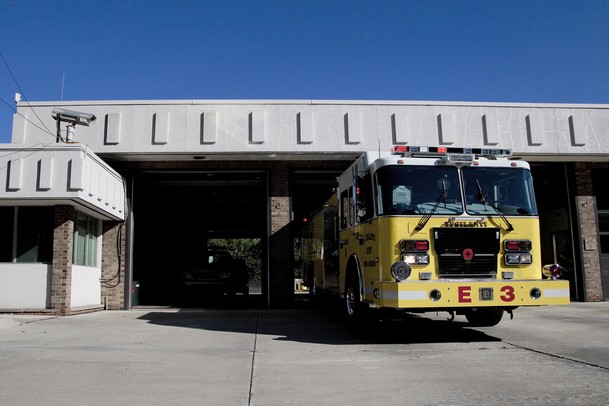
The staffing levels per shift have decreased for the Ypsilanti Fire Department. Chief Jon Ichesco said the change could impact the city.
Jeffrey Smith | AnnArbor.com
The Ypsilanti Fire Department's staffing levels have decreased from five per shift to four and Fire Chief Jon Ichesco said the change may impact the fire services for residents.
City Manager Ralph Lange confirmed the change became effective Thursday.
"You can't keep delivering services with 15 people the way you do when you had over 20 people," Lange said.
The department has 18 employees, and by the end of the year, it will decrease to 15.
Occupational Safety and Health Administration regulations require that interior structural firefighting procedures provide for at least two firefighters inside the structure and two firefighters outside of the structure. The policy, commonly known as the two-in/two-out rule, became effective April 8, 1998.
It was implemented to prevent and decrease the number of firefighters who sustain injuries or die.
The change in staffing puts the department right at the OSHA requirements, which the department is required to meet.
The problem is, according to Ichesco, the change doesn't factor in when firefighters take time off. If that were to occur and there were only three or fewer people on each shift, firefighters are not required to go inside of a structure unless it can be confirmed that someone is inside of the building.
"By law, we do not have to extinguish a fire," Ichesco said. "... We would be like a smaller public safety department like Oak Park. Until someone comes, they watch it burn. I doubt my guys will do that. We're going to do what we can, but that's the nature of the beast. We're going to do whatever we can with the resources we have, but they're depleting."

City Manager Ralph Lange
Ypsilanti Mayor Paul Schreiber said the city has tried for a long time to avoid cutting fire and police services, but it has now become inevitable due to a loss of revenue and rising costs.
Lange said the city asked voters for more money in the form of an income tax and debt millage, but was rejected in May. The tax and Water Street debt millage would have generated more income for the cash-strapped city.
"The community said loud and clear they had no more money to offer," Lange said.
The news comes nearly two weeks after AnnArbor.com reported Ypsilanti officials may consider a proposal to combine the city's police and fire departments into a single department of public safety. The proposal would cross-train firefighters and police officers.
"It's directly due to revenue," he said. "We've done everything that could have been done except cut public safety. Now we have to. We’re still not balanced yet. Mr. Lange is looking at all the options."
Schreiber said the change was made to prevent the large amount of overtime costs incurred by allowing five per shift.
"The monetary fact is we will not be burning up so much in the budget," he said.
The city has about $7 million in reserves, but Schreiber said it's never a good idea to use those funds. The fire budget accounts for almost $2.5 million of the general fund budget.
"We have to try to stretch the money we have," he said. "We have reserves, but dipping... it's not a good strategy and won't last long."
Ichesco said what may happen is the city will see an increase in damages related to fires due to the change in staffing. In 2011, fire damage totaled $381,061 in property loss.
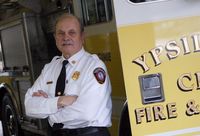
Fire Chief Jon Ichesco
"We're going to have a lot of property loss," he said. "Far more than Mr. Lange or the mayor realizes. It will happen, I know. I've seen it in other departments. Your fires proliferate and what starts small is going to be a large fire."
Ichesco said he believes the rate of displacement could increase as well.
"It will displace people from homes," Ichesco said. "It could also displace businesses. Forty percent go out of business or move somewhere else after a fire. We’ve been successful in keeping what we have and we don’t have a lot of commercial fires. We’ll see what happens."
Ichesco said the department is going to go from running two trucks to one. In addition to this, the department will only use an one engine truck and the aerial platform fire truck, the largest one, will only be used if a large fire occurs.
"There are some ramifications to that," he said. "We will do one task at a time. Whether it's a medical or fire, we're going to have to figure that out."
In 2011, the department responded to 600 fire and 1,566 medical emergencies.
Of the 600 fire emergencies, 100 were for actual fires, 104 were rescues, 118 were false alarms, 30 were mutual aid assists, 33 were hazmat responses, and 79 were investigating hazardous conditions.
Of that 100, 51 were structure fires, with 45 being residential. The average response time was 3 minutes and 47 seconds.
Ichesco said that response time will change if the department doesn't have enough people on staff to respond because it would be forced to wait for mutual aid from a neighboring department. In addition to providing services to the city and Eastern Michigan University, the department also provides mutual aid to neighboring communities such as Ypsilanti Township and Ann Arbor.
The communities reciprocate the aid as necessary as part of the agreement. Schreiber said he isn't sure of the impact it will have upon mutual aid. The city provided 29 mutual aid runs to neighboring departments in 2011 and received eight in return.
"When it comes to fire it depends on how many calls there are," he said. "If there were one I'm sure we could go. "If there are two or three fires, it would stress the system. It's kind of a matter of probability."
"For us, everything we do is simultaneous," Ichesco said. "Everything has to be done in seconds... A fire itself will double in three minutes."
Schreiber also said it could result in a slower response time.
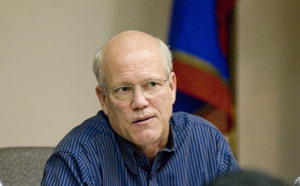
Ypsilanti Mayor Paul Schreiber
"That’s just a reality of the situation," he said. "The buildings are more likely to burn faster. It's not something I like. I would like us to have a faster response which is why I supported the income tax, but they voted (against) it overwhelmingly 2-1."
When asked if he believes the rejection of the income tax by voters caused this to happen, Schreiber said it's a result of it.
"If we had more revenue, we would be having more people on staff," he said. "... Do I wish it were different? Yes. Do I support it (staffing reduction) because we have no other choice? Yes."
Katrease Stafford covers Ypsilanti for AnnArbor.com.Reach her at katreasestafford@annarbor.com or 734-623-2548 and follow her on twitter.
Comments
Rudy Caparros
Tue, Nov 6, 2012 : midnight
HazMat Experts and Firefighters petition Dow Chemical and Union Pacific for safe rail tank cars transporting gas chlorine. Secondary containment is a necessary improvement that must be implemented. See--PETITION C KIT for First Responders Comments.
Megan Turf
Mon, Oct 29, 2012 : 1:13 p.m.
I would like to go on record as having voted for both and i would like my name and address listed somewhere at the YFD so that if two calls come in at one time and one is for a SCIT person and one is for me, they can come to my house first. I voted to support them. SCIT voted to let them fail.
Cendra Lynn
Mon, Oct 29, 2012 : 12:22 a.m.
The city, any city, puts personal safety first by spending money on fire and police first. The voters don't have more money for taxes, but the city provides many other services. Without public safety, those other services are moot. Once your city burns down, you don't use other services. Once people are not safe to move around the city, they cannot use the other services. Individuals do not practice common sense when they let the mortgage payments get behind but keep the car payments up. Cities have to stop thinking about equal buckets for different funds, and start thinking about which is most important. Public safety trumps all the others.
Ypsi Eastsider
Sat, Oct 27, 2012 : 6:46 a.m.
The lie was Mayor Farmer repeatedly telling voters no taxpayer money would be spent on Water Street. Only to learn two years later, the City had spent over $1 million in general fund taxpayer money and that was before the debt payments even started. The City can restore fire service to current levels by eliminating the DDA and the associated collection of paid staff, attorneys, consultants, interns, and rented office. The Chamber, CVB and merchants associations can and already do a better job of promoting the community and putting on events. Its a matter of priorities. By cutting Fire, the Mayor and City Council have shown they value the DDA more than they value protecting the citizens they were elected to serve by adequately funding the Fire Service.
JK
Fri, Oct 26, 2012 : 7:34 p.m.
What people don't realize is that as fire staffing is cut, and the ability to fight fires effectively diminishes, insurance rates go up -- far more than what it costs municipalities would have spent for adequate staffing.
not a billy
Fri, Oct 26, 2012 : 6:29 p.m.
The major obstacles of merging with another entity (Ypsi Township would be most logical) are that 1) the Township has also reduced staffing levels and they are still trying to protect 32 square miles/55,000 people, and 2) unless a seperate, fire-specific millage is implemented for the city the problem of funding still exists. The Water Street cancer will continue to drain the city coffers for many years, even if bankruptcy happens. What most people do not realize is that if a major fire hits a downtown business, it will most likely not be contained to the individual business. They will be lucky to contain it to the block with the resources thay have, even with mutual aid. How many business and how much tax base will be lost is anybody's guess. There were several major fires in downtown in the early 1970s that were held to one or two businesses. Buildings are now forty years older, many of which have not been maintained over the years. Disaster waiting to happen.
Goober
Fri, Oct 26, 2012 : 3:47 p.m.
Interesting that if you man to an OSHA manning level, many are predicting doom and gloom. This includes the fire chief. The fire chief needs to plan for replacement fire personnel when an absence occurs instead of predicting problems with OSHA recommended minimum manning levels. An alternative would be to merge with another township or city.
Katrease Stafford
Fri, Oct 26, 2012 : 2:09 p.m.
Hi, I thought I would share some additional facts. So far in the first six months of 2012, Ypsilanti provided 17 mutual aids to other communities and received 14 in return. Also, the department responded to 325 fire calls within the first six months. These numbers were provided to me by the fire department.
not a billy
Fri, Oct 26, 2012 : 1:31 p.m.
Blaming things on a failed income tax vote is preposterous. The Water Street debacle is at the root of the problem in the city. Unfortunately it is much too late and financially impossible to fix that situation. There is going to be a fire-related tragedy, whether it be an extremely costly property loss or a devastating personal injury/death situation. You can't fight fire with one truck and three or four Fire Fighters. Mutual aid is not the answer, only a crutch. Relying on outside resources to provide basic city services is ignorant. Put a fire millage (not public safety) on the ballot and let the voters decide. Even with that, revenue is at least a year away. For the Ypsi Fire Fighters - be smart, be safe, and try to remember that you did not create this situation!
Ron
Fri, Oct 26, 2012 : 3:33 p.m.
I have to agree with you about putting a FIRE mileage on the ballot, then the voters can say yes or no to having the safety of the brave men and women who put their lives on the line for the citizens of the community. I know it makes me a little uneasy about not having the protection if I or anybody else has a major fire. How about city council members take a 24 hour shift ride along with the FD so they can see first hand what they go through everyday. Then maybe they would look for the money some where else and not kill our FD. That 7 million they have in reserve could go to good use right now. Don't use it all but just enough to have the FD staffed properly for the safety of the citizens. Now to the Firefighters who provide the service, I want to thank you for doing what you do as best you can with what the city is giving you. I will keep you in my prayers to stay safe and hope that we do not have a major fire to where we will need to ask for the mutual aid because the city can't afford to run 2 trucks instead of one. I think they could leave the tower in the station, bring engine 1 back on line and use the 2 engines we have. Then if need be, call in 2 firefighters to get the tower. It would probably save the department money some way.
Dutchy734
Fri, Oct 26, 2012 : 12:38 p.m.
"When asked if he believes the rejection of the income tax by voters caused this to happen, Schreiber said it's a result of it." Or is it a result of the Water Street Project, a result of Ypsilanti's elected officals, a result of mis-managed tax dollars over the past 12 years. As someone who voted for you Mr. Mayor, please don't say our cities budget shortfalls is a result of my no vote on a city income tax.
Glen S.
Fri, Oct 26, 2012 : 12:24 p.m.
Twice in five years the "SCIT" folks blatantly lied to Ypsilanti voters, claiming there was no budget crisis, and that threats of cuts to vital services were just "scare tactics." Now, only months after the last election, we see exactly that -- budget-driven cuts that threaten to put our firefighters, and our community, at increased risk. Worse yet, without additional revenue, these cuts are only the beginning. Question: Where are all the SCIT folks who poured so much time and energy into fighting the ballot proposals, now? Are they willing to put as much time and energy into raising funds to support our public safety officers?
EOS
Fri, Oct 26, 2012 : 12:44 p.m.
it was the pro-tax people who lied to us. admit that cheryl farmer was the worst mayor ever and cause most of this disaster and you'll get my vote for a water street millage. farmer's folly indeed!!!!
Ruth
Fri, Oct 26, 2012 : 11:53 a.m.
Ann Arbor citizens are facing a similar decision by our Fire Department, due to budgetary restrictions/decisions. Judging from the series of recent presentations, Ann Arbor will be having fewer fire stations in order to consolidate the number of firemen per station. Talk with your Council person about this, if you are concerned. I am concerned and will.
not a billy
Fri, Oct 26, 2012 : 1:36 p.m.
The difference being is that AAFD will still have more people on duty daily than YFD has on the entire force. The problem is much deeper than the vast majority of people realize when it comes to providing basic fire suppression services. Yes, total destruction of a building doesn't happen that often, but that is because the fire fighters are doing a good job of stopping the fire. Not going to be the case in the future in either city.
music to my ear
Fri, Oct 26, 2012 : 1:30 p.m.
but yet lets vote for more art in the city. like is that going to catch the robbers or put out a fire.
RFD
Fri, Oct 26, 2012 : 11:49 a.m.
The city "gets it". It's the citizens who voted the tax down twice, two to one.....who don't 'get it'. Now we are all going to pay the price.
SonnyDog09
Fri, Oct 26, 2012 : 4:26 p.m.
This is a familiar refrain. It's always the taxpayers' fault. It is never the fault of "public servants" that squander the resources provided to them.
Goober
Fri, Oct 26, 2012 : 3:49 p.m.
The city leaders do not get it. Tax payers are out of money. Also, the money was collected and wasted. The well is almost dry.
Carole
Fri, Oct 26, 2012 : 10:50 a.m.
Cities just don't get it. The safety and welfare of the people should be their highest priority -- will it take a major incident to make them realize the importance of a fully staffed fire and police department.
music to my ear
Fri, Oct 26, 2012 : 1:28 p.m.
Right on .then down the line, like Ann arbor they will ask the tax payers for more money for something stupid , like in Detroit council will meet for some stupid reason when the only reason they should be meeting is how do we improve the safety of our citizens. surly safety is the utmost Importance we non council and none local government citizens know this why are they always shoeing things under the rugs. do your darn jobs.
A2comments
Fri, Oct 26, 2012 : 10:26 a.m.
"mutual aid run" should be "runs" "faster respone" should be "response"
Katrease Stafford
Fri, Oct 26, 2012 : 11:58 a.m.
Thanks, A2comments. It's been fixed.