

Opening a conversation about the best ways to help can improve caregiver-patient relationships
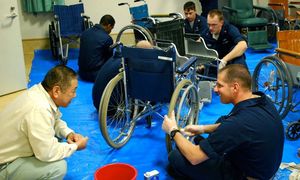
What's your love language? How can you know that the help you're offering is actually helpful? Heather Jones discusses how to keep caregivers and patients on the same page.
U.S. Navy photo by John Westbay, courtesy of Wikimedia Commons
Editor's note: This post is part of a series from Our Values about core American Values. Dr. Wayne Baker is away this week and has invited Our Values guest columnist Heather Jose to discuss caregiving in America. Heather a writer and speaker on improving patient experiences. She also is a teacher, healthcare provider and activist with a website called Go Beyond Treatment.
You may have heard someone talk about their “love language.” In fact Gary Chapman has spent a lot of time looking at love languages and how they impact our relationships. You can even take an online quiz to determine your own love language.
What does that have to do with caregiving?
Quite a bit. Knowing what makes each of us feel cared for — and therefore loved — is important. It can make things so much easier too, if you know what the person your care for responds to. If they value quality time over receiving gifts you can see that an afternoon together is much more valuable than the perfect present.
Understanding language and expectations also can help you to respect boundaries. If you as a caregiver value physical touch — but that makes the person in your care uncomfortable — then a hug every time may not be the best move.
I knew even before I took the quiz that I feel loved and likewise cared for when my husband does something for me so that I don’t have to — described as acts of service. I also get a lot of confidence and energy from being praised, or as Gary describes it, being given words of affirmation.
It can be a challenge to do things for others the way they would want them done, but it will be appreciated.
Even after you have thought about how your help might be received, how can you ensure that help is truly helpful?
I'm going to suggest three general principles for caregivers. Please add to our list of ideas. All three of these ideas involve caregivers helping someone they love navigate the healthcare system.
EARS: At a doctor’s appointment, an extra set of ears is a good idea. Patients are often what I call “hyperhearers,” meaning that we only hear certain statements and fail to retain any other information. There have been many times after a meeting with my oncologist when my husband and I have compared notes and found that we heard very different things. He is more factual, I am more emotional. I would have been missing some crucial pieces of info at times without my extra ears.
VOICE: If you are having a test done it is also nice to have someone with you. Tests are emotional and often times taxing. While some tests are quick and fast, many of them require multiple steps and hours of waiting. Unfortunately, I don’t find the techs to be overly sympathetic to the fact that test results matter to patients. It is nice to have someone to mull over concerns of the day with you.
EXTENDED ARMS: Finally, if you are in the hospital having a caregiver present as much as possible is a bonus. It need not be the same person all the time. This may be a good time to enlist your entire support network. I have found that the staff’s perception of you changes when they can see the patient as a “real person” — the relationship and level of care improves. The image of a sick person fades as the role of parent, daughter or professional reveals itself. As a healthcare provider myself, I know that the more I get to know people the more willing I am to do something extra for them. It’s human nature.
What have you discovered about that language you use with loved ones?
What do you and the person you care for appreciate?
What does the person you care for appreciate?
What do you find helpful?
What challenged have you faced in the healthcare system?
What suggestions can you give caregivers?
Heather Jose is the author of the book Letters to Sydney: Every Day I am Killing Cancer, co-author of The Healing Agreement — and a contributing writer for the Breast Cancer Wellness Magazine, Coping Magazine and Thrive. She is guest writing for Dr. Wayne E. Baker and can be reached this week at Our Values or ourvaluesproject@gmail.com or on Facebook.