

Do we expect too much from our dogs?
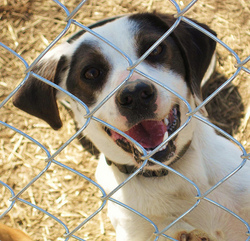
flickr photo courtesy of jeffreyw
Advances in medicine and understanding animal behavior, and better approaches and understanding of nutrition have come a long way. Animals are living healthier lives physically - but what about psychologically? Are we doing all that we can for our pets to assure their mental fitness? Are the expectations that are being placed on some dogs especially, just too high?
Our society favors high achievement, fast movers and goal setters - thriving on the 30-minute meal, the list-making-quick-fix-structured-take-a-pill-it-will-solve-the-problem-do-it-my-way mentality. Dogs just don't live that way. Canines are as vastly different from each other in personality and natural ability as humans are. Despite what is thought by some, there is nothing true about the phrase, "all dogs are the same."
This culture of "I saw this television show where this individual spent like 5 minutes with this really aggressive dog, and changed them instantly!" isn't doing the canine species any favors, either - although it might be getting people to focus on the fact that more care needs to be given in the area of animal behavior as a whole. Do the shows that we see on television with regard to dog training cloud our common sense? In many cases, yes, sadly.
There are a lot of what I call "armchair dog trainers:" people who see someone on a television show administer advice, using catchphrases like "alpha-male dominance" and a "training plan" to dog owners on the show who are at their wits' end. The armchair trainer then tries to apply these techniques on their own pet, and in many cases fails.
You can't believe everything that you see publicized, or that's on television, especially when it comes to behavioral modification methods like the alpha roll. In fact, some things can be downright dangerous. It's better to get in touch with a qualified animal behaviorist and get solid advice that works. An article in Time Magazine by Jeninne Lee-St.John illustrates myths and dog training fallacies further.
In the quest to provide what some perceive a high quality of life to be, I'm going out on a limb to say the essential nature of some dogs has been lost. The very core behaviors that make each breed - each dog, even - unique and valuable individually, are in some cases squelched to the point that the traits become permanently replaced with unsavory, unruly behavior. Welcoming a dog into a family should be a decision taken with great consideration, not on the basis that a dog "looks cool" or that a breed is popular.Lorrie Shaw is owner of Professional Pet Sitting as well as a regular pets contributor on AnnArbor.com. She also blogs frequently on More Than Four Walls, and enjoys researching solutions regarding pet wellness and behavior, as well as social issues related to pets. She can be reached via e-mail.
Comments
nicole
Sun, Aug 1, 2010 : 11:09 p.m.
Don't expect too much of dogs. For example, don't ever leave them alone with your child, even if you are just in the next room. My brother fixes the faces of these little children who have been mauled by the family dog. And these are just run of the mill breeds, not pit bulls. The kids' faces are never the same again. He does his best to make them look normal again, but even a small nip can take the end off of a kid's nose. Don't do it people. Wait until the kid is at least ten before getting a dog.
bunnyabbot
Sun, Aug 1, 2010 : 10:26 p.m.
I think the best thing to know is take the kind of dog you have (or kinds if its a mixed breed) and read up on the breed(s) to learn about what they were bred for, you will learn a lot about the traits your dog is likely to have. My dog has a high ball drive, so excercising him is easy and a tired dog is a good dog. @Ann, your dog probably doesn't hate gloves, if they are leather they are probably treated with chemicals like the rawhids are or at least to the dog they smell similar or feel similar. also, if your dogs aren't fetchers then try the "find it game" hide a treat and then let the dog find it and then praise them, the dog will learn quickly to sit and wait for the "find it" command, then jump to sniffing, it burns off a lot of brain energy in even 10 mins, I haven't met a dog yet that didn't like this game. I would start in the house, keep the dog in one room, hide the treat in the next, just place it at ground level and then get that game down before expanding. If their tails are wagging while they are on the scent then you know they are having fun. the only thing I really expect from my dog is that I can love on him as much as I want, when I want, luckily I am sure he enjoys it!
stunhsif
Sun, Aug 1, 2010 : 10:17 p.m.
My newest dawg is a rescue JRT from "Planned Pethood" in Toledo. He is a short haired brown/black/white JRT ( name is Elwood, Woody for short). He is just over a year old and like all JRT's is very smart. He is my second JRT, a spitting image and no doubt related to my first JRT (named Black Bart) who left us early at the age of 9 with heart problems. Bart would go outside without a leash and not go anywhere, Woody is out the door and gone in a flash if he is not on a leash. I agree with this writer. I have expected Woody to act like Bart did and that is not realistic. Great article!
Mugsy
Sun, Aug 1, 2010 : 9:50 p.m.
Thanks so much for this article. It saddens me that people don't "get" having a dog anymore. We have two in our household, both mutts. Our older dog, a female mutt, I adopted when my friend's dog got out and had a bit of a night on the town. I was psyched to get her, my very first dog (we'd had a family dog but he was never "mine") and through time and energy spent training her with the help of my vet I have a beautifully behaved, smart, personality-ridden best friend. About two years ago my husband and I decided to adopt a second dog (our first needed a friend) and spent many an afternoon at the humane society. We needed to find the right dog for us, one that would fit into a home with our other dog and our cat. We were able to find, after many trips, a sweet young male dog who, quite frankly, was a sedate doll at first but after a few days showed his true, spazoid nature. We worked with him a ton, went to classes at a local pet store and while he's way better than he was when we got him, we've learned that he'll never be quite like our first, and that's okay. I'm so sick of people getting dogs because they're "cool" and think people need to remember that a dog is a companion animal (for most of us) that needs to be cared for, trained and loved... no matter what their personality.
Lorrie Shaw
Sun, Aug 1, 2010 : 8:29 p.m.
Ann, One of our dogs does the same thing. I can throw a tennis ball out into the yard and he'll gladly fetch it - but throwing it to him... he gets freaked out. Unsure what his previous owners were like with him; we can only guess. Tug of War isn't a favorite of his, either. But, there are tons of things that your pooch might like, like bike riding with you, or these: http://www.kyjen.com/shop/index.php/dog-toys/puzzle-plush.html - our other dog especially likes these, as she loves puzzle games. Some of the dogs I sit for love hide and seek, too. Some dogs just do not like to play like other dogs do - and that's ok, as long as they indicate that consistently. Sometimes, just being with their people is enough. I think in these cases, we can't solely judge what we *think* normal dog behavior is, but just let them tell us what they need. It sounds like you're pretty connected to him; that's awesome!
Lorrie Shaw
Sun, Aug 1, 2010 : 8:09 p.m.
Patti, You're so right. Our society is so motivated to base their decisions in choosing a dog based on pop culture. Bad, bad idea. So glad that your pooch and you ended up together. JRT's are a riot! I love sitting for them, as they are so different than our family dogs. JRT's have a boisterous, up-front personality and the just go, go, go!
imsteved
Sun, Aug 1, 2010 : 4:37 p.m.
Maybe I don't expect enough of my cats.
Ann Dwyer
Sun, Aug 1, 2010 : 2:08 p.m.
I'm always concerned that my dog is bored because he doesn't know how to play. He was a rescue, so if you try to play ball with him, he just looks at you like "Why are you throwing things at me?" The only thing he responds to are rawhides and gloves (seriously, he hates gloves for some reason). He's really not like a dog at all.
Patti Smith
Sun, Aug 1, 2010 : 9:26 a.m.
When people get dogs because they are "popular" (think 101 Dalmatians), oy! My doggie is a Jack Russell terrier-beagle mix (rescue doggie!). He is delightful, crazy smart, inquisitive and often up to no good (ahem, like his mom!). I read a ton of JRT books when we got him and several talked about the "Frasier effect"--people saw Eddie and decided to get a dog based on him. That's like watching Twilight* and deciding to become a vampire**. Needless to say, people were shocked!! when their dog dug in the yard, did his own thing, outsmarted them, etc. Moral of the story is to know your dog, understand something about evolution/hard-wiring and be realistic. (*you'd have to shoot me to get to watch/read that; **except that they don't exist)