

DNA testing in mixed breed dogs not just a novelty; ability to save lives needs critical consideration
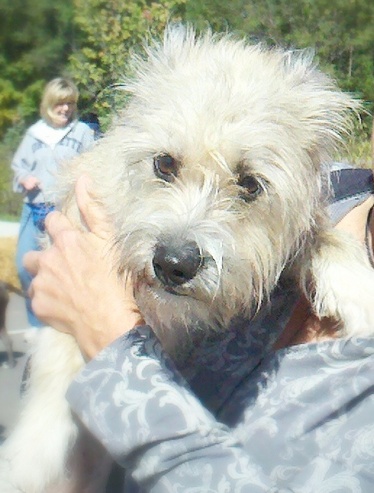
What breed do you think this dog is? The answer is at the end of the post and might just surprise you.
Lorrie Shaw | Contributor
Sometimes, it'd be nice to know, right? There is a way to find out rather than taking an educated guess: run a DNA test.
I've been reluctant to write about DNA or genetic testing with canines since it became available several years ago and for good reason — the results have had a tendency to be unreliable.
Fast forward a few years, and the tests have become refined and more affordable.
Dr. Patty Khuly, DVM recently addressed the topic on Vetstreet.com and gave me a good reason to give this topic some more consideration, and it's beyond just trying to satisfy our curiosity about our pooches' ancestry.
These tests can be useful in addressing health or behavioral issues in our companion animals, based on genetics or breed.
But some dogs will greatly benefit from the testing and will, perhaps, have their life spared because of the clarity that the test can offer.
Dogs that bear a resemblance to a breed that has been at the core of much controversy — the pit bull — often get pulled into the fray of needless fear-mongering.
From breed bans and Breed Specific Legislation to policy exclusions on homeowner's insurance, dogs with parentage of breeds like the boxer and Boston terrier (and everything in between) have been stigmatized, even though they haven't exhibited the kind of behavior that would warrant a concern.
Yes, with dogs, looks can be everything, even the difference between life and death.
Conventionally, we humans have relied on a dog's appearance to offer a clue to their breed.
A dog's breed needs to be established for different reasons.
Veterinarians, when presented with a mixed breed dog, assign a breed for a lot of reasons — for the purpose of medical records, dog licenses and health certificates for travel.
Shelter staff need to try and ascertain a breed in an effort to have success in placing a pet in a permanent home.
The problem is that the approach of visually identifying a dog isn't always a terribly reliable way to establish parentage.
Why?
Humans make mistakes. Times are becoming more complicated. And further, the physical characteristics of many breeds have changed considerably — even become somewhat muddled — over the course of decades because of unscrupulous breeding practices. The latter can make it challenging for even the most seasoned professional get their guess correct.
A recent article by two veterinarians and an attorney addresses this idea.
In some municipalities, a dog wrongly identified as a pit bull can meet an untimely and unfair demise: they can be euthanized.
So, when the stakes are so high and with the current climate of distrust of some breeds, don't we owe it to these animals — regardless their situation — to be properly and fairly identified?
Because it is an emerging field, some of the companies that offer the DNA tests can seem a bit sketchy, as evidenced by the stories from some readers of The Bark in a recent article. Fortunately, as it turns out, there are plenty of good options out there as well.
(The dog in the photo is a Schnauzer/pit bull mix. The photo was taken at a Humane Society event last year.)
Lorrie Shaw leads the pets section for AnnArbor.com and owner of Professional Pet Sitting. Shoot her an email, contact her at 734-904-7279 or follow her adventures on Twitter.
Comments
ilovedogs
Thu, Feb 28, 2013 : 6:33 p.m.
i know loads of dog breeds because the other day i saw a mixad breed and thought it was a jackrussel cocker spaniel and english pointer mix .then i asked and i was right
julieswhimsies
Thu, Feb 28, 2013 : 6:31 p.m.
I detest the stigmatization of certain breeds of dogs. We were refused homeowners insurance by a number of companies because Bree, my Alaskan Malamute is considered by these companies to be a "wolf hybrid". That is insane. She is the most gentle and sweet dog I have ever had. I always thought a wolf hybrid was a dog who had been mated with a wolf.
Lorrie Shaw
Fri, Mar 8, 2013 : 10:52 p.m.
julieswhimsies: I dislike the stigmatization as well. It's not doing the canine world any favors. Thanks for your two cents! ~Lorrie
julieswhimsies
Sun, Mar 3, 2013 : 7:48 p.m.
@ I love dogs. What are you saying here?
ilovedogs
Thu, Feb 28, 2013 : 6:36 p.m.
i did not understand what yoy had just said and achley a spits breed is a dog that ther older relatives from years ago. and yes alaskan malamutes are a spitz breed so are akitas, chow chow, siberian husky, keeshund, finish spitz shibu inu and alot more that i know but i cant be bothered to say all of them.
RunsWithScissors
Thu, Feb 28, 2013 : 5:38 p.m.
I love playing "Name That Breed!" at the dog park. And many people ask me, "What is that?" when they see my own mutt. But I never thought about categorizing based on breed. I can imagine it wouldn't do to list "large dog of unknown breed" on HSHV's adoptable pet website.
Lorrie Shaw
Fri, Mar 8, 2013 : 10:50 p.m.
It is interesting, isn't it, RunsWithScissors? And that's pretty funny, and true - "large dog of unknown breed" wouldn't do in describing an adoptable dog! :) As always, I appreciate your witty and wonderful interaction. ~L
ilovedogs
Thu, Feb 28, 2013 : 6:37 p.m.
i love playing name the dog breed to
ilovedogs
Thu, Feb 28, 2013 : 6:31 p.m.
would you like to play the dog game when you take it in turns to say as much dog breeds yoy think of for a then n then c and so on and so on until you get to z. im an expert