

Horses need plenty of water, but the cold of winter makes delivery of H20 difficult
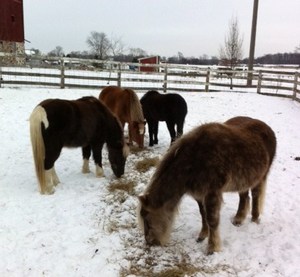
Shetland ponies munching hay
Horses drink a lot of water. Each horse drinks between eight and 15 gallons of water per day, depending on such factors as weather, activity level, pregnancy/lactation and size. They should have access to water at all times, day and night, and certainly should not be without palatable water for more than a couple hours. This is especially true in the winter when water takes that inconveniently solid form. Horses need additional hay in winter, as the metabolism of the microbes in their gut generates heat, helping keep them warm. More dry food means more water to help wash it down. Risks of low water intake for horses include dehydration, colic and death.
People who care for horses inevitably deal with water and hoses. Everyone has heard of Road Rage. A closely related condition, Light Bulb Rage, occurs to people decorating their homes for the holidays. At the stable we sometimes experience Hose Rage, a syndrome characterized by increasing aggravation affecting a person who is attempting to fill troughs or buckets. Hose rage may start with a tangled, sometimes muddy hose which is resistant to straightening and delivering water to its intended destination. Complications such as hose kinking, leaky connections, and the dreaded hose freezing may occur.
A horse may occasionally be seen grabbing the hose and dragging it away from a filling trough for no apparent reason. The industrial strength- heavy duty- guaranteed kink-free hose may have been stepped on by a 1,400 pound individual wearing steel shoes, producing variably sized defects prone to leak and break. Run over or stepped on connectors may take on irregular, tortured shapes which will never be connected again.
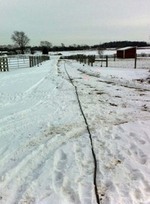
Hose rage may occur at any time of the year, but winter cases are especially severe. I have personally hauled 200 feet of hose out to a trough in the winter only to find that a different hose had been connected, and I was five feet short of my destination. After locating the proper hose, switching it out and getting back out to the trough, the water in the hose had frozen, and no water was going anywhere. I coiled the stiff beast up again and dragged it into the basement to thaw. An hour later I ran with the cumbersome behemoth as fast as possibly through two feet of snow to connect and drag it out to the horses, who had gathered to witness the spectacle.
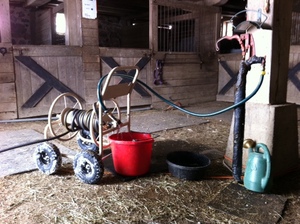
Nice, new hose reel and cart.
Kathy Lundberg | Contributer
To avoid Hose Rage, dedicated hoses have certain applications. They are coiled just so in an attempt to prevent tangling. This winter we bought an all-steel, industrial hose reel cart, with fancy pneumatic wheels. Top of the line. For the first few minutes it seemed all would be well, but then, inevitably, the connections began to drip. In summer this is no big deal, but in winter you soon get an icy, slippery mess. Trenched water pipes with heated spigots closer to the troughs seem like a great upgrade just now.
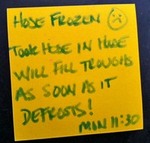
I arrived one recent frigid day to find a note from our barn manager, who was feeling a bit under the weather due to a stuffy head cold. Finding the hose non-patent, apparently frozen, with trough water levels running low, she recognized the feeling of Hose Rage creeping in. To counteract first signs of the syndrome, she brought the whole thing into her kitchen to thaw. After a period of time, it was brought back out and connected, water turned on... but nothing came out! The hose did not seem so cold…
Checking the entire contraption end to end, the hose nozzle was turned firmly off. A simple twist of the device resulted in a strong flow of water. Problem solved! With buckets strategically placed to catch drops from leaking connections, the hose reached its destination and troughs were filled. The horses continued eating, drinking and socializing, oblivious to the human effort that makes all this merriment possible. Looking at the beautiful horses, happy and healthy, is the cure for Hose Rage. Hot chocolate helps, too.
Kathy Lundberg is the owner of Scio Church Stables. Email her at scs@sciochurchstables.com.
Comments
KBDugas
Wed, Feb 2, 2011 : 4:58 p.m.
What a wonderful, eye opening, aritcle about something I have never thought about. I will forever look at a hose differently.
julieswhimsies
Tue, Feb 1, 2011 : 7 p.m.
Oh my, Kathy! Well-written and entertaining post about a problem that I KNOW drives you guys nuts!