For weeks, aisles have been lined with Halloween candy, decorations, costumes and the like. It's a fun time of year and in most households, things are looking and feeling a bit more festive. Pets, with their natural curiosity, are attracted to all things Halloween and at times it can get them into trouble. With a few things in mind, you can keep them safe and keep the fun going this time of year.
It's important to remember that the things that we humans view as fun can be especially frightening to pets. Costumes, faces painted with make-up and life-sized decorations can startle pets and cause them to behave unpredictably. Try to introduce things like this slowly, gauging their reaction.
Additionally, the days preceding and following Halloween yield pranks - and some not-so-playful. In fact, they can be cruel, particularly towards pets, and especially black cats. Don't leave pets outside and unattended during this period.
One of the most common activities, carving pumpkins, is a long-held tradition for adults and kids alike. Keep jack-o-lanterns lit with candles away from all pets.
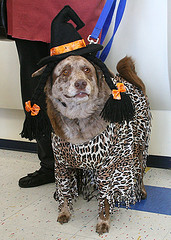
Photo by Flickr user plasticrevolver
With a bit of planning and care, your whole family can enjoy the fun that this time of year has to offer - and have fun, lasting memories for years to come.
Lorrie Shaw is a dog walker and owner of Professional Pet Sitting, and is a regular contributor to AnnArbor.com's pet section with her blog, More Than Four Walls, where she examines topics ranging from social issues and behavior to, of course, pet health and safety. Reach her via e-mail and follow her on Twitter @psa2


Comments
Lorrie Shaw
Mon, Oct 18, 2010 : 3:36 p.m.
I was told recently that one of my feline clients has a monster sweet-tooth. You just never know what a pet will have a penchant for, do you? Thanks for your comment!
jns131
Thu, Oct 14, 2010 : 8:17 a.m.
Hate to say it, but ours loves Halloween and all the goodies it goes with it. Dog loves chocolate and anything sweet. Never saw a dog go bonkers for it. We didn't give it to him, he found it and lets just say, Godiva has nothing on him. For other dogs? Yes, I agree. As for ours? Bring on the fun.