

Michigan Humane Society under fire over kill rates; two board members resign
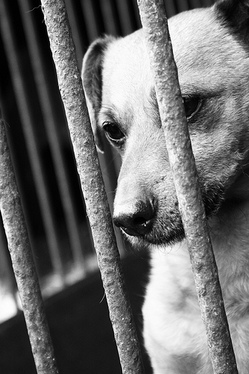
flickr photo courtesy of powazny
Companion animals in southeast Michigan have been impacted by the economic problems just as so many people have, and the numbers of pets that have been abandoned or relinquished has risen dramatically.
That very topic has been the focus of many news reports.
With the surmounting challenges of so many pets flooding shelters, there are bound to be road bumps along the way when it comes to addressing the needs of homeless, abused and neglected pets in south east Michigan.
In light of that, some shelters in the state have faced the problem head on, implementing policies and programs that strive to come to the aid of those helpless pets — who in some cases are ill or injured — and getting a high percentage of them permanently placed in stable, loving homes.
One agency has, in some people's eyes, simply fallen short.
The Michigan Humane Society is taking some heat after it was discovered that the agency euthanized about 70 percent of its animals in 2010.
In the shadow of that news, two members of the Michigan Humane Society Board of Directors resigned Monday over what one of them stated was the agency's unacceptable euthanasia rate.
Board members Cheryl Phillips and Lee Lien quit after members voted 7-5 against an external audit of MHS's practices by an outside veterinary program — an action that Phillips felt was prudent due to the high kill rate.
MHS, one of the largest shelters in the nation, took in 13,725 cats and kittens in 2010. Seventy percent of those pets were euthanized. Sixty-eight percent of the 11,191 dogs and puppies that came through their intake were euthanized, and as MHS Vice President Mike Robbins says, roughly 51 percent of the animals come from Detroit alone.
MHS has locations in Westland, Rochester Hills and Detroit. They receive no federal or state funding and are not affiliated with any national humane organizations.
In July of 2010, MHS partnered with Detroit Animal Control, giving MHS the ability to find homes for the adoptable animals so that DAC could focus its energy on animal control and public safety services, which includes the capture of stray animals within the city of Detroit.
Phillips finds the 70-percent kill rate out of line with what MHS proclaims is a high adoption rate of healthy animals, saying that claims that 70 percent of the pets brought in to the facility are too ill are dubious.
"I doubt that our funders would be happy with a '100 percent healthy adoption rate' if they knew that behind the scenes, fewer than 7,000 of the 24,000 total intakes were actually adopted, and more than 17,000 animals were 'classified' as untreatable by MHS management … and were killed," a statement written by Phillips reads.
Here in Washtenaw County, the Humane Society of Huron Valley (which is not part of MHS), fares much better, with a save rate of 81 percent. Earlier this year, HSHV was given the "Outstanding Large Shelter Award" by the Michigan Pet Fund Alliance because of their work, as was reported on AnnArbor.com in April, with the following large animal shelters trailing behind:
- Oakland County Animal Control = 56 percent save rate
- Saginaw County Animal Shelter = 29 percent save rate
- Michigan Humane Society = 28 percent save rate (all three shelters combined)
What do you think about the state of affairs in shelters dealing with the plight of those animals that are relinquished or left behind to fend for themselves?
Does geographic location have any bearing with the overall problem in the state?
Read more details about the situation at the Michigan Humane Society on the Detroit News' website by clicking here, and tell us how you feel in the comments below.
Lorrie Shaw is lead pets blogger for AnnArbor.com and writes about pet health, behavior, pet culture and more. Catch her daily adventures as a professional dog walker and pet sitter, or email her directly.
Comments
Gramma
Mon, Jun 13, 2011 : 4:39 p.m.
I lived in Nicaragua where more than half the people do not have access to decent housing, medical care, food, clothing and education. They do not have money to feed their animals and dogs and cats scavenge for themselves. I have seen homeless, starving animals listlessly walking the streets looking for any scrap of food. At night, you hear the dogs fighting over bits of food. Although I would greatly prefer that all domestic animals were well cared for and had responsible owners, I believe that euthanasia is better than having them die of hunger or serious, untreated or untreatable injuries or illnesses.
Lorrie Shaw
Tue, Jun 14, 2011 : 10:33 p.m.
Thanks for your avid participation in talking about this most difficult topic. The plight of pets who much fend for themselves is especially horrible. We need to work for change in all aspects of caring for people and animals.
jns131
Sun, Jun 12, 2011 : 1:34 p.m.
This does not surprise me in the least. There are a lot of no kill shelters but with again, with the influx of a large quantity of animals being given up, it is sad to say in the least. They need to use a huge foster program instead of trying to find homes for these animals. California sent a a lot of Chihuahuas to New York because of the hi demand. So, if animals are in demand in different areas of the countries, then with the volunteer pilots who do fly these animals hither and yon, were needed send them there. I believe the ASPCA newsletter mentioned this. I almost flew out to New York to adopt one. But realized they were already spoken for. We need to reexamine what happened and start using foster programs so that these shelters can locate hi demand for different dogs. Huskies and labs are great in Alaska. New York wants small dogs. Good luck and shame on the shelters for doing this dastardly deed.
Lorrie Shaw
Tue, Jun 14, 2011 : 10:28 p.m.
Yep - fostering does bump up successful adoption rates, too. I just did a piece on HSHV's foster program. Some dogs do not do well in a shelter - breed, age, past history. More cooperation is definitely needed in a lot of areas. Thanks so much for bringing that up. That's an interesting aspect of addressing the issue of pets that need adoption.
Gramma
Mon, Jun 13, 2011 : 4:18 p.m.
HSHV does use foster homes, but they can always use more. The foster homes are not meant to be "forever homes," but are used to socialize animals and provide a less stressful environment while they wait for those homes. I believe they are also part of the program to relocate dogs. They have low cost spaying and neutering services. I am a new volunteer, working as a cat comforter. There are also many cats who need homes.
pest
Sun, Jun 12, 2011 : 1:30 p.m.
Be a responsible pet owner - get your pet spayed or neutered. That will help with the amount of abandoned and unwanted animals. Unfortunately, animals suffer because many humans are careless, thoughtless or just outright cruel.
Lorrie Shaw
Tue, Jun 14, 2011 : 10:23 p.m.
So true, pest. I cannot emphasize enough the need for spay and neuter.
Anthony Byram
Sat, Jun 11, 2011 : 10:20 p.m.
Does HVSH still have a limit on the number of pitbulls they will allow in K1 or K2? I remember it used to be around five and any over that limit were put down.
Gramma
Mon, Jun 13, 2011 : 4:23 p.m.
I don't know what K1 and K2 are. There are more than 5 pit bulls and pit bull mixes available for adoption right now. They are all very sweet dogs. HSHV also has special classes on training pit bulls. Check out the website for more information. Properly socialized, they make excellent pets. In the past, they were highly desired by families because of their protectiveness of children.
bedrog
Sat, Jun 11, 2011 : 9:44 p.m.
@ erin: The excellent 'save ' rate at the huron valley humane society ( at which i volunteer) probably does have something to do with its location, in that its in an area with a relatively high population of well educated , humane, and volunteer oriented folks ( as opposed to the opposite---as in the dog fighting demographic who produce alot of shelter dogs...especially the pitbulls that predominate at many humane societies). But the HSHV still winds up dealing with the messes the latter create, and evidently even has a reputation as a great ( mostly) 'no kill' shelter that extends to other regions of the country, which send overflow animals here. HSHV's well- oiled organizational structure and dedicated paid staff, and the efficient way they recruit , train and maintain volunteers would be the envy of any like organization.
clownfish
Sun, Jun 12, 2011 : 1:04 p.m.
I was denied a dog by HVHS even though the dog would have spent it's days in a pet food store.People waiting for other adoptions even put in good words for me and my wife (they were customers of my wife), but I was still refused. This was because another dog we owned had not yet been spayed. Had I not played games with the staff and bent rules the dog would have been put down but we managed to save him in spite of the staff at HVHS. That dog lived a long, happy life. Never been back, never given another dime to HVHS.
CaiBrayMama
Sat, Jun 11, 2011 : 11:04 p.m.
That is true, the people at the HSHV seem to be very dedicated and caring. I've always had really good experiences there.
CaiBrayMama
Sat, Jun 11, 2011 : 9:23 p.m.
I agree that there is a limit on what they can do. I'm sure the people who work for MHS hate euthanizing animals. I am not surprised that the Humane Society of Huron Valley has a higher save rate, but I think that's mainly because of its location. As a pet owner in Ann Arbor, I've adopted two animals (a dog and a cat) from the HSHV, and it seems like everyone in my neighborhood has adopted pets from them as well. I think the economy also has a lot to do with the low save rates. Many people are struggling financially and are having to give up their sick animals because they can't afford to take them to the vet. That's also a bigger problem in some locations than others. I wouldn't blame the shelters as much as the people who aren't taking care of their animals, and getting them fixed.
Lorrie Shaw
Tue, Jun 14, 2011 : 10:21 p.m.
That's right - nothing will save more lives than spay and neuter! Thanks for your two cents!
loves_fall
Sat, Jun 11, 2011 : 8:11 p.m.
Unfortunately, there are too many animals in need of homes and too few homes to fill them. I don't think it's fair to expect our shelters to be like "pet landfills" -- there's a limit to what they can do.
Lorrie Shaw
Tue, Jun 14, 2011 : 10:20 p.m.
I agree. And people's attitudes really change when they do not have their basic needs met - and when they feel powerless. Others, well, their tendencies to become callous and cruel become amplified. So sad.
jns131
Sun, Jun 12, 2011 : 1:38 p.m.
I agree. But Michigan right now is loosing its population to other states. So why not send these animals to other states as well to ease the population explosion. Ypsilanti is now mandating that bull dogs and pit bulls be spayed immediately. This is all they can do to ease the this breeds population. So, for now? Do what the ASPCA is doing. Fly them to where they are needed.
Jennifer Zynischer
Sat, Jun 11, 2011 : 6:08 p.m.
Please provide straight numbers for this article, and not percentages. I'm very interested to know how many animals the other shelters you mention are processing, and to see how these stack up to the nearly 7,000 the MHS has found homes for. I have a strong suspicion that this approach will tell an entirely different story about the success rate of MHS in finding homes for animals.
Lorrie Shaw
Tue, Jun 14, 2011 : 10:18 p.m.
Jennifer, Here is a link to a 2010 Michigan Annual Animal Shelter Report: <a href="http://www.michigan.gov/documents/mda/2010_SHELTER_REPORT_352757_7.pdf" rel='nofollow'>http://www.michigan.gov/documents/mda/2010_SHELTER_REPORT_352757_7.pdf</a> Macomb County Animal Shelter is on page 111 Saginaw County Animal Shelter is on page 145 All other shelters are also available, and are in alphabetical order. Thanks for chiming in!
Dixie Crosspost
Sat, Jun 11, 2011 : 3 p.m.
I was involved recently with a situation about a cruelty case on four dogs and six cats. A neighbor of the person who was being cruel to the animals called me for help. I offered vetting for the injured animals, which was denied by the owners. I told the neighbor that she needed to call the local police (Westland) and report the cruelty. In the mean time I found a home to the 4 month old puppy with a broken leg. My organization was going to raise the fund to help the puppy and another injured animal on the property. When the police seized the animals the Westland Humane Society was called and told we had a home for one of the two puppies on the property and that we were going to raise the funds for medical on the injured animals. Four five days I was given the run around on the animals and their status. On Thursday I found out that the owner surrendered the dog to the Humane Society on the day the dogs were seized. The Westland shelter refused yesterday to tell me what is happening to those dogs, despite offering financial assistance and a home for the special needs dog. I know exactly why they refuse to give the status of the dogs. They put them down already! Why in the world would they put down animals that had a place to go? There was no point in that killing. We offered assistance and they would rather kill these animals then take help to save them. There is something very wrong with this picture.
Lorrie Shaw
Tue, Jun 14, 2011 : 9:41 p.m.
Dixie, I'm very sorry to hear about that situation. As I understand it, owners have legal ownership of an animal (that is how it is seen in this case) and do not need to cooperate with anyone regardless of the situation - unless they are legally ordered to relinquish the animal to the authorities. (I'm sure that a cruelty investigator could better detail that process that.) Animal rescues, caring citizens, etc. do not fall under the category of those who are in a position and legally step in - am I correct? When the authorities get involved, they have the responsibility to handle the case from there. And, they have to handle things as best as they see fit. If the pets were euthanized, there could have been any number of reasons why. Many pets who are found in a setting like that have not been cared for medically, either, and it's quite possible that they were deemed too sick to go on. (Again, I'm only hypothesizing.) What is very wrong, is the attitude of human beings toward animals. The situation of animals being neglected, abused, homeless... it's unacceptable. Humans are always behind it, and they are the catalyst for change as well.
Gramma
Mon, Jun 13, 2011 : 4:34 p.m.
Dixie and others please volunteer to work at these shelters. Get out and actively campaign for low cost neutering and against animal cruelty.
Brian
Sat, Jun 11, 2011 : 1:56 a.m.
my own. The sweetest Labrador Retriever who ran away from flies. She was hit by a car by a driver who got out of his car, looked at her, and drove off, and after many hours of surgery an a thousand dollars later by MHS it was sadly still necessary to still euthanize her. Let's have a serious review and not a knee-jerk reaction.
Gramma
Mon, Jun 13, 2011 : 4:31 p.m.
I, also, had to have my dog euthanized. He was 18 years old. He could only see light and dark, so he was afraid of every shadow. He could only hear very high pitched sounds, which also frightened him. He had arthritis and was in pain and was losing control of his hindquarters. It was one of the most difficult decisions I ever made in my life, but I knew that any weeks or months he had left would only be spent suffering. I cared too much about him to let that happen. I have a living will which provides that no extraordinary steps should be taken to prolong my life in that kind of situation and hope the "plug will be pulled" if I am suffering in the same way as my dog was.
Cash
Sat, Jun 11, 2011 : 9:44 p.m.
I am so sorry about you losing your dog that way, Brian. Heartbreaking.
Dixie Crosspost
Sat, Jun 11, 2011 : 3:07 p.m.
Brian, read my comment about the dogs I tried to help this week. All of them killed even though the Westland Humane Society knew I had a home for one and offered to pay for vetting on two of the four animals. 4 month old puppies killed for no reason. I begged to help and they killed them any way. I have no respect for any of these organizations any longer. DAC kills everything that comes in the door. We have rescues standing in line to help the dogs at DAC and they refuse to allow any rescue to remove dogs. Despite the fact that their web page states they welcome rescues. It is all a front. I know this to be fact because I personal offered to pull dogs for rescues and was told NO RESCUES ALLOWED TO PULL ANY DOGS!
Brian
Sat, Jun 11, 2011 : 1:48 a.m.
I noticed the article didn't list Wayne County Animal Control. Does Wayne County have an Animal Control? Those of us who have lived in both the Detroit Area & Washtenaw County can find it easy to understand why MHS has such a high euthanasia rate. There are roughtly 100,000 homeless dogs in the City of Detroit alone, not to mention cats or thje metro area, a great number of which have not been properly socialized. I don't beleive MHS & HVSH have similiar animal populations. Addditionally, HVSH has a brand new facilty that can support more animals in a better environment. The land on which the shelter is built was also given to the HVHS for $1 by UM due to it's generosity. The MHS does not have this luxury. Although it has a recently new facilty in Westland two of it's facilities are old and are in need of major renovations in order to accomodate more animals and in a comfortable way which makes them more responsive to adoption because their stress levels may be lower. I applaude the HVHS for the good work it has done on behalf of the animals & community. The MHS has a serious review to conduct on it's practices & operations. I think it's too quick, & lacks serious thought, to condemn the MHS for what has resulted w/ the animals in it's care because not all shelters have the same populations & intensity of issues to address. Of course all of us want 100% adoption in good homes w/ 0% euthanasia yet life has shown us the realities we face put obstacles to that pure goal. Many "No Kill" shelters send animals to the human societies just so they won't have to kill an animal then condemn the humane society for euthanasia to generate donations. Let's have a serious, independant, review before we cast stones. None of the workers at HVHS or MHS do it for the money I can guarantee you. No one at either shelter wants to euthanize an animal, ever. Just as a note I once worked for the MHS many, many years ago. The first animal I euthanized was