

Taking your dog camping this weekend? Send us your photos!
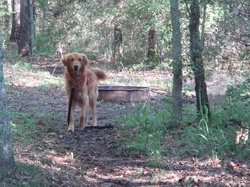
Photo by Flickr user jljohnstone
When you return, email us your favorite photos, and we'll publish them in the Pets section!
1. Learn to recognize potentials dangers. In addition to wild animals that might hurt your dog, remember all the weird and wonderful flora and fauna that your dog might ingest in his quest for knowledge.
A dog’s mouth and stomach are pretty tough and they can vomit up all sorts of things, but it’s good practice for you and your dog to get acquainted with the poisonous fungus and/or toads lurking in your neck of the woods and what the various treatments are. You might need antidotes; you might need to induce vomiting.
2. Don’t forget to pack plenty of water from home for your dog. Bring their regular food bowls, food and treats. To avoid problems, keep them on their regular schedule. Pack plenty of water. Dogs cannot cool off by perspiring like we do. In addition to plenty of water, try a Body Cooler Bandana. This is a bandana that you soak in water and place around your dog's neck to help him stay cool. Do not use this as a substitute for water.
3. Many private campgrounds allow dog but it is of utmost importance that you respect the other campers around you. -Make sure you have complete control over your dog at all times. Keep them on their leash. -Do not allow your dog to bark. Frequent and continued barking disturbed the wildlife and other campers. -Closely supervise your dog around children, other visitors and other dogs. -Never leave your dog outside unattended. -Always pick up after your dog. -Make use of designated dog walking areas. -Use ziplock bags to pick up after them and properly dispose of it in appropriate trash containers.
4. Just as you would not expect yourself to complete a long hiking trek without conditioning, you must condition your dog, as well. Start a training schedule as you would your own - slowly, with a gradual increase in distance and difficulty.
5. Pack dog boots if you are going to be hiking in rough terrain, since dog pads are not normally tough. If you opt for no boots, make sure to check your dog's footpads every day.
Sources: http://thetravelersnotebook.com/top-10-lists/eight-tips-for-camping-with-your-dog/
http://www.lovetheoutdoors.com/camping/tips/dog.htm
http://www.peteducation.com/article.cfm?c=2+2098&aid=3292
Jen Eyer is on the Community Team at AnnArbor.com. She oversees the Parenting and Pets sections, and writes feature stories, blog posts and opinion pieces. She can be reached at 734-623-2577 or jeneyer@annarbor.
Comments
Lorrie Shaw
Mon, May 31, 2010 : 4:37 p.m.
jns131 - That is a great idea! So many could learn from your experience, and have a great time!
jns131
Sun, May 30, 2010 : 8:44 a.m.
Every time I see articles like this one I am reminded that when I have some free time, I should write a book on dog camping. We have been dog camping for over 20 years. There are places that have dog baskets for bikes, these are for the ankle bitters in your life to leashes that help the avid biker let the bigger ones run. There are a lot of places and things that can be done with dogs. I have taken pictures of our daughter in her mini raft with two dogs enjoying a boat ride. Happy Memorial Day everyone!