

Canine Good Citizen Program rewards dogs for having good manners at home, in public
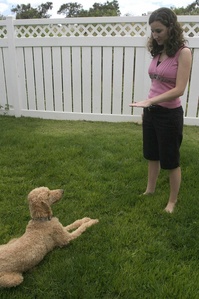
Photo by Flickr user The U.S. Army
The purpose of the CGC Program is to ensure that our favorite companion, the dog, can be a respected member of the community because it has been trained to be well-behaved in the home, in public places, and in the presence of other dogs. The CGC Program welcomes purebred and mixed-breed dogs. The CGC Test is noncompetitive, and dogs are not required to perform with the same precision required in formal obedience.
Dogs that pass all 10 items of the CGC Test, including purebreds and mixed breeds, are listed in the CGC records at the American Kennel Club (AKC). Owners of dogs that pass all 10 items of the CGC test may order an official CGC certificate from the American Kennel Club.
Canine Good Citizen (CGC) is not an official AKC title like Ch. (Champion) or C.D. (Companion Dog). It is meant to reward dogs for having good manners, which enhances the public acceptance of dogs. CGC may be used for advertising or pedigrees, but the AKC does not add CGC to the dog’s official registration papers. “CGC” is an award and not a title.
As the CGC Program has become more popular over the last few years, a number of state legislatures have issued proclamations supporting the program, and some communities and apartment complexes have even used the CGC as a prerequisite for dogs living in those places.
At a CGC Test or Practice session, we expect each participant to have an experience that is positive, educational and fun. Handlers may talk to their dogs throughout the test, and the atmosphere should be relaxed. Praise should be given to dogs throughout the test, and handlers may reassure their dogs with praise, smiles, hugs and pats.
There is no age limit for dogs taking the CGC Test. Because the AKC supports owners who wish to socialize and introduce their dogs to training as early as possible, dogs are welcome to participate in CGC tests when they are old enough to have completed all vaccinations. Owners who bring young dogs to CGC tests become acquainted with qualified trainers, and the CGC Test can be used to identify future training goals.
We would like to stress, however, that when a dog is tested and passes the CGC Test as a puppy, it is important for the owners to have the dog re-tested as an adult. This is because behavior and temperament can change over time. Furthermore, the responsible owner will have dogs re-evaluated on CGC skills periodically (e.g., every 2 years) to demonstrate that training and good manners are maintained. If dogs are re-tested, owners may choose to order an updated certificate, or they may simply keep their old certificate along with updated CGC Test paperwork showing more recent proof of passing the test.
Dogs with disabilities, such as the loss of a leg, deafness, or blindness in one eye, are welcome in the Canine Good Citizen Test. Dogs must perform all of the 10 items to pass the test, but handlers may use hand signals, gestures or other cues to which the dog has been trained to respond. There are no breed specific exceptions to the test requirements (e.g., dogs may not skip the sit exercise because “this breed doesn’t like to sit”). Handlers with disabilities are encouraged to participate in the Canine Good Citizen Test, and we will make minor changes to standard procedures to accommodate handlers with disabilities.
The above is taken from the Evaluator’s Guide for the Canine Good Citizen Program of the American Kennel Club. Next week we’ll take about some basics regarding equipment and behavior for the CGC Test. And if you would like to come by and see a CGC Test, the Ann Arbor Dog Training Club will hold a CGC demonstration and practice/run-through at 7:30 p.m. June 14 in rooms 1-2. See the AADTC website for directions. In addition, there will be a CGC Test conducted at 7:30 p.m. on June 21 in rooms 1-2. No preregistration is required. The cost to participate in the practice is $10; the test is also $10.