

Leptospirosis poses a threat to animals and humans, but its spread can be avoided
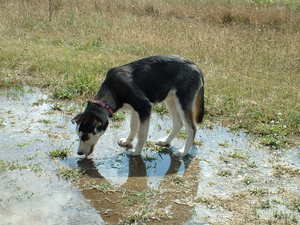
To help prevent the spread of lepto, don't let your dog drink from puddles.
Photo courtesy of Ann Arbor Animal Hospital
Leptospirosis is a life-threatening disease transmitted through contact with urine from infected mammals (raccoons, rats, dogs, etc). The organisms quickly spread through the bloodstream, causing fever and lethargy, and very commonly can infect both the liver (10-20 percent of cases) and kidney (90 percent of cases). Typical symptoms include vomiting, excessive thirst, poor appetite, bleeding and jaundice (a yellowing of the skin and whites of the eyes).
Diagnosis is made from clinical examination and a positive lepto test. However, if the dog has been vaccinated in the last three months, the test may be difficult to interpret.
Treatment is Amoxicillin or Doxycycline for three to four weeks. If the dog is sick enough, fluid therapy can help support the damaged kidneys and complete recovery is possible if found early enough and depending on the extent of liver or kidney damage. Vaccination against six different serovars is readily available and recommended on an annual basis.
When it rains, the urine from infected animals frequently ends up washed into mud puddles, which, to a dog, may look like an inviting place to have a drink. Prevention includes removal of wild animals and standing water in the areas your pet frequents, and not allowing your pet to drink from puddles when out and about.
Don’t feed wildlife or stray animals, and try to avoid attracting them to your property. Avoid contact with animals that may be infected and wash your hands after handling your dog or anything that may have come into contact with dog urine.
With the drought experienced in Michigan and much of the country, there hasn’t been much standing water, which is a prime way for lepto to spread. But as we start to get more rain and the season begins to change once again, the chances of infection will rise.
We hope that there won’t be another outbreak, but the possibility exists. So be mindful of the risk of lepto when you and your loved ones are outside. As we like to stress, prevention is the best medicine.
Dr. Taryn Clark graduated from the veterinary school at Michigan State University in 2000, and has worked at the Ann Arbor Animal Hospital since then. Her areas of interest include oncology, acupuncture, pain management and geriatrics. Questions for Dr. Clark can be sent to David Caddell, hospital director, and he will pass them on. David can be reached at 734-662-4474 or dcaddell@AnnArborAnimalHospital.com.
Comments
LA
Mon, Sep 17, 2012 : 2:50 p.m.
what about letting dogs play in steams and ponds or the Huron River?
Ann Arbor Animal Hospital
Mon, Sep 17, 2012 : 7:32 p.m.
Hi LA, This is David from the hospital and I shared your question with a DVM on our staff and her answer was "Normally we think about Leptospirosis contact via urine (and potentially other fluids) of infected animals. (the stagnant puddle of standing water with animal urine in the barnyard). Moving bodies of water like rivers and streams, may have puddles nearby, but the large body of water is unlikely to have the organisms in very high numbers. Certainly I would avoid having my dog (or horse) drink out of the small murky puddles around bodies of water and provide fresh water from home to satisfy drinking needs. Leptospirosis is out in the environment. Vaccinating is only one part of trying to prevent clinical disease. If your dog is acting ill, providing a good history to include where you and your dog goes and what you do will aid in increasing the level of suspicion so your doctor can get to an accurate diagnosis promptly." Thank you and we hope you found this useful... best, David