

When is the last time your pet's teeth were cleaned? February is Pet Dental Health Month
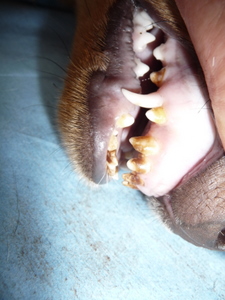
Enamel discoloration in a pup secondary to early distemper virus infection.
Cathy Theisen DVM | Contributor
Most of us wouldn't dream of going, say, 12 years without any dental care - but many pets receive no dental care in their lifetime! February is Pet Dental Health month, and is a good reminder to schedule an appointment with your veterinarian for an oral exam.
Dental care can be as simple as providing "scrubbing" chews or diets, which work by an abrasive effect when the dog or cat chews. These are best used before tartar accumulation begins, as a preventative measure, and mimic what would normally occur when a predator chews through bone and gristle. There are also a variety of toothpastes and oral rinses that can help to minimize tartar production and protect dental enamel.
Even a small amount of tartar or plaque in the mouth can affect an animal's health. Bacteria-laden debris showers the heart and lungs, predisposing the animal to respiratory infections and cardiac disease. A disease called vegetative endocarditis is actually the result of bacterial colonies proliferating on the valves within the heart, ultimately mimicking heart failure.
Interestingly enough, many sled dog teams I worked on in Alaska's Iditarod Sled Dog race had dental cleanings every six months, so clear is the evidence that even small amounts of tartar can impact athletic performance.
If you are noticing an odor or bloody discharge from your pet's mouth, discoloration of teeth or difficulty chewing, see your veterinarian for a dental exam. A typical dental cleaning is an oupatient procedure, usually requiring a general anesthetic, scaling and polishing of teeth, along with extraction of any teeth that are loose or abscessed, or even root canal procedures to save primary teeth. Your pet will likely be heading home with a supply of antibiotics and pain relievers if teeth are extracted or a root canal is performed.
Many people worry their pet won't be able to eat well after teeth are extracted. Toy and small dogs, especially, tend to experience early dental decay and may lose many teeth prematurely. Most dogs and cats do just fine, even with many missing teeth. In any case, removing infected or inflamed teeth is preferable to allowing your pet to experience the same kind of throbbing or discomfort in the mouth that you would experience with dental disease. The sooner the problem is addressed, the less likely your pet will experience tooth and bone loss.
For more information, listen to the AVMA podcast on dental health at http://www.avmamedia.org/display.asp?sid=225&tid=207&NAME=National_Pet_Dental_Health_Month_2010
Dr. Cathy Theisen is a house call and relief veterinarian in Ann Arbor, with 23 years experience in small animal medicine and surgery. Visit her website at www.cathythevet.net, or email questions/comments to cathythevet@comcast.net.