

Educating public on the need to spay & neuter pets is just one goal of area dog rescue
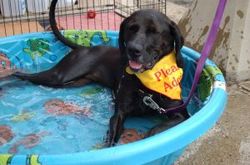
Maddy is just one of the adoptable dogs in the care of the organization
This beautiful weather that we’ve had in the Ann Arbor area recently has easily lent itself to seeing a happy pooch sitting shotgun or in the backseat of a car, likely with the window cracked just enough to get a generous whiff of the spring air in passing.
But look closer: is the dog a permanent member of the family that he’s riding with? You would venture to say “yes”, but the dog could very well be a foster dog that is in possession a local rescue that has saved him.
And you would never know the difference.
Rescue dogs don’t look any different than those that have forever homes: they are as happy, well-behaved and capable of living a normal life as any dog, contrary to what some think.
“They are not throw-away animals,” says Sandy Patton, a foster volunteer with Waggin’ Tails Dog Rescue based in Northville.
“Rescued dogs are in the situation that they are in through no fault of their own,” adds Patton.
Patton — who is fostering Maddy, a 5 and 1/2-year-old German Wirehaired Pointer/Redbone Coonhound mix — says that many of the dogs have been relinquished by their owners because of the economic downturn. Other dogs have been scooped up from area high-kill shelters and some even have been saved from a harsh life in a research facility.
The 501(c)3 nonprofit organization, which was started by experienced rescue volunteers in 2007, has about 20 or so volunteers and as many dogs waiting for adoption at any given time.
Like some other rescues, they do not have a fixed site to house the dogs; the companion animals simply live in foster with volunteers, some of which reside in Saline and Ann Arbor.
These volunteers are not paid and have in most cases, full-time jobs outside of their work with the organization and care for the animals, just as they do their own pets, until a capable forever home is found.
Through daily contact with others, and events at local pet stores and the like, they try and gain exposure for each pet as best they can, and they have a great track record: just this year, about 20 dogs have been successfully placed.
Adoption events are helpful in getting the furry faces the exposure that they need but raising money to help offset the costs of supplies and veterinary care is important, too.
Events like the fourth annual Uncorked for Canines wine tasting event help with that, as does the Kroger Community Rewards Program, and contributions from donors.
One crucial aspect of getting a dog a forever home is understanding what each dog is about — knowing their personality, understanding their limits (some dogs will not do well in homes with cats, for example) — offering full disclosure about what they learn about the dog.
“It’s the only way to really get a dog placed in just the right home. Being honest with ourselves about any possible limitations that they indicate, knowing their energy level, and what their needs are - and relaying that to those who show an interest in adopting them - is our job as foster volunteers,” adds Patton.
She notes that another key to their success is due in part to their thorough vetting process, which involves an application, home visit and more.
Each adult dog is spayed or neutered prior to adoption and is up-to-date on vaccinations - all of which is included in the $225 adoption fee. Puppies under 6 months have higher adoption fees, and if they are too young to undergo a spay/neuter procedure, adopters agree to take care of that when the dog is old enough and need to pay a deposit for the procedure and get a voucher.
"It takes a village," as the old adage says, and Waggin’ Tails understands this. The health of each pet is integral to their long, happy life, as is good behavior. The organization partners with veterinary and behavioral professionals including Dr. Barbara Griffith, DVM of Griffith Veterinary Hospital and trainer Terry Jacobus, owner of Pawzitively Positive in Ann Arbor.
Jacobus even holds seminars for volunteers to educate them on the fine points of dog behavior — key things to look for, how to handle behaviors more effectively, that sort of thing.
The Ann Arbor community has been helpful in helping the rescue; aside from adopters and volunteers from the area, the Whole Foods’ Washtenaw Avenue location has a food drop-off bin for a food bank that Waggin’ Tails has to help feed dogs in need.
One aspect that the organization focuses on is the need to reduce the overall pet population. Providing spay and neuter information and referral services to pet owners is just one way of achieving that.
Patton ended our conversation by saying, “That’s one of our main goals — to educate people about just how much getting their pets spayed or neutered can be a part of the solution.”
Lorrie Shaw leads the pets section for AnnArbor.com. Catch her daily dog walking and pet sitting adventures or email her directly and subscribe to AnnArbor.com's email newsletters.
Comments
Woman in Ypsilanti
Thu, Apr 19, 2012 : 4:20 p.m.
I am always glad to hear of people doing such good things for animals in our community.