

Living on the steep part of the learning curve
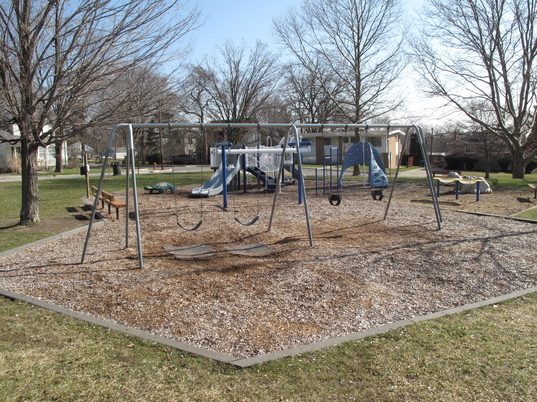
“For children in past eras, participating in the culture of childhood was a socializing process. They learned to settle their own quarrels, to make and break their own rules, and to respect the rights of others. They learned that friends could be mean as well as kind, and that life was not always fair.” —David Elkind
Dennis Sparks/Contributor
“I’ll take my chances, I don’t mind working without a net. . . .”
—Mary Chapin Carpenter & Don Schlitz
Someone recently told me that she missed the old-fashioned card catalogues in libraries because of the books she would stumble upon while searching for others. While we talked I realized that, because I now almost exclusively use my computer’s dictionary, I no longer experience the joy of discovery in finding interesting new words while looking up a definition.
But that joy has been replaced by another kind of discovery offered by the Internet as one Web site or article leads me to destinations I never anticipated when I began my search. For instance, a New York Times obituary for “rock ‘n’ roll photographer” Jim Marshall took me to an article about Bob Dylan, which in turn led to a discussion of a memoir written by Suze Rotolo, Dylan’s girlfriend in the early 1960s. That memoir, according to the article, described a time when the author and Dylan were “two of countless young people who had made their way to Greenwich Village to reinvent themselves.” Such effortless, serendipitous learning is for me a never-ending source of delight.
Because human beings are learning machines, we often learn without knowing that we are absorbing important life lessons. Engaging in creation and play in a “culture of childhood” was an important source of such learning for countless generations, a culture whose recent loss is lamented by child development expert David Elkind.
We also learn through an almost osmosis-like process from our culture and from those with whom we identify like parents and teachers. Some of the lessons absorbed in this way, however, can bring with them unintended negative consequences as we acquire beliefs and habits that thwart the achievement of important goals. Many of us, for example, learned as children to have unreasonably high expectations for ourselves and others, to suffer from guilt caused by too many “shoulds” or to take on responsibility for things that are really the responsibility of others. The “corrective” for self-defeating behavior is a kind of “tune-up” learning through psychotherapy or the presence of positive models that help us understand the forces that shaped us and that replace old ways of thinking and acting with new ones that increase our well-being.
There is yet another form of significant learning that adds vitality to our lives by stretching us out of our comfort zones and tapping previously undeveloped capacities. In an earlier essay I wrote about the strategy of “kedging,” which "Younger Next Year: Live Strong, Fit, and Sexy—Until You’re 80 and Beyond" authors Chris Crowley and Henry Lodge offer as a metaphor for “climbing out of the ordinary, setting a desperate goal, and working like crazy to get there.”
For inspiration I periodically return to a New York Times article that describes the life of Emma Shulman. Until 2005 Shulman was a gerontologist, a senior social worker and a research associate at a major university. She continues to consult, according to the Times article, and is taking a graduate degree in cultural anthropology because, as she says, “I don’t know anything about it,” and is taking a private class in writing.
Emma was 96 when the Times article appeared, an age at which many of us would not expect to find someone living on such a steep part of the learning curve. Emma demonstrates the power of a kind of a hopeful learning that not only enriches the present moment but provides a means for a better tomorrow.
The kind of learning Shulman exemplifies requires that we take our chances by “working without a net,” as songwriters Mary Chapin Carpenter and Don Schlitz express it. It may require becoming comfortable with the discomfort of being a novice. It may challenge long-held habits, including the limitations we’ve placed on ourselves through beliefs such as “That’s just how I am” or “I’m too old to learn to use technology.”
Learning, in whatever form it takes — serendipitous, tune-up, or hopeful — adds to the quality of our lives. Not only does it stimulate the brain, it is a source of energy, passion and connection to things larger than ourselves. Through such processes we realize that our lives are not etched in stone at an early age but can continuously evolve through “multiple drafts” as we learn our way forward until our final days.
Dennis Sparks’ “Things Observed” essays and photos encourage readers to see familiar things in new ways. You can also read his blog on school leadership and contact him at dennis.sparks@comcast.net.