

State budget gets mixed reviews from Washtenaw County lawmakers
State Rep. Jeff Irwin and Sen. Rebekah Warren, both Ann Arbor Democrats, say they're not happy with how the state budget turned out this year.
"I'm absolutely not happy with this budget," Warren said. "If you look at the budget we just passed, what it says is that the people of the state of Michigan are not our priority."
Despite slight increases in state spending starting Oct. 1, both Irwin and Warren argued Michigan still isn't investing enough in K-12 schools or public universities.

Jeff Irwin

Rebekah Warren
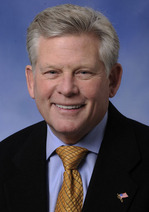
Mark Ouimet

Rick Olson
State Reps. Mark Ouimet and Rick Olson, two Republicans who represent different parts of Washtenaw County in the Legislature, offered a different take on the budget.
Ouimet called it a responsible budget that provides tax relief for every Michigan taxpayer, trims $200 million in unnecessary spending and hikes funding levels for municipal governments.
He pointed out Republican lawmakers were able to bring forward a decrease in the personal income tax rate from 4.35 to 4.25 percent effective Oct. 1, in addition to incremental increases in the personal exemption from $3,700 per person to $4,100 by 2017.
"This is my second opportunity to approve a budget that is truly balanced, on time and moves the state forward toward continued economic success," said Ouimet, R-Scio Township.
Ouimet said highlights of the $48.2 billion state budget for him include $605 million to reduce long-term debt, $140 million more socked away in the state's rainy day fund, an additional $257 million for education and $90 million for individual tax relief.
The main budget bill passed in both chambers of the Legislature last week. The education budget passed 58-51 in the House and awaits a final vote in the Senate.
The budget includes a $36 million increase for public universities, which will get $1.4 billion overall, as well as $200 million more for K-12 schools, which will get $12.9 billion. Community colleges will get $10.3 million more, for a total of $294 million.
All three must meet performance requirements to qualify for much of the extra money. Some of of the money would go to cover school pension and retiree health care costs.
Olson said nearly $10 million could potentially be received by Washtenaw County K-12 school districts beyond the base foundation grant amounts received last year.
Most of that would be to offset increases in retirement plan costs, Olson said, while some would be used to close equity gaps and reward school districts for best practices and showing improved performance in reading, math and overall student proficiency.
"The additional money received by each district will be greatly needed to protect and enhance the ability of our youth to achieve the standards required by the world economy of today," said Olson, R-York Township. "We individually did not get everything we wanted, but this is a positive step forward, enabled by the improving state economy."
Olson said as much as he applauds the progress, it's still evident that most school districts are being squeezed. He said he expects state lawmakers to further address escalating retirement system employer contribution rates and skyrocketing unfunded liabilities.
"Also, providing more funds for early childhood education still remains to be addressed," he said. "We must strive to do even more."
Irwin and Warren said it's disingenuous for Republicans to talk about their commitment to education when the budget only restores a small fraction of what was cut last year.
"This is another year in a row that we see pretty significant cuts to most of our public schools," Warren said. "Some of our public schools will get a bump under this new formula, but most of them won't. Our higher education institutions, although they will see a little bit of a bump, we cut them 15 percent last year. So to get a 1.5 percent increase this year is really not an increase."
Warren also criticized the Legislature for failing to act on legislation that would raise $1.4 billion to better maintain Michigan's roads and bridges.
"We still didn't do anything to increase funding for roads or transit, so we'll still have crumbling infrastructure," she said. "And we'll still be leaving our local governments with budget challenges to resolve, because they won't have enough money."
Warren also was heavily critical of what she perceives as a push by Republicans to put more of the state's resources into the hands of private companies.
"We have outsourced a whole bunch of our programs in education and we've now just decided that we're going to let for-profit companies run an increasing number of our public school programs — from charter schools and now these cyber schools," she said. "So school aid fund dollars are going to pad the bottom line of companies that aren't even here in Michigan."
Ouimet said he was happy with the budget process. Completing the budget four months before the Oct. 1 deadline, he said, gives local governments, school districts and others that rely on state funding more time to accurately complete their own budgets.
"For the second year in a row, our public schools will know exactly how much state funding they will receive so they can build fiscally sound local budgets," Ouimet said.
The overall budget includes $50 million in film incentives instead of the $25 million originally planned for next fiscal year.
As for the debate over budget bills that threatened funding to the University of Michigan unless it complied with stem cell reporting requirements, Irwin said, "I think U of M was able to negotiate the stem cell language into a place where they can live with it and it's not going to frustrate their efforts to continue life-saving research."
Warren agreed it could have been worse for U-M.
"There were some changes that came out of the conference committee that ended up being better for the University of Michigan," she said.
"But like I said, if they get everything that they're eligible for, they'll probably see about a 1.5 percent increase over what they got last year, but after we cut them 15 percent last year," she said. "And that to me is one of the most disappointing things about this budget."
Irwin said he's optimistic the Michigan economy is turning around.
"Fortunately the auto industry is leading the Michigan economy back to a more healthy spot so there's not additional cuts to some of the programs that we saw cut last year such as revenue sharing that provides funding for police and fire," Irwin said. "So hopefully the great tax shift the Republicans were starting to engineer last year is starting to slow or end."
Ryan J. Stanton covers government and politics for AnnArbor.com. Reach him at ryanstanton@annarbor.com or 734-623-2529. You also can follow him on Twitter or subscribe to AnnArbor.com's email newsletters.
Comments
clownfish
Tue, Jun 5, 2012 : 12:22 p.m.
I would gladly pay an extra .10% in income tax to support our schools and fix the roads. Our government officials act like they have been drowned in a bathtub, and the services reflect it.
maallen
Tue, Jun 5, 2012 : 1:02 p.m.
clownfish, No one is stopping you from writing a check to the state of michigan. It's a great day when our k-12 education system is getting more money in the budget and we see our roads and bridges all around us being fixed. However, I don't agree with our public universities getting more money when it is quite obvious they are flush with money.
Jeffersonian Liberal
Tue, Jun 5, 2012 : 12:09 p.m.
Liberal progressives are unhappy because the makers are allowed to keep more of their hard earned dollars and the takers are not receiving more unaffordable handouts.
Alan Goldsmith
Tue, Jun 5, 2012 : 11:07 a.m.
Kudos to Jeff Irwin for marching with the U of M Nurses Union a few month back when they were attempting to settle their contract. His actions have matched his words. No thanks to Rebekah Warren, who has been invisible as my State Representative and not to be found when Unions are being bashed, unless you count 'outraged' after the fact press releases. Her votes seem more in tune assisting with her husband's political future and an attempt to not stir up any waves with Governor Snyder rather than standing up for progressive, pro-worker issues. I guess her outrage is knocking out a really really angry written statement. Lol.
snapshot
Wed, Jun 6, 2012 : 3:59 a.m.
What about all the non-union taxpayers he's supposed to represent? Oh yeah, we don't count. Public employees and their unions are "gang voters" bullying elected officials with their collective voting/work stoppages/strike powers. That's not representative democracy, that's mob rule.
Lac Court Orilles
Tue, Jun 5, 2012 : 10:43 a.m.
Quimet needs to be voted out of office for his disingenuous commitment to our children. Olson is leaving, but he still likes to bash teachers even on his way out. Hurting children and teachers must make these two guys feel good.
Michigan Man
Tue, Jun 5, 2012 : 1:47 p.m.
Ouimet (Mark) is going to be around and in office for a long time. Better get used to it and deal with this reality. If you cannot adapt, best to move on to a different community.
supercalifrag
Tue, Jun 5, 2012 : 12:37 p.m.
Oimet does care and he is frequently caught visiting school boards, assessing what schools need. Just because he isn't throwing money at schools doesn't mean he doesn't care. Stable finances contribute to better education over the long term more so than tiny spurts of token funding that is far beyond the ability to sustain. No one likes the budget to be cut, but considering the dire circumstances we are in, it just makes sense. Since when is creating more debt for our children is more disingenuous to their development than teaching them to live within their means and teach by example? Other states spend far less and many have better results. Why are you complaining about the amount of money being spent when the results are what is important? We need leaders who aren't afraid to tell us the truth, even if it is hard. If Warren is so concerned, why doesn't she give some of her "lunch money" to the cause, instead of outrageously spending it on herself? http://www.annarbor.com/news/rebekah-warren-ranks-no-4-on-list-of-michigan-lawmakers-receiving-lobbyist-paid-meals/?plckFindCommentKey=CommentKey:f8fe5a21-a45f-4ded-93c2-c87d36a25aed Responsible government starts with personal responsibility.
Basic Bob
Tue, Jun 5, 2012 : 10:58 a.m.
Quimet?
snapshot
Tue, Jun 5, 2012 : 5:49 a.m.
The bottom line, unions want more. Public schools lose money but 85% of funding goes to salaries and benefits, including "unfunded' healthcare costs. do the kids deserve more than 15% of public funding? I say yes. Is there a balance between "cadillac" healthcare and healthcare for everyone? I say yes. If you're a public employee do you deserve more and better than the private sector? I say no. If you're an "elected" official, should you pander to union votes? I say no. Should you pander to corporate votes? One CEO in a profit, job producing company that must make a profit to cotribute to a campaign? I also say no but remember, if the corporate entity doesn't generate a profit, they get "fired". what "profit" do public unions produce?
52ndGirl
Tue, Jun 5, 2012 : 1:29 a.m.
I agree - if Irwin and Warren are unhappy with this budget, it must be fiscally responsible and balanced. They both forget that when the Democrats were guiding the budget, it would not be settled until the 11th hour and was done only for a year. I congratulate the House for continuing to make the hard decisions to turn this state around and once again, make it successful.
braggslaw
Tue, Jun 5, 2012 : 12:58 a.m.
If Warren and Irwin are unhappy, then it is a good and responsible budget.
Stephen Landes
Mon, Jun 4, 2012 : 11:53 p.m.
The Michigan budget is balanced. The budget was completed just a couple of days later than planned -- far earlier than the budgets under the previous Democrat-led government. I call this a huge success.
cinnabar7071
Mon, Jun 4, 2012 : 10:41 p.m.
Democrats dont like budgets. Nuff said.
Roadman
Mon, Jun 4, 2012 : 10:01 p.m.
"Warren also was heavily critical of what she perceives as a push by Republicans to put more of the state's resources into the hands of private companies." Such as education? Heh! Come down off your high horse, Becky. Detroit residents are largely singing the praises of charter schools as an excellent alternative to the asininely managed Detroit Public School system that cannot even provide adequate supplies of toilet paper for student use. Some graduates of these charter schools are now attending top universities. Support charter schools!