

Conan Smith: Why Ann Arbor doesn't see itself as part of Metro Detroit - and why it should
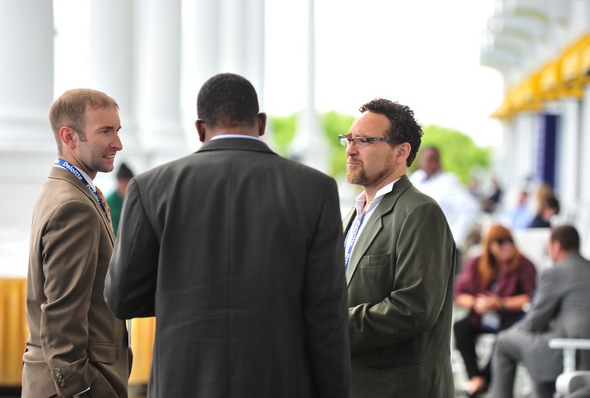
Ann Arbor's Conan Smith, right, talks with Brian Kandler of Wiener Associates, left, and Guy Williams of Detroiters Working for Environmental Justice on the deck of the Grand Hotel on Mackinac Island.
Ryan J. Stanton | AnnArbor.com
Until that point, the marquee panel event at the Detroit Regional Chamber's annual Mackinac Policy Conference was known as the "Big Four," featuring the region's top four political leaders: Detroit's mayor and the county executives from Wayne, Oakland and Macomb.
But adding the chairman of the Washtenaw County Board of Commissioners to the mix made sense, given the increased emphasis on regional collaboration.
Many questions remain about how to bring Detroit and Ann Arbor together, though. For Washtenaw County's part, Smith said, the issue is as much about "should we be a part of the region" as it is about how it is governed.
"From a Washtenaw County standpoint, I think the biggest (roadblock) remains the lack of affinity that Washtenaw County as a whole has with Wayne County and Detroit or Oakland County and Macomb," he said. "We just don't yet see ourselves as a natural part of that region, so I think it feels a little forced to a lot of people, and they're scared about it."
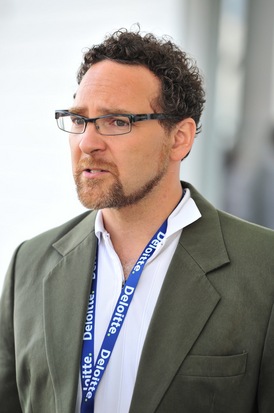
Conan Smith
Smith, executive director of the Michigan Suburbs Alliance, sat down with AnnArbor.com on the deck of the Grand Hotel to offer some insight on this year's conference, which is built around three main themes: innovation, collaboration and the global marketplace.
AnnArbor.com: What are the important issues facing Michigan that you expect to take center stage this week and how do Ann Arbor and Washtenaw County fit into the bigger picture?
Smith: The ongoing major issue for the state, of course, is around economic development and sort of the recovery of the state's economy. And what you're going to hear a lot up here this year is talk about innovation, entrepreneurship and then in particular this economic gardening strategy — the idea that we can leverage our strong corporations to help build other corporations, that community investments play a role in growing the job base.
For the relevance of Washtenaw County and the city of Ann Arbor to that conversation, I think you have to look to the University of Michigan and the role that a strong academic base plays in any future economy. We're no longer the manufacturing economy that we used to be for the region. We have to become more talent-oriented, more service-oriented, to succeed. So what I always say, and what I truly believe, is that Ann Arbor and Washtenaw County really is the metro area's crucible of talent. We draw the best and the brightest from around the world into the University of Michigan and into Eastern Michigan University and then we hone those talents and we send those people off into the world again to be leaders in the new economy. Unfortunately, nearly a majority of those folks leave the state of Michigan.
AnnArbor.com: What do you think the Fab Five will discuss on Thursday?
Smith: I think regional transit is probably going to be on the top of the agenda. The five of us have been working together with the governor's office for almost a year now to advance a model of regional transportation that can serve the metro area around key corridors. In the past, what we tried to do was create one holistic bus system and that idea is sort of off the table, but now we're looking more at inter-county connectivity. So how do you get from Ann Arbor or Ypsi into Detroit to access those cultural and economic amenities? How do you get your workers from Ann Arbor into Dearborn to Ford's headquarters or to Wayne to the plant there? So there are lots of interesting benefits and challenges to the RTA.
The chamber, I believe, has an interest in how regional decisions are made as well, regional governance, and they've seen some really good successes with the Cobo authority and are wondering can that be mimicked and be successful? Or how do we end up with good public governance of regional projects? They also have an interest in regional taxation, so funding the DIA on a more metropolitan level or the Detroit Zoo on a more metropolitan level. At this point, Washtenaw is not part of those particular conversations, but I know both those institutions are interested because they have a lot of members and attendees that come out of Washtenaw.
And then I think we're just going to talk about some of the policy challenges that local governments are facing right now, particularly county governments. So the proposal in the Legislature to reform personal property tax and a proposal that has been implemented with arguable success around the Economic Vitality Incentive Program, which was a morphing of the revenue sharing program that we've had for generations.
AnnArbor.com: Is Washtenaw County any more relevant to that discussion than it was at this time last year?
Smith: I don't think so. The interesting thing is we're small as a population. The difference is that we punch above our weight. So if you look at taxable value or SEV per capita, we're the highest in the metro region. We are a strong and prosperous community. Unfortunately our successes aren't often recognized at the metropolitan level and the experiences that we've had, folks have not been very enamored with duplicating them (in the region), so we end up with strong economic innovation engines like Ann Arbor SPARK and certainly there are those in the metro area as well — Automation Alley, the Detroit Economic Growth Corp., and Wayne County Edge — all doing smart, creative work. But the kind of strategy we brought to the table as Washtenaw County is now recognized at the state level, maybe because the governor is from Washtenaw County, and that model is now being replicated across the state of Michigan. But we still aren't actually recognized for the intelligence of our work and the relevance of our work to metropolitan Detroit, so that's going to be a consistent struggle for us.
AnnArbor.com: There have been questions about whether Washtenaw County should be considered part of Metro Detroit, whether we link up regionally when we talk about collaborative efforts. From a branding perspective, what is the benefit to Ann Arbor and Washtenaw County to linking up with Metro Detroit as opposed to branding Ann Arbor individually?
Smith: Certainly Detroit is our global brand for all of Michigan, and Ann Arbor can't really ever hope to have that same sort of presence on a global scale. Ann Arbor USA is a powerful national brand and certainly a very powerful state brand, but as our economy becomes more global, as our ability to attract talent from around the world and our ability to compete on a global scale grows, we're going to need to have a marker in that game and the city of Detroit or the Detroit name is that marker. So it's important for us from an economic standpoint to recognize that we are part of a bigger picture, that Ann Arbor can't stand alone for all things.
We have sort of three versions of Washtenaw County: east, middle and west. And the further west you go, the harder it is to build a cultural identity with the Detroit metropolitan area. We have a lot of economic commerce between our community and Wayne County, in particular, but not a lot of cultural commerce, so people are just as likely, for example, to go to the Toledo Zoo or art museum as they are to go to the DIA or the Detroit Zoo. So we have a decided economic interest in the metropolitan area that is confounded somewhat by the cultural separation.
AnnArbor.com: What other potential roadblocks stand in the way of some of these regional collaboration initiatives that we're talking about?
Smith: From a Washtenaw County standpoint, I think the biggest one remains the lack of affinity that Washtenaw County as a whole has with Wayne County and Detroit or Oakland County and Macomb. We just don't yet see ourselves as a natural part of that region, so I think it feels a little forced to a lot of people, and they're scared about it. It's easy to become overwhelmed in a system like that, so I think from our standpoint, the relationship barrier is still probably the biggest one. The other things people bring up about economic investment — whether we'd be a donor community or a recipient community, whether we would have independent power or not — those are all things to get worked out at the policy level. There's a much bigger, higher-level conversation about where we fit as part of the metro that hasn't really taken root in Washtenaw County yet and still needs to.
AnnArbor.com: But as you see it, Ann Arbor stands to benefit from Detroit's recovery and Detroit stands to benefit from a stronger Ann Arbor?
Smith: There's no question about that at all. Forty-six percent of the graduates from the University of Michigan leave the state of Michigan, and if we want to keep them here, we have to provide them a big city experience. We can only do that in the city of Detroit. So all the talent that we're investing in — and when I say investing, we're talking hundreds of millions of dollars of taxpayer money that goes into the universities in Washtenaw County to train young people — it really is an investment. And if we want to keep that investment here in the state of Michigan, we have to have a stronger, more vibrant city of Detroit and a metro region that is attractive to young professionals. And when the city of Detroit is strong and vibrant, it's going to attract a whole different kind of business investment — the kind of business investment that makes spinning off great things from the University of Michigan and Eastern Michigan University more likely, more exciting, more powerful. So the two are keenly interrelated and, if managed well, result in a cycle of growth and prosperity for all of the metro region.
Ryan J. Stanton covers government and politics for AnnArbor.com. Reach him at ryanstanton@annarbor.com or 734-623-2529. You also can follow him on Twitter or subscribe to AnnArbor.com's email newsletters.
Comments
Eric Kim
Thu, Jun 7, 2012 : 1:43 p.m.
Disclaimer: I'm a Detroiter. But I see no reason for all of this acrimony. Ann Arbor is a wonderful place, full of very smart people, bound together by a very strong community. I care about what happens in Ann Arbor because I have friends and family that live in Ann Arbor, just as much as I care about what happens in Detroit because I live in Detroit. And maybe I can only speak for myself, but I'm sorry for the heartache that Detroit has caused Michigan. But whether you see it or not, among the war torn houses and empty high rises there are still people, people who desperately want a better tomorrow, many of whom are not to blame for what has happened to Detroit. Whether Ann Arbor is a suburb of Detroit or not really isn't relevant. What is relevant is that for many of us, we're a part of the same family. And despite our problems, family should at least love each other enough to work together. I'm not looking for a handout. But I wish my family would care enough to at least not speak ill of me.
7718
Thu, May 31, 2012 : 11:03 p.m.
Ah, the life of a politician.
Paul Wiener
Thu, May 31, 2012 : 4:23 p.m.
As soon as these jokers have their annual meeting in Detroit, or anywhere within 50 miles of it, not at Mackinac's 1% Grand Hotel at the cost of who knows how many millions of fun-filled expenses, I'll take them seriously - about anything.
annarbor28
Thu, May 31, 2012 : 7:09 p.m.
That's a really good idea.
Stephen Wehmeyer
Thu, May 31, 2012 : 2:22 p.m.
I came here 13 years ago from up north. I've never considered Ann Arbor anything but a suburb of Detroit. Definitely part of Detroit Metro, if not a Detroit neighborhood. Ann Arbor has nothing without Detroit. The company I work for can't even meet without going to Laurel Manor. There's no DIA, no professional sports, no zoo, not amusement parks, no …, there's nothing here without Detroit. Look at a map sometime and tell me we're not a Detroit neighborhood.
Myles
Sun, Jun 3, 2012 : 12:10 a.m.
Exactly I agree 100%.
bluemax79
Thu, May 31, 2012 : 12:14 p.m.
the thing to do with Detroit is to put a huge fence around it and put all the criminals in it (the ones that are not already there) just like the movie escape from New York. Detroit is dying and all the money in the world will not save it. people don't want to go there, they see vacant buildings and don't feel safe there.
Myles
Sun, Jun 3, 2012 : 12:12 a.m.
FYI the van ant buildings and neighborhoods are mostly from the Detroit riots back in the 70's, especially on 12th street, even though I doubt you know where that is because it sounds like you've never even lived there.
Middle America
Thu, May 31, 2012 : 1:22 p.m.
Well, bluemax79, I feel really sorry for you. You obviously have no pride in Michigan or your fellow man. Sorry that Detroit is not in the state you wish it was in, but perhaps your attitude is contributing to the problem. The fact that you are not a downtrodden individual living in a city like Detroit is pure luck.
alex
Thu, May 31, 2012 : 1:10 p.m.
oh... so you want another holocaust?
bluemax79
Thu, May 31, 2012 : 11:54 a.m.
so they want to drag Ann Arobor into the decay and revoltingly corrupt city that is detroit? Let us hope that never happens. the reason the best and brightest move out to Chicago and every other big city is that NOBODY wants to be in Detroit. compare Detroit to Chicago, both have corrupt government BUT Chicago has a vibrant city with a LOT to do for young people. they have miles of public beaches and a great transit system. Detroit has none of that, add to that the constant violent reputation and why does anyone wonder why our best and brightest avoid Detroit like the plague.
Middle America
Thu, May 31, 2012 : 1:25 p.m.
Yes, I hope "Ann Arobor" never is associated with Detroit. Maybe we could pretend that Detroit no longer exists until the economic woes Michigan endures disappear. I mean, the best thing we can do is just constantly berate Detroit! Let's never attempt to help at all and let's just continue to not care. The less we care, the harder those lazy poor people in Detroit will work!
SEC Fan
Thu, May 31, 2012 : 11:36 a.m.
I don't understand Conan's last answer..."46% of Michigan grads leave the state, and if we want to keep them here..." Only 66% of the UM undergrads are Michigan residents...is 46% of the grads leaving that big of a problem? Wouldn't one expect the non-residents to leave upon graduation? We're retaining some 97% of the Michiganian UM grads...I have nothing to compare this to, but that seems pretty darn good. http://www.admissions.umich.edu/glance
alex
Thu, May 31, 2012 : 1:20 p.m.
what does that have to do with this article? Is it THAT surprising there's not that many jobs in Michigan and people want to leave? Sorry... but as a state we're not doing all that well.
Jim Van Buren
Thu, May 31, 2012 : 11:05 a.m.
It must be nice to spend a few quality days at the Grand on the taxpayer dime. This looks like an attempt to cast a bigger net in terms of revenue.
annarbor28
Thu, May 31, 2012 : 4:12 a.m.
Having lived in both Detroit and Ann Arbor, I can say that they are totally different and hopefully will remian unrelated. Detroit government is full of corruption and the city services are dismal, as are the schools. These is absolutely nothing in it for Ann Arbor to have any affiliation with Detroit. This clown Conan Smith seems to be both full of himself, and also have a conflict of interest with his other position. This confereence in general seems to be huge waste of time, only useful for those cronies parading around in suits promoting themselves. Mr. Conan Smith does not realize that Ann Arbor is great because it is not closely affiliated with Detroit. Please send him home to wherever he came from. How did he become County Commissioner?
Myles
Thu, May 31, 2012 : 2:42 a.m.
Well hey I'm from Detroit then I moved to Ypsilanti and now I just recently moved to a2 and most people in Macomb, Oakland, and Wayne counties already consider a2 as part of metro Detroit. FYI a2 is not 45 mi away it's is wayy less than that. You a2 people are full of your selfs and ignorant. Y'all don't realize that a2 is nothing with out Detroit and yes Detroit has its problems but a2 needs to stop trying to get away and help because all its doing is driving everything down hill. In to be honest a2 is no where near as big of a city as Detroit, a2 downtown sucks and the city in general is tiny compared to Detroit. And most of the people who criticize yothe cities from ypsilanti to Detroit have more than likely never even lived there so it makes a2 look stuck up for a city who does NOT have much to offer. I cannot wait to move back to the D because a2 thinks they're something they're most definitely NOT
A2comments
Thu, May 31, 2012 : 10:57 a.m.
bye...
psaume23
Wed, May 30, 2012 : 11:59 p.m.
Hope that the metro Detroit area improves in employment, and that the City of Detroit finds a way to overcome its deep-rooted poverty, crime, education, and blight problems. But leave Ann Arbor out of the equation. Ann Arbor is not, and should never be considered, part of "metro Detroit."
DJBudSonic
Wed, May 30, 2012 : 10:06 p.m.
This line says it all and should tell you why we don't want to be a part of regional coalitions: " So if you look at taxable value or SEV per capita, we're the highest in the metro region." So of course when Metro Detroit needs more money where are they going to look? Raise your hand ( and your taxes) if you want to help pay for Detroit's Transit system...
Mick52
Wed, May 30, 2012 : 8:37 p.m.
Shoot. Oakland County, just across 8 Mile from Detroit won't touch it. No bailouts for Detroit which is exactly what they are looking for.
Vivienne Armentrout
Wed, May 30, 2012 : 8:01 p.m.
I hope that the reporter (Ryan Stanton) and AnnArbor.com can present us with a detailed account of the Thursday panel discussion on the regional transit authority. There are still negotiations going on as to the final shape of that, and it has the possibility to have a profound effect on our local transit picture, up to and including the fate of AATA. I'd love to have as much as a transcript, even.
smb
Wed, May 30, 2012 : 6:54 p.m.
"Certainly Detroit is our global brand for all of Michigan..." God help us all.
Alan Goldsmith
Wed, May 30, 2012 : 6:10 p.m.
Actually cut and pasted from Smith online Michigan Suburbs Alliance bio: "Conan Smith Executive Director, Michigan Suburbs Alliance Conan, our noble leader, has served as Executive Director at the Michigan Suburbs Alliance since August 2004. His passion for cities - matched only by his insatiable desire to create straw replicas of the Seven Wonders of the World - stems from a life supporting innovative policies for urban development and regional collaboration strategies. (We're serious about the straw; plans are already in the works for a backyard Stonehenge.)"
Bleeding Michigan
Wed, May 30, 2012 : 6:07 p.m.
I will consider AA to be part of Detroit when the residents of Oakland and Macomb counties say they are part of Detroit. It is almost hilarious to encounter a fellow Michigander out of state.... and hear them state that they live 10 or 15 or 20 miles North of Detroit . Yet I will hear other traveler state that they live in San Fransico, or Chicago, or Atlanta, when in fact they live in that cities suburbs and it is easier to just give a generalization of where they live. Michiganders are indeed an odd lot in not accepting their largest citiy as a geographical point of reference.
Myles
Thu, May 31, 2012 : 2:44 a.m.
I agree completely and it's annoying how a2 does not do that when Detroit really does claim them
Alan Goldsmith
Wed, May 30, 2012 : 5:59 p.m.
Nice picture of the Deloitte logo around Mr. Smith's neck: http://en.wikipedia.org/wiki/Deloitte What comedian had the idea for politicians to wear outfits like NASCAR drivers? You know, so we can tell who bought and paid for them? Deloitte bought a sponsorship and Smith is ok with wearing their logo around his neck? Looks like the company has a checkered global legal and financial past. Maybe Smith can explain?
SonnyDog09
Thu, May 31, 2012 : 11:41 a.m.
We should also require politicians to give interviews like NASCAR drivers, too: "The SEIU, AFSCME, NEA, Trial Lawyers, Chevrolet run real good today." Followed by taking a swig of a Pepsi.
Perry White
Wed, May 30, 2012 : 5:57 p.m.
Although most of these commentators seem to know who Conan Smith is, I doubt that I'm the only reader who didn't immediately recognize his name and the office he holds. Since you don't identify him in the lead, we are left to figure out who he is since you identify him only indirectly, and not until the third paragraph.
A2James
Wed, May 30, 2012 : 5:42 p.m.
What a hypocrite. Conan Smith still refuses to reimburse the taxpayers/county for those travel funds he used, so how can he ask the taxpayers/county to listen to his suggestions? He's just another crooked politician who wants to further his agendas to make himself look good...too bad most of Washtenaw County sees past this and will be voting him out...
UlyssesWrong1
Wed, May 30, 2012 : 5:17 p.m.
Considering Ann Arbor, Ypsilanti, Inkster, or anywhere else far from the actual city of Detroit as part of metro Detroit is just plain stupid.
Alan Goldsmith
Wed, May 30, 2012 : 5:08 p.m.
Since you brought up Ann Arbor SPARK Conan--any chance, since you voted for tax dollars to fund it, you can step up to the big boy table and ask their financial books be opened to the public? Or is speaking up about a group the Governor created too scary for you?
Alan Goldsmith
Wed, May 30, 2012 : 4:19 p.m.
The original Fab Five of basketball fame might not be the political catch phrase you want to latch onto Mr. Smith. On second thought...there are several similarities...
glimmertwin
Wed, May 30, 2012 : 4:01 p.m.
This cracks me up. The university continues not to recognize the "FAB 5" basketball team. Yet the team, the era continue to live on way past the basketball team. I don't think "exploitation" is the correct word, but I wonder what those players would have to say about their legacy taking on a life of its own.
spm
Wed, May 30, 2012 : 5:06 p.m.
The original FAB 4 were the Beatles not the basketball players. Just saying...
JB1
Wed, May 30, 2012 : 3:49 p.m.
If anyone needs proof of Ann Arbor's elitism the comments on this thread do the trick! Ann Arborites can't handle being near Ypsilanti, much less associated with Detroit! Wealthy, and well-educated=good. Everything else=bad. Worry not, your greenbelt will save you, carry on with heads in the sand...
Elijah Shalis
Wed, May 30, 2012 : 4:53 p.m.
Yes, the Greenbelt will save us from being like the rest of metro detroit.
eyesofjustice
Wed, May 30, 2012 : 3:48 p.m.
Studio 4 could reopen :)
mixmaster
Wed, May 30, 2012 : 3:27 p.m.
Ann Arbor has never been associated with Detroit, In fact Ann Arbor is often held in contempt by surrounding communities, Detroit is no different. I find it strange that the commenters who hold A2 in contempt for being elitist are all for keeping it a closed community. And I bet that many of them reside outside the city limits. The world grows smaller every day. We are all connected to each other. We may be able to choose our friends, but we cannot choose who our neighbors are so we should do what we can now to develop good working relationships with those who live close by. Phrases like "The Other" are completely uncalled for, is language used by the "birthers"and are part of the Tea Party mantra to suggest that President Obama is not a US citizen.
Elijah Shalis
Wed, May 30, 2012 : 4:52 p.m.
Detroit is 45 miles away is not our neighbor.
Allison Camara
Wed, May 30, 2012 : 3:13 p.m.
Lets see what does Detroit have that we don't have, failing schools, a government that can't run right, a city that is falling apart, a fire police and EMS that can't respond to anything in a timely fashion, broken down streets, yes this is what I want for Ann Arbor this is why we are getting a house is Ann Arbor this is why people move from Detroit to Ann Arbor. Go ahead and associate yourself with Detroit and all people will think about is what a slum AA must be if it is so close to Detroit and how unsafe it must be and what "great" schools it must have. I thought we were doing the "Ann Arbor does it different" adds to promote Ann Arbor all this does is destroy it.
Stephen Wehmeyer
Thu, May 31, 2012 : 2:32 p.m.
DIA, professional sports, zoo, amusement parks, Casinos, Convention center, and much more. Ann Arbor is nothing without Detroit.
catfishrisin
Wed, May 30, 2012 : 3:13 p.m.
Smith talks about the importance of the universities to the future economy while the state continues to reduce revenue to universities. Maybe he should be preaching to Snyder instead of AA.Com. while he's up there.
Greg
Wed, May 30, 2012 : 3:12 p.m.
When Detroit's council gets so that you can say something/anything without being called a rascist, perhaps then. From past experience, you can't disagree with them about the weather without being called a racist. Really don't need that kind of attitude from such a well run city.
Dave
Wed, May 30, 2012 : 3:04 p.m.
Where are all the A2 liberals defending this guy??? I'm not going to Wheeler park ever again.
Alan Goldsmith
Wed, May 30, 2012 : 4:17 p.m.
Al Wheeler was a good man and great Mayor of Ann Arbor. Conan Smith--it's pretty obvious from his political moves and actions, he's only looking out for himself.
Vivienne Armentrout
Wed, May 30, 2012 : 2:48 p.m.
There is relevant information about Mr. Smith's activities regarding regional transit efforts here: http://localannarbor.wordpress.com/2012/04/02/those-state-transportation-bills-and-the-regional-transit-authority/
Elijah Shalis
Wed, May 30, 2012 : 2:42 p.m.
I would bet that Grand Rapids will one day surpass Detroit in population. Detroit is just going to keep going down, there is no hope.
Basic Bob
Thu, May 31, 2012 : 7:04 p.m.
Excellent grasp of history. The University of Michigan was IN Detroit for its first 20 years.
Elijah Shalis
Wed, May 30, 2012 : 4:50 p.m.
The success of Ann Arbor has nothing to do with Detroit and the manufacturing industry, nothing. It is all due to the University which was founded almost a hundred years prior.
shadow wilson
Wed, May 30, 2012 : 3:56 p.m.
Gr will never pass Detroit.It is not close now and never will get there.I agree ann arbor has no connection to the detroit of 2012; do not forget however the industry of detroit made all of s.e. mich what it is.Detroit is an iconic city no other in the state has tht distinction.
Alan Goldsmith
Wed, May 30, 2012 : 2:39 p.m.
It also appears Conan's seat at the big boy's Fab Table was his payment for sitting out the election for Governor and failing to support the Democratic candidate, in part because of his anger that his mommy wasn't on the ticket. Looks like we have the best politicians money can buy--and I won't use the other term for bought and paid for.
brimble
Wed, May 30, 2012 : 2:39 p.m.
This isn't a case of 'saying it makes it so.' People in metro Detroit don't think of Ann Arbor as part of the region. And that view is reinforced by media -- both in attention and distribution. The Detroit News and Free Press (remember newspapers?) never did Washtenaw coverage. A.M. talk stations 760 and 950 don't do Ann Arbor traffic. Even the T.V. stations, who have a broader media market reach, treat Washtenaw as an outlier. Heck, Livingston is more directly tied to Detroit than Washtenaw. What could either we or they gain from being tied together? Not much.
Elijah Shalis
Wed, May 30, 2012 : 2:38 p.m.
Send Conan Smith a complain at this e-mail smithco@ewashtenaw.org
Dave
Wed, May 30, 2012 : 2:37 p.m.
This guy needs to find another job. He is not the voice of this county.
Alan Goldsmith
Wed, May 30, 2012 : 2:37 p.m.
The problem Mr. Smith seems to be speaking more for his day job than for the voters who elected him in his Ann Arbor district. Still waiting for him to pay back the travel money he owes the County too. Maybe he's learning tips about avoiding that from his new best friend Bob Ficano?
Janet Neary
Wed, May 30, 2012 : 2:36 p.m.
I think it would have been helpful if the reporter had asked Conan Smith whether he was participating in this "Fab Five" as chairman of the Washtenaw County Board or as executive director of the Michigan Suburbs Alliance. It seems to me as if it was as the latter, which I expect is a paid position and which seems to me to be a conflict of interest with our interests here.
Alan Goldsmith
Wed, May 30, 2012 : 2:28 p.m.
"From a Washtenaw County standpoint, I think the biggest (roadblock) remains the lack of affinity that Washtenaw County as a whole has with Wayne County and Detroit or Oakland County and Macomb," he said. "We just don't yet see ourselves as a natural part of that region, so I think it feels a little forced to a lot of people, and they're scared about it." No Conan. Washtenaw County folks aren't 'scared' of Detroit. They resent local elected political leaders who have a seat at the table not fully looking out for the interests of the voters and taxpayers of our County. We resent our representative falling for the "Fab Five" hype and caving to Bob Ficano's machine's priorities which aren't always in the best interests for the County. You are doing a horrid job at this and it's your performance folks are not happy with. Of COURSE our destiny is linked closely with the City of Detroit and Wayne/Oakland Counties. We just wish we had someone at the table who was as skilled as Ficano or Patterson looking out for us. We clearly don't and that's the issue. Fab Five indeed.
Elijah Shalis
Wed, May 30, 2012 : 2:26 p.m.
We are 45 miles away, in a different valley and region. We are not a part of metro Detroit in any way.
smokeblwr
Wed, May 30, 2012 : 2:18 p.m.
We should be building a wall around the city to keep The Other out.
Unusual Suspect
Wed, May 30, 2012 : 6:18 p.m.
"That kind of coded language is part and parcel of Tea Party rage that infers that President Obama is not a US citizen" That kind of language is part and parcel of Liberal ignorance that infers that President Obama may not be disagreed with.
mixmaster
Wed, May 30, 2012 : 3:31 p.m.
References to "The Other" carry many hostile, ethnocentric and nationalistic overtones. That kind of coded language is part and parcel of Tea Party rage that infers that President Obama is not a US citizen
tdw
Wed, May 30, 2012 : 2:29 p.m.
Only if it keeps the people of Ann Arbor in
Unusual Suspect
Wed, May 30, 2012 : 2:15 p.m.
Ann Arbor should be associated with Detroit only when Detroit earns the privilege.
Chase Ingersoll
Wed, May 30, 2012 : 2:14 p.m.
I think I'll start referring to Detroit as "Metro Ann Arbor", the rational being that the total residential property values in Ann Arbor significantly exceed the total in Detroit. Chase Ingersoll
JSA
Wed, May 30, 2012 : 2:09 p.m.
Mr. Smith should consider keeping his opinion to himself. When he says Ann Arbor he means Washtenaw County. Why would we want anything to do with the corruption of the Democratic politicians and their buddies in Detroit or Wayne County. Mr. Smith just wants to get his hands on more tax dollars and spend them on worthless projects to feed his ego.
Smiley
Wed, May 30, 2012 : 2:08 p.m.
When you mix good with bad, the good gets worse and the bad gets better. It's clear why the bad wants to join forces with the good, but why would the good want to tango with the bad?
Brad
Wed, May 30, 2012 : 2:03 p.m.
Conan Smith - out of touch, or out of his mind?
pbehjatnia
Wed, May 30, 2012 : 3:11 p.m.
Neither. I say looking to see what he can get away with.
Eric Douglas
Wed, May 30, 2012 : 1:56 p.m.
Why would Ann Arbor ever want to become Metro Detroit. All Metro Detroit is is suburban office parks in Southfield in Troy versus suburban office parks and manufacturers in some no-name charter township. There is not cooperation and it is a very combative region. The yearly Mackinaw conference is again a waste of time and words discussing regionalism. Ann Arbor, Lansing, and West Michigan should, and do, want nothing to do with the business climate in Metro Detroit.
pseudo
Wed, May 30, 2012 : 1:50 p.m.
My question is this: what does Detroit really offer the folks here in Ann Arbor and Ypsilanti? Cultural amenities? Like what? Art Museum? Orchestra? Opera? Restaurants? Coffee and People-watching? A farmers market? Bakery? Clothes shopping? Cobo? Oh, I know its the water front? No, the Casinos. Thats it, the Casinos. I get that a Tiger, Red Wings or Lions game..oh wait, U of M Baseball, Hockey and Football...so maybe I am missing it but Detroit doens't offer that much and then you have the utterly shameless mess that is both Detroit and Wayne County governments and the equally abhorent governement of Oakland County. I guess I'm missing the value proposition here.
A2newbie
Wed, May 30, 2012 : 10:31 p.m.
The DIA is one of the best art museums in the country. The restaurants in Detroit some of the best I've been to, serving up way better food for the same price, often better, than Ann Arbor. Eastern Market is fabulous, offering up a variety of items both common and exotic. It costs less to go to a game in Detroit and see better competition than U of M. I do agree the government there is a mess, but I would advise you to leave the bubble and get some culture, expand your horizons.
Dave
Wed, May 30, 2012 : 1:49 p.m.
I want nothing to do with Detroit...that is why I live in Ann Arbor. We have Ypsilanti to deal with....we don't need to buoy Detroit. Take your blinders off and notice that Detroit has serious issues. It's not going to get better anytime soon. We DO NOT NEED to be counted as part of Detroit. When people ask where I live I say Ann Arbor....not Detroit or just outside of Detroit. This is the worst idea I've seen in a long time. I want nothing to do with a city that has an income tax, too.
sparky
Thu, May 31, 2012 : 4:17 p.m.
Dave, Your comments about having to "deal with Ypsilanti" are naive and somewhat destructive to all the citizens of our county. Take a ride east of Carpenter Rd. and you will see many safe and beautiful Ypsilanti and Ypsilanti Township neighborhoods. We, and for that matter, many other Ypsilanti residents have the means to live anywhere they choose. When I brought my family here some 15 years ago we looked at many areas in Washtenaw County and finally chose to buy a home in Ypsilanti Township. We have never regretted that decision. As a previous writer suggested, get off your high horse.
paniroza
Wed, May 30, 2012 : 5:07 p.m.
Deal with Ypsilanti? I don't see why if Ann Arbor thinks it is so vile.
Elijah Shalis
Wed, May 30, 2012 : 2:30 p.m.
We need a income tax to capture the money from the people that don't live here but commute from brighton or dexter etc. Just give a stipend to residents for their property tax.
tdw
Wed, May 30, 2012 : 2:07 p.m.
Sorrry bub....you don't have to deal with Ypsilanti.Get off your high horse
Ron Granger
Wed, May 30, 2012 : 1:47 p.m.
We pay for the greenbelt to isolate our city from the spawl of wasteland that extends from Detroit to Ypsilanti. As the crime and corruption of Detroit spread westward, cities were gobbled up in it's wake. It just became one extended tendril of Detroit spawl. We don't want to connect into Detroit like a giant 45 mile strip mall, all the way to 8 mile.
Basic Bob
Wed, May 30, 2012 : 4:04 p.m.
Huh? There is no greenbelt at all on the southeast side of Ann Arbor.
Ron Granger
Wed, May 30, 2012 : 1:43 p.m.
"We have to have a stronger, more vibrant city of Detroit and a metro region that is attractive to young professionals. And when the city of Detroit is strong and vibrant, it's going to attract a whole different kind of business investment" Hitch our wagon to Detroit? What kind of loon suggests that? I don't want to pour more money into the Detroit money hole of corruption, and I certainly don't want to entangle Washentaw with that. That is the same city that wouldn't accept state taxpayer money to remodel the Cobo convention center unless they could decide how it was misspent.
tdw
Wed, May 30, 2012 : 2:01 p.m.
Ron here's a fact ( I know it personally ) Detroit lost 100,000 $ federal dollars for the PD because the people running the city couldn't agree on how to spend it
tdw
Wed, May 30, 2012 : 1:43 p.m.
Mr Smith my boat is sinking into lake Erie....wanna go fishing ?
Ron Granger
Wed, May 30, 2012 : 1:45 p.m.
Actually, Sir, I would like to buy your boat with taxpayer money. We just need to agree that we'll use the boat to teach the unemployed how to fish. If you can arrange some bonds, I know a guy who can get us each 20% on this deal to compensate us for our time. He'll only charge 20% for his service. Will you consider an offer of 10 million?
Ron Granger
Wed, May 30, 2012 : 1:39 p.m.
I felt Ann Arbor was becoming a lot like Detroit when Conan Smith mirrored the conduct of so many in Detroit government by refusing to repay the money he owed taxpayers. It was the classic entitlement attitude of "So what? So sue me."
pbehjatnia
Wed, May 30, 2012 : 1:37 p.m.
So what does Mr Smith think he can gain from this nonsense?
InsideTheHall
Wed, May 30, 2012 : 1:37 p.m.
Conan Smith never saw a taxpayer dollar he didn't like. He is yet another dangerous latte liberal who believes he can and should save the world.....with our money!
a2grateful
Wed, May 30, 2012 : 1:31 p.m.
Calling themselves the "fab five" is a fatal error, unless they intend to be true to the nature of that legacy. The way government leadership works in this region, one has to wonder. . .
Unusual Suspect
Wed, May 30, 2012 : 1:29 p.m.
When people in Livonia say, "We're going downtown," where are they going? Downtown Detroit. When people in Ann Arbor say, "We're going downtown," where are they going? Downtown Ann Arbor. Therefore, Ann Arbor is not a suburb of Detroit.
Eric
Thu, May 31, 2012 : 12:38 a.m.
And if you say "Ann Arbor" to anyone outside of Michigan or Ohio, they'll likely ask where it is, at which point you have to say, well, "Detroit." I'm from the Twin Cities: Minneapolis and St. Paul have two very different downtowns, a friendly rivalry, and clear knowledge that their fates are bound to each other. Neither is the "suburb" of the other. The transit system has been jointly run for years, to everyone's benefit.
hail2thevict0r
Wed, May 30, 2012 : 1:28 p.m.
Maybe if Detroit wasn't a blown up wasteland run into the ground by it's community members and politicians I would feel differently but I don't want to be associated with metro-Detroit at all.
hail2thevict0r
Thu, May 31, 2012 : 1:16 a.m.
Nope, the difference between Ann Arbor and Detroit is pretty obvious when standing in Detroit as well...as well as Grand Rapids, Lansing and so on. When I tell people I'm from Ann Arbor - they know exactly where that is and only someone completely unaware of basic geography would associate us with Detroit. Or in your world is Sacramento as suburb of San Francisco, Dayton a suburb of Columbus, Jackson a suburb of Lansing....and so on? The difference being - you could drive through Taylor to southgate, to wyandotte, to lincoln park, to melvindale and all the way into Detroit and you really wouldn't be able to tell the difference all the way into Detroit. However, there's a clear 30 minute drive between even those cities and the obvious difference in Ann Arbor. Obviously if Detroit was a Chicago type city then it would make the entire state look better - not just Ann Arbor. That correlation will always exist, that doesn't mean Lansing is part of metro Detroit because they'd benefit from a healthy Detroit City.
Eric
Thu, May 31, 2012 : 12:45 a.m.
The point is you don't have a choice. The difference between Ann Arbor and Detroit may be obvious when you're standing in Ann Arbor, but it's much too subtle for most of the rest of the world. The inescapable association means that Ann Arbor benefits if Detroit has a good brand; Ann Arbor suffers if it doesn't.
antikvetch
Wed, May 30, 2012 : 1:28 p.m.
Speaking of taxpayer money, Mr. Smith, did you ever (coughs into hand) take care of that outstanding invoice you owe us?
pbehjatnia
Wed, May 30, 2012 : 3:08 p.m.
I hear K-W-A-M-E in the wind.
Goofus
Wed, May 30, 2012 : 1:23 p.m.
I'm all in favor of considering Ann Arbor part of Detroit if it increases the likelihood that Conan Smith goes there to work now instead of here.
cinnabar7071
Wed, May 30, 2012 : 3:11 p.m.
MjC I would include his wife in that statement.
MjC
Wed, May 30, 2012 : 2:53 p.m.
This is one elected official who needs to be dismissed in the next election. Still owes the taxpayers and we haven't forgotten
tdw
Wed, May 30, 2012 : 1:12 p.m.
Yea Detroit is ran so well that we should be taking lessons from them
easy123
Wed, May 30, 2012 : 3:22 p.m.
yep! I think the planner seem to know more than the common folk! Watch A2 get destroyed