

How the University of Michigan Hospital handled terrorist suspect's arrival
Having a suspected terrorist on the University of Michigan campus could have become a public relations and security nightmare.
But the U-M public relations team, medical staff and security personnel worked closely with federal officials to address the situation as the world’s eye was briefly fixed on Ann Arbor.
U.S. Marshals brought a man accused of attempting to ignite an explosive device on an international flight to the U-M Medical Center for treatment of his injuries on Christmas Day. And the public relations team quickly scrambled to handle the rush of media attention and the potential security risk that followed.
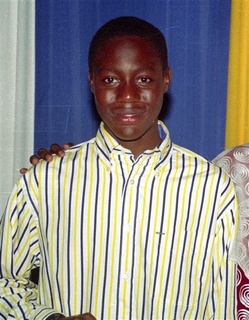
Terrorist suspect Umar Farouk Abdulmutallab spent two days at the University of Michigan Medical Center.
Associated Press Photo
During Umar Farouk Abdulmutallab’s two-day stay at the U-M Medical Center from Dec. 25-27, the university deferred all media requests to the U.S. Department of Justice.
“Hospitals like us are bound by rules of patient privacy,” said Kara Gavin, director of public relations for the U-M Health System. “Obviously, the calls were coming in very quickly Friday and Saturday. It was certainly an unusual holiday - let’s put it that way.”
For the university, the crisis started Friday afternoon when Abdulmutallab was wheeled into the hospital. Hours later, a swarm of media was stationed outside the hospital waiting for any tidbits of news. Media members weren’t allowed to enter the hospital.
Gavin, who was celebrating Christmas with her family, said emergency medical staff notified her “mid-day Friday” of the situation. She said other university officials told U-M President Mary Sue Coleman about the situation, although it’s unclear whether Coleman was involved in directing the university’s response.
“I really want to emphasize that it was a lot of teamwork by a lot of people across the hospital,” Gavin said.
The university released a statement Saturday acknowledging what federal officials had already announced - that “the patient admitted to our hospital is the person being charged in this incident.”
But the university never officially stated the patient’s name in compliance with privacy regulations laid out by the Health Insurance Portability and Accountability Act.
“We followed the same standard we would for any patient. In this case, there was another group that could speak and not be bound by HIPAA. But the hospital is bound by HIPAA,” Gavin said.
Kevin Pettit, a deputy U.S. Marshal and public information officer, said the government led the security initiative at the hospital with U-M security officials providing support.
“We were very, very pleased with the professionalism that they showed in the entire manner, top to bottom,” Pettit said. “They worked with us, and they were flexible.”
It was not immediately clear why federal authorities chose to bring Abdulmutallab to the U-M Hospital. But he was reportedly being treated for burns - and U-M’s 50-year-old Trauma Burn Center is a national destination for patients suffering from similar injuries.
Abdulmutallab is now being held at the federal prison in Milan.
Bringing a terrorism suspect to the Ann Arbor hospital posed a multitude of security considerations for administrators, said Arthur Gerringer, president and chief executive office of The Inter-Sec Group Inc., a security consulting firm in San Antonio, Texas.
“The first thing I would look at is, ‘What’s the threat to the hospital itself? What’s the threat someone would want to break him out of the hospital?’” said Gerringer, who did not serve as a consultant to U-M on the case. “In this case, I would sincerely doubt this would be a big threat. What benefit would al-Qaeda get for breaking him out? What would be the practical value to them?”
To secure the suspect and ensure the safety of staff and other patients, he would have had round-the-clock guards and likely would have been shackled to the bed, Gerringer said.
U-M public safety spokeswoman Diane Brown declined to discuss how the university handled security during the situation.
But she said the university is used to coordinating security measures with federal agencies. For example, the university works with the Federal Bureau of Investigation during U-M football games.
Brown said the university didn’t have to create a new security plan on the fly.
“While this person is now internationally known, it is not uncommon to have people who are high-profile,” or who are high-profile suspects at U-M, she said.
Contact AnnArbor.com’s Nathan Bomey at (734) 623-2587 or nathanbomey@annarbor.com. AnnArbor.com’s Tina Reed also contributed to this story.
Comments
JollyRoger
Wed, Dec 30, 2009 : 5 p.m.
I believe Craig was simply pointing out two instances in this article which contained grammatical errors. Beginning a sentence with "And" and "by" instead of "but".
Sven Gustafson
Wed, Dec 30, 2009 : 2:45 p.m.
@Craig, Go back and look at the quotes you pulled from the story and connected with elipses. Then compare to the original story and notice they're from two different paragraphs. Yet you are trying to pass them off as bad editing. I'd call that arbitrary alright.
nicole
Tue, Dec 29, 2009 : 10:49 p.m.
The sad part is U of M is one of the best hopsitals, I had a messed up surgery at another hospital and seeked help from UofM and they refused me because they did'nt do the surgery. Thanks for helping others that should of been handled by our military, and not your own that are paying for health insurance!
Reason
Tue, Dec 29, 2009 : 4:44 p.m.
To the reporter: an interesting angle on this story. As a UMHS employee, I was surprised to get 2 emails, first notifying me that this person had been taken to UM and reassuring us that there was significant attention to security and then notifying me that this person had been released from the hospital. I thought it was good of them to send those proactively but certainly an unusual step.
djm12652
Tue, Dec 29, 2009 : 1:05 p.m.
I'm happy the University was able to handle this situation with the level of professionalism they have...on the other hand, @michael...this attempt to commit a crime of war, is not a civil matter, it is a war act against our Nation, therefore, it should be held to Military rules. Civil liberties are for those of us that live in our great Nation, not someone declaring war against us and on OUR OWN SOIL!
Craig Lounsbury
Tue, Dec 29, 2009 : 12:28 p.m.
"@Craig, based on your arbitrary sample edited from two separate paragraphs, I'd recommend that writers not follow your advice." Sven, I assure you there was nothing arbitrary about it. Either way it appears management has decided to remove it for whatever reason. It can't be one of the three "off topic" posts removed because it quoted directly from the article.
bunnyabbot
Tue, Dec 29, 2009 : 11:30 a.m.
american rights and civil liberties should not be extended to enemy combatants. further more if he didn't botch the bombing it wouldn't be just the people on the plane. Plenty of people on the ground would have been murdered or injured as well.
Sven Gustafson
Tue, Dec 29, 2009 : 10:24 a.m.
@Craig, based on your arbitrary sample edited from two separate paragraphs, I'd recommend that writers not follow your advice.
Top Cat
Tue, Dec 29, 2009 : 8:42 a.m.
Staying to the context of the story, I would think there would be a little civic pride that a local organization handled a difficult situation like this with such competence and professionalism. We often complain about what we are paying some of these people. This story provides evidence that many of them are good at what they do.
Craig Lounsbury
Tue, Dec 29, 2009 : 8:36 a.m.
"U.S. Marshals brought a man accused of attempting to ignite an explosive device on an international flight to the U-M Medical Center for treatment of his injuries on Christmas Day. And the public relations team quickly scrambled to handle the rush of media attention and the potential security risk that followed.....by deferred all media requests to the U.S. Department of Justice." Feel free to contact me any time to edit your stories.
bedrog
Tue, Dec 29, 2009 : 6:51 a.m.
my hats off and thank you to those in the daily trenches on the quite real "war on terror' ( or whatever euphemism you want to call it as long as you ackonowledge it's there!), including the hospital satff wh had to play "catch up ball" on the spot.... NO thanks,however, to those who-- whether out of simple denialism, hyper P.c.ism, or active pro jihadi sympathies/anti semitism/ self hatred continue to deny or make excuses for the enemies we...and they...all face