

Michigan not on list of states receiving high-speed rail funding turned down by Ohio and Wisconsin
Federal high-speed rail grant money turned down by Wisconsin and Ohio will be redirected to about a dozen other states eager to help develop high-speed rail corridors, and Michigan isn't on the list of receivers, federal officials announced this afternoon.
U.S. Transportation Secretary Ray LaHood said $1.195 billion in funds originally designated for Wisconsin and Ohio now will be used to support projects under way in the following states:
- California: up to $624 million
- Florida: up to $342.3 million
- Washington State: up to $161.5 million
- Illinois: up to $42.3 million
- New York: up to $7.3 million
- Maine: up to $3.3 million
- Massachusetts: up to $2.8 million
- Missouri up to $2.2 million
- Wisconsin: up to $2 million for the Hiawatha line
- Oregon: up to $1.6 million
- North Carolina: up to $1.5 million
- Iowa: up to $309,080
- Indiana: up to $364,980
The incoming Republican governors in Wisconsin and Ohio indicated recently they would not move forward to use federal high-speed rail money. That left the federal government trying to find other states that would accept the money, and several jumped at the chance.
The Federal Railroad Administration originally announced $810 million for Wisconsin’s Milwaukee-Madison corridor and $400 million for Ohio’s Cincinnati-Columbus-Cleveland route.
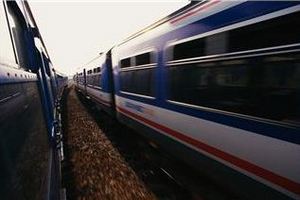
High-speed train
The Michigan Legislature still has not agreed to match the $161 million it recently was granted for high-speed rail improvements along the Detroit-to-Chicago corridor. The Republican-controlled Michigan Senate declined to take action to put up the $37 million state match needed to trigger the federal dollars before the most recent legislative session ended.
Rail proponents fear that sent the wrong message to the federal government about the state's commitment to high-speed rail. However, many are hopeful the Legislature will take up the issue quickly in the next session so Michigan still can receive the money.
Ann Arbor city officials are particularly interested in Michigan landing high-speed rail funding since the upgrades would make Ann Arbor-to-Detroit commuter rail possible. Ann Arbor also is the busiest Amtrak stop between Chicago and Detroit.
“High-speed rail will modernize America’s valuable transportation network, while reinvigorating the manufacturing sector and putting people back to work in good-paying jobs,” LaHood said in a statement today. “I am pleased that so many other states are enthusiastic about the additional support they are receiving to help bring America’s high-speed rail network to life.”
The American Recovery and Reinvestment Act included $8 billion to launch a national high-speed rail program. To deliver maximum economic benefits to taxpayers, the program also includes a 100 percent "buy American" requirement.
Ryan J. Stanton covers government and politics for AnnArbor.com. Reach him at ryanstanton@annarbor.com or 734-623-2529.
Comments
debling
Sun, Dec 12, 2010 : 3:03 p.m.
The issue is both a financial and social issue. On the financial side, the question is does investing in public transportation (rail in this case) make sense for Michigan. Will it improve business, reduce transportation costs, increase jobs, reduce environmental damage etc. Of course, spending money on rail means we reduce spending on roads accordingly. It's a trade off. The social issue deals with whether we want all of our citizens, community members and visitors to have access to transportation throughout our community, not just those that can afford cars. There are some that would prefer the poor stay in their own neighborhoods. Others, would like to see the poor have the ability to get to work, earn a living and participate in society. I spend quite a lot of time in Europe and can tell you the rail system is wonderful. Long term I believe we head this way but I would like to see the financials on each project proposed.
DonBee
Sun, Dec 12, 2010 : 1:33 p.m.
@S_A2 - A Secret? Try: www-fars.nhtsa.dot.gov/Main/index.aspx I found it via google by typing "US Automobile Accident Statistics" it was the first link offered.
S_A2
Sat, Dec 11, 2010 : 4:07 p.m.
America is in a big hurry to fall behind the rest of the world. I'd rather travel downtown-downtown on a comfortable train, with a nice view and a buffet car at 260 miles per hour than slog my way through airport security (to arrive miles from the city), or along a busy highway any day. Train transportation is safe and efficient, if government is willing to invest. It doesn't help that traffic accident statistics are a closely guarded secret.
Soothslayer
Sat, Dec 11, 2010 : 7:40 a.m.
@SillyTree - sorry, mine was sort of a cop out of a response. We probably didn't get considered for funding because we have ample roads, downward trend in industry and residents and massive urban sprawl with no localized concentrations of businesses or housing that we NEED to get to or from that rail would solve. For 50 years the big 3 made sure we built roads, sprawled out everywhere (seriously 1 hour drivin commutes people, boy we must have alot of time, money and energy on our hands with nothing better to do?), kept re-investing our earnings in crummy cars that we'd need to landfill at 80k miles and send a sizeable portion of our resources out of the country to buy oil. As everyone can see what a great grand and elaborate plan this all was and how wonderfully did it turn out for "the big 3" and all the citizens of Michigan. NOT! No there will not be any trains for us, at least not until we have either a destination or some localized reason for having one. Sorry.
Cash
Fri, Dec 10, 2010 : 5:45 a.m.
Michigan struggles a century behind the northeast corridor and Chicago....and fails economically partly because of that. No mass transportation? No mass jobs. We will continue to bleed jobs and young people as long as we don't invest in mass transit. The northeast corridor is light-years ahead of SE Michigan and has managed to survive the economical downturn much better. Michigan has become the equivalent of the "get a horse" folks....refusing to face the needs of the future. Clutching our steering wheels tightly, just as they did the reins of their horses....steadfastly refusing to accept the reality.....the future is NOW.
Macabre Sunset
Fri, Dec 10, 2010 : 4:20 a.m.
Naturally, those who are asking for change to the suburban sprawl paradigm are more likely to live on a postage-stamp-sized lot. Change means changing others, not yourselves. I'm all for developing new sources of energy. Don't see what that has to do with the pretty trains.
Mick52
Fri, Dec 10, 2010 : 2:02 a.m.
I reread the article for this and maybe I just missed it but I think it should be considered. The reason the governors of WI and OH refused the money is that they believe the continuing operating costs of the system would be too much of a burden on the state budgets. No one has sold me on the value of a Detroit to Chicago high speed train. Detroit Metro to A2, I have no problem with that for commuters in the SE Michigan area, but on to Chicago to seems unnecessary. Perhaps a lot of people would like to visit Chicago every now and then but I doubt many Chicagoans will visit Detroit. Because it works in other countries has no bearing on travel in the US. To solve traffic congestion and and make an environmental impact, there has to be enormous use and there is no data to show that Americans will respond in numbers like in Europe. Also, driving in Europe is extremely expensive, in fuel, registration fees, and auto costs. So if you are expecting high rail use you are promoting putting people out of cars by putting them out of reach financially. Will not go over well. If Michigan had money to spend on trains I would like to see commuter trains from the surrounding areas in all four directions. Gas prices are going to spike to and beyond the 2008 spike when the global economy revives. When that happens a commuter train system might be very popular for everyday commuting. But high speed seems to only be a benefit to a few, no matter how busy the A2 station is.
Larry S
Fri, Dec 10, 2010 : 12:26 a.m.
@Sunset: That's precisely the problem. It's foolish to believe we have an endless supply of cheap oil. The real elixir is the belief that suburban sprawl lifestyle can coninue forever. We mistakenly believed that oil would be cheap and lost forever. Change is happening, like it or not. This is not a belief; it's a fact faced by the one out of five people in Michigan that wish they had a job. We are going to have to COMPLETELY reinvent ourselves. It's either work for a change or go down kicking, screaming and crying like all the other societies that depleted the natural resources that made them possible.
Dawn Nelson
Thu, Dec 9, 2010 : 11:49 p.m.
@DonBee: thank you for sharing your knowledge and insight into what would constitute an effective high speed rail system. Chicago-Ann Arbor- Detroit -(toronto?) can put these items down for long term discussion and planning. Perhaps money for transportation infrastructure should come from the federal level. we could probably shave some off the war fund without missing a beat.
Macabre Sunset
Thu, Dec 9, 2010 : 11:31 p.m.
Why are choo-choo trains magic elixir to so many people? They're inconvenient in our suburban sprawl. They are only cost-effective in major urban centers here. We're just not laid out like Europe. They would not create jobs. They would simply be a bottomless pit of money we don't have.
DonBee
Thu, Dec 9, 2010 : 10:43 p.m.
European High Speed Rail works, because it is part of a highly integrated transportation system. Not because it is a high speed rail system. Take the Netherlands, on most major lines there are 3 sets of passenger tracks side by side - in some case 3 sets running each direction. The outer set is for the "stop train" it stops at every little cross road and outpost, going anywhere far on the stop train is painful. The middle set is for the regional train. It stops are collection points, taking the passengers from the stop train. Then there are the major stations - a couple dozen on all the lines in the Netherlands - From Amsterdam to the German border - there are a grand total of, Amsterdam, Utrecht and Arnheim. The regional trains pick up and drop off passengers at the major stations. It is not unusual to need to step onto and off of 3 to 5 trains to get to and from work. They all take the same pass. Then there are buses, trams and bike racks to take passengers from collection points and major stations to their final destination. The TGVs run from Amsterdam to Paris with one or two stops in the middle (depending on the train you choose). They run at about 200 Kilometers per hour. They again connect to the other rail systems and use them as feeders. What is proposed for portion of the Chicago to Ann Arbor line is a poor substitute for a real high speed line. The roadbeds will not support a future 200 kilometer per hour or faster train, so anything done on the roadbed will have to be completely redone in the future if we want to move to real high speed rail. We need to put in place a real plan, not a 1/4 measure like this. If we allow this to go in place, it will be 20+ years before the route gets a shot at a real high speed train. What is different in the roadbeds? The depth of the trench that is used to build the base for the roadbed, the height of the final roadbed, the over or under passes that are built to keep cars and trains from crossing the same ground. The weight of the rails, the use of concrete ties instead of wooden ties and most likely (though not required) an electric system to power the train. I ride the trains in Europe anytime I can skipping airplanes, I find that even London to Paris, I can get around faster than I can on an airplane. I want to see a real train infrastructure. If we had spent the whole stimulus plan this way (China spent a large portion of their on rail) we would have a lot more jobs than we have today.
Dog Guy
Thu, Dec 9, 2010 : 10:32 p.m.
Our grandchildren will not be paying for the boondoggle railway to nowhere. Efficiency, clean air, anti-congestion, money- and time-saving were the same arguments given for the empty busses polluting and crowding our streets. If it were worthwhile, some greedy capitalist would fund it. Next year, the Ann Arbor flying carpet. Taxation makes poverty.
Larry S
Thu, Dec 9, 2010 : 9:52 p.m.
Oh that's all right SillyTree! I'm not going to deprive an old geezer in his later years (chances are you don't cosume much.) I don't blame you either. You had no idea in 1950 that the world's population was going to explode and that the number od automobiles would also increase from 100 million to a couple billion today! I actually respect you. You refrained from taking part in the spawning of the giant boom of babies on this Earth. Like locusts, that generation has been consuming the resources for years in one big selfish and greedy orgy. I tip my hat to you.
SillyTree
Thu, Dec 9, 2010 : 9:44 p.m.
@Larry I suppose if I were about to die, I wouldn't care; but I'm not and so I do. You are right about what you said. I had posted something more humorous and almost identical in meaning to what is posted here, but someone decided that it was not appropriate for this forum.
SillyTree
Thu, Dec 9, 2010 : 9:34 p.m.
@Andy I'm not sure what you mean. Can you elaborate? Do you mean by train from somewhere along the route in question? I am just wondering how this is on topic. I like your posts and I look up to you as a mentor, but I am confused with this one.
Soothslayer
Thu, Dec 9, 2010 : 9:23 p.m.
Awe no one wants to come to Michigan =(
Larry S
Thu, Dec 9, 2010 : 9:11 p.m.
It is foolish to think that oil will always remain so cheap and plentiful. Oil shot up to $142 a barrel in 2008 because the oil producers of the world were no longer able to meet demand. We've reached the peak oil production point and that means the world will pump less and less barrels of oil out of the ground each day. Oil is a scarce and limited resource. If we sit back and do nothing, we will have no options as the price of gas jumps to $6, $8 or $12 a gallon. This will happen in price hike waves and with each sucessive wave, a little bit more of our economy will be destroyed leaving even more people without the option to drive a car, if that is their choice. So we need to get our act together and start investing in ways to conserve energy and money instead of wasting it. A train load of people is many, many times more efficient than a single occupant automobile driving down I-94. Personally, I can no longer justify the $8,000 a year it costs to own and drive a car. (Let me head off the idiots. The cost of driving a car is more than just the cost of gas. It ALSO includes the depreciation, maintenance and insurance.) I would rather spend $800 a year in a combination of taxes and fares to get any where in my community, state or nation. I'm not saying that I want anyone to give up their car. I'm just tired of wasting so much money on automobiles! I'm tired of our over dependence on foreign oil bankrupting this county! I'm willing to do my part, are you??
SillyTree
Thu, Dec 9, 2010 : 8:18 p.m.
@Ghost We don't have the money right now to use innovative ideas to move us forward and allow our economy to recover. That is the problem with you liberals; you are always thinking about possibilities for the future. If the past was good enough for our forefathers, it's good enough for me. Can you imagine? We could all be frontiersman again. It would be like Davy Crocket (the TV show, not the real one.) Lincoln was a railsplitter. Any one of us should proud to be the same! You and your futuristic thinking will be the end of the world as we know it!
Kafkaland
Thu, Dec 9, 2010 : 8:01 p.m.
As to how long the train ride to Chicago should take, take a look at the ambition, and often (but not always) reality in high-speed Europe. They promise to get you from city to city, at distances comparable to AA-Chicago on a direct line twice as fast as a car, but only half as fast as as an airplane. Driving from AA to Chicago takes about four hours, flying about an hour (gate-to-gate). So a real high-speed train should take about two hours.
Veracity
Thu, Dec 9, 2010 : 7:29 p.m.
High speed railways work in Europe and Asia because they move people from one high productivity area to other high productivity areas but many do require subsidies to operate. A Detroit-Ann Arbor-Chicago high speed railway will not move people between high productivity areas and will certainly require subsidies in order to operate. Furthermore, without side tracks or branches extending north and south from Detroit and from Ann Arbor, commuters will not be able to get to and from the train stations conveniently. Passengers will have to drive distances in cars in order to get to their various destinations, except in Chicago which has world class public transportation. Except for the loss of temporary construction jobs, be happy that a new high speed railway will not materialize in Ann Arbor and gobble up tax payer dollars desperately needed elsewhere.
jns131
Thu, Dec 9, 2010 : 7:22 p.m.
Another Dingell promise down the toilet. Guess the bridge is next? And still people voted for him. Guess what? He lied. Very sad to read.
SillyTree
Thu, Dec 9, 2010 : 5:27 p.m.
I don't even know why they developed railroads in the first place. Stupid railroad inventor guys. What jerks! Then they went on to create diesel engines and to offer other ameneties to attract riders. The even used speed to do it. It worked back then, but this is now. We don't need no stinking better railroad because the old one doesn't work right and if it don't work right, the better one will be even worse! Back when I was a kid, we used to ride the train to Chicago uphill both ways. And another thing...
cinnabar7071
Thu, Dec 9, 2010 : 5:09 p.m.
"What are these idiots thinking?" Well USRepublic they're thinking they can live hundreds of miles from work and the rest of us will pay for it. It's just more of the same ole entitlement attitude.
USRepublic
Thu, Dec 9, 2010 : 4:52 p.m.
Just the facts....according to Amtrak. In 2008, the "Wolverine" route generated $18,400,000 in revenue on a ridership of 472,393. The net profit was $-14,700,000!!!!! That equated to a LOSS of $55.41/passenger ride inclusive of depreciation!! Now...let's throw on another $320M-$500M in capital improvements to depreciate and the loss grows to? Just a couple of hundred bucks per passenger ride..... What are these idiots thinking? http://subsidyscope.org/transportation/amtrak/table/
sellers
Thu, Dec 9, 2010 : 4:48 p.m.
Mr Meyers - you did read where Ann Arbor is the busiest station in the Detroit-Chicago corridor, including Detroit (but not Chicago). It's the busiest by far in the entire state. Ann Arbor needs/uses it more than anyone else in Michigan and could benefit from a link (proposed) to Toledo to get to places east and south.
Top Cat
Thu, Dec 9, 2010 : 4:38 p.m.
It would be a lot less expensive if all the people advocating this would just ask Santa for a Lionel train set for Christmas. Plus they could just run it in endless circles and it would be about as productive.
margo
Thu, Dec 9, 2010 : 4:28 p.m.
yes we have 85 000 Student between Ann Arbor and ypsilanti,,We donot have Parking for 85,000 CARS. One reason. SEcond we desperate need masstransportaion. for ourself. the elderly. disablet,and for the TOURISTINDUSTRIE.. we have traveler coming and with a highspeed train. would really stop in Michigan.rep> john Dingell gave $ 150 Million..The MITRAIN promised to have the train runnig for Thank giving pardade this year 2010.. Depot rag announced in Nov. 2010 Commutertran behind schedule! Update Nov. 10 michigan House HB 6484 Voted YES on $ 100 Million bond /The Senate must pass the bill So Call your Senaotr to vote for HB6484 to match REP. John Dingell fund.I just hope that in the close future they buid the train Around Lake michigan and Superior and Hurn so we can take a trip around Michigan and SEE the waters. And then there is the 30 YEAR project Ann Arbor to BrightonTHE GOLDEN SPIKE...well by time that is running it will have a name change to OLD RUSTY. YES there aree jobs in Michigan and the money is there it is just a few....a.......greed...At since it is christmas time..I guess we have a few no christian.....
Seasoned Cit
Thu, Dec 9, 2010 : 4:25 p.m.
Interesting now that the election is past.. that we don't have word from our State Senators and or Reps. They got their grant dollars to pass out to insure votes before the election but now we're back to the norm of not getting back from Washington what we send. Could this be called redistribution of wealth? The last thing the Administration will want to do now is help a Republican Governor.
Connecting the Dots
Thu, Dec 9, 2010 : 4:11 p.m.
Let's just think about who would use the rail system: workers who live in AA or live in Detroit & suburbs: parking is at a premium in Ann Arbor (and I live here--I know). Okay then there are ageing folks who no longer feel comfortable (and others think unsafe) to be cruising the freeways. [I know I'm one of the seniors.] Then lets think of freight: wouldn't it be lovely to get some of those trucks off the freeway? Then what about savings on fuel that it takes to drive to Chicago or for that matter back and forth to work? So if you are only thinking of your selfish little self--expand your horizons.
foobar417
Thu, Dec 9, 2010 : 4:08 p.m.
Taking the train to Chicago *should* take 4 hours (or less if we really had high speed rail), the same amount of time as a car. However, since freight is prioritized over passenger rail, it can easily take 8 hours if you're unlucky. I know lots of people who would rather take the train to Chicago than drive. All of them say the same thing, they'd do it, if not for the real chance of huge delays. This money would go a long way towards making travel time to Chicago predictable (and even a little faster). I strongly suspect this will lead to a large increase in ridership to Chicago, thus taking cars off the road and reducing the need for road capacity increases. All in all, this would be a great investment for Michigan, IMHO.
Dawn Nelson
Thu, Dec 9, 2010 : 3:43 p.m.
Including Ann Arbor in a Detroit-Chicago high speed rail connection would ideally increase employment and business opportunities for many people. Although it may seem a risky investment, I think it is one that should at least be discussed as having the potential to provide solutions to long term problems, issues both long-standing and forthcoming. It is important that we lessen overall car dependence, and rail systems are part of that solution.
Steve
Thu, Dec 9, 2010 : 3:37 p.m.
Yes, let's clarify something; the $37 million would help fund high speed Detroit-Chicago rail, and not the AA-Detroit commuter rail.
Steve
Thu, Dec 9, 2010 : 3:33 p.m.
Well, yes, passenger rail does have virtues-BUT at the present, with cutbacks looming in Medicaid, school aid, etc., spending $37 million on rail would seem to be an irresponsible use of public funds for the State.
USRepublic
Thu, Dec 9, 2010 : 3:30 p.m.
Frankly and F...owl... Ann Arbor's version of the "Bridge to Nowhere" would be a "high speed" rail system to bombed out Southwest Deeetroit. Blaming Republicans is so shallow.....and so passe... Looks like Da Mayor Heisty will have to find another boondoggle to pillage. Perhaps he can sell off parts of Huron Hills?
Elaine F. Owsley
Thu, Dec 9, 2010 : 3:22 p.m.
Thanks Republicans. Off to a good start, I see. Oh, right!! It was probably to "progressive".
Ryan J. Stanton
Thu, Dec 9, 2010 : 3:17 p.m.
Just a reminder: There's a high-speed rail forum tonight: http://www.facebook.com/event.php?eid=167029173329040
John Frank
Thu, Dec 9, 2010 : 3:13 p.m.
Eric, passenger rail has public benefits: safety, reduction of highway congestion, environmental impact, and efficient land use. Governments all over the world understand this public benefit perspective.
ERIC MEYERS
Thu, Dec 9, 2010 : 2:40 p.m.
Good ann arbor does not need a rail system.