

Michigan lawmakers have no business meddling in stem cell research
Michigan business leaders who are worried about the way the state has dis-invested in education offered a telling statistic this past week. Between 2002 and 2011, state funding for universities, when adjusted for inflation, fell by $4,000 per student while tuition rose by $3,500 per student.
After a prolonged period of decline in state support for higher education, the Legislature finally is headed back in the right direction. Both the Senate and House have approved budgets that would increase the allocation for our 15 public universities.
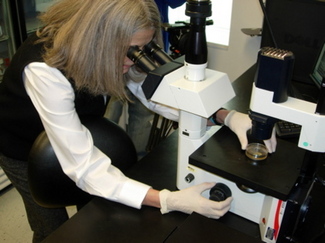
A University of Michigan researcher conducts embryonic stem cell research.
U-M is a national leader in stem cell research, and the work that it and other institutions across the country are doing is crucial to treating and curing diseases and saving lives.
If there was any serious question in Michigan whether stem cell research is a valuable and morally acceptable means of advancing medical science, it was resolved in 2008 when voters approved a constitutional amendment that allows researchers to create embryonic stem cell cultures and use them in medical research. The people of Michigan understood that embryos used in this form of research would be discarded otherwise, and the potential benefit to human health is too great to shut down such promising avenues of study.
Unfortunately, there are lawmakers who would defy the will of the people by attacking stem cell research through backdoor means. The current budget bills include a provision that threatens funding to U-M unless it complies with stem cell “reporting requirements’’ being imposed by the Legislature. The bills, including the stem cell provision, passed along party lines in both chambers, with Republicans carrying the majority.
Let us say simply that these so-called reporting requirements are a farce. They involve five questions having to do with the number of human embryos, stem cell lines and research projects. Given that there is no regulatory purpose for such information, this looks more like a thinly veiled form of harassment intended to discourage stem cell research.
U-M officials say they have provided the requested information, but lawmakers say U-M’s response isn’t adequate. The university shouldn’t even have to be going through this pointless dance. Stem cell research is already is heavily regulated by the federal government, and no state regulation is needed — let alone pseudo-regulation that serves no apparent purpose.
The Legislature has no business using state funding as a hammer to impose its social agenda on U-M. If this approach is allowed, it could send exactly the wrong message about the research climate in Michigan, discouraging researchers from coming here and causing those who are here to consider relocating to states that are more hospitable to the important work they are doing.
When the issue of stem cell research was on the ballot in 2008, a public policy group issued a report concluding that such research could benefit hundreds of thousands of state residents, save millions in health-care expenses and create hundreds of jobs in the growing biotech sector. That is what’s at stake here.
The House and Senate bills now go to a conference committee, and we call on that committee to strip the higher ed budget of the stem cell provision, as well as other provisions that seek to control the behavior of universities on non-financial matters. The Legislature’s priority right now should be to restore educational funding without any such strings attached.
(This editorial was published in today's newspaper and reflects the opinion of the Editorial Board at AnnArbor.com. David L. Lampe, who serves as a community member on our Editorial Board and is executive director of research communications in the Office of the Vice President of Research at the University of Michigan, did not participate in our deliberations on this editorial.)
Comments
Randa Morris
Tue, Jun 19, 2012 : 4:37 p.m.
This has nothing to do with Michigan lawmakers not approving of stem cell research! Ardesta LLC and Ardesta Ventures 1 (our governors companies) profit off stem cell research people. Is the U of M cutting into their financial feast? Better do some research and open your eyes. Recent legislation in the house mandates "humane disposal" of fetal remains, requiring a burial or cremation after TEN WEEKS (joke) UNLESS donated to science. (see humane disposal provisions). Specific directions are included in the bill but for some reason section 2688 that legislates acceptable "donations" are not made public. Please wake up Michigan. Through Ardesta LLC and Ardesta Ventures 1, everything in Michigan is making your governor cash, cash, cash.
Karen Walacavage
Mon, May 14, 2012 : 4:24 p.m.
What the U of M gave lawmakers was 50 pages of "nothing". They won't comply with answering 5 simple questions. Some of us in this state would like to know how many human embryo's have been destroyed for research. Research that has so far proved no cures. Nothing! Billions of dollars have been lost on the hope of a cure - while adult stem cell research has been pushed to the side. Maybe Michigan will soon wake up and follow other states and invest time and money into adult stem cell research. Funny, if it is so difficult to answer these questions, why did Michigan State University comply? Go Spartans!
YpsiVeteran
Mon, May 14, 2012 : 2:12 a.m.
Mick52, I agree with you, and I would add that I don't see any reasonable explanation of how asking 5 questions somehow constitutes harassment or jeopardizes the university's ability to continue its research in any way. Having to supply my social security number to the Secretary of State's office doesn't serve any regulatory purpose either, but I still have to do it get a driver's license, regardless of my opinion on the government's motives in requesting it. I would ask the writer if he has the same problem with the thousands of pages of regulations and reporting requirements the NCAA imposes on the U's athletic teams, 75% of which are a complete waste of time and "serve no regulatory purpose." The university, with its seven BILLION dollar endowment, reminds me of a 25 yr. old with a great job who still lives at home -- not willing to cut the cord, but constantly complaining about house rules and staging petulant displays of defiance. Other people's money comes with strings. It's a fact of life most people learn between the ages of 15 and 18. Use your own money, or quit complaining.
YpsiVeteran
Mon, May 14, 2012 : 3:08 p.m.
It does not serve a *regulatory* purpose. I am in no way more or less qualified to drive a car now that I am compelled to give the number than I was prior to giving the number. The number is being required in a particularly ineffective attempt to somehow make us all "more secure." I vehemently disagree with this specific, pathetic tactic, and I am highly suspicious of the motives behind it, yet I must comply if I want to drive in Michigan.
DonBee
Mon, May 14, 2012 : 10:47 a.m.
YpsiVeteran - Giving your SSN to the state for your drivers license does serve a purpose, if your birthdate in the state database, does not match the one in the SSN database, you don't get a drivers license.
DonBee
Sun, May 13, 2012 : 8:08 p.m.
While, in theory I can agree. I would ask the question a different way. There is a principal here that is important, that I think Mr. Dearing has missed. So let my offer a dramatically different research project: "If the state were partially funding a research organization whose research would sterilize all the members of one race, would you have the same reaction?" While I like the idea of stem cell research and what it can bring, I abhor the idea of forced sterilization. When state funding is involved, the state government has a right and a duty to see what is being done with the money. In the case, I think they are overboard, but they still should have the duty to see that state funding is not spent in the wrong way. I know many people are going to dislike the alternate scenario, and I will apologize in advance, but the same principal applies and we should respect it. Now Lansing needs to ask reasonable questions (which they are not) and the UofM needs to provide reasonable answers (which they are not) -OR- the UofM needs to spin out the research so it is clearly not funded in any way (not even overhead) by state money.
DonBee
Mon, May 14, 2012 : 10:45 a.m.
snark12 - I picked something stark on purpose. I wanted people to see the principle behind the issue. As to how the state government is behaving with the questions, I completely disagree, but the UofM is not helping either. Both sides are wrong in this one. Unfortunately the principle is still there. The State Government needs to back down and ask reasonable questions, the UofM needs to answer with reasonable answers. If both sides stick to their guns, we will have a train wreck. But maybe that is what both sides want. And it takes both sides digging in to create this train wreck.
snark12
Sun, May 13, 2012 : 9:55 p.m.
For your straw man argument you choose a hypothetical research topic that is offensive to nearly everyone. So, Yes, most people are going to say that state should insure that public funds aren't used by U of M for that type of thing. With stem cell research, we're talking about something that the majority of the state already said they were okay with four years ago, even though its opposition is part of the political platform of the majority party in Lansing. In this case the state's funding is just being used by the GOP to gain leverage over the issue, simply because they can. I think a better hypothetical would be, Should the state put roadblocks in the way of research benefiting the defense industry. Just as the far right is opposed to stem cell research, many on the far left (my side of the fence) would be upset about U of M research ultimately benefiting advanced weapons systems, which it undoubtedly does. But that's a concern for only a small number of people (just like stem cell research is only a concern for a small number of people), and I would not agree with the state limiting weapons research.
carrier
Sun, May 13, 2012 : 7:41 p.m.
First you should all read the comments by Tommy J posted at 8:57 a.m. I find it amusing how the author of the editorial thinks legislators shouldn't be involved in this situation, yet I bet he thinks it's okay that they were involved in forcing gay marriage upon some states. And I bet he thinks it's okay if President Obama's justice department doesn't enforce DOMA.
sh1
Mon, May 14, 2012 : 10:55 a.m.
All of his links are from places like Right to Life who are not objective. Can you provide any peer reviewed, independent research that claims the same thing as his links?
OverTaxed
Sun, May 13, 2012 : 4:57 p.m.
Why am I paying for your kids to go to High School and College? Where are we, socialist Europe? No more money, more money to U of M. U of M, a 1% school. The funding is going to the overpaid research professors. If it is a viable research direction, the private market will embrace it.
shadow wilson
Sun, May 13, 2012 : 6:23 p.m.
This is about religion.Disguise it however you like but this is out religion.......religion is not supposed to mix with government...
Mick52
Sun, May 13, 2012 : 4:36 p.m.
Another article that if reviewed by an editor would be sent back. First, it makes it appear the writer/news organization does not understand that a government that funds anything has every right to ask for information for evaluation purposes. SonnyDog points this out. The state doesn't have to fund this research just because it is legal just like they don't have to fund marijuana growing which is also legal for "medicinal purposes." Second, the article simply criticizes the intent of the legislature using terms like "farce," "attacking," and "harassment." What I would like to see is the reason the legislature asks for the information they requested. I see no statements from any legislator on what their thinking is on this. Thus we don't know why the legislature is interesting in this information other than the writer's opinion it is harassment., a writer who is not, as far as we know, a medical professional. That makes little sense, something I would prefer not to read in a news report. If we knew, perhaps we could make a sound decision. But all we get is criticism, no facts.
BhavanaJagat
Sun, May 13, 2012 : 3:38 p.m.
What is Embryo? : I regret to note the fact that David L. Lampe, executive director of research communications, University of Michigan is not involved in generating this editorial opinion. I would be happy if he has the courage and conviction to respond to this editorial. The problem with this entire editorial is that of the language that it uses to describe the concept of this research. It is a lengthy editorial and yet there is no substance to arrive at an understanding of the problem. The issue is not that of discarding the live human embryos. We read about stories in the news media all the time as to how human life is discarded in Michigan and in the rest of the world. The intrinsic value of human life cannot be undermined if it gets discarded by accidents, illness, injuries, violence, and warfare. Fundamentally, we have to establish the nature and status of the embryo to sanction any kind of research. In the past we have conducted research on live human subjects to learn about the serious problem called Syphilis. The research at that time had also aimed to serve the cause of humanity. The end result of providing a benefit will not morally justify the 'means' that we choose to achieve that end result. I would ask this Editor and the silent spectator whose name is given to me, to stop this farce of beating around the bush. Let us first define this research subject and get some clarity based upon the real or true nature of the subject called embryo.
Doug
Sun, May 13, 2012 : 2:49 p.m.
So now lawmakers are experts in medical science!
Mick52
Sun, May 13, 2012 : 4:37 p.m.
Apparently Ann Arbor.com writers think they are too.
Susie Q
Sun, May 13, 2012 : 3:17 p.m.
They are also "experts" in education.
SonnyDog09
Sun, May 13, 2012 : 2:22 p.m.
The way that it works with all "government grants" is that if you take their money, you have to follow their rules. If you don't want to follow their rules, don't take their money. Problem solved.
bobslowson
Wed, May 16, 2012 : 3:14 p.m.
Tell that Catholic church that!
snark12
Sun, May 13, 2012 : 2:43 p.m.
No, that doesn't solve the problem. The rules here are capricious, designed only to support a political agenda that has nothing to do with the research, and create a climate that de-motivates much-needed investment in the state. So the rules hurt everyone, even those that are agnostic on the stem cell research debate.
jayjay
Sun, May 13, 2012 : 1:57 p.m.
Hopefully, we will some day grow up politically. Maybe when we do (and I guess, if we do) we will allow differing opinions to co-exist and not have make everything either black or white. The argument against stem cell research is essentially a religious one. And as most people can hopefully admit, religions do vary on what they believe and what they teach. Therefore, to allow essentially a religious belief to guide whther stem cell research is allowed is a direct violation of the separation of church and state. Until we learn how to put intelligent politicians in office, those that can separate their religious and moral values from the business of governing, we will continued to be burdened with this kind of idiocy!
Enso
Mon, May 14, 2012 : 1:10 p.m.
@OverTaxed, My bet = you don't even know what socialism is.
OverTaxed
Sun, May 13, 2012 : 5:04 p.m.
Idiocy is this Socialist system shoved down our throats. No worries on the religious aspect if you take out the UnConstitutional research I have to pay for. I do not see where I have to pay for anyones kids or stem cell research in the Constitution. Remember, to protect and to serve, not to educate and to research.
Brad
Sun, May 13, 2012 : 1:17 p.m.
Up until that "culture of death" thing you sounded kind of credible. Then I checked that "lifenews.com" link ...
Brad
Sun, May 13, 2012 : 1:18 p.m.
Argh! This was supposed to be a reply to @TommyJ
bedrog
Sun, May 13, 2012 : 1:07 p.m.
good editorial....
Pat Ardner
Sun, May 13, 2012 : 12:54 p.m.
Politics don't belong in medicine. The government has no right to tell people how or when do deal with their health, be it stem cell or pro-life or pro-choice. Each person should be aloud to make their own choice about their health. The government is turning into "big brother" and it's sickening. The government also shouldn't be telling the people what to do about their own healthcare, especially when they have their "own" policies. If the government wants to force us into specific healthcare, then they should have to do the same. I'm not into "cloning" but maybe some day stem cells can help with other medical problems, such as cancer and other diseases. Pat
Enso
Mon, May 14, 2012 : 1:09 p.m.
The corollary to that is when people choose to eat fast food most of their lives, and then their private insurance won't cover them because they are too expensive, the government shouldn't have to foot the bill. If you are obese or have diabetes because you chose not to follow government guidelines on what is and isn't healthy, you are entitled to die in the streets penniless.
outdoor6709
Sun, May 13, 2012 : 12:38 p.m.
Not to argue the merits of stem cell research, isn't the government asking for usless information what it does? If the U of M failed to provide data on the ethnic makeup of its students it would loose massive amounts of funding. Why is this different? Reality is this is an election year and Mr Dearing & AA News wants to make the politicians they do not like look bad. If AA News really wanted to inform the public on a much more important issue, they would explain Baseline Budgeting so voters are aware that the Federal budget goes up every year and "Cuts" are actually reductions in the rate of growth.
Craig Lounsbury
Sun, May 13, 2012 : 12:34 p.m.
"If there was any serious question in Michigan whether stem cell research is morally acceptable .... it was resolved in 2008 when voters approved a constitutional amendment...." To use that logic you must believe Gay marriage is morally corrupt because the voters said so. I'm not sure I buy the notion that morality is determined by a vote of the masses. Disclaimer:I don't have any problem with stem cell research AND I believe Government should be neutral in the arena of "marriage"
amlive
Sun, May 13, 2012 : 3:16 p.m.
Point well made on the flaws of our system by which we amend our constitution. Simple majority in the will (or whim) of the people does not unequivocally determine universal rights or wrongs. However.... Between the two examples here I do see one key difference. In one case the amendment seeks to ensure rights of a group (researchers and patients), while the other (gay marriage ban) serves to deny them. Of course we have no legal mandate which makes one acceptable and the other not, so perhaps this is a philosophical difference. I believe it is an important one however, in which we are violating the intentions repeatedly made clear by the founders of our nation. In the words of James Madison - "It is of great importance in a republic not only to guard the society against the oppression of its rulers but to guard one part of the society against the injustice of the other part." The stem cell amendment in reference here certainly seems one to "guard society against the oppression of its rulers" and "to guard one part of the society against the injustice of the other part", while the gay marriage ban seems to be precisely the opposite.
Tony Dearing
Sun, May 13, 2012 : 1 p.m.
Craig, point well-taken, although I'm not particularly worried that Republicans will be using the state budget anytime soon as a tool to thwart the will of the people by making it easier for gays to get married.
clownfish
Sun, May 13, 2012 : 12:31 p.m.
Agree with the author. No place for politicians. This new requirement will save no lives, create no jobs, and will stifle scientific progress. If the cells are not used in research they will be destroyed anyway. This new bill does nothing but pander to a small segment of the electorate. If the GOP is interested in saving lives, they should revisit the helmet law and get the state ready for the new health insurance requirements that will give thousands of people access to health care they cannot get now.
greg, too
Wed, May 16, 2012 : 6:33 p.m.
MichiganMan, I would laugh at your sarcasm if I wasn't so terrified that you actually believe what you wrote.
Michigan Man
Sun, May 13, 2012 : 1:42 p.m.
Clown - I am a solid GOP type. You are correct, most GOP types really do not care about saving lives. If everyone were to die today, think how much we would save in our healthcare system? Let the old people die, and we can save trillions in future healthcare expenses, especially on the Medicare side! If I were running the GOP party in Michigan this is the platform I would argue for.
TommyJ
Sun, May 13, 2012 : 12:31 p.m.
This editorial is a farce. Something that is always missing in write ups like this is the fact that embryonic stem cell treatments have never created a cure or treatment. There has never even been a successful trial using embryonic stem cells. The only trial ever approved in the US by Geron was abandoned last November, and Geron reported that none of the subjects in the trial even showed a response to the treatment. And then that company announced they were abandoning esc treatment, The same year that Michigan passed the funding for esc, the very man who created the method of research using embryonic cells announced his own companies were abandoning esc research and moving to adult stem cell and induced pluripotent research. The fact is, esc doesn't work, and adult stem cell research provides cures on a daily basis. Yet the people of the state of Michigan are giving money to UofM to continue this fruitless research, while institutions around the world are making leaps forward daily using research and methods that work NOW. Research on ips and adult stem cells is making leaps forward all over the world, and one researcher from the UK has referred to the US as the 'Bangladesh of stem cell research' for the rediculous pursuit of embryonic stem cell research. http://repairstemcell.wordpress.com/screw-the-embryos-they%E2%80%99re-irrelevant/ The people of this state were duped into diverting money to research that's worthless and UofM should be ashamed of pursuing that research. The legislature should do everything it can to limit that research, which not only doesn't work but is highly unethical. Time and again we are told that we must continue this research, and we are misled into believing it's the esc research that must continue and shows the most promise. This is blatantly FALSE. Those that spread this misconception either don't understand the issue, or are purposefully pushing the esc agenda in order to promote the culture of death. Don't believe the hype.
JV
Mon, May 14, 2012 : 5:06 p.m.
First of all, you should do some research before posting ridiculous statements. Geron wasn't the only company approved by the FDA to do Clinical trials in the U.S. using Embryonic Stem Cells. Advanced Cell Technology was also approved last year and I might add that they've already published phase 1 results in the journal The Lancent. If you look it up, you will find that the results so far have shown slight visual improvement and are very promising!
paulczar
Sun, May 13, 2012 : 11:24 p.m.
So just because stem cell research hasn't yet proven to be "successful" (a debatable statement) means we should stop all research related to it? Don't you remember from elementary school that Thomas Edison tried like 100 different materials before finally finding a durable material for the filament in his so called "light-bulb?" Bottom line, it will never be successful if we don't try.
snark12
Sun, May 13, 2012 : 2:36 p.m.
Frankly, for purposes of this discussion, I could care less if ESC treatments work or not (and the endless hype of their "failures" from your side is wrong and tiresome). The point is, it's not up to the legislature to determine which research is "good" research. This is about funding for public education, and the state GOP is using this trick to push its agenda, against the wishes of the state's voters who already made their voice clear in 2008.
TommyJ
Sun, May 13, 2012 : 12:46 p.m.
http://www.lifenews.com/2011/12/26/the-u-s-is-backward-on-embryonic-stem-cell-research/
TommyJ
Sun, May 13, 2012 : 12:41 p.m.
Some links of interest to open eyes: http://www.stemcellresearchcures.com/escr-prospects-dimming http://media.rtl.org/pdf/scrc/treatment-list.pdf http://media.rtl.org/pdf/GreatStemCellDebate.pdf http://www.americanthinker.com/2010/08/playing_politics_with_stem_cel.html
clownfish
Sun, May 13, 2012 : 12:40 p.m.
"Since our founding CIRM has funded a couple of hundred grants that have laid the foundation of our understanding of stem cell science. By 2011 43 of those projects - in 26 different diseases - were in the transition to the clinic. Those covered a wide range of conditions from heart disease and leukemia, to Alzheimer's and diabetes. Some of those studies are still in the early stages, establishing what's called "proof of concept" to show that the theory behind the therapy works. Others are much further along the pipeline and much closer to clinical trials where those therapies will be tested in people. "California Institute of Regenerative Medicine.
Hammer
Sun, May 13, 2012 : 12:20 p.m.
This is a race to see who will be the first to clone a human.