

U-M faculty members say child porn discovery 'fell through the cracks,' stop short of calling for external review
A group of University of Michigan faculty members Monday stopped short of calling for an external review into a six-month lapse in university officials reporting the discovery of child pornography in a University Hospital employee area.
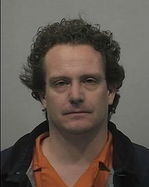
Stephen Jenson
"Part of the nagging issue that’s haunting the institution as a result of this case ... is the apparent discomfort with evaluations and investigations," John Lehman, a biology professor, said at a Faculty Senate Advisory Committee on University Affairs meeting Monday.
"This thing fell through the cracks," Lehman continued, criticizing the botched reporting of child pornography found on a thumb drive in an employee computer at University Hospital in May. Although a medical resident, her supervisor, hospital security and the university's legal office knew about the pornography, it was not reported to police until Nov. 18.
Stephen Jenson, a 36-year-old medical resident who worked regularly with children during the six-month reporting lapse, was charged Dec. 17 with four counts of possessing child pornography.
Comprehensive AnnArbor.com coverage
- U.S. Department of Education 'looking into' six-month lapse in reporting child porn at University of Michigan
- Hospital accreditation agency investigating complaint about U-M Health System's 6-month delay in reporting child porn
- University of Michigan faculty to discuss lapse in reporting child porn
- Timeline in University of Michigan child porn case
- University of Michigan regent calls six-month lapse in reporting child porn 'extraordinarily disappointing'
- Counsel who reviewed initial report of resident possessing child porn no longer employed by U-M
- Internal review into U-M Hospital's handling of child porn case to be done in weeks
- U-M Health System CEO calls delay in reporting child porn 'painful moment in our history'
- University of Michigan officials didn't report child porn to police for 6 months
- University of Michigan officials weren't required by law to report child porn to state
The committee, at first split on whether to ask administrators to conduct an external review, decided to table the matter until a Feb. 13 meeting. The committee gives suggestions to university administrators based on feedback from the school's faculty senate.
With the U.S. Department of Education, the Joint Commission, a hospital accrediting agency, and university auditors eyeing the case, the group said it would wait for more fact-finding to commence before suggesting an external review.
"We need to see if the ball was dropped and where in the chain of command if it was," said medical school professor Charles Koopmann. "Let's step back, not have a sudden burst of adrenaline and sudden reaction."
Faculty members expressed concern with the lack of communication between U-M Health System security and the university's Department of Public Safety, which are separate entities.
"Part of the problem appears to be that they don’t communicate," said Kate Barald, SACUA chair and engineering and medical school professor.
Koopmann discussed the need to involve outside police departments in serious reviews and inquiries in order to avoid biased decisions made in self interest.
"I don’t think they should keep things internal," he said. "Perception can be reality if we’re investigating ourselves."
Physics professor Finn Larsen proffered that university investigators and administrators must act differently than Penn State University officials if the school hopes to maintain its public image.
"In this Penn State case part of what aggravated the situation was moving slowly and in an in-transparent manner," he offered.
While the committee did not call for an external review on Monday, it did pass the following resolution:
"Although the university's internal investigation into the current alleged child pornography possession at the Medical Center is ongoing, it is expected that a report will be issued in a matter of weeks. SACUA expects that the university will use this incident to carefully consider the recommendations of the Senate Assembly... on reporting criminal activity in the most expeditious and effective manner."
Annarbor.com previously reported on those suggestions, which were spurred on by the Penn State sex scandal in November.
"We're all concerned about the university's reputation," Barald said in an interview.
Kellie Woodhouse covers higher education for AnnArbor.com. Reach her at kelliewoodhouse@annarbor.com or 734-623-4602 and follow her on twitter.
Comments
UtrespassM
Tue, Feb 7, 2012 : 7:53 p.m.
what else is in those cracks? TOO MUCH, the crack is not only filled up, but also has been over flow for long time.
julieswhimsies
Tue, Feb 7, 2012 : 7:38 p.m.
Child porn is way TOO BIG to fall through cracks. I wish the police and whomever else is investigating this crime finishes soon and throws the book at everyone involved from the top on down. Children hold our dreams, and our hope. We cannot allow them to be hurt any more to save face for shiny pot-bellied institutions. And I certainly hope this is an external investigation has begun before the internal investigation has hidden or destroyed evidence.
FreedomSpeech
Tue, Feb 7, 2012 : 6:42 p.m.
Let's shine a light on folks! We live in a world that has a huge problem with child predators and many of them are the elite. The local Pittsburgh radio host Mark Madden reported on Jerry Sandusky and the pedophilia last April and was pretty much laughed at and ridiculed... Fast forward a few months and the story breaks Nationally and low and behold Madden again is all but ignored when publicly proclaims that not only was Sandusky doing his evil against these kids practically in the open but his so called foundation is, in fact, a clearing house for the Elite to come in to rape kids! The judge that let Sandusky out of jail sits on the board of the foundation... Wonder why the accusations aren't being covered by the so called nightly news... Where's Nancy Grace? <a href="http://blogs.houstonpress.com/hairballs/2010/12/wikileaks_texas_company_helped.php" rel='nofollow'>http://blogs.houstonpress.com/hairballs/2010/12/wikileaks_texas_company_helped.php</a> <a href="http://www.infowars.com/the-real-sicko-movie/" rel='nofollow'>http://www.infowars.com/the-real-sicko-movie/</a>
Wondering
Tue, Feb 7, 2012 : 6:20 p.m.
Whether Jensen is found to be guilty, and of what, does NOT impact in any way whether the issue should have been reported and thoroughly investigated at the time it became known to University faculty/staff.
sHa
Tue, Feb 7, 2012 : 9:36 p.m.
That is absolutely correct!
BhavanaJagat
Tue, Feb 7, 2012 : 6:09 p.m.
The External Agency that must decide on this case is the Court which will hear the evidence and gives us its verdict. The Hospital and University can easily install security cameras in areas where people use computers. If obscene images appear on the computer screen, it becomes easy to establish the identity of the person who is using the computer and action can be taken promptly. The users will be aware of the presence of security cameras and will refrain from activities that violate law. The discovery of evidence in this case is faulty and hence it was not properly followed up for remedial action. I would like to wait and see as to how the Court admits evidence in this criminal proceedings against Stephen Jenson. I would not think that he is a monster in spite of these numerous stories and public attention to his acts.
Wondering
Tue, Feb 7, 2012 : 6:03 p.m.
There is a self-reinforcing network of complicity in events such as this that leads everyone to remain silent, and then that causes foot dragging and spinning ad nauseum.........until someone with the insider knowledge of what has occurred has the courage to stand up and call a crime a crime.........and demand that the institution make appropriate amends and set up clear procedures to enable a different kind of moral/ethical/legal leadership in future. It does seem that the Faculty Senate Assembly has an opportunity in this case to take a very clear public stance regarding which side they are on. Thus far, they are making it clear they are on the network of complicity/foot-dragging/spinning side. One can only hope that they will choose to reconsider that position......and that this will allow each faculty member to have the opportunity to think deeply about all the times they themselves have been involved in such situations, and have made the wrong decision.
Wondering
Tue, Feb 7, 2012 : 5:44 p.m.
@15crown00: Perhaps the deep irony of my post did not come through loudly enough?!
15crown00
Tue, Feb 7, 2012 : 5:35 p.m.
They need Donald Trump to come in ,line up ALL the guilty parties and simply say "YOU'RE FIRED."
15crown00
Tue, Feb 7, 2012 : 5:32 p.m.
or so the PR flacks would have you believe.M.S Coleman and the medical school bosses need to come out and say "we blew it big time.it was people not procedures that did/didn't do it.IT WILL NEVER HAPPEN AGAIN!!!!!!!!!!!. Bet they don't have the guts to do that.
Wondering
Tue, Feb 7, 2012 : 5:19 p.m.
@ Fatkitty: "How does the opinion and recommendation from SACUA have any relevance to this case?" Because it shows clearly and unequivocally what a majority of other University faculty would do when a similar situation arises again.
Tru2Blu76
Tue, Feb 7, 2012 : 5:03 p.m.
Huh, "Although the university's internal investigation into the current alleged child pornography possession at the Medical Center is ongoing, it is expected that a report will be issued in a matter of weeks." Looks like same old, same old, to me. A report will be issued... in several weeks?! Little chance that the premise (we must avoid acting in haste) stands scrutiny since it's already been MONTHS since the original discovery and report. What is it about academics and the legal profession that causes them to habitually defer, confuse, complicate and even defeat clear needs?? We are constantly reminded by both professions that they are in authority BECAUSE of their superior intelligence and greater knowledge. To me, it looks like the U of M Faculty Senate could just as easily convene a panel of janitors and grounds keepers - who would promptly resolve these "mighty puzzles" for them.
walker101
Tue, Feb 7, 2012 : 3:21 p.m.
Let's see this happened and we now have a 8 year old sexual attacked at school, both were being thrown under the rug, only in Ann Arbor.
walker101
Tue, Feb 7, 2012 : 3:17 p.m.
It took faculty members to figure out they had a crack and this fell through, the ball was dropped and heads need to roll. Hire me for 6 figures and I can be your consultant (non bias) and correct this fiasco in 10 minutes, better yet I'll take this pro bono and resolve this today, YOUR FIRED!
gofigure
Tue, Feb 7, 2012 : 2:53 p.m.
That's their excuse and they're sticking to it.
Sciomanone1
Tue, Feb 7, 2012 : 2:51 p.m.
This situation is nothing like what happen at Penn State, all the Doctor did if he even was the person that did was have pictures up on a computer of Children. The coach at the other school was in the shower with Young boys. That is a big difference, and nothing close to compare. It looks like the Administration does not want to fire the people that did not do their job and that is the Head of Hospital Security and the top administration of the IT the computer Department, There is NO crack in the situation it is just the fact, they did not do their job. If this has happen with this Doctor, I am sure this is not the first time, they need to do alot of checking with all the departments, the joint comminsion needs to do more than a slap on the hand if this kind of thing has been going on for years. If the Administrators were doing their job this would not of happen in the first place, This is Not something that fell through a crack, it is they do not care!!!!
sHa
Tue, Feb 7, 2012 : 3:28 p.m.
I disagree. This situation is exactly like what happened at Penn State. I am not talking about the crime, but the cover-up. In both cases, it seems that image was more important than any victims. Actually, Sciomanone1, the UM's spokesman has admitted that it was the General Counsel's office who "claimed ownership of the incident". Their office decided to "close the case" and not contact police. Hospital Security and the IT Dept. probably assumed that it was all being handled by the hospital's attorneys.
Goober
Tue, Feb 7, 2012 : 11:48 a.m.
Highly educated, but don't have a clue. On top of this, they are teaching our children!
Bertha Venation
Tue, Feb 7, 2012 : 5:19 p.m.
You got that right, Goob! Saaaayyyy... You look familiar. Are we cousins?
Carole
Tue, Feb 7, 2012 : 11:42 a.m.
Apparently, someone did not do they job in reporting this to the proper authorities. That is the bottom line. And, in my opinion, that individual or individuals should not be working in the hospital.
DennisP
Tue, Feb 7, 2012 : 7:41 a.m.
This University spent more time and money conducting internal and external investigations of Rich Rodriquez' alleged NCAA violations for monitored workouts than they spent on investigating this heinous criminal allegation. Where is the UM's moral compass pointed? Where is the Board of Regents on this too--especially in an election year where two seats will be open? You would think this would have been addressed in one of its meetings by now or that they would convene a meeting to discuss it given the actions in Penn State and ordered a more comprehensive review. This leads to the impression that too many of the highest-ranking "leadership" at UM are willfully ignorant of what's going on. This leads to all sorts of rampant speculation that there may be a lot more under this rug. None of this is very smart coming from a school that prides itself on having some of the smartest people in its employ. I welcome the scrutiny of outside federal and accreditation groups precisely because it seems the UM does not. I think we need as thorough and deep an investigation to see what else was swept under the rug and that it should run as high up the ladder as possible--up to the regents themselves if necessary. In fact, this is a tax-funded institution and the Hospital and holds State licenses. The State of Michigan should conduct its own publicly-open investigation to determine if there was any complicity or cover-up. It's been said that the light of the sun shining upon the darkest crevices is the best disinfectant. It's time to shine that light fully upon this shameful matter.
trespass
Tue, Feb 7, 2012 : 11:04 a.m.
If a University attorney told the security department to stop an investigation it is a crime called obstruction of justice. There should be a criminal investigation by the State Police but they generally will not intervene unless the local police, campus police, ask them to do so. That is precisely what the campus police need to do.
Deputy_Dog
Tue, Feb 7, 2012 : 4:09 a.m.
I can't help but notice how often this has gotten compared to Joe Paterno....may I point out that was decades of abuse and neglect for administrators and victims from the program which made National News. Maybe I missed the breaking news at this hour on ABC? Six months after something was verbally reported and no evidence was found....where was the case to begin with?
Wondering
Tue, Feb 7, 2012 : 5:16 p.m.
Absolutely--could not agree more.
DennisP
Tue, Feb 7, 2012 : 7:52 a.m.
To my understanding, evidence was found and the resident was arrested. The fact is that, save for one employee in security who took it upon him or herself to flout the actions of hospital higher-ups, this fellow could still be seeing pediatric patients today and could, ultimately, finish his residency to end up who knows where. In your opinion, this wouldn't rise to a concern unless and until a child is physically harmed on the premises and then allowed to fester for decades? The fact is the same motivations that drove the vice-president and athletic director at PSU to make shameful decisions are seem to be at play here. It's that mindset that has many outraged. The fact is if the UM had been forthright about this at the outset, this would have been only one more item on a police blotter--albeit heinous. The shame and the criminality would rest solely on the resident. However, because of, at best, egotistical buffoonery and--at worst--intentional cover up, this is now ballooning. This is not a matter of degree. This is a matter of doing what is right and that can't be measured in increments.
Lily'sMom
Tue, Feb 7, 2012 : 2:57 a.m.
@Roadman: Of course administrators in the schools are upset when a staff member is involved with any sort of abuse. However, administrators are not in charge of whether or not a report is made. All staff are required, by law, to report incidents which may involve students, independently of administration. In other words, they do not have to go to administrators before reporting an incident. They, themselves, are responsible. If they go to administration after reporting makes no difference as to their primary responsibility.
Arborcomment
Tue, Feb 7, 2012 : 2:37 a.m.
Whole lot of PhDs in the room. Common sense was absent.
Chicagobob
Tue, Feb 7, 2012 : 3:19 p.m.
Alas, this is often the case where there is an inverse relationship between so-called faculty smarts and common sense.
Michigan Man
Tue, Feb 7, 2012 : 2:23 a.m.
Really? Is this the best the faculty leaders can do? Weak, weak response. And all along I thought the smartest people in the nation were at The U of M. Almost had to laugh at this sad little effort by the faculty.
Scott Hankins
Tue, Feb 7, 2012 : 1:55 a.m.
The real issue here is the time from "Discovery" to Police involvment. These attempts to "keep it quiet and maybe it will go away", only further enable the predator in obtaining his prey. As soon as this thumb drive was discovered it should have been turned over to the LAW!! There is no policing your self you cannot be judge and jury here. The only thing that happens is just like Penn St. you will look corrupt as you do now. More worried about the black eye the University will get, how about being a hero and stopping the Predator!!
trespass
Tue, Feb 7, 2012 : 1:38 a.m.
There has been so much PR spin and smokescreen that this just screams for the need of an independent investigation by someone who knows how to inverview witnesses and find all relevant documents. Who knew what when? How high in the administration was the information known? I bet it goes a lot farther than anyone has so far been willing to admit.
treetowncartel
Tue, Feb 7, 2012 : 4:56 p.m.
I agree, send in the FBI
Sparty
Tue, Feb 7, 2012 : 7:29 a.m.
Conspiracy run wild?
Fatkitty
Tue, Feb 7, 2012 : 1:14 a.m.
How does the opinion and recommendation from SACUA have any relevance to this case?
Sparty
Tue, Feb 7, 2012 : 1 a.m.
And the US DOE and Joint Commission, both external agencies are conducting individual investigations, so the faculty investigation continuing or not makes not much difference. There are also several internal audits taking place so hopefully with all of these groups, the facts will come out.
trespass
Tue, Feb 7, 2012 : 11:10 a.m.
@Sparty- you seem to imply that you are in a position to know what the DOE and JCAHO (The Joint Commission on Accreditation of Healthcare Organizations) are doing but you don't even know the name of the organization so I think you are probably full of hot air.
Sparty
Tue, Feb 7, 2012 : 3:46 a.m.
And you know there are no onsite reps from the DOE and the JCOHC how? I believe you are mistaken.
trespass
Tue, Feb 7, 2012 : 1:29 a.m.
DOE and the Joint Commission do not do independent investigations. They send the University some questions and ask the University to investigate and send them answers to their questions. An independent investigation would examine documents that the University would be required to produce and they would interview witnesses. That takes a special skill set that is not in the Office of University Audits.
Arborcomment
Tue, Feb 7, 2012 : 12:35 a.m.
This story provides an absolute, pristine, spot on reason why there SHOULD be an external investigation to determine what happened and provide recommendations on how to restructure so this does not happen again. Houses built on sand...
xmo
Tue, Feb 7, 2012 : 12:32 a.m.
I guess this is what is known as the "Michigan Way". I am sure that someone will be promoted for this after all "failure is a resume enhancement" in some jobs.
Ellis Sams
Tue, Feb 7, 2012 : 12:08 a.m.
If child pornography is of such little significance to the University of Michigan that it can "fall through the cracks", what else is in those cracks? At what point does someone act responsibly and call the State Police?
LaMusica
Tue, Feb 7, 2012 : 12:05 a.m.
"Fell through the cracks?!" Unacceptable. And they really don't think an external investigation is warranted?! Have they ID'd the kids in the pictures? What if the pictures were patients of this guy?!
justcurious
Mon, Feb 6, 2012 : 11:50 p.m.
"We need to see if the ball was dropped and where in the chain of command if it was," said medical school professor Charles Koopmann. "Let's step back, not have a sudden burst of adrenaline and sudden reaction." "IF" the ball was dropped? At this late stage in this there is no threat of a "sudden burst of adrenaline and sudden reaction". It looks like this will go on another 6 months with nothing being resolved. They know who the resident reported it to and they should know who that supervisor reported it to. Time to make a decision about this is now.
Roadman
Mon, Feb 6, 2012 : 11:31 p.m.
I simply don't buy the assertion that there was a good-faith and innocent "falling through the cracks" mistake that caused this delay. More spin doctoring to salvage the repuatation of U-M. My guess was that those in authority were covering this up to avoid a public black-eye on U-M's image and., more importantly, protecting the University from a risk management standpoint. There was certainly a possibility of prohibitive University liability if it was determined that any child porn reviewed on the thumb drive or eleswhere in the custody of Dr. Jenson was of a patient of this pediatrician. School district administrators, as a general rule, get very upset if a staff member is involved in child abuse due to liability concerns and I believe that the same mindset controlled U-M decisionmakers in this case. To investigate Dr. Jenson vigorously would open up a can of worms that could only hurt U-M in many ways. So Jenson was allowed to practice for six months despite what administrators already knew. What are the parents of his patients to think of U-M allowing this to occur. Any prudent and diligent administrator would have ran to the phone and called DPS immediately after learning of the contents of the thumb drive. God help any defenseless child victims whose images may have been on the thumb drive.
say it plain
Mon, Feb 6, 2012 : 11:28 p.m.
It wasn't even "allowed to slip through the cracks"... It was "pushed into a crack" by the Hospital General Counsel's office, when they deemed the case 'closed'. How is that "slipping", "falling" or otherwise? This is a completely bogus 'determination' by the faculty committee, I don't even understand what they were *looking at* here?! They could have made a reasonable statement calling for an outside investigation, and there appears to be no reason not to, aside from a desire to *not* find out what happened. Perception surely *is* reality here, and an outsider is best poised to understand reality here.
DBH
Mon, Feb 6, 2012 : 11:27 p.m.
Unless the reporting in this article is distorting the emphasis of the concerns of the UM faculty members, they come across as being more concerned about the university's reputation than about the victims depicted in the child porn photos and the possible victims (if there are any) of Dr. Jenson during this six-month lapse. While the university's reputation is important, the welfare of the children is paramount and that needs to be stated explicitly and repeatedly, and acted upon appropriately. An external investigation may be needed but I am willing to await the result of the internal UM investigation before deciding on that point. And they darn sure better share with the public ALL results of their investigation.
DBH
Tue, Feb 7, 2012 : 4:10 p.m.
Thanks, @liekkio. That article suggests to me that the faculty was quite concerned about the process that failed. I am saddened by the apparent lack of expressed concern for the children involved and potentially involved. But, maybe the faculty thinks that concern is a given. I don't know.
liekkio
Tue, Feb 7, 2012 : 3:13 p.m.
@ DBH. You say: "Unless the reporting in this article is distorting the emphasis of the concerns of the UM faculty members". Look here: <a href="http://www.michigandaily.com/news/sacua-criticizes-umhs-handling-child-porn-case" rel='nofollow'>http://www.michigandaily.com/news/sacua-criticizes-umhs-handling-child-porn-case</a>
a2citizen
Mon, Feb 6, 2012 : 11:16 p.m.
"...This thing fell through the cracks..." A more accurate description would be "it was allowed to slip through the cracks, possibly forced into the cracks, hopefully to be forgotten. Until that damn Joe Paterno guy got fired". Besides, it's only child porn.
mkm17
Tue, Feb 7, 2012 : 12:14 p.m.
Well put, a2citizen. There was no falling through the cracks. All along the way, there were deliberate decisions not to proceed with involving law enforcement. It seems to be another case of institutional failure and an overriding desire to put the university's reputation first, not unlike the Penn State affair. If insiders are doing their own investigating, it's hard (impossible) to believe that the insiders won't be torn between their desires to be objective and to protect the University's reputation. They'd be investigating their own employer, for cryin' out loud. Of course they'd be biased. Shame on the University, and shame on using such a flippant, meaningless phrase as "fell through the cracks".