

Washtenaw County lawmakers divided on public school employee pension reform
- Updated story: Michigan Senate fails to vote on teacher pension reform
Washtenaw County lawmakers are once again divided on controversial legislation coming out of the Michigan House of Representatives.
The Legislature's lower chamber on Thursday approved reforms to the Michigan Public School Employees Retirement System to eliminate long-term pension and health-care liabilities, a move that angered local Democrats and won support from Republicans.
State Rep. Mark Ouimet, R-Scio Township, said Senate Bill 1040 will direct more funding into public school classrooms by eliminating almost $16 billion in employee retirement debt.
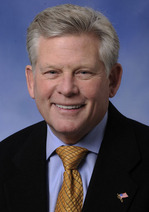
Mark Ouimet

Jeff Irwin
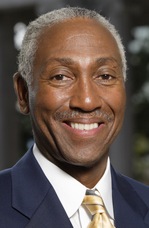
David Rutledge
MPSERS is a statewide public employee defined benefit plan. Ouimet said the plan has debts that currently total more than $45 billion, which schools must eventually pay.
The Senate passed a version of the bill last month. With changes made by the House, the legislation, approved 57-47, now goes to the Senate for concurrence.
State Reps. David Rutledge, D-Superior Township, and Jeff Irwin, D-Ann Arbor, both issued statements decrying SB 1040. They argued the legislation hurts public schools and takes more money out of teachers' pockets.
"Today I voted against a plan that increases contributions for retired teachers, current teachers and future public school educators," Rutledge said. "Not only does this bill break the promise made to retirees, but it is essentially another cut to classrooms, as it makes it more difficult for teachers to make ends meet."
Perhaps most troubling, Rutledge said, the bill will make it even harder for Michigan schools to attract the best and brightest to become new teachers. Meanwhile, he said, charter schools now have access to seemingly limitless public resources in the form of tax breaks like those offered under House Bill 5287.
"These changes will make it nearly impossible for public schools to compete on a level playing field," Rutledge said. "If we want to drive our public education system into the ground and effectively privatize our schools, this is another step to get there."
Before 1994, schools paid a flat 5 percent of their payroll into the retirement system. Now, because of the growing debt and the need to pay retiring educators, schools are paying 27 percent, and their payments are expected to jump as high as 35 percent.
Ouimet said the House plan will eventually take the rate back down to 5 percent, which he said may be the single most important piece of reform legislation the House takes up.
"Freeing up additional funding for our schools means more money for students to prepare them for the future," he said. "State employees are moving into 401(k) plans in order to make better use of limited taxpayer dollars, and it's only fair that state school employees do the same."
Under the reform plan, school employees hired on or after Aug. 1 have the option to receive an existing hybrid defined-benefit, defined-contribution plan or a straight defined contribution 401(k) account. New employees no longer would receive retiree health care but would receive matching employer contributions up to 2 percent of compensation deposited into a 401(k).
Irwin said teachers will suffer under SB 1040.
"This bill doesn't solve the financial problems of our pension system that have been exacerbated by the privatization of public schools," he said. "Instead, SB 1040 is a backdoor pay cut for teachers that will draw even more resources out of the classroom."
Irwin said SB 1040 requires teachers to either contribute more in order to continue with their current benefits or transfer any future years of service to a defined contribution plan. He said it also requires that all current retirees pay a little more than double to continue receiving their health care coverage, an amount many will be unable to pay due to fixed incomes.
Irwin said the average pension is about $22,545, far from the extravagant sum portrayed by some opponents. He also cited statistics showing that from 2001 to 2010 the number of active employed MPSERS members has declined by 23.8 percent.
"Rather than ensuring MPSERS long-term stability, Republicans have passed legislation that supports privatization of services and expands charter and cyber schools without acknowledging or understanding the impact that those decisions have on the overall health of the pension system," Irwin said. "We should end the trend to privatize public education and restore the millions of dollars raided from the School Aid Fund."
State Rep. Rick Olson, R-York Township, gave a floor speech in support of the MPSERS reform bill and was briefly interrupted by abortion rights protesters who were escorted out of the House.
"No one wants to pay more or receive less," he said. "Nonetheless, the $45-50 billion unfunded liability problem must be solved. On balance, this is a reasonable sharing of the burden."
Ryan J. Stanton covers government and politics for AnnArbor.com. Reach him at ryanstanton@annarbor.com or 734-623-2529. You also can follow him on Twitter or subscribe to AnnArbor.com's email newsletters.
Comments
Roger Kuhlman
Sun, Jun 17, 2012 : 2:55 p.m.
I am tired of seeing public school employees getting special deals and benefits on their pensions. They should be getting the same kind of pensions that workers in the private sector are getting. The current arrangements for public employees, which are grossly unfair to the rest of us, need to be drastically reformed and put on a long-term sound financial basis. It is ridiculous that Michigan government could be bankrupted in the future because of sweetheart, extravagent pension and retirement costs for public employees.
Angelika Lewis
Fri, Jun 15, 2012 : 10:20 p.m.
Mr. Ouimet will host a townhall meeting on Weds., June 20, 6:00 p.m. at WISD; the more people that participate in our democracy, the stronger our democracy is.
Lac Court Orilles
Fri, Jun 15, 2012 : 8 p.m.
There is a great candidate with better qualifications who's much more experienced than Ouimet. She's ready, willing, and able to take Ouimet's seat in the house next January. If you don't like Ouimet flushing teachers' lives and their students' lives down the toilet, vote for the current mayor of Saline who will "work with" teachers instead of kicking them to the curb like Ouimet does.
Michigan Man
Sat, Jun 16, 2012 : 1:57 a.m.
Mark will simply crush this woman from Saline who is running against him. It was very terrible act to force this woman into running against Mark. Those who are responsible for this citizen vigilanti act of forcing this poor woman into sacrificing her good name by running against Mark should be rebuked in the Saline public square.
Lac Court Orilles
Fri, Jun 15, 2012 : 7:46 p.m.
Teaching is a low paying high stress job. In addition, Teaching is the most scrutinized of any occupation. People who devote a lifetime to this occupation deserve a good retirement and good health benefits because stress takes it's toll on the mind, body, and spirit. Each year teachers are asked to do more with less and for less pay. Teachers followed the rules and lived by the rules, and now it's unfair not to honor the promise (contract) that was made to them. Many teachers elected to have additional money taken out of their pay and sent to MPSERS, and SB 1040 puts this investment at risk. SB 1040 does not fix the problem; it is political retribution against teachers. Removing the funding by establishing unlimited charter and cyber schools makes the problem worse. Governor Engler balanced the State's budget twice by taking money from the teacher retirement system and never returning it. At the bottom of this there seems to be a conspiracy by Speaker Bolger to eliminate public schools all together. I don't know why anyone in their right mind would want to pursue a teaching career if this is how one is treated.
FredMax
Fri, Jun 15, 2012 : 12:17 p.m.
Whats a pension?
mixmaster
Fri, Jun 15, 2012 : 2:24 p.m.
Maybe if you joined a union and collectively bargained for benefits for working people you might have one.
13
Fri, Jun 15, 2012 : 12:13 p.m.
One point that no one mentions in the discussions about changes to retirement plans is that the majority of people in 401 (k) plans do not have the option of retiring "early". The amount of money built up in their account will not allow them to retire until they are older. Therefore, future complaints will be about the aging teacher workforce and that there are not enough openings for young inspiring teachers.
Topher
Fri, Jun 15, 2012 : 11:56 a.m.
To anyone thinking of becoming a teacher in Michigan, I would recommend that they strongly reconsider. Currently a teacher, I now wish I had majored in something else and would consider a move to something that will give me a livable income. I love my work with students, but living paycheck to paycheck is strenuous. If I were 22, living in an apartment with little commitments, teaching would be a dream. Trying to support a family, own a house, and be an active community member makes it hard. I consider myself a good teacher, a hard worker, a supporter of rigorous assessment (I get none), and merit pay. I am open to working longer schoolyears and longer days. In 2002 The State Board of Education set out to build a plan to "Elevate the profession of teaching and the image of teachers, including the recruitment of teachers and career enhancement." (http://www.michigan.gov/documents/Ensuring_118782_7.pdf) It is now ten years later. I think they have epically failed.
Susie Q
Fri, Jun 15, 2012 : 11:16 a.m.
@ Carol. Public school employees DO pay a significant portion of their health care insurance. By law they are required to pay at least 20% of the cost of the premiums OR anything over a "hard cap"; which is a figure determined by legislators. So, for example, the cost of insurance for a couple is $10,000 per year and the hard cap is $8,000; the employee pays the difference. My friend that teachers in A2 schools pays $6,000 per year for two people. In addition, public school employees now pay another 3% of their salary into a fund that pays for current retiree health insurance....which is another $1800 for an employee earning $60,000 annually. So, yes, indeed, public school employees pay a LOT for their health insurance......in this case, at least $7,800.00 ea. year.
Carole
Fri, Jun 15, 2012 : 10:48 a.m.
Question: In 1994, public schools paid in 5% now 27% - why? All employees pay a percentage into the pension as well--maybe that percentage may have to increase.. Wondering if the health care issue is costing more - most likely. Why, can't the public schools employees pay a small percentage for their health care? Yes, folks are living longer and pensions are being paid longer, Maybe a look at the time frame for retiring --
Alan Goldsmith
Fri, Jun 15, 2012 : 10:18 a.m.
Wow, so Olson and Ouimet 'couldn't be reached for comment' on the abortion rights bill but, suddenly crawled from under the rocks to have words of wisdom on this bill? Quimet is no 'moderate' Republican' on anything but has done a pretty good con job on voters. Olson is on the way out the door because even Republicans think he's a fool.
Michigan Man
Fri, Jun 15, 2012 : 1:25 p.m.
AG - Mark is rather selective about his company. Send him a letter. He will evaluate your concerns and may be back at you!
Dr. Rockso
Fri, Jun 15, 2012 : 1:43 a.m.
Now I'm not against 401's but they don't seem to be working out to well for most of the people who have been in them. So the GOP solution is to move everyone into 401's because misery loves company.
Michigan Man
Fri, Jun 15, 2012 : 1:24 p.m.
Rock + SQ - I now spend most summer days at the pool, playing golf and admiring the landscaping in my yard. Also started a 7 figures required golf group club with men and women (yes women) who are with the same investment group. BTW, my charitable and benevolent contribution, predominately to Christian organizations, are sky high these days. Forever, being invited to attend non-profit charitable events to mingle with other donors (like Obama does). Try it - you may like it!
The Black Stallion3
Fri, Jun 15, 2012 : 11:18 a.m.
Susie..........do you need the government to take care of you?
Susie Q
Fri, Jun 15, 2012 : 11:08 a.m.
The GOP loves 401k plans because it shifts the burden to the employee to completely fund their own retirement. This is one reason they keep trying to "privatize" Social Security. The privatization of SS and the shift to 401k style plans will be a HUGE windfall for banks, investment houses and other financial businesses. And that is the other reason GOP supports this stuff. Michigan Man boasts of his 7 figure 401k accounts.....good for him......but most 99%ers will not do as well. However, just remember, you always hear from gamblers when they win big at the casino, but they rarely boast when they lose.
The Black Stallion3
Fri, Jun 15, 2012 : 10:46 a.m.
Rock....stop being so negative
leaguebus
Fri, Jun 15, 2012 : 4:08 a.m.
Rock, these days new teachers leave college with a mountain of debt, keep having their wages cut for tax breaks to many rich businesses, are told they are mostly lazy and given no respect by a lot of people. The more money someone makes, the more they can save for retirement as you well know. Why would anyone want to be a teacher these days? Our students show from their test scores that our educational system is underfunded and falling behind the rest of the world every day. I am glad you are so well off but compassion for teachers that will never have the pay or chances you have had is seriously lacking.
Dr. Rockso
Fri, Jun 15, 2012 : 2:29 a.m.
Well my Michigan friend things look kind of rosey in the 401 world right now. Also I never said I'm hurting financially nor do I need a financial adviser. I blew those clowns off 35 years ago and have done pretty well for myself. I don't work, I paid my mortgage off after 4 1/2 years about 25 years ago. Yes I did it on a high risk stock play. No I'm not a genius I was lucky. I live off my investments and I'm pretty damn good at it. But even though I have been successful I have not lost the perspective that many people out there do not have the ability to manage money well. Financial managers and brokerage firms will clean these peoples clocks. Also I have not lost compassion for others who have not done as well as me. Yes some people will not do well in 401's, many more will not.
Michigan Man
Fri, Jun 15, 2012 : 2:03 a.m.
Rock - You need a new financial advisor! My condolences that you are behind the times. My 401(k) has been smoking hot!
Michigan Man
Fri, Jun 15, 2012 : 1:12 a.m.
Once again Ouimet is on the right side of this issue. 401(k) is very much the preferred investment option. I am a big 401(k) guy! Have well into the 7 figures in my multiple 401(k) accounts. Keep and eye on the markets, get some good investment advice and move into a fat chunk of money for retirement. Just do not understand why this concept is so hard to grasp? Perhaps the U of M business school types need to do a better job of explaining why the 401(k) model is so vastly superior to the archaic school/union corrupt pension system.
The Black Stallion3
Fri, Jun 15, 2012 : 10:45 a.m.
Rock....Jealousy will get you nowhere
Dr. Rockso
Fri, Jun 15, 2012 : 3:42 a.m.
I've got 7 figures..I'm wonderful.. I can't understand why everyone doesn''t have 7 figures. Blah Blah. I can't grasp that everyone else isn't as wealthy as me.
AlfaElan
Fri, Jun 15, 2012 : 1:45 a.m.
First school teachers can't get 401(k) because the nonprofit equivalent is called a 403(b), but that's just picking nits. The real problem with saying just give them 403(b) is that it was not done years ago so now you have you have all these employees that have paid into a fund that promised them a defined income in retirement, and you say you are going to take it away. That would be like telling you half that 401(k) money you have isn't yours and you can't have it. I have no problems with telling new employees that they will get 403(b)s and phasing out the pensions, but the existing employees and retirees have to be treated fairly and equitably. The real problem here is that the legislature did not invest the pension money well and calculate the pension liability correctly. If they had done this over the years they would have been able to adjust the defined benefits and cost to prevent this problem.
Townie
Fri, Jun 15, 2012 : 1:10 a.m.
Let's see -- you underfund pensions to cut taxes but promise that the tax cuts will produce mountains of extra revenue that will cover the unpaid pensions. Then the tax cuts don't produce any revenue and you blame the teachers for the pension costs you decided not to fund. Brilliant. I just call it robbery by stupidity. They assume no one will remember promise #1... And many don't and swallow lie #2. Still waiting for Ouimet to pay Washtenaw County back - did he? How about the AA.com telling us the status of his payback for stealing money from the county? Olson is a sad joke. He's my district rep and hasn't said practically anything to us and won't tell us how he votes (about 99% for his party I imagine). The Republican party has become sooo predictable -- ALEC gives them their marching orders and there isn't an original thought in their heads.
Ryan J. Stanton
Fri, Jun 15, 2012 : 3:55 a.m.
http://www.annarbor.com/news/mark-ouimet-cuts-check-to-county-for-14386-after-audit-finds-commissioners-improperly-collected-pay/
Bob
Fri, Jun 15, 2012 : 12:51 a.m.
Don't think a few million less makes Balas any smarter. Our children won't be any smarter either. Until you can effectively evaluate and terminate the very few bad apples, a few million more won't help anything.
aataxpayer
Fri, Jun 15, 2012 : 12:44 a.m.
The republican agenda is becoming increasing clear - destroying public schools and replacing them with charters with low paid, leased employee status teachers with few benefits. Traditional teaching will become an undesirable job, while "teaching" in cybers and charters will become focused on "dashboard" metrics and passing standardized tests. Republicans are destroying our schools.
Arborcomment
Thu, Jun 14, 2012 : 11:17 p.m.
Floyd, your "mike check" is working, they can hear you all the way to Wisconsin, um maybe not.
Floyd
Thu, Jun 14, 2012 : 11:30 p.m.
You're right they didn't hear this in Wisconsin. That's why they will have no right to collective bargaining at all in November. And we might.
Floyd
Thu, Jun 14, 2012 : 11:06 p.m.
Don't forget that the governor's first action was to slash the education budget by a billion dollars and then turn it into a tax-break for Michigan's One Percent. There is plenty of money in our economy (if not jobs). The One Percent are draining our public resources, and they have sold the uneducated on the lie that the coffers are empty. According to Center on Budget and Policy Priorities, a non-partisan government watchdog, "Income inequality has been rising in the United States for the past three decades, as the top one-percent has claimed an increasing share of national income growth. Indeed, the top one-percent claimed 23.5 percent of all national income in 2007: its highest share of the national income since 1928." Amazingly, they are fairly open with their plan for public education: Privatize the public education sector, and give public pensions to their banker friends to play with and cash in on. In the recent past, Michigan has been a place where a public education is worth a lot. Not for long! Down with the One Percent! Up with the Ninety-Nine! Save the Middle Class!
leaguebus
Fri, Jun 15, 2012 : 3:47 a.m.
The state is broke, why, mindless Republican tax cuts. There are 75000 jobs in Michigan that can't be filled because Michigan does not have trained workers. So what does the party in power do? They cut education further, lay off thousands of teachers, and then start eroding benefits of retirees because there is no money for education, but of course there is money to further cut taxes for businesses that will not create jobs because there is no demand.
u812
Thu, Jun 14, 2012 : 11:24 p.m.
some people prefer the Rich get richer and the neighbors makes less and there housing values drop even more.
u812
Thu, Jun 14, 2012 : 11:02 p.m.
wow,teaching definitely will not attract the brightest and best anymore, I would definitely get a DEGREE in something else.
andy kelly
Fri, Jun 15, 2012 : 10:42 a.m.
Right! Ever think that by keeping our youth stupid and only mildly literate, the wool can pull over their eyes forever - endless political gain. Yet, teach a child how to truly "think" and democracy gains its legs - that is not the goal of either side. Simply, if our youth, as a whole, had the capacity to fully-understand what is being done to them in the prison-modeled school system they would revolt, and with childhood possibility create a system that truly enables the possibilities of humankind. Too optimistic and dreamy?... That is exactly what they told me before attempting to pull the wool over my eyes. How about you? Share.