

Debate over Fuller Road Station picks up as Ann Arbor City Council prepares to consider project
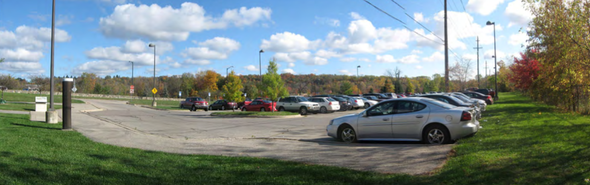
A look at the debated parking lot in Fuller Park where Ann Arbor officials are proposing an intermodal transit station called Fuller Road Station. Park preservationists argue though the land is currently a parking lot, using city parkland to build a parking structure and possible train station sets a dangerous precedent that could have negative implications for other city parkland in the future.
Photo courtesy of city of Ann Arbor
The City Council has held off on taking any action on the project — which includes building a large parking structure, bicycle facilities, bus depot and possible train station on city-owned land along Fuller Road — since the Planning Commission approved the first phase last fall.
But talks are picking up again, and the project is expected to come back before council sometime soon — possibly in the form of a special work session at first. Not wasting any time, opponents of the project have renewed protests.
Members of the Huron Valley Group of the Sierra Club are arguing the city is wrong to consider permanently repurposing a chunk of city parkland for the project — located in front of the University of Michigan's medical campus — without going to voters for approval.
"What are we getting with this deal? What's in it for the city?" said James D'Amour, the Sierra Club's vice chairman. "We have existing facilities for trains that are quite adequate."
James D'Amour
Fuller Park, most of which is located north of Fuller Road, includes soccer fields, an outdoor pool, picnic and play facilities. Critics of the project's location note the area has been designated as parkland for more than 80 years, but it seems city officials now consistently refer to the property as "public land."
The City Council took action in July 2010 to change the permissible uses for property zoned "public land" to include "transportation facilities," which allows building a train station at Fuller Park.
"Evidently then, the city has decided that this portion of Fuller Park is no longer parkland," said Nancy Shiffler, chairwoman of the Sierra Club.
"And does this mean that any parkland in the city may be equally vulnerable to redefinition?" Shiffler added. "How could Ann Arbor citizens be expected to support park millages when they don't know what will remain as parkland?"
Because the land technically isn't being sold, Mayor John Hieftje and other city officials argue it doesn't need to go to voters for approval.
They also point out the specific area where the parking structure and train station would be built is currently a surface parking lot, not actual green space. The city has leased the 250-space parking lot to U-M for nearly two decades.
"There's really no other location, certainly in our area, that is as ideal," Hieftje said of the Fuller Road site. "The presence of the hospital where 24,000 people go every day is really what makes it work and what makes it so exciting."
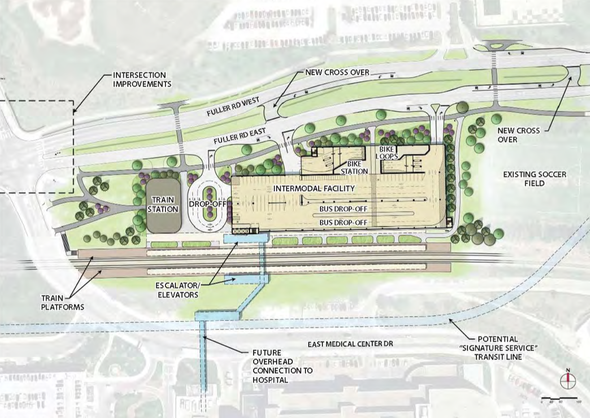
A look at a Fuller Road Station site layout as proposed in a city report from April.
AnnArbor.com obtained a copy of the original 1993 agreement between the city and the university that called for a joint-use parking lot at Fuller Park.
Accompanying the agreement was a memo from then-City Administrator Alfred Gatta explaining part of the reasoning behind the agreement was an attempt by the city to save landmark oak trees that were threatened by a proposed road realignment.
Gatta wrote in the memo the parking lot would accommodate overflow parking needs at Fuller Park and also provide parking space for users of a new soccer field. He added the university would use the new lot at designated times that do not to conflict with city park uses.
The agreement called for the city to lease the entire parking lot to the university Monday through Friday from midnight to 4 p.m. and 10 p.m. to midnight for 15 years. After 15 years, the university would have the option to renew the lease for successive five-year periods.
U-M continues to lease the lot from the city today.
AnnArbor.com also obtained a copy of a draft environmental assessment for Fuller Road Station that was prepared by the city in April. It goes into detail about how Ann Arbor officials came to decide on the 7.61-acre site along Fuller Road for the proposed transit station.
According to the report, the project would take up about 3 acres, mostly within the footprint of the existing surface parking lot, but also a limited amount of additional space between the lot and both the city's road right-of-way to the north and the railroad property to the south.
"Not only would the new station provide improved access to key destinations throughout Ann Arbor, it would feature unparalleled access to the (U-M medical campus) while increasing accessibility for all persons using the station, especially users with special needs such as wheelchair access," the report reads. "The ease of access to destinations also helps provide increased security for passengers making connections and accessing other parts of the city."
The report notes there are more than 25,000 Ann Arbor residents who commute daily to work in Wayne County and about 17,000 Wayne County residents who work in Washtenaw County.
"FRS can serve to accommodate rail commuter and long-term rail-related parking demands and provide direct access to the rail system," the report reads. "It is also conveniently located within walking distance of the 15,000-plus jobs on U-M’s medical campus."
The report acknowledges the project is proposed for an area within the Huron River valley that is "master planned as parks and open space."
The report shows the city completed an analysis of public lands adjacent to the Norfolk Southern Railroad that could potentially accommodate a new transportation facility in March 2007. The analysis revealed 16 potential sites, most owned by the city, some by the university.
The city dismissed 15 of those sites — all but Fuller Road — including locations at Barton Pond, Bird Hills Nature Area/Kuebler Langford Park, Barton Nature Area, Bandemer Park, U-M Medical Center, U-M's Mitchell Field, Furstenburg Nature Area, Gallup Park, Huron Hills Golf Course, Forest Park Nature Area and the Ann Arbor Wastewater Treatment Plant.
The stated reasons for dismissing those sites ranged from "poor visibility" to "no vehicular access" to "floodplain." A handful of the properties also were dismissed because they were designated as city parks or nature areas, records show.
U-M's Mitchell Field, which is located next to the Fuller Road site near the hospital, also was dismissed because it was a designated recreation area with heavy use.
Asked whether they'd consider bringing forward a resolution to put the repurposing of parkland for the Fuller Road project up to a public vote, multiple council members said there's not enough support on council for such a measure.
Council Member Sabra Briere, D-1st Ward, said the real issue is whether the city government can treat parkland as fungible. Because the city's zoning language sees "public land" as encompassing all publicly owned land, including parks, it is possible to repurpose public land and parks to have multiple uses, she said.
"The solution I see is rezoning — a change that would separate parkland as its own use, without other uses possible," Briere said.
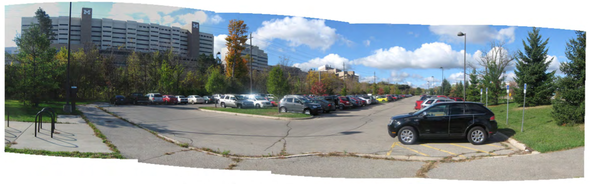
Another look at the proposed site of Fuller Road Station, which would stand in front of the University of Michigan medical campus.
Photo courtesy of city of Ann Arbor
The $43 million first phase, as approved by the Planning Commission in September, includes a five-level parking structure with five built-in bus bays and 103 bicycle parking spaces. City officials say they're tweaking those plans to possibly include commuter rail platforms in the first phase now — but that's if the project is even done in phases.
The university has committed to paying for 78 percent of the Phase I costs and would have access to 78 percent of the parking spaces in the structure. The long-term vision for Fuller Road is estimated to cost $121 million, inclusive of planning and engineering costs, and city officials are hopeful federal funding will be forthcoming to cover those bills.
Federal officials already announced a $2.8 million grant for preliminary engineering and environmental study work for a train station at Fuller Road last month — in addition to $196.5 million for improvements to the tracks between Dearborn and Kalamazoo.
"It is the most exciting time for rail in Michigan in 100 years," Hieftje said. "This is a very exciting time and actually things are moving forward."
Council Member Mike Anglin, D-5th Ward, said he's not as excited, though. Fuller Road Station sounded like a good project at first, which is why he supported it, he said.
"Now it's really looking a lot more like a parking structure than anything else and that concerns many of us," he said, adding he has doubts there'll be a large influx of federal cash.
"Nor are we in need of a train station for a town our size," Anglin said. "The dream is a wonderful dream, but possibly in the wrong place, maybe in the wrong town."
City records state the city — along with U-M and the Ann Arbor Transportation Authority — is pursuing the Fuller Road Station project based on a concept first proposed by Hieftje in June 2006. The university didn't get involved until later.
Jim Kosteva, a spokesman for U-M, said the university has a medical center master plan adopted in 2005 that identified university-owned land in the Wall Street area as a location for a new parking structure. As the university was proceeding toward that development two or three years ago, he said, Ann Arbor officials invited U-M to partner with the city at the Fuller Road location for a more comprehensive intermodal transportation facility.
Kosteva said U-M agreed with the logic behind the Fuller Road location because it provided better interconnections with rail, buses, pedestrian movements and bicycles.
The existing Ann Arbor Amtrak station is located 3,200 feet west of the proposed Fuller Road site. It's the busiest train station in Michigan and the second busiest along the corridor behind Chicago. City officials note that's in spite of the shortcomings of the existing station’s location, which is difficult to access and has limited parking.
Anglin said the city has put about $1 million into the Fuller Road Station project to date. Potentially spending millions more at a time when the city is letting police officers go is "unconscionable," Anglin said, but he can see where this is headed.
"There are no guarantees of a train coming here, but there's certainly a guarantee of a huge structure," he said. "It's already planned, designed, everything."
Hieftje said no date's been set for when the project will come back to council.
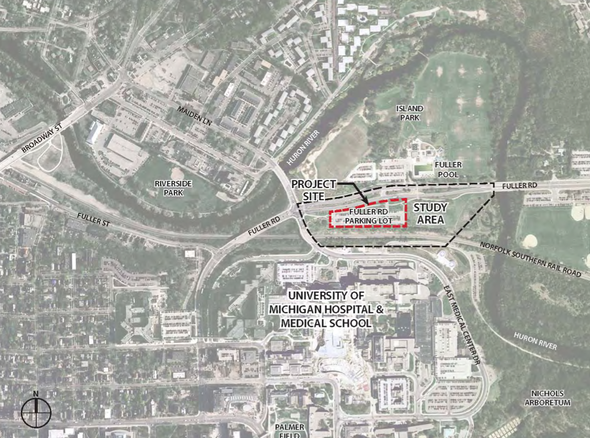
A map showing the Fuller Road Station site in proximity to the Huron River valley.
Image courtesy of city of Ann Arbor
Ryan J. Stanton covers government and politics for AnnArbor.com. Reach him at ryanstanton@annarbor.com or 734-623-2529. You also can follow him on Twitter or subscribe to AnnArbor.com's e-mail newsletters.
Comments
deb
Thu, Jun 16, 2011 : 4:27 p.m.
This is a joke. It is a waste of tax payer money. If the U wants a new parking structure they should pay for it. Looking at the plan, how many parking spots the U gets, and how many parking spots are available at the old train station shows why. The city will only acquire about 60 additional spots then the currently available amount at the train station. Now they want to add a bus terminal to the same station, that should eat up the additional spot allotment pretty fast.??This is nothing more then a parking deck built for the U. ??As for a new rail (so trains can pass), couldn't we add one to where the station already is? Could we not look at making that station bigger? There is no reason for the city to build 700+ parking spots for the U. They have there own money and with 26,000 visitors a day, i am sure they can afford it. Why are these projects combined, other then to give the U land to build a large parking structure for the hospital? ??If we really want a new "terminal", tear down the old one, and build it in that spot, or another place where the city (and apparently national) taxpayers aren't subsidizing a parking lot for the U. This article shows at least 146 parking spaces near the old train station, and is one of the first things that come up whey you google "ann arbor amtrack parking." (<a href="http://www.marp.org/?p=868" rel='nofollow'>http://www.marp.org/?p=868</a> ) I do not believe that $10 million for 60 more parking spaces is a good idea. This station should not be built without looking into alternatives
Aaron Wolf
Thu, Jun 16, 2011 : 4:22 p.m.
Accepting the concerns about the process and precedent and whatnot, this seems like a superb project. This is absolutely an ideal location for such a thing and could be a wonderful addition to the city. I only think they ought to have more bike-related stuff their than they are already planning. Simply put: this is a great use of this land, with a long-term focus. For the record, I was (am) totally opposed to the stupid hotel/conference-center downtown thing. I'm no pro-development all the way guy. And I really care about parkland and open spaces. I think this station is the right thing to do.
lester88
Thu, Jun 16, 2011 : 4:15 p.m.
The fact that they don't want the voter to decide should be cause for concern.
Peter Eckstein
Thu, Jun 16, 2011 : 3:56 p.m.
Why not let the University pay 100% of the costs and have access to 100% of the parking spaces, except those that it might make available to others for a fee--hourly, monthly or annually? In exchange for letting the University "lease" the land, an arrangement could be made to let those 22% of parking spaces revert to city use if and when the mighty intermodal transportation facility is actually built. I am not too concerned about converting an ugly parking lot into an ugly parking structure, but I am concerned about putting more city money at risk for yet another expensive "if we build it they will come" project.
blahblahblah
Thu, Jun 16, 2011 : 3:50 p.m.
Great article Ryan! Please dig a little deeper on the $1 million estimate of expenses thus far. The city's Park's Advisory Committee still has some unanswered questions related to outside consulting work for this project. Also, the city has allocated quite a bit of money ($1 million I think??) to a feasability study to build a traffic circle at the Fuller Rd./Medical Center intersection, which should be considered a related cost. It's quite obvious that city council is waiting for the dust to clear from the budget process before voting to spend $10 million plus on this pet project. Council may think they found the one site with no immediate neighbors (NIMBY's) to organize against the project, however they still need to answer to the taxpayers as a whole. Mr. Anglin is correct that such a project at this time would be "unconscionable" given the budgetary sacrifices being made and the future fiscal challenges facing the city.
xmo
Thu, Jun 16, 2011 : 3:31 p.m.
I just love this Liberal vs Liberal fighting! You have the "Huron Valley Group of the Sierra Club " fighting the AA City Council. Maybe if we thought just a little before we cast our next vote for someone with a (D) by their name we would not have this kind of slimy government! Think before you vote?
Rita Mitchell
Thu, Jun 16, 2011 : 2:11 p.m.
Please take a look at your favorite park and know that you will have to be alert for plans to turn it into something that you never imagined, never helped to decide, and never expected as an outcome of the contribution of your tax dollars to parks millages. In 2010, Council had to backtrack on proposals for "temporary" football parking in Allmendinger and Frisinger Parks, because park users (the collective owners) opposed the plan. Each of those proposals represented a potential development over 20 years into a plan such as this one proposed for Fuller Rd. They would have allowed people to get used to a parking lot, degraded the sites, and reduced the worth to the point of no one feeling like protecting the sites. Fuller Park represents the outcome of what could have happened to any city park. In 2008, 80% of voters said they wanted to vote on whether to sell park land. We're not being given that chance for Fuller Park. The land is being transformed instead, and the trade-off is way outside the range of the definition of fungible. Fungible: being of such nature or kind as to be freely exchangeable or replaceable, in whole or in part, for another of like nature or kind. Park: In this case, is it a noun or a verb?
Stephen Landes
Thu, Jun 16, 2011 : 3:27 p.m.
I love the last line -- seems like Council thinks it can be either at their choosing.
Mike
Thu, Jun 16, 2011 : 2:07 p.m.
If they can't get the speed limit raised above 25 mph imposed by Norfolk Southern is "high speed rail" really going to happen or be practical? I can ride a bicycle that fast. I'd solve that problem before I'd spend millions and disrupt park land for something that will most likely turn out to be economicallu unfeasable anyhow.
grye
Thu, Jun 16, 2011 : 12:44 p.m.
The loss of current parkland is not an excuse to stop the project. The city is flush with parks that cannot be properly maintained.
Christopher LeClair
Thu, Jun 16, 2011 : 12:37 p.m.
I am absolutely in support of this project. It is just the kind of thing that both Ann Arbor and the University of Michigan can take full advantage of. People are not fully appreciating how this can benefit everybody. With it being a dual train stop, bus stop, and parking garage it can further decrease some of the traffic in downtown AA which only seems to be getting worse. Especially with expansing companies like Baracuda which will be bringing even more cars into the crowded downtown area. The current Amtrak station is fairly crappy. I take the train frequently and know that Ann Arbor is the most frequented stop on the route and it would be appealing for travellers to have a more modern facility. It would be amazing if they could get one of those new bus routes up and even less people would need to drive their cars all the way into the city. They could take the train right from their town to AA, hop on a bus, and head right to work. Although, it would be ideal if they could also turn this into the main bus depot for the AATA. It would be nice to have that removed from being directly in town as that immediate area really could use some sprucing up. The city doesn't have a habit of "giving up parkland" so why all the furor over this? It clearly is not going to be a repeated thing and the benefits far outweigh the costs of this unused parkland. You cannot even get to the property without crossing the traintracks from the Arb which I believe is illegal. Public works projects like this help the entire city which in turn helps every one of it's citizens. Support
Stephen Landes
Thu, Jun 16, 2011 : 3:23 p.m.
If this is the right thing to do then have the courage to do it the right way: put the sale of this property on the ballot.
johnnya2
Thu, Jun 16, 2011 : 2:41 p.m.
" If you had to pay the real, unsubsidized cost of a ticket you wouldn't be so happy" The big lie rears its head again. Amtrak is subsidized 20% of its operating budget by the federal government. Roads are subsidized 50% over and above what fuel taxes pay. The problem that most right wingers have is that since they won;t take the train they don't want to pay, but since they drive their SUV's they want the rest of us to subsidize their roads. If you want things unsubsidized, then be consistent. Let's start by making ALL roads toll roads. I do not drive on Boardwalk, which just underwent resurfacing. Every car will now need to stop, pay a toll to pay for this road I choose not to use. Of course nobody would go for that, and shouldn't. We all pay for a lot of things in life we do not use. I have never used the AAFD, but I gladly pay for them. I have used the AAPD exactly ONCE in 20 years. I would have been better off paying an hourly rate than what I pay in taxes. I have never used the AAPS, but I see the benefit to all these things.
Mike
Thu, Jun 16, 2011 : 2:14 p.m.
$121 million for the station (est.) and $190 million for the tracks adds up to a lot of money for a system that will require subsidies to continue operations paid for by a federal government that is printing money to pay for it's out of control spending as it is. If you had to pay the real, unsubsidized cost of a ticket you wouldn't be so happy. We have a "crappy " station because that's all we can afford, just like people whop drive "crappy" cars do so because they can't afford a new one. You can only get a new credit card to pay off your old one for so long.
bob elton
Thu, Jun 16, 2011 : 12:31 p.m.
I negotiated the agreement with the University when I was chair of the Parks Advisory Commission, in order to save a number of large oak trees by the extended Fuller road. At the time, the University reppresented that the need for a parking lot on park land was "temporary". Now they've been there almost 20 years. The PAC never imagined that we were signing away park land for a permanent parking structure and/or train station. Now, I like trains as much as anyone, more than most. But the chicanery involved in giving parkland to the University, and for a train station, without a vote, is breaking the trust of the people who voted for park millages over the years. I chaired the committee that got the first park acquisition milage on the ballot (over much Democratic party opposition, I might add) in 1988. Time and again were were asked by voters signing the petition if city council could sell off parkland for other purposed, and time and again, we assured the voters that this could never happen. Perhaps we were wrong. I hope not. Bob Elton
a2grateful
Thu, Jun 16, 2011 : 12:12 p.m.
Forget about the proposed use and users. The proposed use and users will change for any given council project that it deems fit. Basically, the city is giving away the development and use rights for our park parcel for free. Think about all of the development and use rights that the city has in the county: parks, green space, and urban parcels. . . All purchased in with public money, founded in promises of fiduciary responsibility and trust. With this precedent the city gives itself the green light to transfer development rights anyplace, any time, to anyone. The only thing that will stop them is a lawsuit: Citizens of Ann Arbor v City of Ann Arbor. City attorneys hope for this in giddy anticipation. Litigation is their passion and profession! We know the views, practices, and partial agenda of a2 city government. Will the citizens ever wake up?
My2bits
Thu, Jun 16, 2011 : 11:29 a.m.
Concerns over setting a precedent are valid and should be addressed, but this parking lot is not the place to make a stand. As a longtime user of the lone, very poorly maintained, soccer field (that is not being built on), I would gladly give that up too. This is the right site for the transit center and parking structure. If misguided citizens block this to save a surface parking lot, the U of M will build the parking structure(s) elsewhere, most likely between Maiden Lane and Wall Street, which is not desirable for anyone. Read the article: The U of M is paying into this project. The City is not "giving" U of M a structure at the taxpayers' expense. If people are so worried about this paved piece of land they call "park" that is on the other side of a busy road from the main Fuller Park, or are worried about the precedent this might set for other properties, let them put their energies into more productive solutions. Could we live with trading this "park" for quality park land? Does the U have some land to trade (ex-Pfizer)?
blahblahblah
Thu, Jun 16, 2011 : 2:39 p.m.
The U of M is not paying any land acquisition costs whatsoever. Their 78% contribution is for the cost of the parking structure only. So in effect the land is being given away for free. Also, the Maiden Lane location is very desirable to all the taxpayers who are not interested in paying for another parking structure. Let the U of M build their own structure on their own property.
Brad
Thu, Jun 16, 2011 : 11:20 a.m.
We can't sell parkland? No problem - we'll just call it something else and bypass the citizens again. Put it up for a vote? No way - "there's not enough support on council for such a measure". And that's becauase there's not enough voter support for such a measure.
ToddGack
Thu, Jun 16, 2011 : 10:56 a.m.
Whatever the mayors grandiose plan is, he will make sure he gets it. Reminds me of the time when the city over spent for the YMCA so their could be affordable housing downtown because the Mayor believed that affordable housing should be downtown. He though now has switched his belief that affordable housing now can be on the fringe of downtown. So the city wasted millions of taxpayers money on the YMCA for John's vision instead of letting AATA build their new bus station there. The old YMCA is now a parking lot. What a great investment that was as the city had to pay extra for all the abestos that was in the Y when it was torn down and then even paid over a million dollars for the former Y residents for a year so they had some place to stay. Sounds like the Mayors visions are great in theory but are impracticable. He will probably force Amtrak to move their station when they don't want and will use taxpayers money in order to accomplish his vision. One only has to look at the YMCA debacle to see the waste of taxpayers money and check out the parking lot. I would say that is money well spent.
blahblahblah
Thu, Jun 16, 2011 : 2:31 p.m.
Also, the city still owes around $4 million for the YMCA purchase.
yohan
Thu, Jun 16, 2011 : 10:36 a.m.
This is no more a train station or bus station than it is an airport. The city cannot afford to subsidize UM's "bigger is better" obsession while cutting police and fire protection and eliminating other city services such as Mack Pool and the Senior Center. Let UM build their own parking garage ... elsewhere.