

Stem cell star Sean Morrison to Legislature: 'You don't compete by looking for ways to put stem cell biologists in jail'
A preeminent figure in embryonic stem cell research is leaving the state.
And Sean Morrison, director of the Center for Stem Cell Biology at the University of Michigan, isn’t mincing words on his way out the door.
Since news broke of his pending departure to lead a new pediatric research initiative at University of Texas Southwestern Medical School in Dallas, he's accused the state Legislature and faith-based groups of harassing stem cell researchers — threatening Michigan's potential for stem cell research and a thriving life sciences industry.
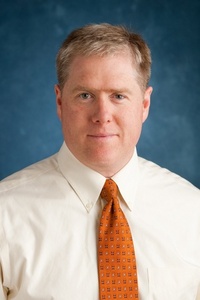
Sean Morrison, who directs the University of Michigan Center for Stem Cell Biology, had harsh words for lawmakers in the wake of an announcement that he will lead a new Texas institute.
Photo provided by the University of Michigan
“There are a small number of faith-based special interest groups that are attacking relentlessly. Relentlessly looking for ways to block these forms of medical research most people in the country feel should be supported,” he said. “They’re well-enough organized and sophisticated and have deep-enough pockets. What that means is we are constantly under attack.”
Morrison was a vocal leader in the successful effort to pass Proposition 2, the 2008 amendment to the state Constitution that allows embryonic stem cell research in Michigan. Leading up to the vote, he testified before lawmakers on the potential of the research and gave media interview after media interview explaining the science.
Since 2008, lawmakers and conservative-leaning groups have attempted to undermine the change, he said in an interview Wednesday.
The latest attempt is a set of new reporting requirements for embryonic stem cell research, which was tacked onto the higher education budget bill.
“It’s a way of making it more difficult for the University of Michigan,” he said. “And it’s unfortunate, because U-M is a spectacular place, and it’s a terrific environment in which to do research, but there are lots of ways in which the Legislature holds this place back.”
Despite progress made at U-M — including the recent creation of two new disease-specific stem cell lines - the debate isn’t going away.
At the heart of the controversy is the destruction of human embryos that occurs when stem cells are culled from them. Scientists point out that the embryos are unused and come from fertility clinics. Morrison said there are about 400,000 frozen human embryos nationwide at these clinics, and those used for research would otherwise be discarded as biological waste.
Scientists covet human embryonic stem cells for their ability to multiply in perpetuity and change into any cell type in the human body. Understanding how an embryonic stem cell determines its fate could give science the tools to alleviate human suffering and find new treatments and cures for cancer and conditions like Parkinson’s and Lou Gehrig’s disease.
Morrison works with less-controversial adult stem cells in the hope that understanding the mechanisms driving the cells will shed light on diseases and lead to more effective treatments for cancers like leukemia.
While working at U-M, he's tried to hammer home the message that all stem cell research needs to continue.
According to an MLive.com report, both the House and Senate spending plans for the state’s 15 public universities require that schools engaging in embryonic stem cell research file a report on those activities with the state Department of Community Health.
The reports have to include the number of human embryos and human embryo stem cell lines received by the university in the current fiscal year, the number of embryos utilized for research, the number of stem cell lines created, the number of embryos held in storage and the number of research projects underway, MLive.com reports.
State Rep. Bob Genetski, R-Saugatuck, who supports the reporting requirements, told the Holland Sentinel in April he wants to bring transparency to stem cell research through provisions in the higher education budget.
“It is important to know where the human embryonic stem cells are coming from and where they’re being generated,” he told the Sentinel. “We want to make sure the embryos are legal — that they didn’t come to us through the black market.”
Morrison calls that fear-mongering.
Gov. Rick Snyder's legal counsel told GOP leaders Friday that the reporting requirements are unconstitutional.
“There are already multiple forms of regulation that would prevent a black market, including the state Constitution, which makes it illegal to buy or sell a human embryo,” Morrison said.
Despite his frustration with lawmakers, the scientist is quick to say the reporting requirements were not part of his decision to leave. A $3 billion investment by Texas in cancer research connected to his new position was the main thrust for his move after 12 years at U-M. He said he’d like to see Michigan make the same kind of commitment to life sciences.
Morrison's loss will be felt, said Alan Saltiel, director of the Life Sciences Institute, the parent entity of the Center for Stem Cell Biology.
Morrison’s lab — and the millions of dollars his work brought to U-M — will go with him to Texas, along with at least 10 of 20 staff members so far. The center — which was an intellectual rather than a brick-and-mortar home for stem cell scientists — will continue. But it’s not yet clear if and when a new director will be hired, Saltiel said Friday.
Saltiel said despite the pending loss of a star researcher and attempts by lawmakers to force new reporting requirements, the Life Sciences Institute remains strong, protected by Proposal 2 and buoyed by a supportive academic environment.
“We have a number of young scientist members of the center off to a spectacular start and doing really well,” he said.
“If they reversed the decision (Proposal 2), it will rear its ugly head as a problem for recruiting, but right now, things are pretty good.”
He added that "everyone’s got problems,” — a reference to a federal judge’s 2010 ruling threatening to strip millions in federal funding from embryonic stem cell research nationwide, including at least 15 U-M projects. The matter is tied up in the federal appeals process.
The Life Sciences Institute is one of numerous homes for stem cell research at U-M. The A. Alfred Taubman Medical Research Institute — which recently received a $56 million injection in endowed funds from Taubman, a mall mogul and U-M dropout — strives to explore cutting-edge areas of stem cell research for diseases like Alzheimer’s and Lou Gehrig’s disease. The new disease-specific lines are the fruit of the U-M Consortium of Stem Cell Therapies.
And elsewhere in Michigan, Wayne State University, Michigan State University and Oakland University have their own stem cell programs.
It’s impossible to quantify the loss of one star researcher on the state’s bioscience industry, said Stephen Rapundalo, CEO of MichBio, a chamber of commerce of sorts for 240 bioscience businesses, the vast majority of which are in Michigan. A handful of MichBio members are stem-cell research spin-offs, thus far a fledgling industry. But they have increased in number since Proposal 2 passed in 2008, he said.
Lawmakers’ attempts to tack on additional reporting requirements, he said, give the impression that Michigan is "not open for business and not open-minded'' when it comes to scientific research. "Everything else being equal, people like Sean will pack up and go, and others may choose not to come here at all,” he said.
And everything else is not equal. Morrison points out that Texas and California have recently each made a $3 billion investment in stem cell research, creating an outstanding environment for science in spite of budget troubles.
“Michigan needs to decide whether it wants to compete in the life sciences or not,” he said. “If it doesn’t, fine. U-M will do the best it can without any help from the Legislature.
“You don’t compete by looking for ways to put stem cell biologists in jail.”
(The headline on this article has been corrected to reflect that Sean Morrison's remarks were directed at the Legislature in general. In reviewing our interview with him, he did not direct any criticism specifically at Republicans.)
Comments
bballcoachfballfan
Mon, May 23, 2011 : 6:26 p.m.
At some point in time, I hope people will stop thinking that "conservative" is something positive and proud while "liberal" is something to be ashamed of. At one point in history: Conservatives fought to keep slavery. Liberals championed its demise (don't use the Lincoln was a republican bit--different party back then. Plus, I am saying conservatives, not republicans). Conservatives fought allowing women to vote. Liberals championed the cause. Conservatives fought the idea of keeping our seniors out of poverty (social security). Liberals championed the cause. Conservatives fought the idea of providing affordable heath care for our seniors (or wait, they are again). Liberals championed the cause. These examples go on and on throughout our history. Nearly every significant social breakthrough we have had in this country was fought by the conservatives of that time while fought for and won by the liberals. I am not overly political. These are simply historical facts. I don't doubt this man would have gone to Texas anyway with that type of money being thrown around. But this stem cell issue is of critical importance to us right now and is being hijacked in Michigan by the conservative wing of the republican party. This should not be a political issue. Lives can be saved!
outdoor6709
Tue, May 31, 2011 : 12:28 a.m.
Liberal democrats fought the civil rights bills, required republicans to pass legislation over the objections of the Sr. Senator Gore, Robert Bird, the grand dragon. As for SS the origanial FRD plan was for private accounts. What year will SS and Medicare go broke? About 2025.
A Voice of Reason
Mon, May 23, 2011 : 6:06 p.m.
Nice "burn your bridge" article. What is the point of this article other than to hurt the State of Michigan and the Univesity of Michigan from receiving NIH future grants. Seems like a true leader would fight for the cause vs. cowardly move to a state that is more conservative than Michigan. Oh, ya- and speaking of values, not very smart to leave your two young children behind. You should not be judging right from wrong.
Ernest Payne
Mon, May 23, 2011 : 5:42 a.m.
Enjoy the slide to third world status as science packs ups and moves to Europe and Asia. Religious theocracies never do well. As examples look no further than Italy and Spain and the results of the counter reformation. I am also curious about the Universities position on sports. Is it continuing to fund sports while reducing the funding of education?
Wolf's Bane
Mon, May 23, 2011 : 11:49 a.m.
Recall Engler, I mean Snyder!
Jon Saalberg
Mon, May 23, 2011 : 1:49 a.m.
I don't know about the end being near - apparently not May 22, anyway. However I do believe the most recent state elections did bring on the end of reason in our fair state. With our current "red state" status, this esteemed research individual's departure, for Texas, no less, just shows that maybe Michigan will have a hard time moving forward, since the GOP's agenda doesn't really look forward - it 's only interested in adhering to an illogical, religion-tinged agenda. It's hard to look forward when you use a book (the bible) to find your logic instead of reason.
Chase Ingersoll
Mon, May 23, 2011 : 1:56 p.m.
Jon: I'm originally from Texas (specifically Dallas - where SW Med is located). While accusing GOP members of relying on facts, you yourself are ignoring any number of facts regarding the political environment in Texas as compared to Michigan and Dallas vs. Ann Arbor. Do some GOP voter vote on the Bible - sure. But do some DEM voters vote against what they think is in the Bible, even though they don't know what it actually says, and even though what they are voting for is not in the best interest of themselves or society - "you betcha".
Diagenes
Mon, May 23, 2011 : 1:12 a.m.
Looks to me that Morrison left for a bigger better deal and threw the "faith based organizations" under the bus because he did not want to tell people he was pulling a Lebron.
Wolf's Bane
Sun, May 22, 2011 : 6:59 p.m.
No one was 'Raptured' yesterday (at least that I know of), so we can pretty much put the question of God, Jesus, and the Holy Toast to bed for good! Kudos, to Sean Morrison for standing up to these religious zealots, let's move Michigan's economy forward by becoming leaders in Stem Cell technology!!!
Madhatter
Mon, May 23, 2011 : 9:31 p.m.
A poll of 1,022 randomly chosen adults, conducted by ABC News, shows how many, in several cases a majority, of religious people support stem cell research. The URL for the poll findings is at <a href="http://abcnews.go.com/sections/politics/DailyNews/poll010626.html" rel='nofollow'>http://abcnews.go.com/sections/politics/DailyNews/poll010626.html</a> In addition, the director of education for the National Catholic Bioethics Center conducted a presentation in 2006 that explained how the Catholic Church is not opposed to stem cell research. He also happens to "hold a doctorate degree in Neuroscience from Yale University, conducted post-doctoral research at Harvard Medical School, and studied theology and bioethics in Rome." The URL for that article is <a href="http://www.lifesitenews.com/news/archive/ldn/2006/jul/06072709" rel='nofollow'>http://www.lifesitenews.com/news/archive/ldn/2006/jul/06072709</a> . Bill Clinton, a leader in left-wing ideology, send out a press release in 1994 that read: " I do not believe that federal funds should be used to support the creation of human embryos for research purposes, and I have directed that NIH not allocate any resources for such research. In order to ensure that advice on complex bioethical issues that affect our society can continue to be developed, we are planning to move forward with the establishment of a National Bioethics Advisory Commission over the next year." The URL is <a href="http://clinton6.nara.gov/1994/12/1994-12-02-president-on-nih-and-human-embryo-research.html" rel='nofollow'>http://clinton6.nara.gov/1994/12/1994-12-02-president-on-nih-and-human-embryo-research.html</a> Is Bill Clinton a "religious zealot" because he cut off funding for the creation of human embryos and also cutting off federal resources? What if we applied your argument, is the U.S. lacking in stem cell research because of what Clinton did? I would also like to point out a more recent article that explains how the Vatican is investing in adult stem cell research. The URL for that story is at <a href="http://www.legatusmagazine.org/?p=4647" rel='nofollow'>http://www.legatusmagazine.org/?p=4647</a>.
Wolf's Bane
Mon, May 23, 2011 : 6:18 p.m.
Dear Madhatter, clearly, I am not going to debate you regarding your religious convictions because I am an atheist and therefore a non believer. However, I can offer you evidence (hard facts) that Michigan can be become a leader in Stem Cell research based on its many wonderful institutions of higher learning and research facilities. In fact, I have family members, friends, and neighbors currently employed by some of this first rate Michigan institutions all of which are receiving record amounts of federal and state grants to move stem cell research forward. So, how do these recent turn of events benefit Michigan, you may ask? Well, as these institutions file patents based on their hard work, they may spawn new and complex industries that need a place to call home. If our Governor plays his cards right, these start-ups could call Michigan home and therefore benefit our state! Finally, it is very difficult to take religion of any kind seriously, given that the fundamentalists amongst you 'predict' the destruction of the world? Cheers, no hard feelings there, Madhatter? Cheer up.
Edward R Murrow's Ghost
Mon, May 23, 2011 : 2:31 p.m.
"There are many people against stem cell research, some of which do not happen to be religious at all." Really? MANY???? Who would they be? The only ORGANIZED opposition embryonic stem cell research about which I am aware comes from religious zealots. So perhaps you might show evidence of MANY opponents to ESCR who are not religious? Good Night and Good Luck
Madhatter
Mon, May 23, 2011 : 1:53 p.m.
Your argument is moot because it is based upon logical fallacies.. First, you are using a hasty generalization/inductive fallacy that implies all people believing in God beilieve that the rapture was going to happen. The fact is, a few small group of people believed that the rapture was going to happen. Second, you are using a false dilemma argument that associates God with the rapture. You are trying to imply that God would have only existed if the rapture happened. Third, you are using a circumstatial ad hominem attack on "religious zealots" in order to make a factless argument look more beneficial. There are many people against stem cell research, some of which do not happen to be religious at all. I happen to believe in God and I am somewhat supportive of it. Those facts alone prove your assumptions are false. Fourth, you use a red herring argument to make people like your idea of stem cell research. You imply that Michigan can become a leader in stem cell research if we ignore the "religious zealots" and move forward with the research. What evidence do you have to back that up?
GoBlue1984
Sun, May 22, 2011 : 5:42 p.m.
Michigan is so screwed up. This state will never advance while the kind of groups that "constantly attacked" Dr. Morrison have power. Such a sad, screwed up state.
Chase Ingersoll
Sun, May 22, 2011 : 5:33 p.m.
I really don't understand the focus of this article juxtaposed against the U Texas Southwestern Medical Center press release from May 11 which states in part: "Dr. Morrison focuses his research on NON-embryonic stem cells" Also note sciencemag.org reprorter Joselyn Kaiser on May 13, 2011 on the subject of Morrison writes, "...But he [Morrison] admits that the Lone Star state may be no more welcoming [than Michigan] of research on embryonic stem cells..." and followed with" "Morrison told ScienceInsider he's not saying Texas is a better place than Michigan to do hESC research. "It's possible that there will be battles in Texas about stem cell research," he says. But he believes strongly that "Texas is clearly an environment that's more supportive generally of research innovation. Three billion [dollars] for cancer research is going to change the landscape." That infusion of cash is especially important as the budget of the U.S. National Institutes of Health (NIH) stagnates, he says." So here is a Canadian who has spent most of his time in the US at California Universities and then Ann Arbor, being reported as saying one thing to the Ann Arbor reporter, but another thing to another reporter. Come on Ann Arbor.com do your background and follow up research on these articles before you opportunistically blame Conservative Christian Right to Lifers for his leaving the U of M.
thorj97
Sun, May 22, 2011 : 10:39 p.m.
From the above annarbor.com article: "Despite his frustration with lawmakers, the scientist is quick to say the reporting requirements were not part of his decision to leave." Whom is aa.com blaming?
BhavanaJagat
Sun, May 22, 2011 : 5:03 p.m.
Trespass has presented a valid argument and reporting as demanded by Michigan State will not impose any form of burden unless you are a crook and would like to hide some basic information. However, my main concern is about defining the term 'Life'. We speak about 'Life Sciences' and never bother to define the word 'Life'. We need a basic understanding about Life and that understanding would provide the moral and ethical implications that come into play while we conduct research. Consciousness is the fundamental characteristic of Life. When consciousness departs, there is no Life and the entity is dead or non-living. For human life, the consciousness begins at conception and operates through all the stages of its existence as embryo, fetus, infancy, boyhood, adulthood, and old age. The single cell called Zygote is very unique and it arrives with a plan for its existence and its eventual dissolution. It is not surprising when I read Bible and note that human conception is initiated by a divine thought; often told as the story of Immaculate Conception. I am not a Christian and do not belong to a group and yet I support the view shared by Bible. If Zygote arrives as a conscious entity, I want to restrict Sean Morrison's Right to violate the Rights of a Conscious Entity.
Wolf's Bane
Mon, May 23, 2011 : 11:50 a.m.
Conscious Entity? Give me a break.
Enso
Sun, May 22, 2011 : 8:13 p.m.
You can't just pronounce things like "consciousness begins at conception" or consciousness = life. No one can even agree on a definition of consciousness. And, are you saying that things that are not conscious are not alive? You have a lot of sorting out to do in your thought process. Also, other animals are conscious, thus have life, thus are not to be infringed upon. Do you really uphold this in your own life?
Edward R Murrow's Ghost
Sun, May 22, 2011 : 3:33 p.m.
Early in the second millennium, the Islamic world was the hotbed of science and scholarship while Europe was a cultural backwater. Today it is a region in which many reject intellectual discourse and scientific discovery in favor of religious dogma. Sounds a lot like Michigan under the RepubliKan regime. Good Night and Good Luck
JSA
Mon, May 23, 2011 : 7:04 p.m.
You lost me. Why the RepubliKan comment? It makes you sound like Briegel. (I hope I spelled it right)
Edward R Murrow's Ghost
Mon, May 23, 2011 : 4:16 p.m.
JSA wrote: "It is a religious issue" . . . which is EXACTLY my point. Thanks! Good Night and Good Luck
JSA
Mon, May 23, 2011 : 4:12 p.m.
Ghost, Shame on you. It is a religious issue, not a political. You don't think Cathlolic Democrats oppose stem cell research or that non religious Republicans do support it? You don't usually post this kind or fuzzy thinking.
Technojunkie
Sun, May 22, 2011 : 2:52 p.m.
Embryonic stem cell research is the perfect government program. It promises to cure everything if we throw enough taxpayer money at it... eventually. And it agitates those scary Christians, always good for giggles in the faculty lounges. Meanwhile private sector research focuses on adult stem cells and produces useful results. I'd heard that Texas was losing its way and throwing $3B at embryonic stem cell research proves it. If it were really that promising Big Pharma and assorted startups would be funding it.
alan
Sun, May 22, 2011 : 2:17 p.m.
@trespass- The flaw in your analysis is that the university takes their share of research grants in order to provide the researcher with the facilities, heat, lights, accounting, non-research support personnel, etc. Some schools take less, some take more, but without the schools share there would be no research at all.
trespass
Sun, May 22, 2011 : 3:13 p.m.
Ed- but private industry is not exempt from property taxes and business taxes. They don't have state appropriations, low cost student labor, and charitable donations.
Ed Kimball
Sun, May 22, 2011 : 2:44 p.m.
Trespass -- when I worked in the private sector, our overhead rate was typically around 100% of direct costs. I.e., for every dollar charged directly by people working on the project, another dollar was spent on overhead: building, utilities, supplies, etc. Also, different organizations count different costs as direct vs. overhead. E.g., some count support staff time as overhead, others charge it directly to projects. That significantly affects overhead rates, but it has little effect on the total project expenditures.
trespass
Sun, May 22, 2011 : 2:29 p.m.
Baloney, I am not saying that no overhead should be paid but most industrial and foundation grants pay 25% or less. Universities will do research even if the federal taxpayer does not pay huge overhead costs.
lionslover
Sun, May 22, 2011 : 1:51 p.m.
Morrison to GOP: "you don't compete while looking for ways to put stem cell biologists in jail" if I would have said that A2.com would have censored me for being too inflammatory - or too political...
dogpaddle
Sun, May 22, 2011 : 1:35 p.m.
I'm with Chip and BillieR. It's sad when a leading scientist has to go to Texas to escape a form of religious persecution despite the fact that we still have the First Amendment that has "Congress shall make no law with respect to religion..." in its first words before "freedom to worship freely" (or not). Come to think of it, didn't Leonardo da Vinci face similar government intrusion and jail time when he opened up cadavers to prove that we have a circulatory system and a department that today we call "anatomy"? Oh, yeah, and we didn't fall off the flat earth at 6:00 last night, either. Just sayin'
Moscow On The Huron
Sun, May 22, 2011 : 1:28 p.m.
This is the way the country works, and the way the original thirteen states intended: If you don't like the way the people in one state decide they want things done, you are free, and even encouraged, to choose another state that better fits your own interests.
Chase Ingersoll
Sun, May 22, 2011 : 1:27 p.m.
In Ann Arbor, or Cleveland for that matter, being a "capitalist" and leaving for the money is not a"cool" thing to do, and Morrison, who probably has a lot of friends who would self characterize themselves as "socialist", is not comfortable with that aspect of his decision. Accordingly he raises a straw man of an issue even when we all know Texas is more conservative than Michigan on reproductive issues. The problem I have is the reporting by Ann Arbor.com. Did the reporter really challenge Morrison on anything he said, or was the reporter simply so happy to get an interview that they were not willing to risk asking any offending questions?
eagleman
Mon, May 23, 2011 : 6:13 p.m.
A2K, I think you overstate things a bit. Is abortion legal in Michigan? Yes. DO we permit research on stem cells? Yes. The counties outside of the population center are largely irrelevant--though I would still take issue with your assessment that they are "extremely right wing". If you are a communist maybe they are. But for the most partthey are not anymore right wing then the conservative parts of the east side of the state.Furthermore, they don't have the numbers to prevent any research. All they can do is Mr. Morrison is using this argument as an excuse for leaving for more money. That much is obvious. We live in a democracy. The majority rules and the majority have spoken on stem cell research. Mr. Morrison is lying to cover his money grab.
Chase Ingersoll
Mon, May 23, 2011 : 1:41 p.m.
Why I think it is a safe bet that Dr Morrison has socialist friends: 1. being in Ann Arbor, even I have socialist friends; 2. Morrison is from Canada and has then lived in academic cities in California and then here in Ann Arbor. Birds of a feather flock together and the majority of people/influences to whom he would have been exposed to in the university environment would have been the class of academic elites, of whom more than 90% are registered democrats and on any policy survey would more than lean in support of socialist policies. 3. using an interview in Ann Arbor blame the GOP in Michigan, but then giving a different reason in an interview in a science magazine and then stating in Texas that the overall business climate toward research is better, is evidence of his partisanship in Michigan and opportunism in Texas. Res Ispa Loquitur
thorj97
Sun, May 22, 2011 : 10:30 p.m.
As the article says, he works with adult stem cells. Chase, I'm not sure how you know how Dr. Morrison's friends would characterize themselves. Can you explain?
A2K
Sun, May 22, 2011 : 9:18 p.m.
Michigan is extremely right-wing outside of Wayne, Oakland, and Washtenaw counties...in fact, Michigan has some of the most rabid, virulent anti-choice people in the country -- check out the decisions passed by the GOP ruled legislatures on abortion issues over the last 30 years, they are some of the most draconian in the country.
Ed Kimball
Sun, May 22, 2011 : 2:41 p.m.
Chase -- Do "we all know" REALLY that Texas is more conservative than Michigan (outside Wayne, Washtenaw and Ingham counties) on reproductive issues? If so, why is Texas putting $3B into stem cell research?
outdoor6709
Sun, May 22, 2011 : 11:50 a.m.
I am curious, why is it that putting more reporting requirements on business, banks, oil companies, is a good thing and putting some reporting requirements on researchers is a bad idea? This is about money. The U of M could not put up the small fortune required for a new building, Texas could. U of M has its priorities, after all we are getting a new Chrysler Arana.
Tru2Blu76
Sun, May 22, 2011 : 5:57 p.m.
Well - businesses, banks, oil companies obviously commit a lot of actual, highly visible crimes. How many crimes of any kind do we know of which are committed by research institutions? And - what is the scale of damage created by research institutions? Comparatively - your question is like asking why we don't regulate lemonade stands but still regulate the quality of lemons.
MikeC
Sun, May 22, 2011 : 2:04 p.m.
A $3B investment is a little bigger than a $50M investment. Some would say that the former is 60 times bigger. A better comparison would be against something of similar magnitude.
DFSmith
Sun, May 22, 2011 : 1:30 p.m.
outdoor- the budget for the U-M Athletic Dept, is totally seperate from the budget of the rest of U-M.
BillieR
Sun, May 22, 2011 : 11:49 a.m.
He thinks he'll get harassed less by faith-based groups in TEXAS?
alfonso
Mon, May 23, 2011 : 10:45 a.m.
Ironic isn't it, that a scientist would have to travel to a Bible belt state like Texas to find academic freedom?
thorj97
Sun, May 22, 2011 : 10:26 p.m.
As the article says, he works with adult stem cells.
seldon
Sun, May 22, 2011 : 1:18 p.m.
Says something about the current climate in Michigan, doesn't it? I was thinking the same thing.
Chip Reed
Sun, May 22, 2011 : 11:09 a.m.
Religion is splendid for issues that science doesn't address, but it is troubling when people's pet theories stand in the way of important medical advances. I'm sure God gives each of us our own soul, but when exactly do we get it? A fertilized egg can become twins down the line. Are we to imagine that this (these) invisible-american(s) has (have) two souls? Little people are not being killed with stem-cell research.
DFSmith
Sun, May 22, 2011 : 1:29 p.m.
Good point, Chip.
trespass
Sun, May 22, 2011 : 11:07 a.m.
There is another lesson to be learned from this story. It is how compteting to recruit the few scientist who can get federal grants is driving inflation in costs at major research universities. UT Southwestern didn't just pay Dr. Morrison a big salary but they invested $3 billion in stem cell research. When they recruited the current Chairman of Pathology, they promised to build him an entire new building. There are deals like that going on many times each year at the University. This competition also drives the top salaries for both scientists and administrators. While the average employee's salary doesn't even keep up with inflation, overall salaries rise at three times the rate of inflation. Some of that money comes from grants but much of it comes from the general fund as well. The problem stems from overfunding of research at the federal level. For every dollar of grants given for the actual cost of research the US taxpayer gives more than $0.50 in overhead to the University (not including fraud and abuse). That pays for buildings, administrators, utilities, etc. That operating overhead is so attractive to those who run the university that it is the tail that wags the dog. It also drives up costs in the general fund that are paid by tuition and state appropriations. We need to look hard at how the federal government funds research and how it is affecting costs to students, state governments and federal taxpayers.
MikeC
Sun, May 22, 2011 : 1:59 p.m.
The problem with your rant is that overhead in commercial/industry is considerably higher -- about $0.20 for every dollar actually goes into a research budget. So, the overhead in academia is relatively small. We don't need a new committee, oversight board, task force, or report to look into this. Things like buildings and utilities cost money. The natural gas bill for my building on north campus is around $100k per year!
1bit
Sun, May 22, 2011 : 12:05 p.m.
Agree with you. Right now the government hands away billions of away in research dollars. This can be a good thing and helps develop new drugs, treatments and devices. However, if/when one of these comes to market, patients are charged an exorbitant amount ostensibly for R&D costs. Of course, the irony is that taxpayers helped offset the initial development costs (before the venture capitalists would help). It is time the government began asking for a return on its investment through either a share of profits, a buyout of its share in development, reduced costs, or all of the above.