

University of Michigan adopts $1.65B academic budget
- Related: University of Michigan raises tuition 2.8 percent for in-state undergraduates
- By the numbers: Tuition and budget changes at University of Michigan
University of Michigan's general fund is increasing by nearly 4 percent this year, reaching an all-time high of $1.65 billion.
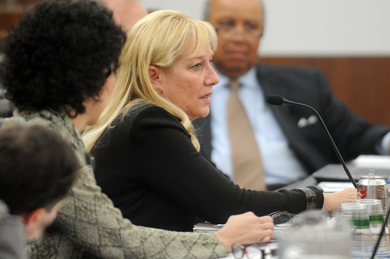
Regent Denise Ilitch was among the three votes against the budget.
U-M Provost Phil Hanlon said that roughly 65 percent of the budget will go toward staff compensation. Faculty and staff are expected to receive 3 percent and 2 percent raises next year, respectively.
The university's budget has increased more than 20 percent in the past six years, according to past and current U-M budget documents. Last year, it was $1.59 billion.
The budget passed the Board of Regents Thursday afternoon in a 5-3 vote, with board chair Denise Ilitch and regents Laurence B. Deitch and Andrea Fischer Newman voting against the budget.
Ilitch voiced frustration with tuition increases, saying they were causing higher education to become out of reach for the middle class
The 2012-13 budget includes $1.12 billion for academic units, an increase of $63.3 million, $252.9 million for administration offices —including the president, research, communication, financial, provost, development, general counsel, student affairs and secretary units— and $277.3 million in other expenses, including insurance, utilities, events and university-backed financial aid.
The top four funded academic units include: the College of Literature, Science and Arts at $338.5 million; the College of Engineering at $165.9 million; the Stephen M. Ross School of Business at $83 million; and the medical school at $82 million.
Financial aid received a 10 percent increase this year, rising to $144.8 million.
The budget reflects $1.16 billion in tuition and fee revenue, $273.1 million in state appropriations and $219.4 million in other grant money and other revenues.
U-M officials calculate that over the course of 11 years, state appropriations to the school have decreased by 178 million, after adjusting for inflation.
In the early 1990s, tuition and state appropriations contributed equal portions to the school's budget. Today, tuition accounts for roughly 70 percent of the budget, whereas state funds contribute 17 percent, according to university figures.
Kellie Woodhouse covers higher education for AnnArbor.com. Reach her at kelliewoodhouse@annarbor.com or 734-623-4602 and follow her on twitter.
Comments
Sparty
Fri, Jun 22, 2012 : 9:32 p.m.
MSU increases tuition 3.5%, looks like UM is holding the line in comparison.
trespass
Fri, Jun 22, 2012 : 11:40 a.m.
"Financial aid received a 10 percent increase this year, rising to $144.8 million" What they don't tell you is how we treat our veterans at UM with regard to financial aid. If an active duty soldier puts aside part of his pay in an education savings account, UM will make them spend all of their savings before they will give them a dime of institutional financial aid. This is despite the fact that congress said that money could not be held against the veteran for federal financial aid. I think our veterans deserve better than that from UM.
Ignatz
Fri, Jun 22, 2012 : 10:08 a.m.
I see that once again staff, and even faculty, are getting pay decreases.
Charley Sullivan
Fri, Jun 22, 2012 : 8:27 a.m.
$12K in-state undergraduate tuition for a U-M education remains one the best cost to quality ratios going among American colleges. And the $40K out-of-state is more than competitive. And now let the flaming about over-paid, under-working professors begin!
Evan Smith
Thu, Jun 21, 2012 : 10:56 p.m.
Urgh... 178 million dollars in lost state appropriations. No wonder why our tuition is so much higher.