

University of Michigan's top 16 execs collect $6.85M in base pay
University of Michigan's top 16 executives make $6.85 million in base pay, according to 2011 salary figures released today.
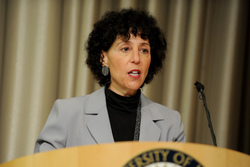
Ora Pescovitz receives the highest salary at U-M.
Angela J. Cesere | AnnArbor.com

Douglas Strong receives the 2nd-highest salary at U-M.
Mlive.com

David Brandon receives the 3rd-highest salary U-M.
AnnArbor.com

University of Michigan President Mary Sue Coleman receives the 4th-highest salary at U-M.
Melanie Maxwell | AnnArbor.com
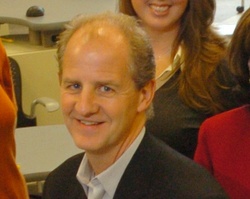
Erik Lundberg receives the 5th-highest salary at U-M,
Booth file photo

Timothy Slottow receives the 6th-highest salary at U-M.
AnnArbor.com

Philip Hanlon receives the 7th-highest salary among U-M administrators.
AnnArbor.com
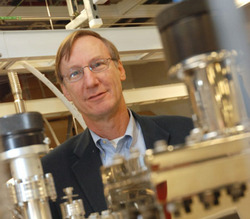
Stephen Forrest receives the 8th-highest salary among U-M administrators.
AnnArbor.com
Ora Pescovitz, executive vice president for medical affairs, topped the list at a base pay of $739,025, 2.5 percent above last year's $721,000. Douglas Strong, chief executive officer of U-M hospitals and health centers, is receiving a base of $612,000, up $12,000 from last year.
Pescovitz and Strong have led UMHS during the construction and opening of the $754 million C.S. Mott Children's Hospital and Von Voigtlander Women's Hospital and through tense contract negotiations with the U-M nurses union, which eventually resulted raising pay and benefits for nurses about 3.5 percent.
Pescovitz and Strong both receive deferred pay. Pescovitz gets $100,000 in annual deferred compensation. She also receives performance-based pay, which can reach $150,000 per year. Strong receives $60,000 in deferred compensation and is eligible for an additional sum based on his performance.
Athletic Director David Brandon is the third-highest paid official, making a base of $600,454, up about 4 percent from last year's $577,360 compensation. Brandon's compensation package also includes $100,000 in yearly deferred compensation. Brandon's contract allows him to earn additional compensation based on performance.
In his two years as director, Brandon hired football coach Brady Hoke (who makes about $3.25 million a year), orchestrated U-M's first-ever night game and restructured the marketing arm of the athletic department.
President Mary Sue Coleman comes in fourth, at $585,783, up 2.75 percent from last year's compensation of $570,105. Coleman donated her raise this year to a scholarship fund.
Coleman's total compensation package, however, exceeds $910,700. In addition to $175,000 in deferred compensation, a $100,000 yearly retention bonus and more than $50,000 in annual retirement pay, Coleman also gets the use of a car and U-M's 162-year-old president's house.
Coleman has also been reported to make about $230,000 for sitting on the board of Johnson & Johnson and another $137,000 for belonging to the board of Meredith Corporation, a media and marketing company.
Coleman has led the university since 2002. During that time the school's endowment has more than doubled. Recently, she launched a new program that will invest endowment funds in university start-ups and another initiative to promote sustainability on campus.
Erik Lundberg, the school's chief investment officer, ranks fifth in base pay at $575,000. Lundberg has received no raises in base pay during the past two years, but receives additional compensation based on the performance of university investments.
Lundberg manages the university's $7.8 billion endowment, which grew by a staggering $1.2 billion last year and is the seventh largest of any university endowment in the nation.
U-M Vice President of Research Stephen Forrest received the largest hike in base compensation. His salary grew 12.5 percent, rising from $324,826 last year to $365,348 this year.
That raise is due to a 2.3 percent merit increase and a contract change that adjusted his salary so that it is competitive with the market rate, according to the university.
Laurita Thomas. associate vice president for human resources, said top administrators saw increases this year that paralleled staff and faculty increases.
"In the general scheme of things, it's a modest increase," she said. "We wish we could do more but that would not be responsible."
For example, Coleman's 2.75 percent increase was her lowest in years (except in 2009 when she chose to freeze her pay, along with several other administrators). In previous years, Coleman's increases have been 3 or 4 percent.
Aside from Forrest, Strong, Brandon and Lundberg, the average salary increase among top administrators was 2.7 percent.
Faculty salary increases averaged 2.8 percent in 2011, up from the 2.6 increase seen in 2010. Merit increases for deans, which do not include contract adjustments, averaged 2.9 percent.
However university staff saw a slight dip in their increase, according to university figures. Last year, salaries rose 2.3 percent for staff. This year, they rose 2.2 percent.
Thomas said that paying administrators competitive rates is essential to keeping U-M competitive as a university.
"We’re trying to maintain competitive salaries but keep costs as low as possible," she said, adding that salary increases represent a continuing "investment in our leadership, faculty and staff."
Meanwhile, tuition this year increased by 6.7 percent and state funding declined by more than $54 million.
Here's a list of top U-M executives ranked by their base pay:
- Ora Pescovitz — executive VP for medical affairs — $739,025
- Douglas Strong — CEO of U-M hospitals and health centers — $612,000
- Dave Brandon — athletic director — $600,454
- Mary Sue Coleman — president — $585,783
- Erik Lundberg — chief investment officer — $575,000
- Timothy P. Slottow — executive VP and chief financial officer— $551,668
- Philip Hanlon — provost and executive VP of academic affairs — $485,040
- Stephen Forrest — VP for research —$365,348
- Jerry May— VP for development —$355,136
- Suellyn Scarnecchia — VP and general counsel — $312,206
- E. Royster Harper — VP for student affairs — $301,168
- Daniel E. Little — U-M Dearborn chancellor — $290,388
- Cynthia Wilbanks — VP of government relations — $278,641
- Lisa Rudgers — VP for global communications and strategic initiatives — $270,000
- Sally Jo Churchill — VP and secretary for the university — $262,642
- Ruth J. Person — U-M Flint Chancellor —$261,375
Kellie Woodhouse covers higher education for AnnArbor.com. Reach her at kelliewoodhouse@annarbor.com or 734-623-4602 and follow her on twitter.
Comments
BhavanaJagat
Thu, Dec 22, 2011 : 1:23 a.m.
What is Satisfaction in Life? I read this story to understand the human need for happiness and satisfaction in life. There is a natural desire in all of us to acquire wealth, material possessions, social position, social status and social recognition. But, man is a social animal and he/she has to find happiness and derive satisfaction in life through social interactions. All human institutions, social structures and organizations both public and private depend upon a number of people participating in a collective effort. This tendency to pay very high wages to people who are in executive positions or leadership positions may not really help them to find satisfaction in life. In this discussion, several readers have pointed out that all of these executive are very likely to find other lucrative opportunities that may pay them more for the job they perform. Apparently, it reveals that they have not established the degree or amount of remuneration they need to feel satisfied with what they earn. Hence, I would respectfully ask each of them if they find satisfaction from the food and drinks they consume to perform physical or mental work in life. I find perfect satisfaction in my life from what God has provided me as food and drink and do not experience hunger or thirst. These people are still thirsty for raises in personal income at the end of each year and demand a bonus and a increment in salary. How do they quench their thirst?
Let me be Frank
Wed, Dec 21, 2011 : 11:16 p.m.
Hey Rickie Synder, Instead of taxing Michigan's seniors who are on fixed incomes you should be sucking funds from state supported instituations that clearly are awash in excesses. Are we the people collectively learning anything from this transparency? While recent and new hires are in the auto industries are making ~40% less pay then their senior co-workers, employees elsewhere have had their pay frozen, etc. etc. How is this being sensitive to the community and Michigan...now we can see why there was a proposal to have U of M converted to a private institution.
Sparty
Thu, Dec 22, 2011 : 6:30 a.m.
Actually that proposal may have been a UM proposal, as it would eliminate alot of State mandates, regulations, and foolish interference in the mission of the university. Given the relatively small percentage of state aid, going private may not be a foolish thing to consider!
Sparty
Wed, Dec 21, 2011 : 8:42 p.m.
Perhaps increases in wages were awarded because the individual University executives met or exceeded results on performance goals set by their direct Manager or Regents, as the case may be (beyond the reduction in State aid, which may not have been a factor in their own individual performance assessment at all)? Or is that too logical an assumption to ponder?
15crown00
Wed, Dec 21, 2011 : 6:43 p.m.
salaries to high.raises way to much.
Wolf's Bane
Wed, Dec 21, 2011 : 6:16 p.m.
Obscene for a state school. Really obscene.
njoy1
Wed, Dec 21, 2011 : 5:30 p.m.
"Brady Hoke... makes about $3.25 million a year." It seems this only reports executive pay. So who are the highest paid employees?
Mark
Wed, Dec 21, 2011 : 4:38 p.m.
Yes, when we rarely get 2% raises that do not even cover the increase in inflation, us low-end employees have had stagnant wages for the past decade.
BhavanaJagat
Wed, Dec 21, 2011 : 3:46 p.m.
The Art of Living : Dr. Oliver Wendell Holmes, Professor of Anatomy and Physiology, Dean of the Harvard Medical School(1847 to 1882) had commented, "To live is to function" and "that is all there is in living." Since I am given this opportunity to know as to how they make their living, please also let me know as to how much they need to eat and drink to perform those living functions.
Harry Potter
Wed, Dec 21, 2011 : 3:16 p.m.
You must realize that only nine of the top 16 are even in the one percent.
walker101
Wed, Dec 21, 2011 : 2:48 p.m.
What else can you say. <a href="http://www.hark.com/clips/cwnjsbgykq-hail-to-the-victors-short" rel='nofollow'>http://www.hark.com/clips/cwnjsbgykq-hail-to-the-victors-short</a>
Geoff Larcom
Wed, Dec 21, 2011 : 2:40 p.m.
It should be noted that such salaries are released by U-M each year in an active effort of transparency. Also, the truest indicator of salaries is overall W-2 figures, not base salary. Many more doctors and surgeons would be on this list were those figures to be used.
rulieg
Wed, Dec 21, 2011 : 2:55 p.m.
Geoff--you make it sound like the U releases these figures because they're nice guys who care about transparency. they don't--the figures are released because they have to be by law.
jgold47
Wed, Dec 21, 2011 : 2:23 p.m.
think we should have a new rule. If you post on a salary article, you should have to put your job title, and your salary so we can all take shots at you. All this 'transparency' does is scare good people away from public sector jobs. Where they are needed the most. We live in a free market and that is what dictates what an appropriate salary is. If you don't like it, I am sure there are a few communist countries we haven't toppled yet that would be glad to take you. I'm sorry, but being hateful of someone elses success is un American. Land of the free and all, you know.
Rose Garden
Wed, Dec 21, 2011 : 2:18 p.m.
Truly, it takes intelligent, experienced, competent people to run a university with the stature of U-M. If we lowered their salaries, they would go to another institution. We could hire replacements for less money, but would they do as good a job? Could the new Chief Investment Officer raise the endowment fund by $1.2 billion in a year? I do think Hoke's salary of $3 million is outrageous but U-M's football performance is important to donating alums, current students and fans (not so much to me).
bluemax79
Wed, Dec 21, 2011 : 1:41 p.m.
people complaining about salaries need to realize that is the American way get educated and keep educating yourself, work your way to the top. not the way some want it which is GIVE ME MINE I DESERVE IT!!! these people are the top people at the TOP INSTITUTION in the state and one of the best in the country you have to pay the best to be the best.
annarbortownie
Wed, Dec 21, 2011 : 11:20 a.m.
This salary level is being carried on the backs of students. They work multiple jobs and take HUGE loans in order to obtain a higher education degree. One can only hope that they will even get a job with that cherished, EXPENSIVE, Michigan degree. I believe in higher education but something has gone a stray. These salaries along with CEO's in corporate America are out of whack.
Publius the Younger
Wed, Dec 21, 2011 : 4:58 a.m.
To really understand this numbers they have to be compared with the numbers of similar positions at other institutions along with the cost of living. I bet they like to compare themselves to institutions in areas with a much higher cost of living. Compared to Boston, San Francisco, or LA, Washtenaw county is a pretty cheap place to live.
Camp Comments
Wed, Dec 21, 2011 : 4:53 a.m.
Strong is paid substantially less than DMC CEO Duggan. See today's Freep: <a href="http://m.freep.com/localnews/article?a=2011111220062&f=1232" rel='nofollow'>http://m.freep.com/localnews/article?a=2011111220062&f=1232</a>
Nick
Wed, Dec 21, 2011 : 4:49 a.m.
2.2% for staff raises is shameful. People have spent their entire working careers taking care of administrators and faculty. Why should they receive less? Are they saying their contribution is less valuable?
rulieg
Wed, Dec 21, 2011 : 2:52 p.m.
yes, that's exactly what they're saying. at the U, faculty is king, students are princes and princesses, and staff is forgotten.
Veracity
Wed, Dec 21, 2011 : 4:15 a.m.
In actual dollars, a 2.75% salary increase this year could exceed a 3% salary increase a year or two in the past.
Veracity
Wed, Dec 21, 2011 : 4:14 a.m.
I thought that Brandon's and Hoke's salaries came out of athletic revenue which is separate from University finances and includes revenue generated by different sports though primarily from football.
Mike S
Thu, Dec 22, 2011 : 7:23 p.m.
That is true, this article fails to mention which parts of the University are self-funded (use no tuition or tax money): <a href="http://vpcomm.umich.edu/pa/key/understandingtuition.html" rel='nofollow'>http://vpcomm.umich.edu/pa/key/understandingtuition.html</a>
trespass
Wed, Dec 21, 2011 : 4:10 a.m.
If you are outraged it is your own fault. Vote for new Regents who will not keep approving these exorbitant salaries but in the last election both incumbents were re-elected. This time only Libby Maynard is expected to run for re-election. She should not even be nominated by the Democratic party, let alone re-elected by the public.
peg dash fab
Sat, Dec 24, 2011 : 6:26 p.m.
define exorbitant in the context of salaries
Kafkaland
Wed, Dec 21, 2011 : 3:35 a.m.
For all of those who comment on the "top 1%": To be in the top 1%, you need to have an income of at least 350k. There are nine individuals on this list, although, if you add bonus pay, the number would probably be a bit higher. UM has about 30, 000 employees, so you would expect that there would be 300 individuals in the top 1%, but there are way fewer. So, if anything, this tells you that it is very hard to make a top income at UM, and it's actually very hard to argue that the very top employees are overpaid.
joe.blow
Wed, Dec 21, 2011 : 3:32 a.m.
You mean you pay the executives of a multi-million dollar company so little? Some of those listed are physicians, which means 15 years of college and beyond of education. Less that 1% of the population has gone to school that much.
treetowncartel
Wed, Dec 21, 2011 : 2:44 a.m.
Its great, to be, a michgan Wloverine....seriously folks, how can you make more than your boss? Brandon and Coleman are underpaid, please donate money to increase their stipend.
treetowncartel
Wed, Dec 21, 2011 : 3:43 a.m.
Wow, my typing sucks, I wish I was never forced to spend that horrific time of my life at a chartered public school.
treetowncartel
Wed, Dec 21, 2011 : 3:41 a.m.
Dave Brandon probably got his last jobs as a result of the phenomemon that is the U of M athlete networking connection. CEO's make way too much money, sure they desrve a nice pay day, but they are only signing of on research and decision making of those beneath them , which relies on the production of the people underneath them. Riddle me this Billy Bob, if all of a sudden every Dominos Pizza franchise doesn't have any delivery drivers to their pizzas one day how much is Dave Brandon worth that day one job?
Billy Bob Schwartz
Wed, Dec 21, 2011 : 3:15 a.m.
Well, Dave Brandon was paid tons more at his last job, and is running a huge business. I'm not concerned about that. This is a huge university with huge operations of all kinds, and the hospital is world class. How much should a hospital administrator who is CEO of a world class hospital make?
angry bird
Wed, Dec 21, 2011 : 2:15 a.m.
Yes, 8% of the University's budget comes from the State of Michigan.
Ralph
Wed, Dec 21, 2011 : 2:07 a.m.
No recession here! Just one of these people make more than the entire staff in my office.
annarbor28
Wed, Dec 21, 2011 : 12:50 a.m.
There is no way that these administrators deserve this, plus they get huge bonuses, and retirement account contributions. This is a state university in the middle of hard times. The state needs to take over, like they are doing in Detroit. I am especially ashamed of the doctors who take this much compensation. Is this what they went into medicine for? There are children dying all over the world, with doctors and nurses sacrificing to serve. And these physicians are earning so much to go to meetings? C'mon, this is a scandal.
Billy Bob Schwartz
Wed, Dec 21, 2011 : 3:11 a.m.
Doctors who went into medicine to make piles of money. I'm shocked, I say, shocked!! When did you last meet a making-ends-meet doctor who hadn't lost his license?
gonefishing
Wed, Dec 21, 2011 : 12:21 a.m.
these folks should be able to make as much money as they possibly can , however I do not support these folks using any of my tax money---of course they have no comment about where their money comes from---this is another form of welfare---Educational Welfare and why do you suppose they have all landed here at a taxpayer supported university--It is much more difficult to work in the private sector and not be held accountable---what a wonderful scam----Bernie Madoff would be proud to hang out with them----
calmic
Tue, Dec 20, 2011 : 11:17 p.m.
How about changing UM motto to "Leaders and Best Paid". Fortunately, I no longer work at UM, but I worked there several years ago for a division that was credited with saving several million dollars in utility costs -- yet several of us did not receive ANY raise one year (not even cost of living) , while our boss Tim Slottow received a 14% raise. Occupy the Fleming Building anyone?
peg dash fab
Sat, Dec 24, 2011 : 6:24 p.m.
that would be lying.
Barb
Tue, Dec 20, 2011 : 11:16 p.m.
I think the contruction dept makes way too much money also, they should all get pay cuts. They waste too much time going to lunches and chit chatting on cell phones and facebook
Arborcomment
Tue, Dec 20, 2011 : 10:57 p.m.
We need to help Mary Sue. The President down the road in Ohio makes more. He was #1 a few years ago at $1.3 Million. She has not caught up yet! Come On Blue!
xmo
Tue, Dec 20, 2011 : 10:50 p.m.
Do these people work on Wall Street? Theses people are balancing their budgets on the backs of the Middle Class College Student!
Sparty
Tue, Dec 20, 2011 : 10:47 p.m.
Ok, not surprising to see the ranting that has taken place here. How about seeing some market based data here to compare against these salaries. How do these salaries compare against these individual's peers at similarly size Public Universities in Michigan and across the United States? Shouldn't that be the true measure of competitive pay practices? Since we recruit for these positions nationally and others recruit these people from us to fill their positions, let's use fact based data instead of trying to incite those who choose not to use reason.
Arborcomment
Thu, Dec 22, 2011 : 10:30 p.m.
Rob, the link provided was for your benefit to compare as requested. You will note my original post used the words "State legislatures" (s) (plural) as endemic of the private/public comparison and associated spiral bidding wars that result - of which you seem to indicate support. The questions regarding the value of these bidding wars remain - let us know what you find out.
Sparty
Thu, Dec 22, 2011 : 6:18 a.m.
I think my point has been made about how some post data with incomplete or partial information with the intent to mislead, and that once provided with complete information actually leads to the truth and conclusions opposite of where the original poster tried to mislead them
Arborcomment
Thu, Dec 22, 2011 : 12:10 a.m.
Couple of typos lTG Campell USA is their commander.
Arborcomment
Thu, Dec 22, 2011 : 12:08 a.m.
Rob, you will see in my comment that I did mention PRIVATE universities. Read more, type less. Amazing selectivity on his Rob. Surely these public servants can get out of the evil 1%? Maybe down to 3-5%? And while you are comparing, and must keep up with the other schools ranked 1-4, enlighten us exactly what that O$U president does that is worth and extra +$300k more than Mary Sue or what Mary Sue is not doing to make it even. Perhaps you have a figure in mind of the $ amount required to keep that "talent pool" from drying up. How much does it take for a dedicated public servant to lead a world class organization? You can begin your search by looking up the name Don Campbell he is responsible for the care, feeding, shelter, operations, and equipment for around 40K people and their families over 5 US States. There are a lot of Don Campbells out there, I'll make your search easier: google 3rd Corps United States Army. lTG Ca,pbell is there commander. He makes less than the UM Police Chief (when you can keep one).
Sparty
Wed, Dec 21, 2011 : 4:28 p.m.
This survey link fails to mention that that the referenced article also indicates that a major survey also reveals that Private University President's compensation averages $100,000 more than Public University Presidents. In the 2007-2008 survey in which Ms. Coleman's compensation was #5, Ohio State, Northwestern, Florida State, and University of Florida had compensation above her's. Should we pay less? Perhaps some feel that in a noble experiment we should pay less and the rest of the nation will follow our lead and will refrain from poaching our talented executives? LoL.
Sparty
Wed, Dec 21, 2011 : 3:30 a.m.
Wonderful, you all agree. I do agree with you that market based pay hold be the primary driver of competitive compensation decisions for new hires!
Billy Bob Schwartz
Wed, Dec 21, 2011 : 3:09 a.m.
If this is a valid way to evaluate the pay, then isn't it also the way to evaluate AAPS administrators and the four teacher/coaches? Let's have comparison with other school systems in the country with similar cities.
Michigan Man
Tue, Dec 20, 2011 : 11:36 p.m.
Rob - Fine with me if any of them want to leave U of M - The only two I would keep are David Brandon and Brady Hoke - if the academics want to book - fine with me - many more where they came from!
Arborcomment
Tue, Dec 20, 2011 : 11:16 p.m.
Here you go Rob, it's an older link but lays it out nicely. Could even prove your point... If it was valid. The Occupods were almost getting around adding this to their arms long list of greviences when it got cold. They are Public Employees. Regents, assisted by State legislatures fell into the same hole you are heading into. "We must pay John Doe big bucks to compete with (insert various Ivy league PRIVATE schools here) or we are doomed! <a href="http://images.businessweek.com/ss/09/02/0216_college_pres/6.htm" rel='nofollow'>http://images.businessweek.com/ss/09/02/0216_college_pres/6.htm</a>
Michigan Man
Tue, Dec 20, 2011 : 10:42 p.m.
Looking like the 1% crowd. Where is the Ann Arbor outrage? Who said left democrats don't like money? Academic freedom pays pretty well by these numbers. These numbers have been available to the public for years so try not to be shocked - The smartest people in the USA, Ann Arborites, have had access to this data for quite sometime - would now be interested in looking at their record of charitable giving, although I believe that is private (as it should be) information.
Cash
Wed, Dec 21, 2011 : 1:22 a.m.
Left Democrats??? Bwahhaaaa...that's a good laugh. Apparently you haven't seen MSC and Snyder together. Best buddies. You could NOT be further off the mark.
Olan Owen Barnes
Tue, Dec 20, 2011 : 10:42 p.m.
University Greed? - the Occupy movement skips the University.
nekm1
Tue, Dec 20, 2011 : 10:17 p.m.
How about posting ALL of the perks, like the 401k match? Expenses covered? And we wonder why the students (i.e., parents of the students) go into hock each year to cover the cost of rising tuition? Where is it written that raises should happen every year? Why retention bonuses? What the heck are those? Really? What happens when Superintendents get those in their public school contracts and then bolt anyway? Wake up taxpayers and students...this isn't Wall Street greed. This is higher education greed. Same thing, just hidden better. This is YOUR money. How about occupying U of M and asking some tough questions. This is outrageous...period.
peg dash fab
Sat, Dec 24, 2011 : 6:22 p.m.
1. staff benefits are summarized here <a href="http://www.drda.umich.edu/proposals/budgets/staff_benefits_table.html" rel='nofollow'>http://www.drda.umich.edu/proposals/budgets/staff_benefits_table.html</a> 2. raises happen annually in part to keep up with increases in the cost of living. 3. retention bonuses are sometimes used to retain faculty and staff who receive outside offers. what's missing in nekm1's screed is any evidence that highly compensated faculty and staff are overpaid compared to their market rate. just sayin'.
maestra27
Tue, Dec 20, 2011 : 9:53 p.m.
Reading this article reminded me of the one that was recently published titled, "59 Ann Arbor schools employees topped $100,000 in annual pay in 2010." Many people commented on how outrageous the salaries were for those who are operating the public school here in Ann Arbor. Comparatively, the administrators in the public school system are making peanuts compared to those running our public university. Without (K-12) public school employees, kids would never even make it to the university level. Kind of puts things in perspective, don't you think? <a href="http://www.annarbor.com/news/59-ann-arbor-schools-employees-top-100000-in-annual-pay-in-2011/">http://www.annarbor.com/news/59-ann-arbor-schools-employees-top-100000-in-annual-pay-in-2011/</a>
Mike K
Tue, Dec 20, 2011 : 9:26 p.m.
Wow - more 1%'ers! That's some jack. And one wonders why health care is so expensive to the average working person. They need to be "Occupied".
Mike K
Tue, Dec 20, 2011 : 11:58 p.m.
Oh. Didn't know there were two sets of rules. Silly me.
Arborcomment
Tue, Dec 20, 2011 : 11:22 p.m.
These are the "good" one percenters Mike.
Carly
Tue, Dec 20, 2011 : 9:21 p.m.
This is really remarkable to read, I figured that these executives and vp's made some good money but this is just outragous. I am a student at UM-Flint and from a students point of view, I am just disgusted with the amount that UM is forking over for these people. I agree with the previous comment that said, why dont we show the top lowest salaries along with the highest salaries and see the comparisons. That amount of money is the biggest waste of money. The UM should really start re-evaluating the amount of money that goes into these salaries and start distributing it to those staff and facility members that dont even get paid the percent increases that these executives got.... Carly
DonBee
Tue, Dec 20, 2011 : 9:20 p.m.
That is $165 dollars per enrolled student.
grye
Tue, Dec 20, 2011 : 9:15 p.m.
I must admit that 12% raises for individuals already earning salaries above $200,000 is too much. Often these salary increases will be larger that the starting salary of much needed help. The U of M administrators need to take a long look in the mirror.
applehazar
Tue, Dec 20, 2011 : 8:47 p.m.
Outside board stipends should be paid back to the University if any of the meetings were held on Paid University time - that is only fair since University work cannot be done while attending outside meetings. If all is taken on personal unpaid time - then ok - hmmmmmmm
trespass
Wed, Dec 21, 2011 : 4:07 a.m.
The University policy is that all faculty can have up to 4 days per month to do private consulting. Some have outside start up businesses. Some serve on boards. Some serve on advisory panels. This is not only done on University time but in many cases it actually cheats the taxpayers because they charge grants as if they were working a full schedule when they may only be working 80% (it doesn't matter if they work more than 40 hours per week because grant rules say however many hours you work that is your 100% effort.
David
Tue, Dec 20, 2011 : 8:43 p.m.
Wait! How much does Brady Hoke make? HOW MUCH!!!!!
Sparty
Wed, Dec 21, 2011 : 8:34 p.m.
And you know Brady would have come here for half his compensation how? Facts please! Did you have a conversation with him in which he declared this? Receive an email to this effect? Please advise exactly where you got this piece of wisdom.
ez12c
Wed, Dec 21, 2011 : 12:58 p.m.
Hey David Briegel that'd catch you a lot a heat. We want a coach to make $7.40 per hour with no OT. Like the President, chancellors and VPs. Oh and lets not forget that the guy who earned the endowment another $1.8Billion shouldn't make more than $7.40 per hour. LOL
David Briegel
Tue, Dec 20, 2011 : 10:54 p.m.
And he would have come here for HALF that much!
pegret
Tue, Dec 20, 2011 : 8:43 p.m.
Maybe you could print the 16 lowest-paid employees, along with their salaries, so we can see how top executives' salaries "parallel staff & faculty increases" according to Laurita Thomas. When you're making under $27,000 a year, a 2.2% increase doesn't even cover the yearly increase in parking, let alone health care increases. The 2.75% increase that Mary Sue received comes to more than half of many employees' salaries. Just like almost all of our elected officials, these top administrators are way out of touch with how most of us live.
leaguebus
Tue, Dec 20, 2011 : 8:36 p.m.
Our new national motto, "them that's got is them that gets" . No 12.5% raises for staff?
ez12c
Tue, Dec 20, 2011 : 8:50 p.m.
I'll bet if you through the list of all staff you will find some 12,5% and better.
shutthefrtdoor
Tue, Dec 20, 2011 : 8:31 p.m.
Why doesn't this surprise me??? Correct me if I'm wrong...but doesn't UM take tax payer money?
shutthefrtdoor
Thu, Dec 22, 2011 : 4:49 p.m.
Well Rob...since you piped in I'll give it a whirl. My response goes back to my original post. Since the university is partially funded by "US" and Snyder is imposing mandatory cuts on everything else...I guess it is pretty difficult to "ponder" as you put it. But...since these are the "1%ers" it doesn't surprise me. Priviledge has it's place I guess. And puleeze...give me a break on "performance targets" that's a fancy name for the "good ol' boy's and girl's" club in my opion...unrealist bonuses and stipends created based upon made up targets and goals to reward each other and perpetuate the ongoing class division driven by smoke, mirros, and "kool-aid". Am I jaded??? absolutely...with good cause.
Sparty
Wed, Dec 21, 2011 : 8:41 p.m.
Perhaps increases in wages were awarded because the individual University executives met or exceeded results on performance goals set by their direct Manager or Regents, as the case may be (beyond the reduction in State aid, which may not have been a factor in their own individual performance assessment at all)? Or is that too logical an assumption to ponder?
shutthefrtdoor
Tue, Dec 20, 2011 : 9:07 p.m.
And by the way "ez"... if the school got 54M less; why pray tell, didn't the top paid take less as well? You are quick to jump in...so I'd like an intelligent response if possible...
shutthefrtdoor
Tue, Dec 20, 2011 : 9:04 p.m.
What kind of remark is that??? It was a rhetorical question... where on earth did you find "cheating on taxes?"...oh nevermind...I have a pretty good idea.
ez12c
Tue, Dec 20, 2011 : 8:54 p.m.
duh! That's why it is a State University and not a private one. So yes, it does and in fact UofM received $54M less this year. Are you holding out on the State by cheating on your income taxes?