

Borders stores too costly for Ann Arbor bookseller as rents climb, sales fall
Less than a year ago, Borders Group Inc. officials announced in their annual report that they were committed to their retail stores.
On another page of that report were the company’s obligations based on its leases: By 2010-2011, annual lease costs will be $562 million. And by 2041, that number climbs to $1.248 billion.
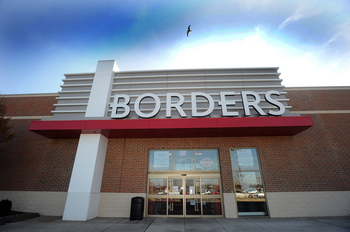
AnnArbor.com file photo
And those are on annual U.S. sales that in 2008 were $3.11 billion and - as reported over the past year - declining.
Still, the chain focused on stores.
“Our physical stores ... remain integral to our future success,” the report stated. Operational improvement would be a part of that.
Officials concluded by saying, ““We remain dedicated to … offering our customers a rich shopping experience in a relaxing, enjoyable atmosphere.”
Those words may offer some comfort to the estimated 20,000 plus employees that staff stores across the U.S.
And it may sound like it bodes well for the Ann Arbor area, which is home to the flagship store in downtown Ann Arbor and two large-footprint stores in shopping centers near both the east and southwest borders of the city. Property taxes alone on those stores generate more than half-million dollars in revenue.
Yet as Borders officials rolled out their corporate job cuts on Thursday, cuts on the store level were absent.
Officials said “there are no plans for widespread store closings,” yet they also told employees in an internal memo that changes were likely coming to stores next.
“We are in the process of evaluating our store payroll and expect to make changes in our stores over the coming weeks,” according to the memo from Shereen Solaiman, senior vice president of human resources.
Those changes, based on Borders’ past moves, likely will involve store closings. That’s how it handled trimming low-performing stores in the Waldenbooks chain and it’s been closing individual stores based on various criteria on an ongoing basis.
But as the chain deals with rapid revenue declines and an industry overhaul with the emergence of mass-market electronic readers, Borders is not giving the impression that it is adjusting its store footprints to align with what many experts say it needs to survive: many titles available to download on a quality e-reader, none of which take up physical space in a retail location.
Secondary to that, experts point to, are online sales - which are dominated by Amazon.com. That’s obviously another area that won’t affect store space needs.
So that leaves Borders, grappling with declining sales, making decisions about stores.
The focus on creating a core environment for “bookies” sounds like a strategy consistent with the chain’s original mission. And it’s one that its employees - still known as book-lovers - should be able to deliver.
Yet is Borders - already behind the industry curve on e-readers and online sales - committing to an already-outdated footprint?
“Superstores clearly won’t work,” said retail consultant Ed Nakfoor of Birmingham, speaking of the respective futures of Borders and its competitors.
“They are not going to be able to sustain that kind of square-footage,” Nakfoor said. And the key reason: Their space is used to house merchandise facing an increasing degree of obsolescence.
“Bookstores today,” Nakfoor said, “are mimicking the record stores of several years ago. And look what happened there.”
It’s been two years since Borders rolled out its new superstore concept in Waters Place, the Pittsfield Township shopping center near Ann Arbor-Saline and Lohr Road.
And the chain continued to roll out the large-footprint stores, which average 24,700 square feet - with, on average, 13,100 square feet of that devoted to books. The largest superstores carry 192,000 books.
But the stores also contain music and movies - categories the store downsized by the 2009 holiday - along with stationery, a coffee shop, and a newsstand. Growing categories include teaching materials and children’s books.
Nakfoor looks at the stores and sees too much clutter from incidentals that don’t boost the book-buying experience.
Even Borders’ own data shows that the bigger footprints aren’t as efficient in generating sales as its smaller stores.
On average in 2008, superstores generated $203 in sales per square foot. Borders will be closing 67 percent of its Waldenbooks stores - which generated an average $266 per square foot.
On an operational basis, those stores - mostly based in shopping malls - may be more expensive to operate.
But as Borders focuses on refocusing its mission in its large-footprint stores, it also has to confront its real estate realities: Its lease obligations soon will be over $500 million per year.
Those leases are for stores that appear too big for struggling player in the book industry to sustain.
And that may be a reason for the chain to keep ignoring rumors that it will have to liquidate and instead focus on bankruptcy reorganization. That would allow the bookseller to shed those lease obligations that are keeping it from “right-sizing” itself.
There are plenty of persistent rumors that Borders eventually will have to liquidate.
But a better bankruptcy route may be a Chapter 11 reorganization that would allow the bookseller to shed those leases that stand in the way of “right-sizing” itself to survival.
Paula Gardner is business news director at AnnArbor.com. Contact her at 734-623-2586 or follow her on Twitter. Sign up for the weekly Business Review email from AnnArbor.com, distributed every Thursday, here.
Comments
Frains
Mon, Feb 1, 2010 : 8:22 a.m.
The original Borders space on State has been a Steve & Barry's recently, but I'm not sure what's there now. It was a special place for thousands of frequent customers. Borders needs to revisit in detail what got them a great reputation in the beginning... right down to the guy at the cash register who smoked a pipe. Powell's in Portland is a good example of getting it right and building modestly on it.
UofM_Fan
Mon, Feb 1, 2010 : 7:01 a.m.
hattrix, I used to feel the way you do. But long ago I gave up sacrificing for a company that refused to learn from their mistakes, refused to treat the customer as number one, and refused to treat their employees fairly. For years Borders has been run by greedy executives who came in, proclaimed that they were going to turn the company around, made a truckload of money and bailed out. Over the years, while other book chains got good at selling online, marketing products well, and eReaders, Borders focused on re-organization. Every year, sometimes multiple times a year, they would re-organize their departments, wasting millions of dollars by stopping existing project while the new executives re-evaluated and re-prioritized everything. Borders' problems go back years. Everyone there has known that this was coming, yet the powers that be focused more on their immediate needs and ignored the long-term problems. Why? Because they were never going to be there long enough to have to face them. I'm all for local businesses, but just because a business is local, doesn't excuse a record of poorly running the business.
hattrix
Sun, Jan 31, 2010 : 8:05 p.m.
Maybe people should stop bad-mouthing a local employer and start supporting them. If Borders doesn't have your book in stock, you can order it online and pick it up at the store - no shipping. Instead of drinking your coffee at Starbuck's, go to Borders. Instead of buying books on Amazon and at Barnes & Noble, go to Borders. If you want discount prices, join their rewards program - they send you coupons online all the time. They may be a big company, but they are also a local business here in Ann ARbor. Quit complaining about them and start supporting them or we will have one big vacancy downtown! Do you know anyone who works for Amazon?
Somewhat Concerned
Sun, Jan 31, 2010 : 5:37 p.m.
Big stores, with lots of empty space and shelves half-empty to save on inventory carrying costs, do not provide an attractive atmosphere. The inventory has become sparse except for bestsellers - the very books you can get at super-bargain prices everywhere from Amazon to Wal-Mart. Borders is not a magnet for people who buy books at full price. The booksellers tend to be knowledgeable and nice in Ann Arbor, but in many cities they tend to be surly and are more absorbed in playing their favorite, odd music over the store system and complaining about their co-workers than in knowing much of anything about books in the sections they supposedly cover. Borders just doesn't give book buyers many reasons to drive or walk to a store, and their website is just terrible compared to Amazon or Barnes & Noble. Incidentally, with regard to a prior comment, lease costs are not paid for by market cap. Market cap is the number of shares outstanding multiplied by the price at the time for those shares. It is not money available to pay for leases or anything else. It is not even related to the money Borders got when it originally issued those shares at whatever price the share were issued for.
mmggttnn
Sun, Jan 31, 2010 : 4:15 p.m.
Commercial and residential landlords have been reducing their rents in this bad economy. This way they can keep their existing tenants rather than sit there with empty units and lose money without hope of filling the space. Borders should renegotiate their leases with their landlords. Maybe the City and townships can assist in this effort to keep our home-based stores in business.
Paula Gardner
Sun, Jan 31, 2010 : 2:48 p.m.
BTPud, The timing here: "Yet as Borders officials rolled out their corporate job cuts on Thursday, cuts on the store level were absent."...refers to Thursday's cuts, not previously announced closings. Also, our coverage on Thursday made it pretty clear that additional store closings are coming, based on the email distributed to employees. Here's a link to that story: http://www.annarbor.com/business-review/borders-laying-off-124-at-ann-arbor-headquarters-this-morning/ And here's the story from November 2009 on Waldenbooks: http://www.annarbor.com/business-review/borders-announces-closing-of-200-waldenbooks-and-1500-job-cuts/
treetowncartel
Sun, Jan 31, 2010 : 1:14 p.m.
Borders on State Street used to be across the street, and Jacobsons used to occupy the space of the current store.
BTPud
Sun, Jan 31, 2010 : 11:32 a.m.
"Yet as Borders officials rolled out their corporate job cuts on Thursday, cuts on the store level were absent." What do you mean? Are you kidding me? The day before the layoffs were announced, the 200 stores announced in this article- http://www.annarbor.com/business-review/borders-announces-closing-of-200-waldenbooks-and-1500-job-cuts/-closed, one being right here in Briarwood. From the Briarwood location alone, around 15 people lost their jobs, after being told since November that we would be transferred to other locations. And that was just at this one location. As always, the lack of research given to the articles written on this site amazes me. Frains- Borders on State St. is still there.
Jon Saalberg
Sun, Jan 31, 2010 : 11:31 a.m.
It will be difficult for Borders to survive $500+ million in lease costs, in addition to covering its employee costs and inventory costs, with just 10% of that in market cap.
Frains
Sun, Jan 31, 2010 : 11:13 a.m.
Borders lost it's mojo when it abandoned it's original State Street store. Somewhere along the expansion plan they lost some of what made them special, and now as many competitive business pressures force them to retract, Borders is in search of their true north. Maybe it's time Borders takes back the original store space and recreates what got them special in the first place... that's what people want, not another anonymous space for books at the mall.
anonamoose
Sun, Jan 31, 2010 : 8:44 a.m.
Borders started it's downward spiral when they started hiring just about anyone who walked in the door. To some new hires, it could have just as easily been Payless instead of a bookstore.